Financial security and economic mobility are foundational to our both our culture and economy, yet for many families they remain an unrealized promise. Fifty-four percent of all U.S. households lack sufficient financial assets to make investments in opportunities that increase financial mobility, such as buying a home, creating a business, or investing in their children’s education.
Foundations have invested in a range of approaches to make financial security and economic mobility a reality for more Americans. As the gap between the haves and have-nots in our country continues to widen, these investments become even more crucial, and more complex.
Owning a business is one key means through which individuals and families build assets. Over the past three decades, foundations, corporations, and public policy have supported the creation and growth of microenterprise development organizations, which provide access to capital and other business development services to microbusinesses – defined as businesses with five or fewer employees, requiring less than $50,000 in start-up capital, and owned by low-income or minority individuals, or others who lack access to business capital and resources. Microbusiness ownership has become increasingly more important and relevant as an asset-building and income security strategy since the Great Recession has devastated the net worth of many families, and years of erosion in wages have made family-supporting jobs a rarity. This guide elevates the ways that microenterprise programs are currently helping individuals and families realize the promise of financial security and mobility, and outlines guidance for funders looking for ways to leverage microenterprise as an asset-building strategy.
About the Business Ownership Initiative
The Business Ownership Initiative, an initiative of the Economic Opportunities Program, works to build understanding and strengthen the role of business ownership as an economic opportunity strategy.
About the Economic Opportunities Program
The Aspen Institute Economic Opportunities Program advances strategies, policies, and ideas to help low- and moderate-income people thrive in a changing economy.
Join Our Mailing List
To receive occasional emails about our work — including new publications, commentary, events, fellowships, and more — join our mailing list.
Connect on Social Media
For news and updates every day, connect with us on the social media platform of your choice.

Metrics that Matter: Improving Financial Analysis of CDFI Small Business Lenders

From Crisis to Continuity: Optimizing CDFI Capital and Partnerships for Natural Disaster Response
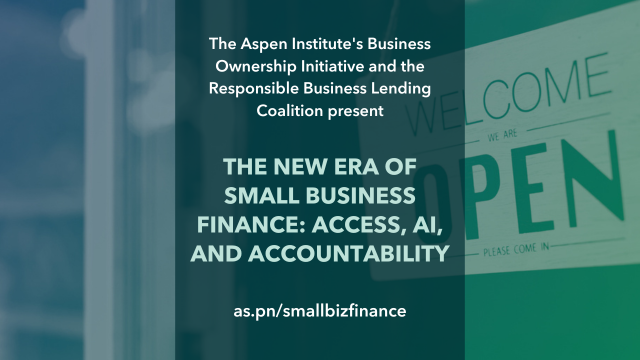
The New Era of Small Business Finance: Access, AI, and Accountability (Highlight reel)

The Changing Role of Small Business Ownership
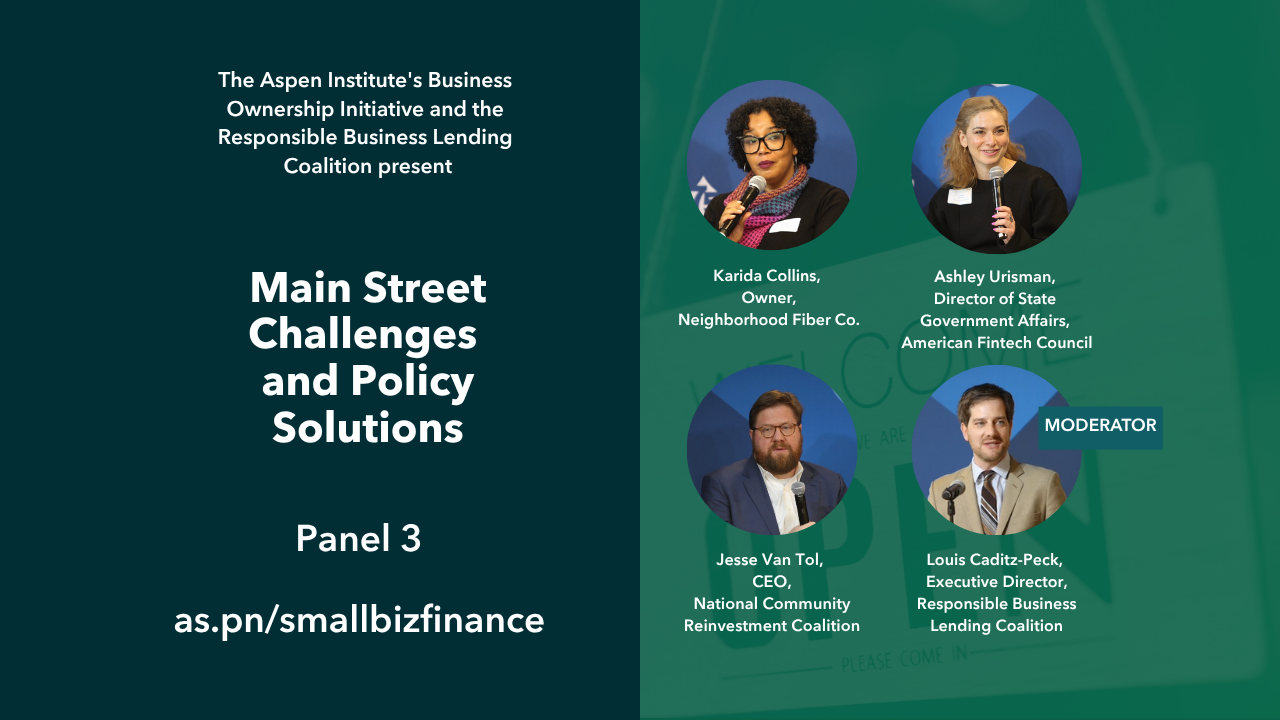
Main Street Challenges and Policy Solutions
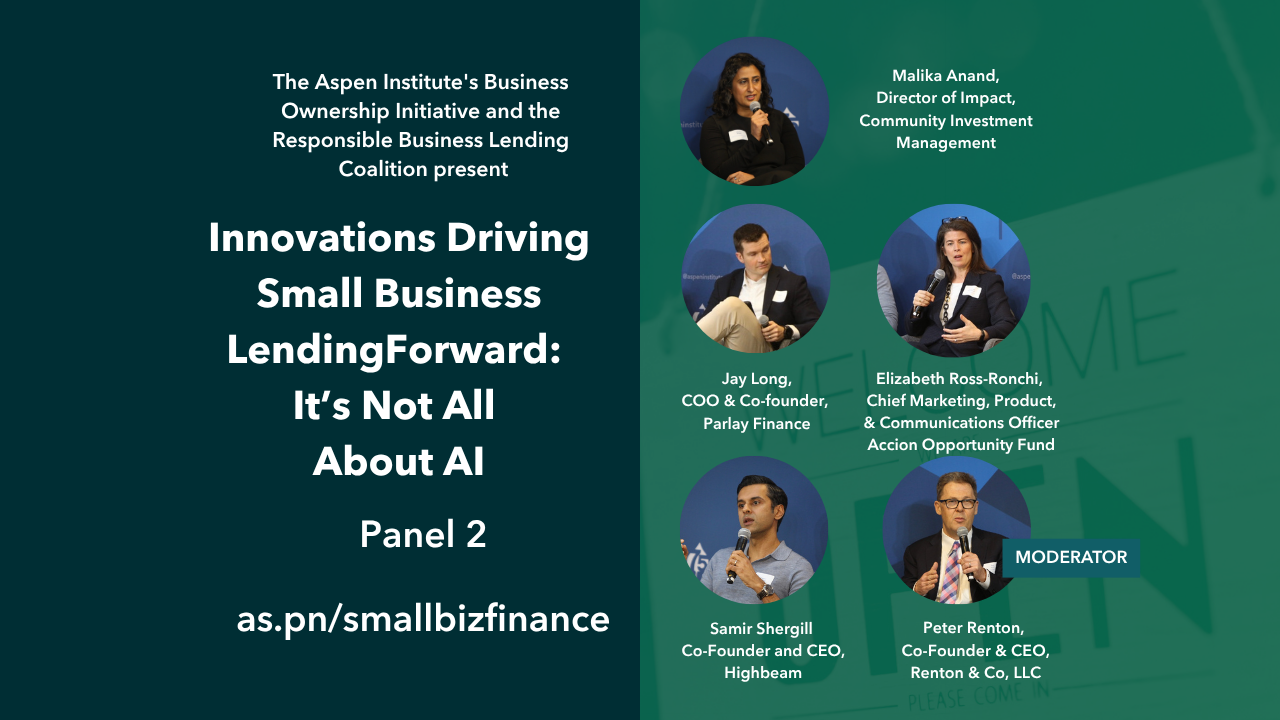
Innovations Driving Small Business Lending Forward: It’s Not All About AI

To Help Small Businesses Recover From the L.A. Fires, Invest in Community Lenders