How Income Volatility Hurts Student Attendance
Homework, exams, extracurriculars – being in school comes with a certain amount of stress for everyone. But for some students, even attending school on a regular basis is a challenge – a challenge that new data shows could be exacerbated by the level of income volatility experienced in a student’s household.
Income volatility – spikes and dips in income over time – is an emerging, critical issue for understanding household financial security today. A new study (paywall for full text) by New York University’s Lisa Gennetian, Pamela Morris, and Chris Rodrigues, and the University of Washington’s Heather Hill sought to better understand the relationship between income volatility and child development.
After examining attendance rates for children in 4th, 7th, and 9th grades along with the level of income volatility experienced by their families, researchers found that high income volatility is associated with lower rates of school attendance among 4th and 7th graders, relative to stable income or moderate levels of income volatility.
We spoke to Lisa Gennetian, a research professor at NYU’s Institute for Human Development and Social Change and the lead author of the paper, about her team’s work. “Economists have long studied earning instability, primarily among male earners. Social scientists have studied the effects of poverty on children’s development,” she said. “Until recently, these research arenas did not intersect despite the trends in earnings instability and the documented unfavorable influence of poverty. We sought to bridge this gap.”
The Aspen Institute Financial Security Program’s Expanding Prosperity Impact Collaborative (EPIC) recently completed an 18-month study of income volatility. One of our first reports on the subject – a paper authored by researchers Daniel Schneider and Kristen Harknett – identified sizable and common income swings among hourly retail workers, and acknowledged the same research gap Gennetian is working to bridge. While a substantial amount of research describes levels and trends in income volatility and has begun to identify its causes, there is much less known about the consequences of income volatility for household wellbeing, particularly its impacts on children.
Dr. Gennetian and her co-authors note that income volatility could negatively impact student attendance if it disrupts family routines, creates higher risk for illness through stress or material hardships, and may negatively affect parent’s ability to pay for basic materials and preparation for school, including clothes, transportation, and after-school care.
“Whether triggered by job loss, inconsistent work hours, gaps in the safety net, or disruptions in family relationships,” the authors note, “the effects of income volatility on family life may be consequential and distinct from those of persistently low-income.”
“The challenge of distinguishing the effects of income volatility from the effects of persistent low-income is the methodological elephant in the room,” Gennetian said, “and one of the next big research gaps in the field.”
To wrap up EPIC’s focus on the issue, the Aspen team outlined our take on the future of income volatility research, which we hope will inspire more studies like that of Dr. Gennetian and her co-authors. To achieve a nuanced understanding of the issue, future income volatility research should, to the extent possible, focus on the effects of the issue on households and family life, and resulting influences on children’s development, social networks, and the relationship between household volatility and the macro-economy.
“Solutions to low or chronic attendance at school generated by income instability are likely to look different than school regulatory policy,” Gennetian said. Teachers and other nonparental caregivers who work with children should be aware of the effects household income volatility could have on students and be creative in approaches to minimize the potentially unfavorable effects due to shifting dynamics of home life.
The study’s conclusion that high income volatility is associated with worse school attendance among 4th and 7th graders is one example of how broad the negative influence of income volatility can be. It is also an important example of the type of research EPIC hopes will help build the consensus necessary to create real changes in industry practice and government policy – changes that reduce income volatility, and, ultimately, improve the lives of millions of Americans.
A Financial Security Threat in the Courtroom
Strong Foundations: Housing Security Solutions Framework
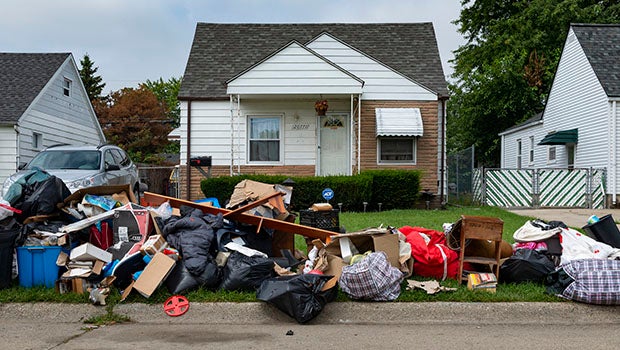
The COVID-19 Eviction Crisis: an Estimated 30-40 Million People in America Are at Risk
The True Cost of Caregiving
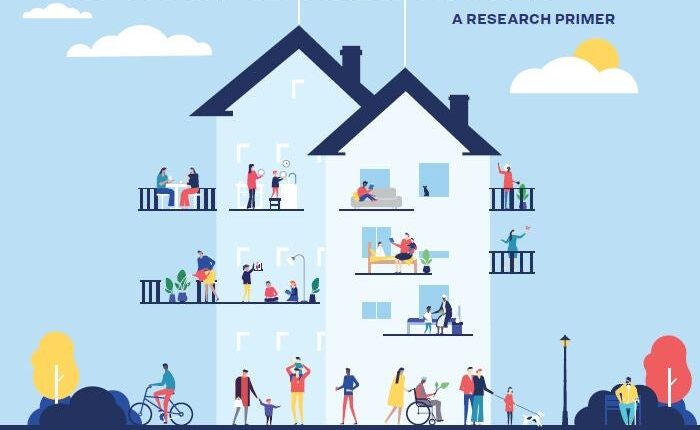
Strong Foundations: Financial Security Starts with Affordable, Stable Housing


Toward a College-Debt-Free Society

Highlights from EPIC’s First Expert Survey on Housing Affordability and Stability