Measure What Matters: Realigning Measures of Economic Success with Societal Well-Being
Description
By all the usual measures, the US economy is healthy. Unemployment is low, job growth continues to be robust, GDP is growing and 2019 was a great year on Wall Street. But while economic measures indicate a strong economy, too many people’s economic lives are precarious. Stagnating wages, rising expenses, uncertain incomes and limited opportunities to get ahead leave far too many people across the country feeling left out of today’s economic success. What is missing from our economic measures? And how could better measures help us address the economic divides and build shared prosperity?
In a new book Unbound: How Inequality Constricts Our Economy and What We Can Do About It, Heather Boushey, President and CEO of the Washington Center for Equitable Growth, considers how inequality is restricting growth and imagines how a more equitable economy would function. The book also raises two key questions: How can we better measure our economy to understand how it can improve the lives of individuals and how do we better support working families so we can set them and their children up for success?
The Economic Opportunities Program, Ascend, Financial Security Program, and Program on Philanthropy and Social Innovation hosted a book talk with Heather and a panel discussion including other experts to explore these questions about defining and measuring economic success and how we can work more broadly to create growth with purpose.
Resources
Download presentation slides: Unbound How Inequality Constricts Our Economy
Speakers

Heather Boushey Follow @HBoushey
President and CEO, Washington Center for Equitable Growth Follow @equitablegrowth
Heather Boushey is the president and CEO and co-founder of the Washington Center for Equitable Growth, which was launched in 2013. She is one of the nation’s most influential voices on economic policy and a leading economist who focuses on the intersection between economic inequality, growth, and public policy. Her latest book, Unbound: How Economic Inequality Constricts Our Economy and What We Can Do About It (Harvard University Press) was released in October 2019. She is also the author of Finding Time: The Economics of Work-Life Conflict, and co-edited a volume of 22 essays about how to integrate inequality into economic thinking called After Piketty: The Agenda for Economics and Inequality.

Daniel Alpert Follow @DanielAlpert
Managing Partner, Westwood Capital LLC and Affiliates
Daniel Alpert is an American investment banker, think tank fellow, professor and author. He is best known for his writing on the credit bubble and the ensuing financial crisis of the 2000s, and his many articles and papers on the US housing market, banking, employment, regulatory matters and global macroeconomics. Alpert has been widely quoted and published in print outlets, including the Wall Street Journal, The New York Times, Reuters, the Associated Press, Bloomberg, Forbes, and Fortune. He has been a frequent commentator on business news networks, such as Bloomberg, and CNBC. He is the author of The Age of Oversupply: Confronting the Greatest Challenge to the Global Economy (Penguin Portfolio) on the effect of macroeconomic imbalances on advanced economies.
Daniel Alpert is founding Managing Partner of the New York-based investment bank, Westwood Capital LLC and its affiliates and was a fellow of the New York-based Century Foundation, one of the nation’s oldest think tanks. In February, 2018, Alpert was named a senior fellow in financial macroeconomics and an adjunct professor of law of Cornell Law School. Alpert joined Cornell Law’s Clarke Program on the Law and Regulation of Financial Institutions and Markets, part of the Jack G. Clarke Business Law Institute.
For more information about the Job Quality Index, please visit jobqualityindex.com.

Sapna Mehta Follow @sapnamehta113
Director of Policy and Research, Groundwork Collaborative Follow @groundwork
Sapna Mehta is the Director of Policy and Research at Groundwork Collaborative. Her work has been featured in the New York Times, New York Daily News, Crain’s New York, and other publications. Prior to joining Groundwork in 2019, Sapna was the Legislative and Policy Director at Main Street Alliance, where she built momentum for the first ever House of Representatives hearing on paid leave. As a Senior Policy Analyst with the Office of the New York City Comptroller, Sapna conducted research to support local and statewide policy campaigns. Sapna was also previously a member of the Ford Foundation’s Future of Work team, leading efforts to build power for working people through grassroots organizing and policy change. Sapna began her career with SEIU, securing union contracts for workers across the Midwest. She has a bachelor’s degree in economics from The Ohio State University.
Moderator

Maureen Conway Follow @conway_maureen
Vice President for Policy Programs, The Aspen Institute; Executive Director, Economic Opportunities Program Follow @AspenWorkforce
Maureen Conway serves as Vice President for Policy Programs at the Aspen Institute and as Executive Director of the Institute’s Economic Opportunities Program (EOP). EOP works to expand individuals’ opportunities to connect to quality work, start businesses, and build economic stability that provides the freedom to pursue opportunity. Maureen founded EOP’s Workforce Strategies Initiative and has headed up workforce research at the Aspen Institute since 1999. Maureen also curates a public discussion series at the Aspen Institute, Opportunity in America, which brings together voices from business, labor, policy, human services, media, academia, and others to discuss the challenges experienced by many in today’s labor markets and new ideas for addressing these challenges. In addition, Maureen oversees EOP’s leadership development programs, which connect innovators, both within communities and from across the country, to peers working to help low- and moderate-income Americans access opportunity.
Learn more
This event is part of the Opportunity in America series, an ongoing discussion series hosted by the Aspen Institute Economic Opportunities Program. We are grateful to the Ford Foundation, Prudential Financial, Walmart.org, and the Mastercard Center for Inclusive Growth for their support of this series. For more information, visit as.pn/opportunityinamerica.
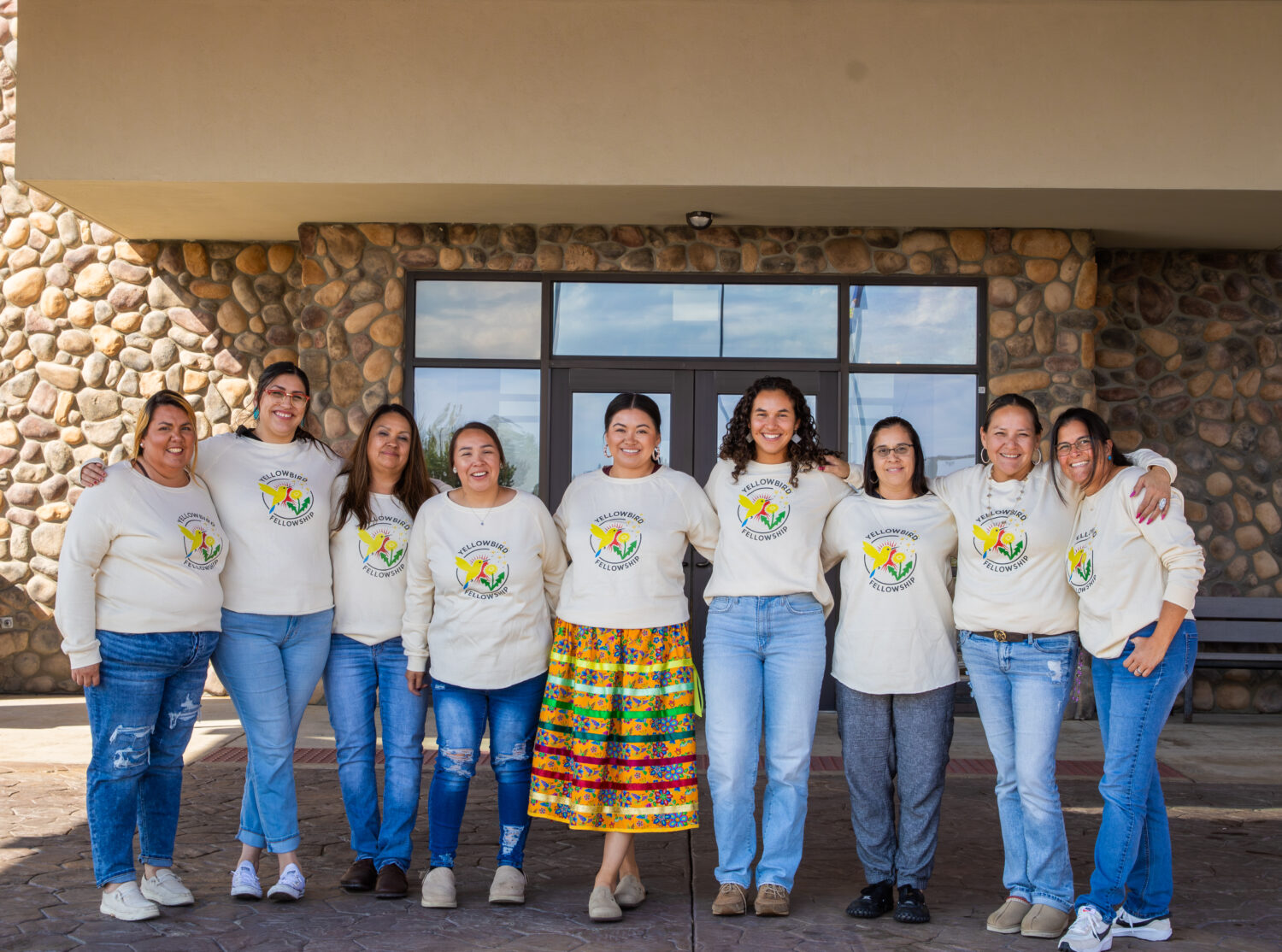
Putting Resources in the Right Hands: How One Fellowship Is Supporting Financial Services Professionals on Native Reservations

A Persistent Challenge: How Financial Shocks Continue to Undermine Family Financial Security
Five Forces of Change Shaping the Next Decade of Inclusive Finance

How the National Strategy for Financial Inclusion Can Improve Public Benefit Delivery
How the National Strategy for Financial Inclusion Can Strengthen Household Well-Being

The Saver’s Match from SECURE 2.0: The Opportunity to Add Thousands of Dollars to Retirement Savings Accounts for People with Low Income

5 Priorities to Enable Digital Identity in Financial Services
Aspen FSP Launches National Task Force for Fraud & Scam Prevention