
A New WIOA Measure Deserves A New Way Of Measuring

Maureen Conway
Vice President; Executive Director
What is an optimal way to measure the public workforce system’s effectiveness in serving employers?
The US departments of Labor and Education have been grappling with this question for a couple of years. In the 2014 Workforce Innovation and Opportunity Act (WIOA), they were tasked with developing one or more indicators of the federal core workforce programs’ effectiveness in serving employers.
Last year, AspenWSI released a working paper that proposed a novel “point-menu” system to measure core program effectiveness. In this approach, states would negotiate a yearly point goal with federal administrators. Then they would accumulate points toward their goals by achieving self-selected outcomes from a menu related to serving employers and benefitting workers and job seekers. The more transformational the outcomes, the more points the states could earn.
This approach allows for the wide variation in local labor markets and in program administrators’ capacity and experience working with employers. It also recognizes more sophisticated employer engagement, provides aspirational benchmarks for workforce programs to strive toward, and offers valuable learning opportunities on how to serve and engage employers in providing better opportunities for workers while supporting strong businesses.
In the final WIOA regulations released in late June of this year, the departments of Labor and Education proposed state pilot programs to test various indicators of measuring core programs’ effectiveness in serving employers. The regulations specifically mentioned consideration of AspenWSI’s point-menu system as a pilot. You can read more about the proposed point-menu system in our final publication describing this approach: A New WIOA Measure Deserves a New Way of Measuring: A Point-Menu System for Measuring Effectiveness in Serving Employers.
We are thrilled that the federal agencies are considering a nontraditional approach to the complex challenge of measuring effectiveness in serving employers. If you are interested in piloting the point-menu approach, please let us know at [email protected].
About the Workforce Strategies Initiative
The Workforce Strategies Initiative, part of the Economic Opportunities Program, uses research and evaluation to explore strategies that help workers attain stability and mobility, including through training, education, and broader systems change.
About the Economic Opportunities Program
The Aspen Institute Economic Opportunities Program advances strategies, policies, and ideas to help low- and moderate-income people thrive in a changing economy.
Join Our Mailing List
To receive occasional emails about our work — including new publications, commentary, events, fellowships, and more — join our mailing list.
Connect on Social Media
For news and updates every day, connect with us on the social media platform of your choice.
Race and Gender Wealth Equity and the Role of Employee Share Ownership

Enhancing Conversations Between Employers and Workforce Professionals
Voices from the Field: Engaging Employers to Connect Young Adults to Good Fit Employment
The Benefits of Bridging Divides: How YouthBuild Philly Shares its Supportive Practices to Build Business Value and Better Jobs

Genesis at Work: Evaluating the Effects of Manufacturing Extension on Business Success and Job Quality
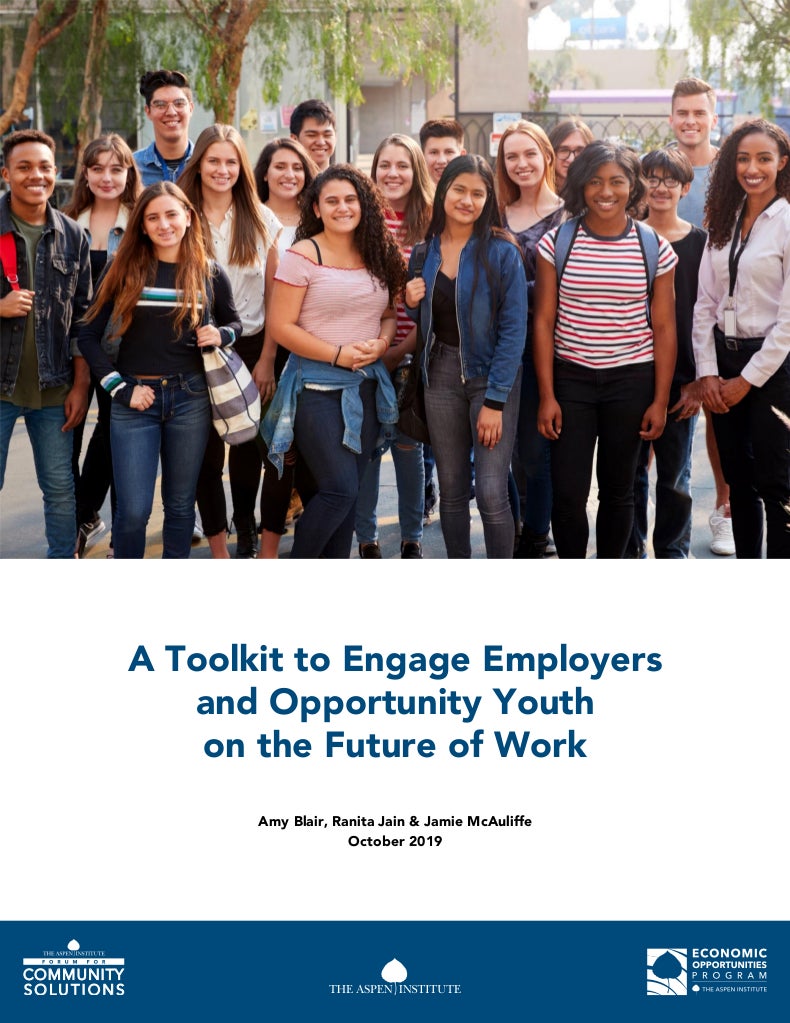
A Toolkit to Engage Employers and Opportunity Youth on the Future of Work

