Coordinating with State and Federal Government to Improve Benefits Delivery

Tim Shaw
Director, Benefits Transformation Initiative and Senior Policy Advisor

Sophia Scott
Former Policy Fellow
The Aspen Institute Financial Security Program, in coordination with the federal government’s Facing a Financial Shock interagency implementation team and a host of nonprofits, has launched new working groups to improve access to public benefits.
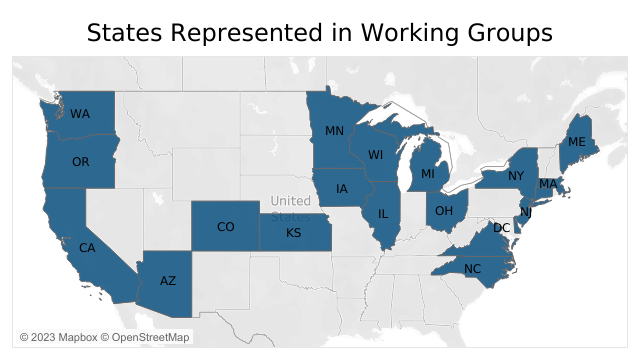
Access to essential benefits, such as the Supplemental Nutrition Assistance Program (SNAP) and Temporary Assistance for Needy Families (TANF), can be critical for maintaining financial stability in the face of job loss, illness, crisis, or other events. Public benefits provide protection against extraordinary or unexpected financial shocks, a precondition of successful wealth building as explained in our publication, The New Wealth Agenda: A Blueprint for Building a Future of Inclusive Wealth. The Working Groups have brought together more than 90 state human services leaders and staff from 21 states, 15 federal staff members who cover these programs, and more than 70 nonprofit and other ecosystem partners to identify common challenges, share learnings, and co-design solutions around public benefits delivery.
Six Areas with Opportunities to Improve Public Benefits Delivery
Following the 2023 Financial Resilience Summit, six key themes emerged from conversations with state and federal leaders to effectively improve access to public benefits. Each of these themes now has a dedicated working group to focus efforts, co-led by representatives from Benefits Data Trust, Center on Budget and Policy Priorities, the Beeck Center, U.S. Digital Response and Tech Talent Project, with the following goals:
| Working Group | Goal |
| Policy and Requirements | Clarifying federal policy requirements and flexibilities in key public benefit programs, including eligibility, application and renewal processes, funding, reporting, and IT systems to improve efficiency and reduce burden. |
| Data Sharing Policy | Overcoming barriers to the sharing and reuse of administrative data across Medicaid, SNAP, TANF, and other sources for outreach, cross-enrollment, and verifications to eliminate the duplicative requirements for applicants and processing work done by caseworkers. |
| Operations | Documenting best practices for operations improvements in identified challenge areas such as using plain language for notices and call center management to improve benefits delivery. |
| Procurement | Identifying opportunities to improve IT vendor management to make technology used in benefits delivery modern and accessible. |
| Texting and Notifications | Clarifying permissions and improving operations around text messaging to help people stay informed of actions needed related to benefits, such as reminders for upcoming appointments and enrolling in or recertifying their benefits. |
| Talent | Coordinating resources to support the recruitment and retention of technical talent to support the delivery of public benefits, a challenge identified by nearly every state in our working groups. |
Working Groups Surface Common Challenges, Share Resources, and Build Connections
Each group has created a space to discover opportunities for growth, catalyze new connections among working group members, share best practices, and disseminate valuable existing resources. Groups have prioritized a number of specific topics of focus for the first few months based on shared challenges: legal permissions related to texting, policies and data sharing requirements around cross-enrollment, working with IT vendors, and hiring technical talent.
“The simplification and alignment of how incomes are counted decreases the burden on consumers and workers, improving the efficiency of benefits delivery.” – Working Group Member
“Implementing text and email notifications led to an additional 10,000 applicants for an affordable internet connectivity program in one round of outreach.” – Working Group Member
In response to specific blockers state staff members are tackling, federal staff and nonprofits have also shared resources such as video trainings, one-pagers on income calculations and guides to streamlining enrollment. Finding the most relevant resource can feel like looking for a needle in a haystack, so pointing state staff in the right direction can have a big impact on improving benefits delivery.
When existing resources do not suffice, the working groups have brought in subject matter experts to present information and answer questions live. These experts include federal and nonprofit staff members who have been able to follow up with state staff, meeting one-on-one to discuss barriers and how to overcome them. State staff members have built connections with those experts and one another as they share lessons learned and best practices. These relationships lay a foundation for increased access to critical public benefits for all who need them.
“National best practice sharing such as this work group are most helpful to support use of data so that beneficiaries only need to submit information once.” – Working Group Member
Join and Support the Working Groups in Creating Tools for States Across the Country
If you are a state human services professional facing similar challenges–or effectively overcoming these obstacles in your state–then please join us in exploring challenges, building connections, sharing resources, and creating new tools for diverse states to use in improving the delivery of public benefits. The working groups will develop playbooks, guides, and recorded presentations that will be publicly available for all state staff.If you’re interested in participating in this work and would like to know more, please contact Tim Shaw ([email protected]), Policy Director at Aspen FSP.
North Stars in a Moment of Constraint

Announcing the 2026 Class of Finance Leaders Fellows
Bridging the Information Gap: How Organizations Can Assess and Use Benefits Screeners
From Band-Aids to Stepping Stones: How We Can Rebuild Young Adults’ Trust in Public Benefit Systems
OBBBA’s Impact on Young Adults and 5 Strategies to Support Them
Leading with Empathy: Strengthening Benefits Delivery with Mike Wilkening

A Persistent Challenge: How Financial Shocks Continue to Undermine Family Financial Security

Beyond Income: Worker Financial Security and the Role of Benefits Inside and Outside of the Workplace