Aspen is a place for leaders to lift their sights above the possessions which possess them. To confront their own nature as human beings, to regain control over their own humanity by becoming more self-aware, more self-correcting, and hence more self-fulfilling.
Care is a universal need and the backbone of our economy. Nearly 1 in 5 people incur caregiving expenses. From infants to adults to elders, every household is likely to need care support or caregiving at some point in time.
This past year, the Aspen Institute Financial Security Program identified the cost of care as an emerging financial security challenge – one that affects everyone.Today you can access our inaugural report on this topic. This report illustrates four pillars of care: child care and early education, adult and elder care, family caregiving and self care, and professional caregiving.
Upon reading this report, policy researchers, advocates, and leaders will gain a deeper understanding of:
How existing care systems support households
What the greatest unmet care needs are for households
How design principles can better address care needs
What promising policy proposals and opportunities exist to improve household financial security
The Aspen Institute Financial Security Program’s work on dependent care is made possible with support from Citi.
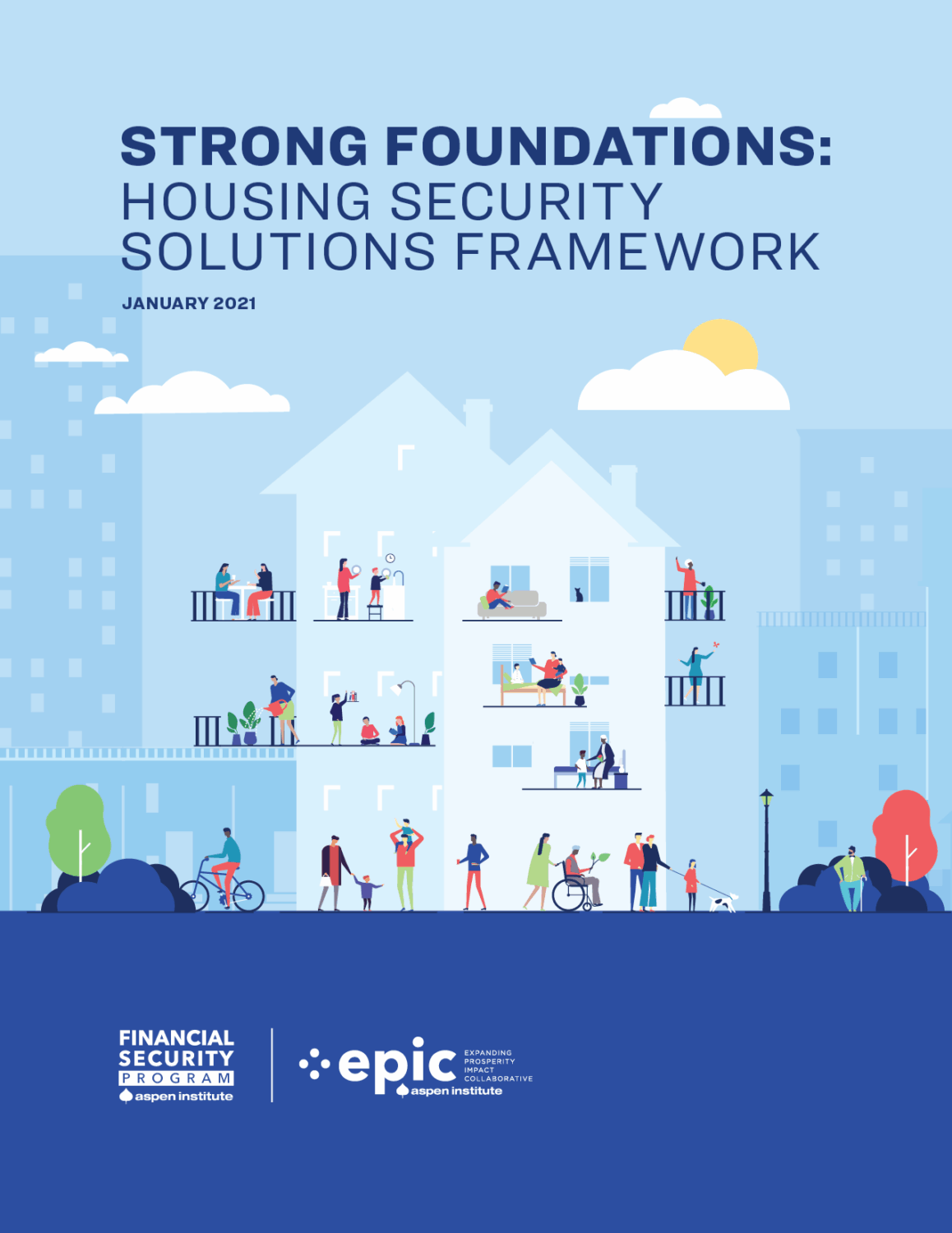
Everyone can do something to expand housing security in their own communities. Find the robust set of solutions for effective, equitable, and sustainable housing in the full solutions framework.
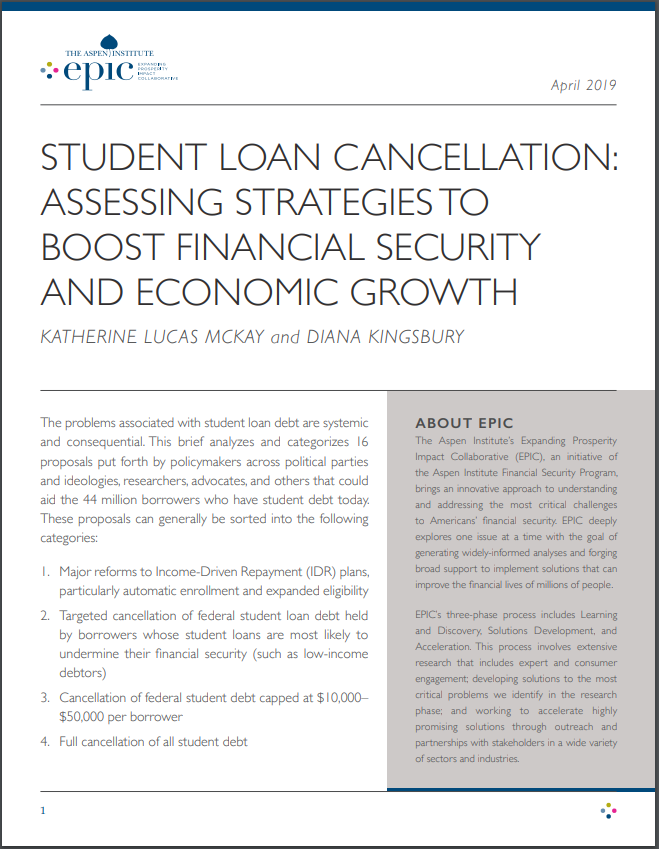
This spring, the Expanding Prosperity Impact Collaborative (EPIC), an initiative of the Aspen Institute Financial Security Program, released a study on ways to help those with student loan debt to eliminate some portion of their federal student loans.