
Expanding Prosperity Impact Collaborative (EPIC)
A first-of-its-kind research initiative, EPIC shone a light on three pressing challenges impacting Americans’ financial security.
The Expanding Prosperity Impact Collaborative (EPIC) was a first-of-its-kind research initiative led by the Aspen Institute Financial Security Program. From 2015 to 2020, EPIC drilled into three critical issues impacting Americans’ financial security: income volatility, consumer debt, and housing affordability.
Bringing together hundreds of cross-discipline experts, each of whom contributed new and unconventional approaches to understanding consumer finances, the effort yielded more than 40 papers, briefs, and think pieces in six years of research and convenings. With this shared, foundational understanding, leaders from applied, academic, government, and industry settings developed consensus recommendations and solutions models to improve the financial lives of millions of people.
The EPIC Approach
EPIC took a unique, three-phase approach to its work.
Phase 1: Learning and Discovery
We synthesized existing research and data, interviewed consumers, surveyed experts, published reports, and convened diverse sets of leaders to build a more accurate understanding of how our identified issues impacted household financial security and what were the underlying drivers of those challenges.
Phase 2: Solutions
For each issue, we developed a framework to evaluate potential solutions, selected a set of highly promising solutions to explore in depth, vetted those solutions with a diverse group of consumers, cross-sector leaders, and experts, and published our findings and analyses.
Phase 3: Acceleration
In collaboration with multi-sector experts, we helped put our solutions frameworks into action, designing research and policy agendas, developing guidance on solutions and tools, and providing leaders with the knowledge and networks to advance these solutions.
The Issues
Jump to

Issue 1
Income Volatility
Through its first focus on income volatility, EPIC uncovered how unpredictable and inconsistent income impacted low- and moderate-income households. Our landscape review found that nearly half of all households experience an income gain or drop of more than 25 percent over any two-year period. This month-to-month fluctuations happened an average of five months a year to low-income households.
EPIC’s focus on month-to-month data and its causes illuminated an under-considered aspect of the problem: that shorter-cycle income volatility leaves households less able to budget and save. It also uncovered the twinned problem of expense volatility. Combined, these factors mean that even if a household’s annual income exceeds its expenses, a year might include several months of living in poverty. Aspen FSP’s work brought national attention to these issues and fueled calls for multi-sector approaches to creating less volatile family finances.
For nearly one in four jobs, paycheck amounts varied by more than 30% paycheck to paycheck.
Source: JPMorganChase Institute analysis of 2012-2014 data
Income Volatility Publications
Income Volatility: A Primer

Income Volatility: Managing the Swings
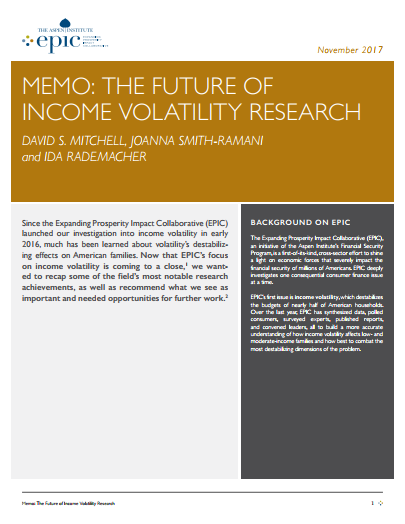
The Future of Income Volatility Research

Issue 2
Consumer Debt
Most Americans carry debt some or even all of the time. EPIC focused on non-mortgage consumer debt, discovering that households were increasingly likely to incur debt from non-loan sources such as out-of-pocket medical expenses. Consumer debt had reached record levels, and its effects were undermining financial security, physical and mental health, as well as the broader economy.
EPIC approached consumer debt as a systemic problem and suggested systemic upgrades, ultimately selecting specific, multi-sector solutions. These included supports for curing delinquent debts, expansion of student-loan forgiveness and repayment benefits, debt collection lawsuit reform, and elimination of unfair civil fines and fees.
Most new debt was from student loans and auto loans, both of which had high and rising default rates.
2016 Survey of Consumer Finances
Consumer Debt Publications
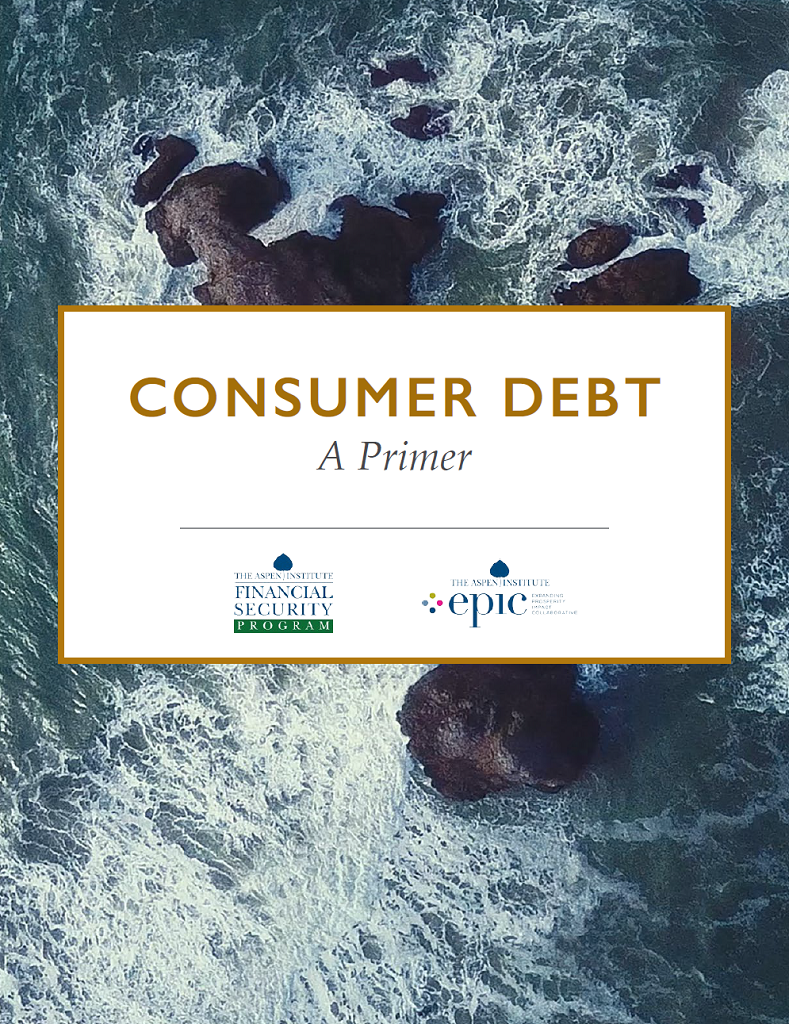
Consumer Debt: A Primer

Lifting the Weight: Consumer Debt Solutions Framework
Solving the Consumer Debt Crisis: An Action Guide for Local Government
Student Loan Cancellation: Assessing Strategies to Boost Financial Security and Economic Growth
A Financial Security Threat in the Courtroom
Issue 3
Housing Affordability and Stability
EPIC’s third focus was housing. Our review recognized rising housing costs and instability as critical threats to the financial security of American families. Deeper research showed how the availability, cost, quality, and location of housing affect job opportunities, earnings, other costs of living, health, and educational opportunities. The problem was compounding; from 1990 to 2019, rents and home prices had grown faster than inflation and wage growth.
EPIC’s research made it clear that rising housing costs and instability were inextricably linked, and were together critical threats to the financial security of American families.
One in three U.S. households—nearly 100 million people—struggled with housing costs that jeopardized their financial security.
Joint Center for Housing Studies of Harvard University, 2018

Housing Affordability and Stability Publications

Highlights from EPIC’s First Expert Survey on Housing Affordability and Stability

Strong Foundations: Financial Security Starts with Affordable, Stable Housing
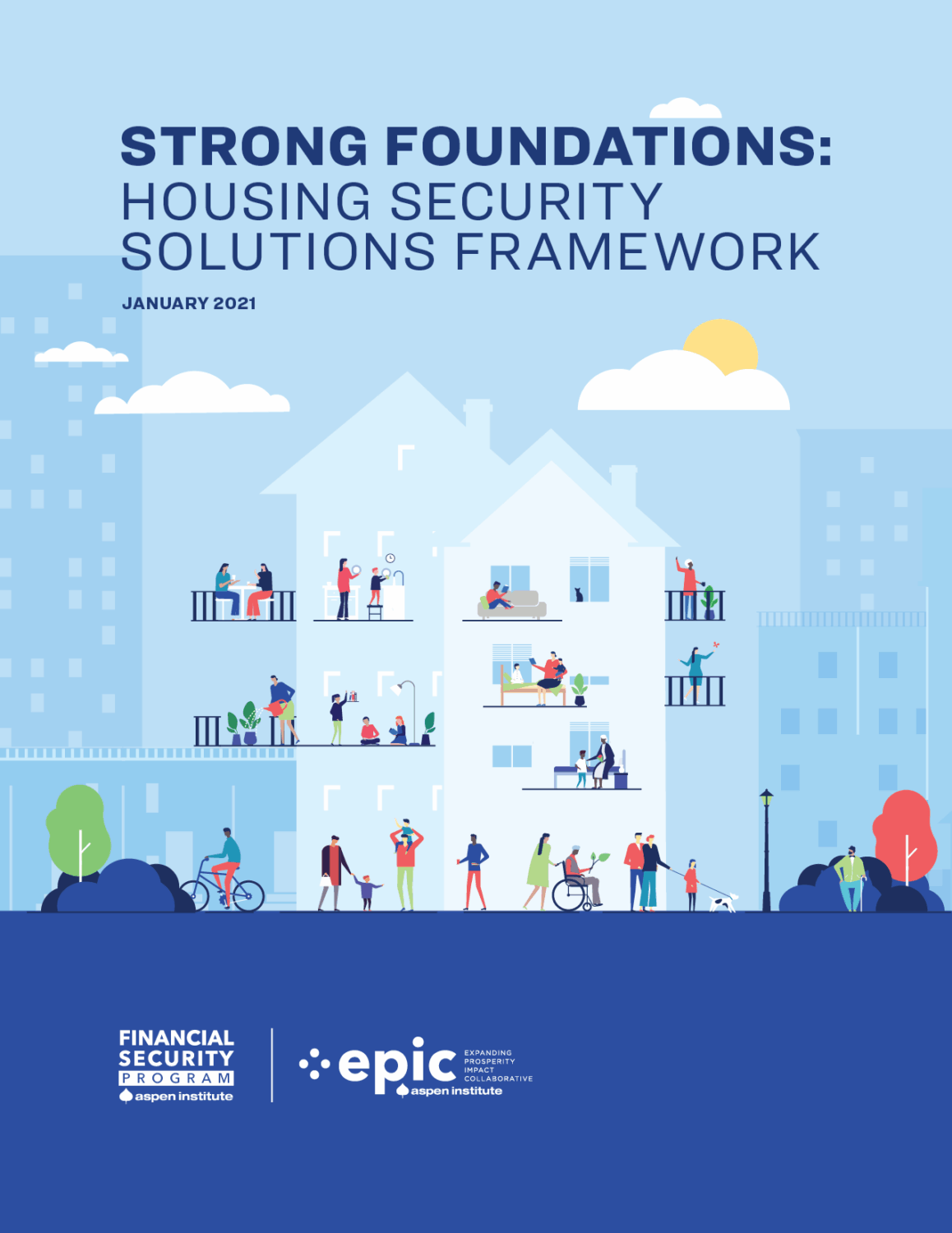
Strong Foundations: Housing Security Solutions Framework

With Federal Moratorium Expiring, 15 Million People at Risk of Eviction

Launching the Housing Policy Matchmaker: A Diagnostic Tool for Local Officials
Stay Connected
Join our work to build financial security for all.
Learn more about how you can support the Aspen Institute Financial Security Program through a philanthropic grant, tax-deductible gift, or event sponsorship.
Stay up to date with our latest news and events.
