Aspen is a place for leaders to lift their sights above the possessions which possess them. To confront their own nature as human beings, to regain control over their own humanity by becoming more self-aware, more self-correcting, and hence more self-fulfilling.
Driving Retirement Innovation: Can Sidecar Accounts Meet Consumers’ Short- and Long-Term Financial Needs?
July 1, 2017
Financial Security Program
For decades now, those interested in helping low- and moderate-income Americans build wealth have focused almost exclusively on long-term investments, like home ownership, higher education, and retirement. While such tools are positive drivers of financial security, they can be fully utilized only when a household’s day-to-day financial lives are stable.
This brief explores the possibility of linking a short-term savings, or “sidecar,” account to a traditional retirement account to better meet consumers’ short-and long-term financial needs. Such an innovation could help address families’ current inability to cope with financial shocks and volatility, as well as their over-reliance on withdrawals from retirement accounts to fund current consumption. After describing these dual problems in depth, the brief will explore the advantages and disadvantages of various design approaches to implementing a sidecar account.
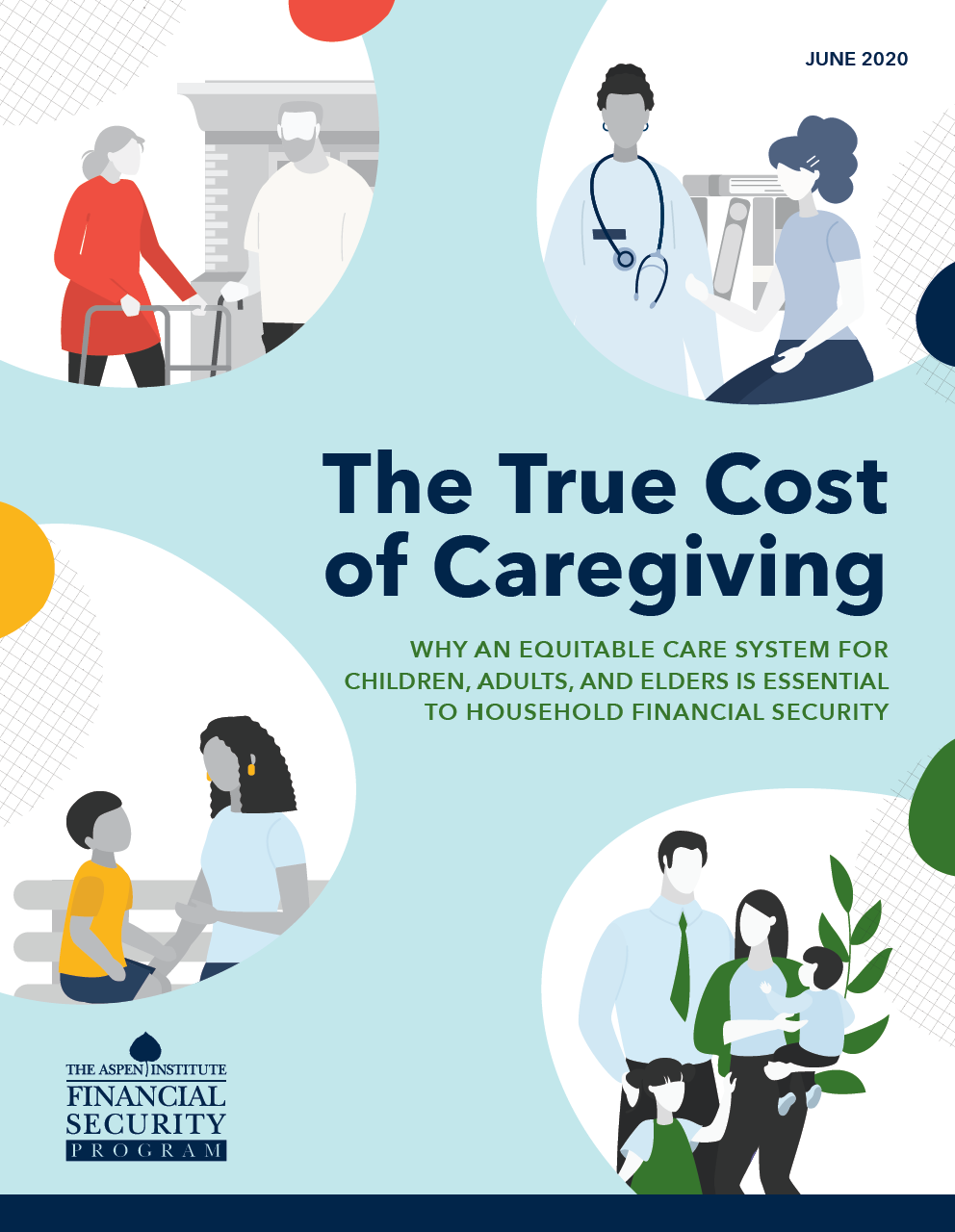
This report illustrates four pillars of care: child care and early education, adult and elder care, family caregiving and self care, and professional caregiving.
Finance Forward is an example of the power of cross-sector collaboration. Income volatility is a complex problem that requires attention from fintech, government, nonprofits, academics, financial institutions, and more.
This paper will help grantmakers understand the enormous challenge income volatility presents in our country and will present an array of strategies for philanthropy to leverage both investments and leadership to empower families to protect themselves from volatility’s worst effects.