With a global pandemic and a resulting worldwide economic contraction, we need smart, values-driven, adaptive leadership more than ever. This is particularly true in the health care industry, which has had to create its own playbook during this highstakes crisis.
Members of the Aspen Institute’s Health Innovators Fellowship have heeded this call for leadership. The Institute launched the fellowship in 2015 to create a cadre of leaders committed to addressing the unique challenges of health care in the United States—both individually and collectively. Guided by their values and working as both individuals and a collective, Health Innovators fellows have used the lessons and the support of the fellowship to address the urgent needs of today. Three fellows write here about how they changed their work once Covid-19 arrived in the country and in their professional lives.
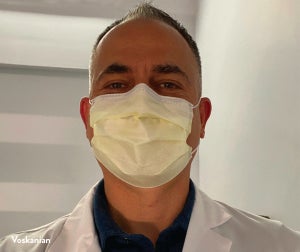 Alen Voskanian
Medical Director of Cedars-Sinai Medical Group
As a medical director, I lead about 200 physicians and 50 nurse practitioners and physician assistants. When Covid-19 first unfolded, I realized immediately that safety was paramount. I needed to put my stake in the ground and say these are the absolute musts and these are the absolute nos.
We as providers have to have the correct personal protective equipment to do our work, and I had to be the voice saying, “I’m never going to ask you to do something if you don’t have the proper PPE.”
I constantly channeled the discussions I had as a Health Innovators fellow to help guide my thinking and identify the values I needed to make clear clinical decisions. Who gets an N95 mask? Who gets a surgical mask? How do we make sure everybody on the team—including nursing and administrative staff—has access to the right PPE?
Communicating clearly from the onset of the pandemic that our clinicians and staff would never work in an unsafe environment fostered critical trust. It also increased everyone’s motivation and, ultimately, improved the health and safety of our staff and patients. Using my fellowship experience and thinking about justice and equity as my foundation, I’ve been able to respond to challenges and support providers as we all face this together.
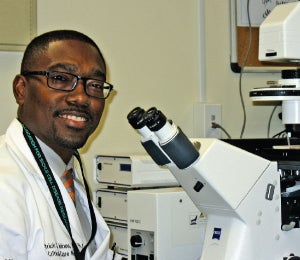 Patrick Hines
Founder and CEO of Functional Fluidics
When Covid-19 hit, I looked at the world and knew I needed to act. My company, Functional Fluidics, develops technology for pharmaceutical companies and health care providers to evaluate new therapies that modify red blood cell health. Because one area for combating Covid-19 focuses on the health of red blood cells, I knew that both our clinical work and research could be relevant to evaluating drugs under development for frontline use.
People were dying from this virus, and we had a lab to study it. We saw that Covid-positive patients with red blood cell damage were more likely to develop severe symptoms as a result of poor oxygen delivery. Equally important, we saw that people infected by the coronavirus continued to have abnormal red blood cell function even after they recovered from the acute infection, which could explain many of the symptoms reported in post-Covid syndrome. We are working to identify people with red blood cell damage, which can potentially be treated both when patients are suffering from acute infections and when they become part of the growing post-Covid population. This type of precisionmedicine approach could facilitate better resource utilization for health care systems during the pandemic.
Helping those who have or have recovered from Covid-19 fare better, cope better, and feel better by understanding the mechanisms of their illness is every bit as important as diagnosing people to stop the spread. We created a tool that could help—and that was where we needed to focus our efforts.
I’m hopeful that the answers are, in many cases, right in front of us. The question is if we have the compassion as a society to think about the whole and not just the individual so we can make some of these answers real.
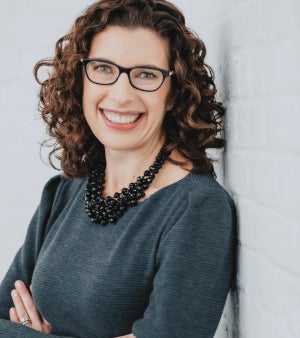 Megan Ranney
Founding Director of Brown-Lifespan Center for Digital Health
Chief Research Officer of AFFIRM
I’m an emergency physician. When Covid-19 struck, my home state of Rhode Island had one of the earliest identified cases. But a leadership vacuum at the federal level had failed to prepare us for the onslaught. When we continued to see no action, I realized I had an obligation—and an opportunity—to develop grassroots solutions.
At first, we came together as a group of doctors committed to do more than just write and talk about Covid-19—we needed something for our colleagues who were working in dangerous situations without protection. We quickly created GetUsPPE. Although we saw it as a stopgap at the time, GetUsPPE still thrives, and has delivered almost three million pieces of equipment, developed the country’s only PPE Scarcity Index, and created a “fairness framework” for equitably directing and distributing the PPE we receive.
Unfortunately, as Covid-19 diagnoses inexorably creep up nationwide, we continue to face shortages of both PPE and testing supplies. I particularly worry about the intersection of all three epidemics we are facing—Covid-19, racism, and violence—and their harm in the months to come.
I continue to have hope. I’m inspired by the hard work and dedication of our volunteers, health care providers, and community members, who persevere, coordinate, and communicate to realize a better vision of our country. They refuse to let physical separation stop our efforts at social and emotional connection and protection. It is because of them that I trust we will be okay.