Subscribe to Weave’s Newsletter
This story was originally published on Weave’s newsletter. Every week, you’ll get resources on how to weave our communities and restore social trust.
For over a decade, Farmington Hills, MI, a city just outside of Detroit, suffered from racial tension. Black folks felt targeted by police and in fact had higher rates of tickets, traffic stops, and arrests. When the black community celebrated Juneteenth to recognize the emancipation of slaves, the city and police department offered no support.
Faith leaders turned Juneteenth into a city-wide celebration of freedomFor over a decade, Farmington Hills, MI, a city just outside of Detroit, suffered from racial tension. Black folks felt targeted by police and in fact had higher rates of tickets, traffic stops, and arrests. When the black community celebrated Juneteenth to recognize the emancipation of slaves, the city and police department offered no support.
But this year’s Juneteenth celebration looked very different.
In the racially mixed town of 84,000 people, neighbors of all backgrounds showed up in droves. The fire department brought fire trucks and set up sprinklers for the kids to play. The police department organized booths and activities like an obstacle course and raised money to buy bikes and helmets for kids who didn’t have them. The city even had a machine to make custom bike license plates and driver’s licenses for kids.
What changed? Faith groups started working together to build trust in the community.
For years, Reverend Dr. Coleman-Burns of the First African Methodist Episcopal Church had tried to engage the police and city government to address tensions and issues important to the black community. Her efforts led nowhere, but others in the community noticed.
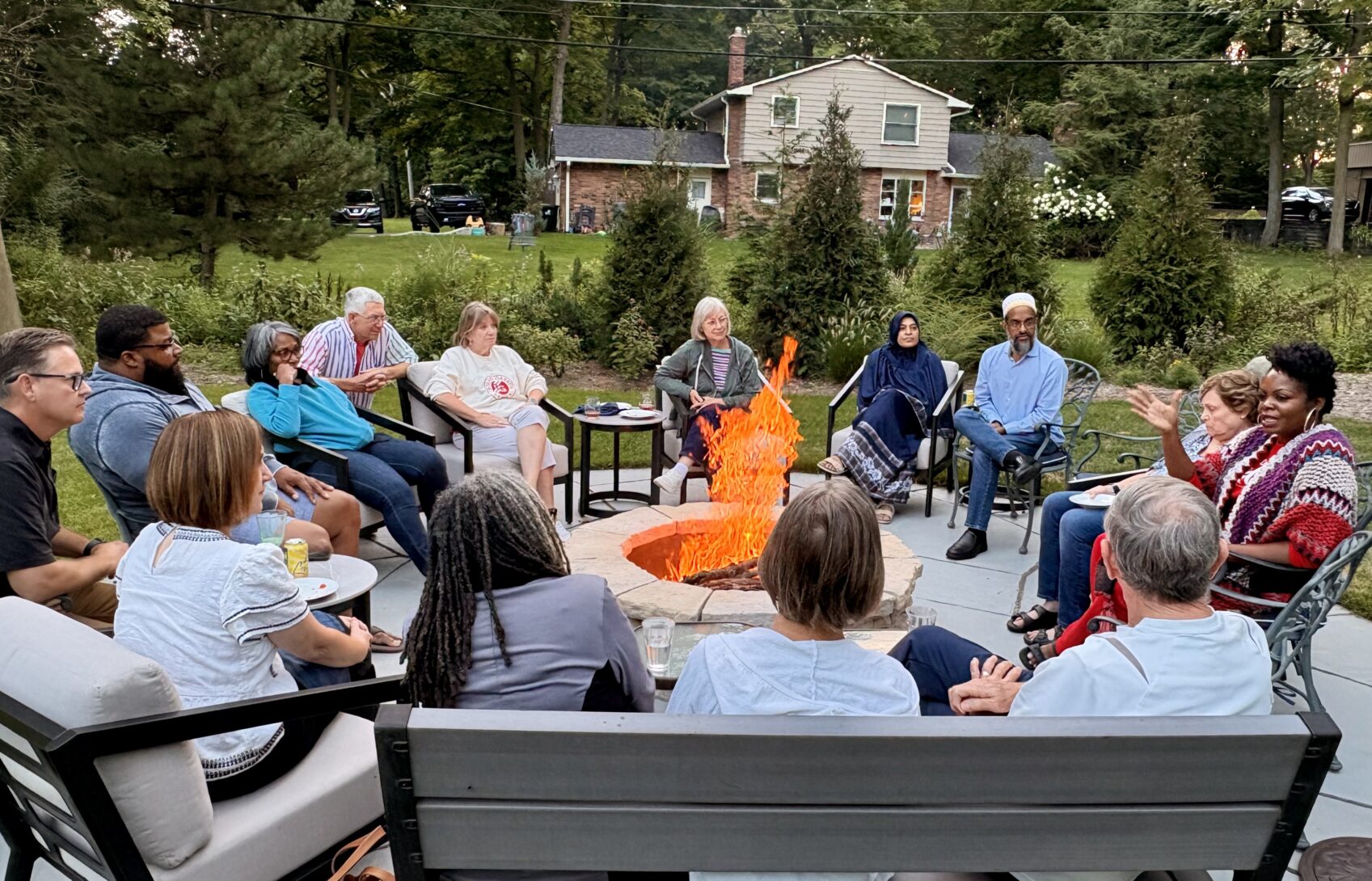
Abizer Rasheed, a local Muslim leader, reached out and suggested they gather an interfaith group to see what they could achieve together. They invited Greg Geiger, who ran Bridging to Belonging for the Interfaith Leadership Council of Metropolitan Detroit, to bring lessons from that city.
The group held conversations. They visited each other’s congregations and had dinners together. “We told our stories — Who are you? Where did you come from? Tell me what you value,” recalls Coleman-Burns. It built relationships across differences and trust. “And then at the end, we asked: ‘What do you want to work on?’”
Since Juneteenth was coming up and everyone knew it had been a point of tension in the city, they decided to make that a city-wide celebration for everybody. They invited neighbors to gather for an evening of sharing stories about Juneteenth. “It was just a remarkable evening,” remembers Geiger of the Bridging to Belonging project. “These are stories of freedom and, in some cases, of suffering and oppression. You can’t be committed to freedom and hear these stories and not be touched.”
The new police chief noticed the efforts to bring neighbors together. So when he was invited to talk with the group, he brought his whole team with him. “It was just a complete turnaround of the relationship between this minority community and the larger community and police department,” Geiger adds.
Since the first city-wide celebration in 2024, many changes have occurred. Farmington Hills has held town halls to address the violent attack that happened at the Latter Day Saints temple in nearby Grand Blanc and the growing tension between the Jewish and Palestinian communities. For the first time, a group of 25 black kids participated in the police’s youth academy to learn how policing works. The police also met with the African American Parent Network to discuss the role of the police in schools.

What Will Great Business Leadership Look Like in 2026?
Fellows On Fellows: Leading with Purpose in the Public Eye
Standing in Hope and Gratitude: Leading With Vulnerability and Purpose
Bridging Divides with Humility: A Leadership Journey Rooted in Purpose

Young People Are Not Just the Future—They Are the Present
Turning Compassion Into Action: A Lifelong Fight to Protect Children
Dignity, Trust, and Legacy: What Aspen FSP’s Community Advisory Group Has Taught Me