Neighbors serve up community at this free pantry
Subscribe to Our Newsletter
This story was originally published on Weave’s newsletter. Every week, you’ll get resources on how to weave our communities and restore social trust.
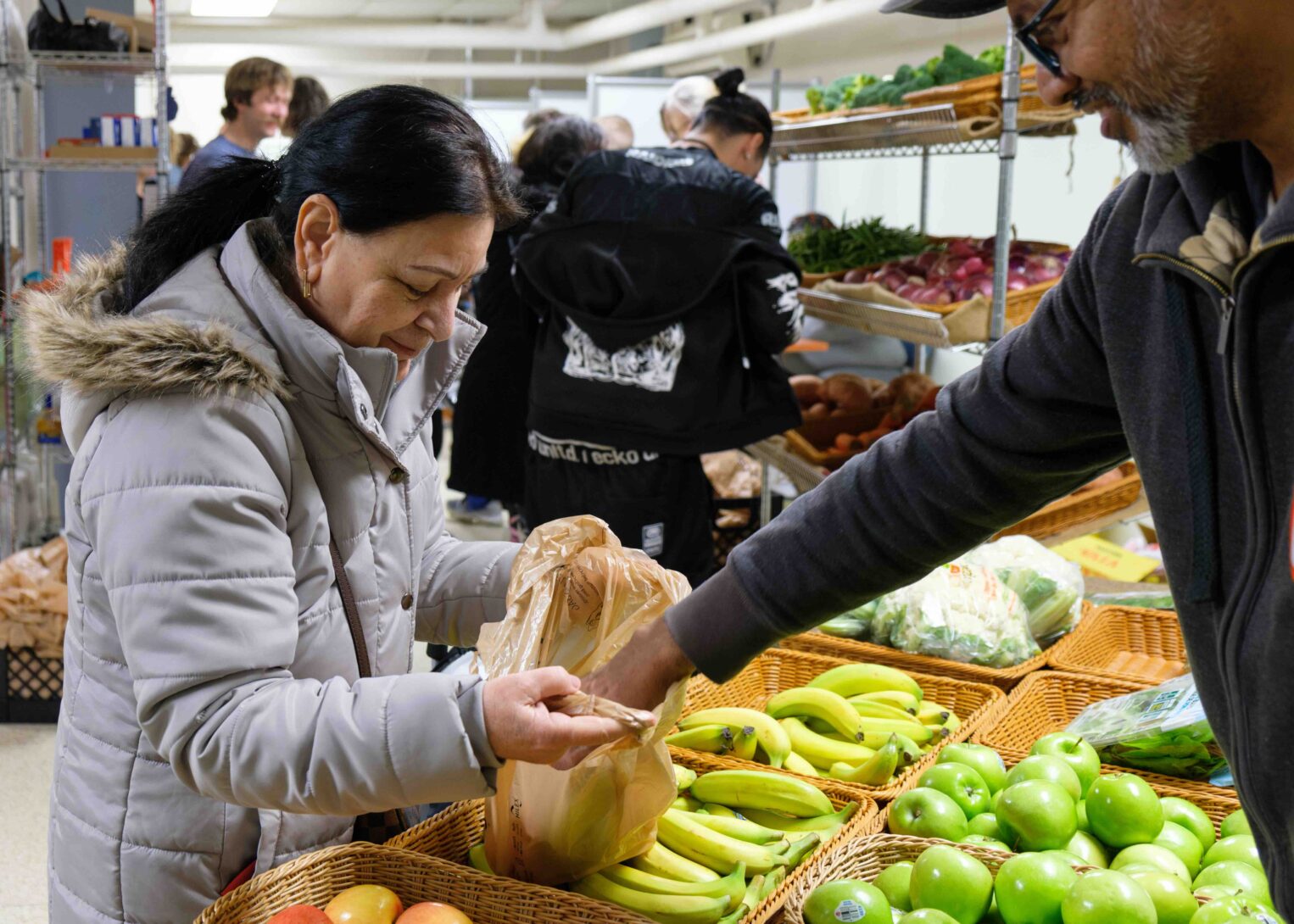
When you drop by Kinship Community Food Center in Milwaukee, WI, it’s hard to tell who is shopping, who is volunteering, and who is doing both. That’s the point. Everyone has a name tag that looks the same.
A few years ago, the food pantry renamed itself a “food center” and updated its mission. Instead of focusing on providing food for those in need in the River West neighborhood, Kinship sees food as a tool to create long-lasting relationships that “change our lives for the better.”
On Tuesdays and Saturdays, people drop by for shopping and a meal. As soon as they arrive, says Travis Sternhagen, the volunteer and training manager, they are greeted and shown to a communal table where they can eat, meet a neighbor, and shop for free groceries.
“We make sure that everyone feels welcomed and valued from the moment they walk through the door,” says Sternhagen. “We are very intentional in the language we use to greet folks to avoid putting them into categories and to create an equal ground. When someone walks in we ask them the same question: ‘Are you here to shop, volunteer, or both?’”
Kinship has about 200 volunteers. Up to 85% are a core group of passionate regulars and most have been coming for years. 40% of them are also shoppers. Only 10-15% of the volunteers are one-timers, who typically come from corporate partners or volunteer groups.
Why do so many volunteers keep coming back? It’s community, says Sternhagen. “We do all these intentional moments where we call and recognize our belief that every person brings value to the community. Before we open, we take 5 minutes to reinforce that every single person that comes into this common ground has something to give and has something to receive.”
It’s not an easy concept for many volunteers to get at first. Sternhagen recalls a woman who had recently retired from a high-pressure job and was ready to serve. “She came on the first day with so much energy and said, ‘Give me everything you can, I have so much to give.’“
A few weeks later, he found her crying with another volunteer, out of happiness. “Something switched for her from, ‘They need me. I have all this money and time to give’ to ‘I want to be here because I love all these people and this is my community.’” Sternhagen says she has now been coming for over a year. “They feel belonging here and that is why they volunteer for so long.”
Kinship has carefully cultivated this sense of community. Volunteers attend training that spans six one-hour sessions. “We go deep into what it means to show solidarity in a community, what keeps us from seeing a neighbor as truly a neighbor and not the other,” says Sternhagen.
“We explore things like ‘who are the most difficult people for you to love?’ At first, people say they can’t put anyone on that list. But as they dig into the past hurt they’ve had, like a family member who struggled with substance abuse, they realize that it’s difficult for them to love a person who drinks too much.”
Every shift is overbooked with volunteers, on purpose, so everyone can take time to eat dinner and connect over conversation with a neighbor.
That helps create an atmosphere where volunteering isn’t about doing charity work and leaving. It’s about showing up for neighbors in mutual support and developing relationships.
“Mutuality is a simple premise, and once you experience it, it is transformative.” Sternhagen says. It has transformed Kinship and the community, as well as the volunteers.


Growing the Pie: Lessons on Wealth Building with Devin Murphy

What Will Great Business Leadership Look Like in 2026?

Fellows On Fellows: Leading with Purpose in the Public Eye

Standing in Hope and Gratitude: Leading With Vulnerability and Purpose
Bridging Divides with Humility: A Leadership Journey Rooted in Purpose

Young People Are Not Just the Future—They Are the Present
Turning Compassion Into Action: A Lifelong Fight to Protect Children