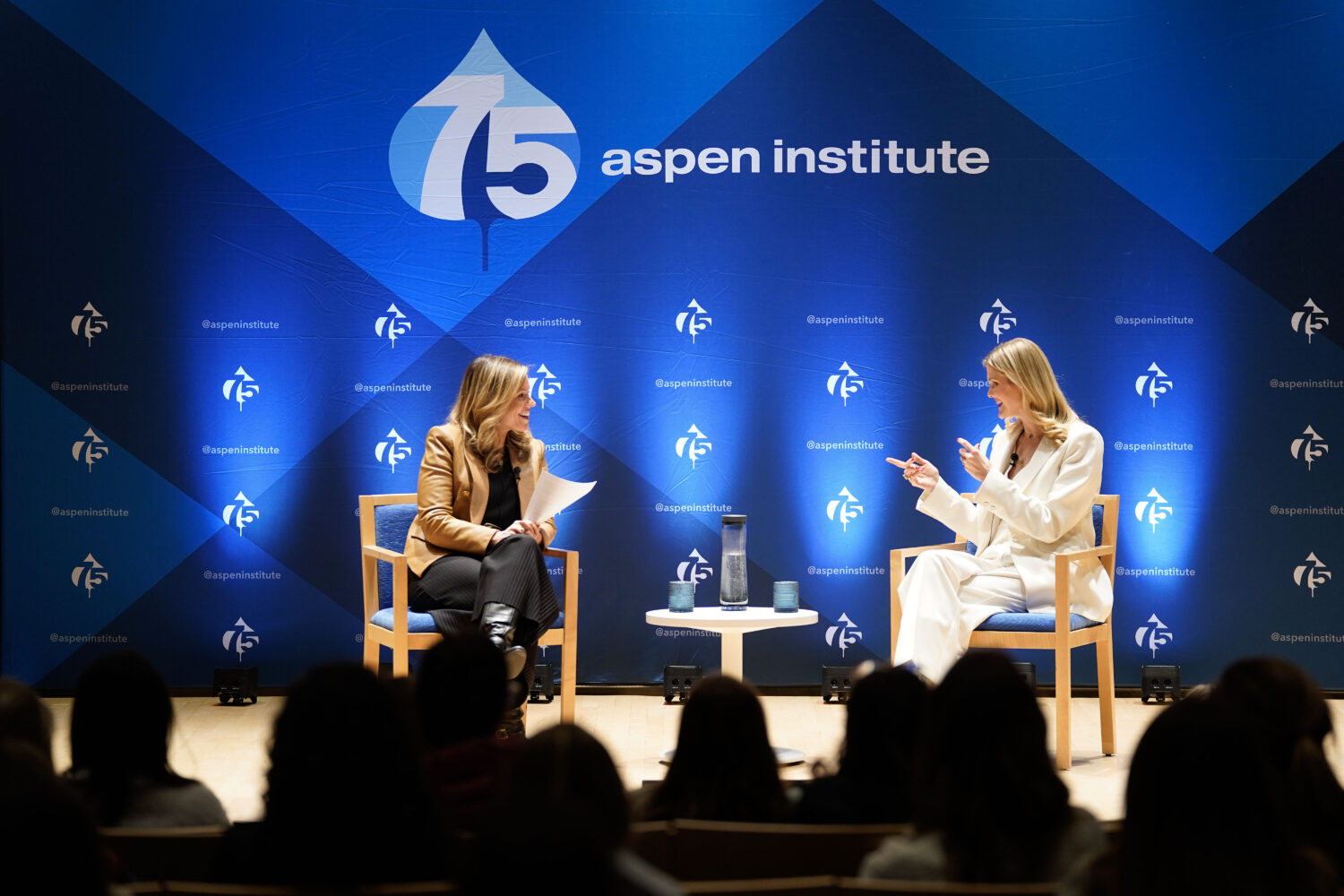
Lessons from the 2025 Trust in Practice Summit
Practicing Trust, Building Change

Olajumoke Banjo
Senior Director, Alliance for Social Trust
In May 2025, the Alliance for Social Trust—an initiative of the Aspen Institute and Allstate—brought together over 200 national and local leaders for a two-day convening grounded in collaboration, reflection, and a shared commitment to building trust.
In a time marked by division and disconnection, the Summit was hopeful, honest, and centered the experiences of those doing the work on the frontlines of their communities. But we did not just talk about trust—we actively engaged in its practice, through dialogue, learning, listening, problem-solving, and reimagining what’s possible when we collaborate across differences. It was a space filled with joy, hope, resilience, and the tireless energy of people who continue to show up and do the work, those who have a bias for doing. The Summit reminded us that trust isn’t just a goal—it’s a practice. And it’s one we must commit to, over and over again.
Trust in Practice Summit Purpose
The Summit was born out of a recognition that collaboration is integral to building trust and that trust remains the bedrock of lasting change. According to findings from a most recent Pew Research Center survey, “overall levels of social trust…go hand in hand with many features of a healthy society, creating a ‘virtuous circle.’”
Recognizing that, our goal was simple to bring together people who are not only thinking about trust but actively working to build and restore it. Leaders from government, philanthropy, community organizations, academia, corporate and beyond joined to share insights, challenges, and strategies. We bridged silos across institutions and sectors, elevated community-rooted innovation, translated research into practice, and built a shared identity among those advancing trust.
The Trust in Practice Summit was designed to advance the Alliance for Social Trust’s first strategic goal: to align and strengthen the diverse players in the trust-building field by fostering collaboration and cohesion among community leaders, organizations, and institutions—thereby building a unified front capable of driving long-term, systemic change.
Trust in Practice Summit Highlights
The Summit featured over 30 dynamic speakers and a lineup of sessions designed to explore the multifaceted nature of social trust and inspire action across sectors. Jenn White of 1A served as the emcee, weaving together the day’s narratives and keeping the audience engaged throughout the event. From lightning talks by trailblazing social innovators like Orlando Bailey of Outlier Media or Arica Gonzalez of The Urban Oasis, to a reveal of new findings on the state of social trust in America from Pew Research Center, the presentations and conversations were both data-driven and deeply rooted in lived experience.
A fireside chat connected insights to practical trust-building efforts on the ground, while a panel on cross-sector partnerships featuring Vilas Dhar, President, The Patrick J. McGovern Foundation, Charlie Brown, Executive Director, Trust for Civic Life, Sixto Cancel, Founder & CEO, Think Of US and Orriel Richardson, Head of Policy & Advocacy, Morgan Health, JPMorgan Chase unpacked the challenges and successes of collaborative work to build lasting relationships within and between communities. Interactive roundtable discussions allowed participants to break down organizational silos and co-create concrete roadmaps for collective action—laying the groundwork for stronger, more unified trust-building efforts at every level.
The Summit built on the foundation of a pre-meeting the day prior, designed exclusively for practitioners, featuring social innovators like Asiaha Butler, CEO of Resident Association of Greater Englewood and Janice Ikeda, Executive Director of Vibrant Hawai’, as well as national leaders like Brian Hooks, Chairman and CEO of Stand Together and Frederick Riley, Executive Director of Weave: The Social Fabric Project who shared stories, lessons, and insights from their work with communities across the United States.
Trust in Practice Summit Learnings
The insights shared during the Summit extended beyond formal sessions. The Summit’s energy and learnings also came from informal conversations, breakout sessions, and moments of reflection. Here are some of the most resonant lessons we’re carrying forward:
- Trust starts locally. Small, meaningful acts—like introducing yourself to a neighbor or offering help in a moment of need—are the building blocks of trust.
- Cross-sector partnerships are essential. Lasting change requires collaboration across institutions, sectors, and geographies. When we connect across boundaries, we create stronger, more resilient networks for trust-building.
- Trust takes time. This work doesn’t move fast. It requires deep presence, patience, and a commitment to the long haul.
- Trust gets built by doing things together. Agreements are good—but shared actions and collaborative efforts are better. Trust grows strongest when people work together toward a common goal.
- Asset-based approaches lead the way. The most effective trust-building efforts start from a place of strength—recognizing and amplifying what’s already working in communities, rather than focusing only on what’s broken.
- Listening is non-negotiable. We must remain grounded in dialogue—not assumptions. Building trust starts with hearing the voices of those closest to the challenges, listening to their assessment, needs and wants, and solutions.
- There is power in identity-building. More than just a convening, this Summit became a space to form a collective identity as trust-builders. A shared purpose emerged, reminding us that trust-building is not just a task—it’s a role and responsibility we carry.
- Trust-based work comes in many colors. Some of it is dialogue-based, some is activity-based. Some work may be labeled as local economic development work, others as civic engagement work, some efforts might be church-based, others based in libraries or schools. What they all have in common though, is that they build relationships rooted in trust, and lead to commitment and action to solve problems together.
- Shared resources are desired. Participants expressed a strong desire for tangible tools, shared frameworks, and ongoing resources to support their efforts.
- Longevity signals true commitment. Building trust with communities requires long-term investment, not short-term engagement. Relationships must extend beyond individual projects or funding cycles.
Outcomes and Next Steps
This Trust in Practice Summit was not an endpoint—it’s a beginning. Together, we crafted detailed roadmaps to guide ongoing, coordinated work—turning ideas into tangible action. We made connections that serve as seeds for future partnerships. We shared a sense of purpose that serves as the foundation for a movement. Moving forward, our next steps include:
- Development of strategic roadmaps to guide continued collaboration and implementation.
- Creation of a centralized toolkit with practical tools and resources.
- Formation of new cross-sector partnerships and working groups, seeded during the Summit.
- Expansion of local trust-building efforts, with a focus on relational and asset-based approaches.
- Ongoing investment in narrative change, to reframe public understanding of trust as a civic priority.
Conclusion
The Trust in Practice Summit affirmed a central truth: trust is both urgent and possible. Through deliberate collaboration, consistent action, and a shared vision, we can build and strengthen the social fabric of our communities.
The Alliance for Social Trust remains committed to leading and supporting this movement. We will continue to invest in the people, practices, and partnerships that build trust not only as a value—but as a way of working, leading, and living.
Sign up for our
Mailing List
Stay engaged with the Alliance for Social Trust and learn more about upcoming initiatives, resources, and opportunities to collaborate.
Standing in Hope and Gratitude: Leading With Vulnerability and Purpose
Bridging Divides with Humility: A Leadership Journey Rooted in Purpose

Young People Are Not Just the Future—They Are the Present
Turning Compassion Into Action: A Lifelong Fight to Protect Children
Dignity, Trust, and Legacy: What Aspen FSP’s Community Advisory Group Has Taught Me

A Blueprint for Action: Lessons from the National Strategy to Prevent Scams with Nick Bourke
What Did You Learn in 2025?