During his tenure as the California Secretary of Health and Human Services, Mike Wilkening cemented his reputation as a steady leader amid crisis. In 2017, when the Nuns Fire forced the evacuation of the Sonoma Developmental Center—a residential community for people with disabilities—he was on the frontlines, rolling oxygen canisters across a warehouse floor and onto trucks to be delivered to those who had been evacuated. Thanks to the state’s disaster response efforts and the round-the-clock care of facility staff, every resident survived and returned home when the fire retreated.
Whether fighting fires or working to connect people to critical governmental services, Mike’s work has followed a simple philosophy: government in service of its people. Now, Mike serves as an Aspen FSP Fellow within our Benefits Transformation Initiative portfolio. We sat down with Mike to learn more about his model of leadership, his experience in state and federal benefits administration, and the ways he is supporting current state benefit leaders through the Aspen Institute State Benefits Leadership Cohort.
Tell us about yourself. What drew you to a career in state government?
Fortunately, I had an opportunity to join state service immediately after grad school. Little did I know that it was exactly what I was looking for and that I had the heart of a public servant. I started at the California Department of Finance where the governor’s largest policy statement—the budget—is developed each year. My master’s degree is in political science, and finance is where the executive, legislative, and sometimes judicial branches all come together, along with external stakeholders and the press. What interested me about political science was inter-branch relationships, so it fit perfectly with what I liked about the field.
I worked in the Department of Finance for 13 years because I found that I could see all of state government from that one place. I could work within Health and Human Services (HHS), local government, education, and employee retirement and compensation issues. So I could bounce around, take those skill sets, and move to a different issue area, where I could apply what I learned to new policy and with new colleagues.
You have led both state and federal level efforts to improve benefits delivery, for both clients and administrative staff. To achieve that, much of your focus has been on the role of new technology. How did you come to focus on that intersection?
When I became undersecretary at California’s HHS, IT came under my supervision, and I decided, if I’m going to do this, then I’m going to do it differently. We were in the Great Recession at the time, and HHS was facing serious reductions across benefits programs. While working under limited resources certainly provides its challenges, I have found that if you’re creative it can also focus government on the issues that matter most in connecting people with benefits.
The secretary at the time had asked me, “What’s the cumulative impact here? How many families are we hitting two, three, four, or five times with these reductions?” The data systems weren’t set up that way, so I couldn’t actually answer that question. I put the people we serve at the forefront of what we do and, in doing so, realized that the systems in place were a barrier to achieving that aim. I knew action was needed to make big changes.
Around that time, I was introduced to Code for America, and they introduced me to agile and modular approaches. We were also getting into open data, so we created an innovation office and did data use agreements across the 12 departments so that we could start to figure out issues and see overlap across departments. That was fundamental: If you’re going to focus on the impact you have on people, that needs to be the focus of your data.
From California HHS, you went on to the Governor’s Office, and then moved to the federal government working with HHS and the Office of Management and Budget. There, you helped coalesce senior leaders at eight different federal agencies around a set of North Stars for the delivery of public benefits. Tell us more about that work.
We were taking much-needed steps to change the relationship between government and people, particularly through how services were delivered. Government cannot do it alone. In my experience, the biggest, most impactful changes are done through public-private partnerships. That means harnessing the expertise of vendors, philanthropic partnerships, academia, and the whole of government. It was a whole effort.
The goal of the North Stars was to help agencies align their efforts with the needs of the people they serve. I have had the good fortune to work with people who truly care about the people we strive to serve. That sense of service, whether you work for government, the private sector, or philanthropic organizations, can inspire a group to make big change. And believe me, you need inspiration, because much of the real work is a slog. You have to be relentless in your commitment. You need endurance for the long haul.
My advice: Never lose sight of the individual. Value people’s time and ensure your policies and programs have empathy for the lives that people lead. You’re meeting them where they are. What is it that they need in their lives? You build around that. And you should always think back to the impact the process of getting the benefit has on them, both positive and negative.
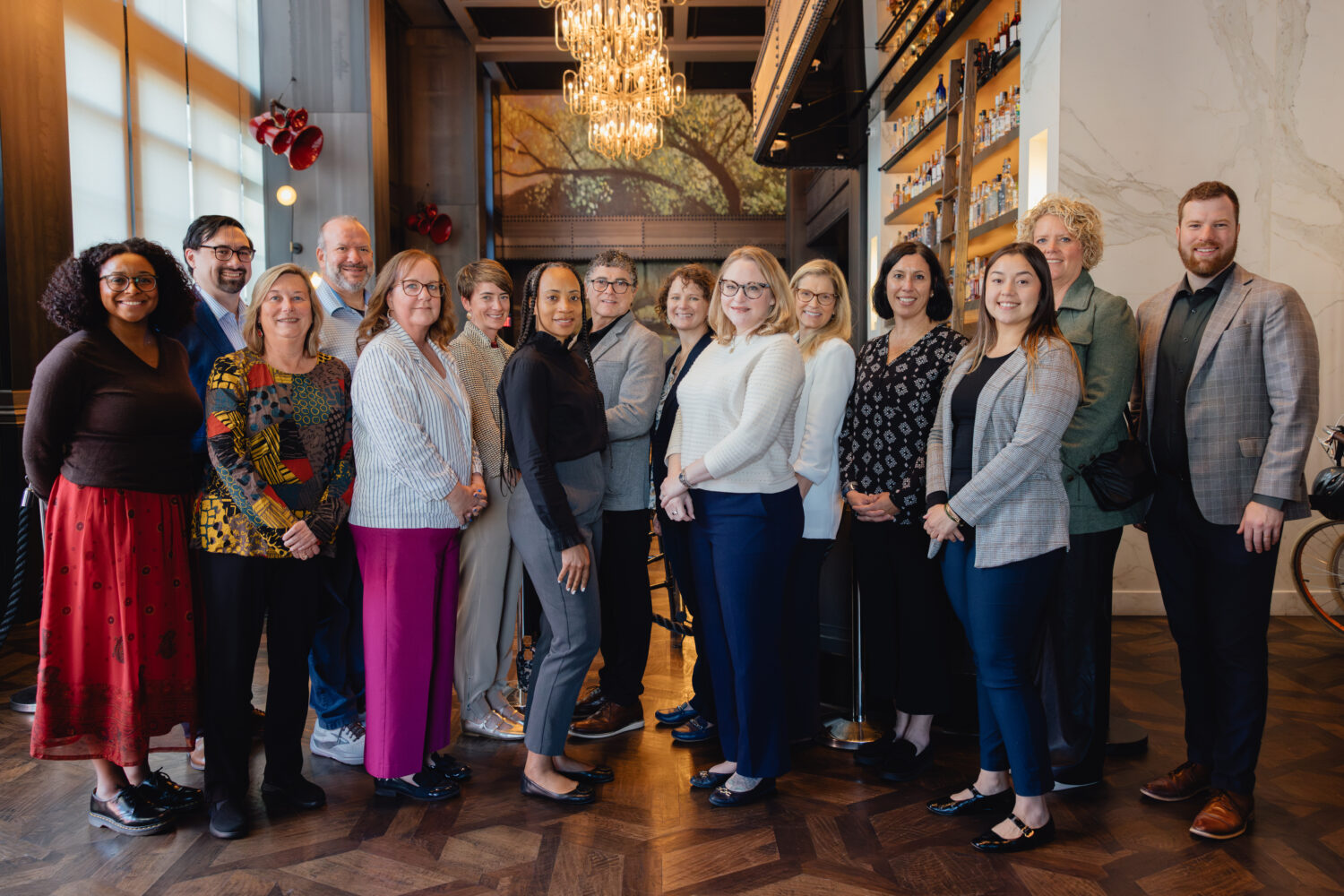
As an Aspen FSP Fellow, you have helped develop the Aspen Institute State Benefits Leadership Cohort. How did the Cohort come to be?
The Cohort really came out of a conversation that Tim [Shaw, director of the Benefits Transformation Initiative] and I had about the North Stars after we had gotten the sign-off from eight federal agencies. Tim asked, “So you got it signed, now what’s next?” The North Stars, by their nature, are vision statements. They’re just goals. The federal government wasn’t going to mandate them, and implementation is at the state and local level.
Tim and I talked about my service as Secretary of Health and Human Services for the State of California. In that role, you lead the shaping of health and human services policies that will touch 40 million lives. It is not just a job; there is a heft to it. It’s a responsibility, and it can be lonely. Setting the table for people in similar roles across the nation to converse and share ideas struck me as a noble effort.
In talking to Tim, we asked ourselves, “How do we bring thought leaders across states together?” We came up with the idea of creating the Cohort—a space where we can build relationships between state leaders, giving them a space to talk not only about the successes but the failures. The challenge with being a leader in government is that you don’t always have the opportunity to acknowledge that you didn’t get it right the first time and that there may be opportunities for improvement. There can be political sensitivities in doing so. This Cohort allows the space to have these conversations and to learn from each other. These are complex systems and if you do this work at these levels, you really are part of an exclusive club in this country. You need allies. You need to learn from each other to really accomplish big things.
“Setting the table for people in similar roles across the nation to converse and share ideas struck me as a noble effort.”
This space—this Cohort—is for leaders to organically share ideas, experiences, and insights. It’s a safe space where no one’s going to run out and put this in the press. You can talk about times when things didn’t work the way you intended, what you learned from it, and how it led to your next success. When I was Secretary, I was fine with making mistakes—everyone makes mistakes—but I’d much rather make new ones. I don’t want to make your mistake. You already made the mistake, so tell me what it was so I can learn from that, and as a group, we can move forward. My hope is that in sharing our experiences it streamlines our collective path.
The Cohort offers a space not just for information sharing and problem solving but for reflection. Why is it important for state benefits leaders to have a space for reflection?
Setting the table for true partnership is in my view one of the greatest benefits of the Cohort. Having a space for self-reflection allows us to think about ourselves as leaders and our strategic vision. If you’re anything like me, self-reflection is critical to understanding the “why” behind our actions and strategies. It’s about having the partners to really help you think through and know that you’re not alone in this, that other leaders are struggling with the same things. In all likelihood, the leaders before us struggled with some of the same challenges. How do we break that cycle? Before you know it, we will be handing off this responsibility to the next generation of leaders. Let’s hope that our efforts pave the way, and while they’ll certainly have challenges, let’s hope that they’re not the same challenges.
“These are complex systems and if you do this work at these levels, you really are part of an exclusive club in this country. You need allies. You need to learn from each other to really accomplish big things.”
Leadership positions are tough. If you’re not purposeful, your day can just be all tactical. Actually finding the time, the space, and the right headspace to really think strategically about what you want for this organization and the people of this state is key. What are you trying to do as a leader?
How have the North Stars and the Cohort changed the way states deliver benefits?
It’s exciting to see how states are modernizing their relationships with the public. We’re seeing technology solutions that go far beyond what I certainly would have imagined when I entered the workforce. More and more we see digital service shops established as a core function of the benefit services programs across the nation. The question now is: How do you scale? And how do you actually change the way the government does its business? How do you change how it interacts with people?
Policy leaders are increasingly recognizing the vital role technology plays in providing benefits to people and simplifying the work of caseworkers. The emergence of AI has heightened this awareness and the criticality of addressing technology’s role. Capacity alone is not sufficient. You have to have somebody who recognizes that not investing in technology is a problem. So, you need risk-takers. You can mitigate some of that risk by showing that this is possible and that it’s being done in other places. That’s part of what the Cohort does—it helps to pool the risk. You diminish the risk by saying that you’re either doing it with partners or you’re following in the footsteps of something that’s been done before.
There’s also an inspirational aspect of showing people what another state is doing. Through this model, Cohort members can talk about delivery and technology, how to build capacity, and how to forge partnerships with third parties. I really am a firm believer that you have to develop an ecosystem. There really has to be that blending of the public and private sectors. But somebody in the public sector needs to lead that. It has to be around a purpose, and that purpose should be defined by the public sector.
What are you most looking forward to doing as an Aspen FSP Fellow? What are your hopes for the Cohort going forward?
Most of us are here because we want to be in service to others. We have dedicated our lives to public service, and I think that is a noble pursuit. Doing good for other people. It’s that simple. As for me, when I left my government positions, I worried that I would lose that sense of service, and my work would have less meaning. Not the case. The work we do in this Cohort—bringing together others with that same sense of service, to tackle some of the largest challenges facing our nation’s public benefit system—this is public service. If you’re like me, it recharges your battery and inspires you to keep doing this work.

A Persistent Challenge: How Financial Shocks Continue to Undermine Family Financial Security

Beyond Income: Worker Financial Security and the Role of Benefits Inside and Outside of the Workplace

Video: We Don’t Have to Choose Between Financial Stability and Wealth


How Work and Savings Penalties Block Financial Security and Economic Mobility

Learning from Young Adults to Improve Public Benefits for All
How the National Strategy for Financial Inclusion Can Scale Emergency Savings