Taking the scary out of a neighborhood
Subscribe to Weave’s Newsletter
This story was originally published on Weave’s newsletter. Every week, you’ll get resources on how to weave our communities and restore social trust.
In 2014, after a string of violent incidents with guns hit Rainier Beach, WA, parents were scared to have their kids trick-or-treating on Halloween. That year, the neighborhood felt like the wrong kind of spooky.
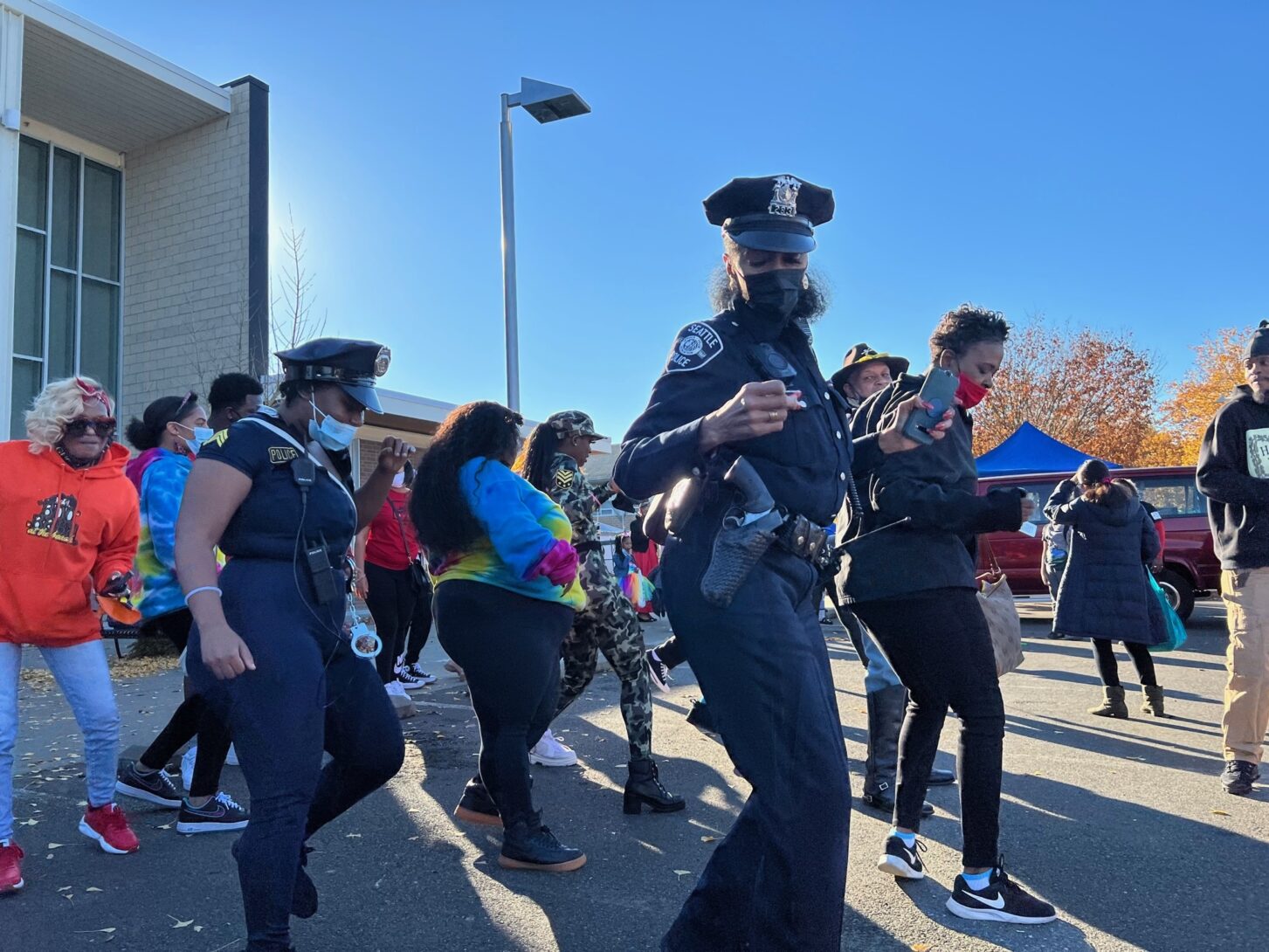
Cindy Laws knew her community had the strength to turn things around. She and neighbors organized the “Boo Bash” for folks to have a safe space where kids could trick-or-treat. They chose the very parking lot of a Safeway grocery store that had been the scene of gun violence because they wanted to reclaim the space and turn pain into joy.
It was a success and became a yearly tradition as more and more neighbors joined in. Danielle Jackson, who leads a local community-building organization called CHAMPS, says, “It’s easy to fall in love with this neighborhood. No matter where you look, you’re going to see a mountain, the beach, or a park. It’s absolutely beautiful.”
In 2019, she started leading Boo Bash to undo the reputation of Rainier Beach as an unsafe neighborhood and instead showcase the beauty and pride of the community. “A lot of people talk about crime here, but our neighborhood today is rated at a B+ by Niche, which is amazing. It’s because of the efforts put on by the community.”
Today, the Boo Bash hosts 4,000 folks coming even from outside Seattle. “The whole neighborhood shows up to welcome people from all over, from as far as Bellevue and Snoqualmie,” says Jackson.
The volunteer-run event pulls out all the stops. Aside from traditional Halloween fare – like candy and costume contests – there are bouncy houses, food carts, face painting, falconers, horseback riding, magic shows, and a balloon artist. “We do this so that neighbors can connect with each other and build the neighborhood that they want to see.”
“City, state, and county officials are here and they are so intentional in building relationships with the neighbors and hearing from them about what is going on and what it is they need,” says Jackson.
Jackson says that running an event of this size and depth is only possible because they’ve built trust and relationships in the community. Her organization, CHAMPS, organizes all sorts of initiatives to bring folks together, including community gardens, trash pickups, and block parties. They also coordinate with the city officials to address community needs, from requesting a speed bump to building a skate park.
Those relationships have paid off. The main sponsor of Boo Bash, now renamed Harvest Fest, is the city of Seattle, who sees the event as a critical venue to meaningfully connect and listen to neighbors. Jackson says, “This event is possible because we are consistent in creating space for people to know each other. It’s about community and connection” – with candy, food, and entertainment thrown in for good measure.
Standing in Hope and Gratitude: Leading With Vulnerability and Purpose
Bridging Divides with Humility: A Leadership Journey Rooted in Purpose

Young People Are Not Just the Future—They Are the Present
Turning Compassion Into Action: A Lifelong Fight to Protect Children
Dignity, Trust, and Legacy: What Aspen FSP’s Community Advisory Group Has Taught Me
A Blueprint for Action: Lessons from the National Strategy to Prevent Scams with Nick Bourke
What Did You Learn in 2025?