Weaving from scratch – with soup
Subscribe to Our Newsletter
This story was originally published on Weave’s newsletter. Every week, you’ll get resources on how to weave our communities and restore social trust.
In the fall of 2023, Chris Hyde had a lot of veggies left over from his garden in Olympia, WA. He gave vegetables away to neighbors and friends, and still had more than he could store or eat.
He was lonely and thought it could be a good way to connect with others. “I sort of had this epiphany that making soup for my community would somehow improve the world,” he says. He created a Facebook group and called it “Souper Sunday” and invited folks over for soup. But no one came.
Maybe they were shy after COVID-19, or maybe from the political divisions roiling the country. “People were really divided and isolated,” says Hyde. Yet he wasn’t deterred.
He started packing soup into containers and inviting people to take whatever they wanted. “At first, only a few people came out. But every week it grew. I soon had 20, 40, 80 people come.” He kept cooking every week and well after the harvest with supplies he bought or was given.
People talked about Souper Sunday with their friends and on social media and it caught the attention of local and national media. Soon, folks from all over the city and the country started reaching out to Hyde to start their own Souper Sundays. The Facebook group grew to over 4,000 members. People started making and sharing soup in their own neighborhoods. Some ate it in groups, others gave it away.
One neighbor posted on Facebook, “I’m not naturally outgoing, and forming a sense of community has never come easily to me. When I moved here in 2022, I didn’t know a soul. But Chris’s group became my first real feeling of Olympia as my place—my home.”
“We now have five of what we call the Soup Loop Groups where folks get together, invite their friends, and make soup once a month,” says Hyde. “It’s a very joyful time and they’ve built deep friendships.” People even deliver the soup to neighbors with mobility issues or who might be experiencing mental health issues.
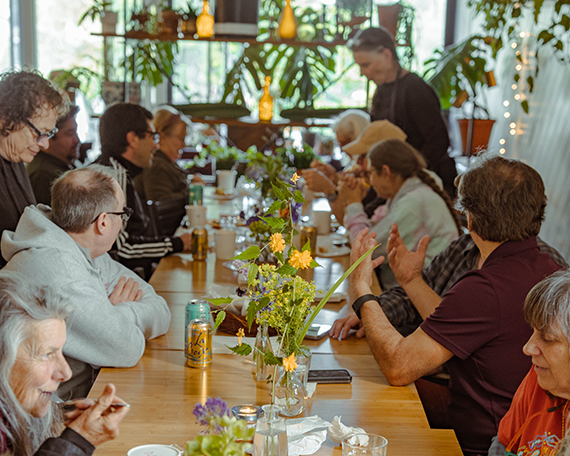
Hyde decided to start organizing pay-what-you-can dinners for folks to connect in person and raise funds for Souper groups. At the first one, 110 people showed up. “We had a long table in the center for folks to share a meal and a conversation, and some ancillary tables for those who don’t like crowds,” he says.
“People stayed for hours, eating, chatting, making new friends, and exchanging numbers. It really got to the soul of why this group was developed.”
Hyde’s story holds two lessons. First, it doesn’t take much to start weaving. Second, people are hungry for connection. You can see the local TV story on him here and check out the Souper Sunday Facebook group. It’s been 18 months since he cooked that first big batch of soup and had his epiphany about making the world a better place by doing it.

Fellows On Fellows: Leading with Purpose in the Public Eye

Standing in Hope and Gratitude: Leading With Vulnerability and Purpose

Bridging Divides with Humility: A Leadership Journey Rooted in Purpose

Young People Are Not Just the Future—They Are the Present
Turning Compassion Into Action: A Lifelong Fight to Protect Children
Dignity, Trust, and Legacy: What Aspen FSP’s Community Advisory Group Has Taught Me

A Blueprint for Action: Lessons from the National Strategy to Prevent Scams with Nick Bourke