Weaving the unseen into our communities
Subscribe to Weave’s Newsletter
A weekly resource on how to weave our communities and restore social trust.
Too often, people walk by those living on the streets without a glance, a greeting, or a smile. Many of the homeless live in public, yet feel unseen and unwanted. Jaime Encinas with the First United Methodist Church of Boulder, CO, is helping to change that.
The church started by hiring Nesti Castillo and Travis Hale-Kesler as “Illuminators” – unhoused folks tasked with spending time with others living on the streets of Boulder and unearthing their gifts, talents, dreams and passions. Then, the Illuminators work with a team of volunteers to connect these folks to one another and the broader community.
Castillo knows what it means to live on the street and feel unseen and unwanted. She has had periods without a home since she was a teenager. She has dealt with addiction and some bad luck, like an accident that ended her military career. Yet when she moved with her husband to Boulder, she found what she calls “doorways to something better.”
“I love to open these doorways because they bring new life, new journeys, new excitements, and new scares.” These doorways opened, she says, because people welcomed and loved her and her husband just the way they are.
Illuminators like Castillo serve as bridges for the unhoused, explains Encinas. They make those on the streets feel seen and known. The church has since expanded the program and hired a total of five Illuminators in the last year. They have cooked at a monthly dinner at the church where congregants and the unhoused can meet and talk.
They have worked with libraries to set up and sit at Sanctuary Benches outside, where they offer conversation and friendship to those who feel lonely. “They sit with people who’ve had a bad day and they are not there to fix or solve problems, they are there to just be together with them,” says Encinas
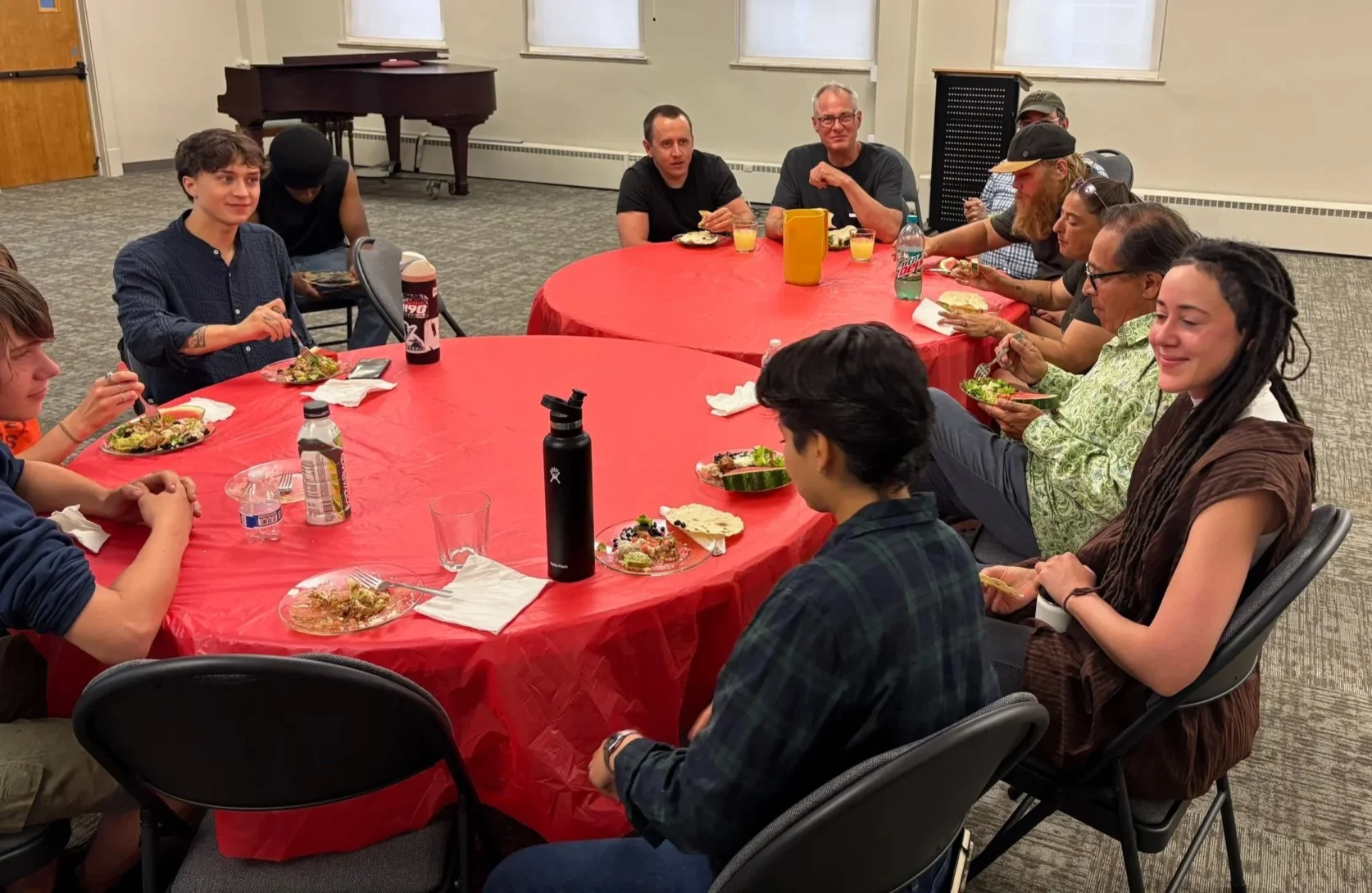
The Illuminators create opportunities for the broader community to meet and connect with the unhoused and address shared needs. Last Juneteenth, Gabriel Aarnes, an illuminator, held a listen-and-learn meal and conversation with students, academics, nonprofit executives, and several unhoused.
Mike Mathers, the Pastor at the church who attended one of these gatherings, wrote of the profound sense of belonging he felt during the session. “There was laughter and the quiet rumble of conversation. As a group, we told stories, of gifts and struggles, of hopes and torment. Dividing into smaller groups, we heard more intense storytelling. In the one I was in, people listened to one another, seeking for healing, for feelings of respect and indignation. There was anger and there was love.”
When one of Castillo’s campmates was stabbed, the Illuminators brought folks together to discuss citizen safety. It was attended by neighbors, the unhoused, and the former Chief of Police of Longmont, CO. People shared their experiences and spoke to their distrust of the police, and how to come together as a community and build trust by seeing each other’s humanity.
The Illuminator project is less than a year old, but has paved a path toward a more inclusive community, suggests Illuminator Gabriel Aarnes. “My hope is that through these types of gatherings we can look past the labels of ‘homeless’ or ‘housed’ and recognize the shared humanity in everyone we meet. When we do this, we open the door to genuine connection and compassion.”
Standing in Hope and Gratitude: Leading With Vulnerability and Purpose
Bridging Divides with Humility: A Leadership Journey Rooted in Purpose

Young People Are Not Just the Future—They Are the Present
Turning Compassion Into Action: A Lifelong Fight to Protect Children
Dignity, Trust, and Legacy: What Aspen FSP’s Community Advisory Group Has Taught Me


A Blueprint for Action: Lessons from the National Strategy to Prevent Scams with Nick Bourke
What Did You Learn in 2025?