
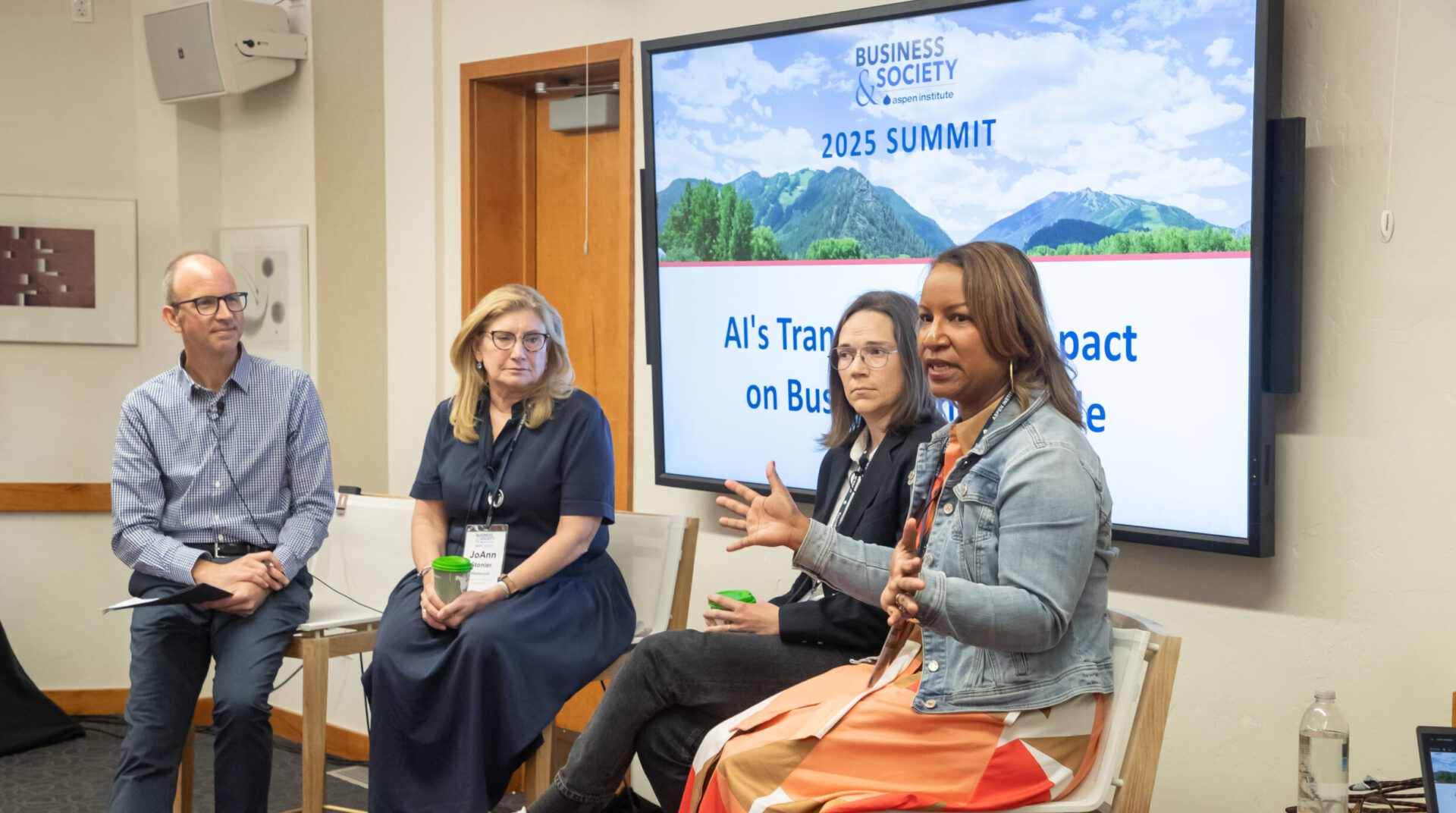

The 2025 Aspen Institute’s Business & Society Summit coincided with a moment of significant social change, when democratic norms, sustainability strategy, and technological adoption all demanded clearer commitments from business—and offered far less room for neutral ground. Across our conversations, a single theme emerged: leaders are being asked to make decisions under conditions of heightened scrutiny, political complexity, and accelerating change.
Three new Insight + Action summaries from the Aspen Business & Society Program examine how leaders are navigating these pressures, and what principles are guiding decision-making in three very different domains.
1. On Democracy: Silence Is a Decision
The democratic conditions business leaders once took for granted are shifting, drawing corporations more directly into political engagement. Legal retaliation, political polarization, and shifting expectations have complicated even basic civic engagement. Many sessions at the Summit explored the role business plays in America’s democracy, to address the emerging tension between business norms and the law, and the value of corporate voice in defending democracy.
That tension is already influencing board conversations, legal guidance, and internal communication strategies. When companies articulate and uphold democratic principles, they help strengthen the civic environment they depend on. When they abstain, they leave space for actors who may not share commitments to facts, pluralism, or rule of law.
2. On Sustainability: Strategy Matters More Than Slogans
Sustainability leaders now operate in a landscape shaped by regulatory flux, supply chain instability, and intensifying scrutiny from investors, employees, and policymakers. These intense pressures underscore the importance of key factors that sustainability leaders have emphasized in our dialogues for the last 10 years: materiality, performance, and long-term value creation.
To unlock the link between sustainability and the bottom line, leaders need to clarify which issues materially affect their operations and value chains, align incentives with long-term performance, and treat the supply chain as a central platform for resilience and innovation. Rather than relying on slogans or short-term signaling, these organizations are redesigning core processes so that sustainability and business performance reinforce each other.
3. On AI: Readiness Is the Real Reckoning
Artificial intelligence dominated executive agendas in 2025, yet many leaders expressed uncertainty about how to move from pressure to preparedness. Many companies have felt compelled to “do something” with AI before they had a strategy, governance model, or realistic understanding of the technology’s requirements and risks. Taking time to consider the unique context of their company, however, can reveal governance gaps—places where consequential decisions are being made without shared standards for risk, accountability, or disclosure. It also helps leaders assess the tradeoffs of early headcount reductions, which may undermine the very expertise required to guide and interpret AI systems over the long term.
AI’s impact on public trust in companies will depend on whether leaders can demonstrate that AI decisions reflect human judgment and clearly articulated values. If there is an AI reckoning ahead, it will center on readiness, not speed of adoption.
Looking Ahead to 2026
Across democracy, sustainability, and AI strategy, executives will continue to face complex choices in the months and years ahead. Companies must decide when and how to use their voice to uphold longstanding democratic norms, and how to credibly link sustainability to long-term business performance. On questions of AI adoption, leaders will confront hard decisions across governance, risk management, and workforce development as they take meaningful steps toward shaping the future economy.
The 2026 Aspen Business & Society Summit will take these questions head-on. We’ll gather a diverse group of leaders to spark honest, productive conversations about the challenges—and opportunities—we face on the road ahead.
If you’re interested in participating in the annual Summit, you can nominate yourself or others here.