Art as Leadership: Creativity at the Heart of Community Impact
Subscribe to Our Newsletter
Subscribe to stay connected with the Center for Rising Generations.
Kaya Henderson
Executive Vice President and Executive Director, Center for Rising Generations
As 2025 comes to a close, I keep returning to a powerful realization: young people are leading with creativity, and the rest of us are finally catching up.
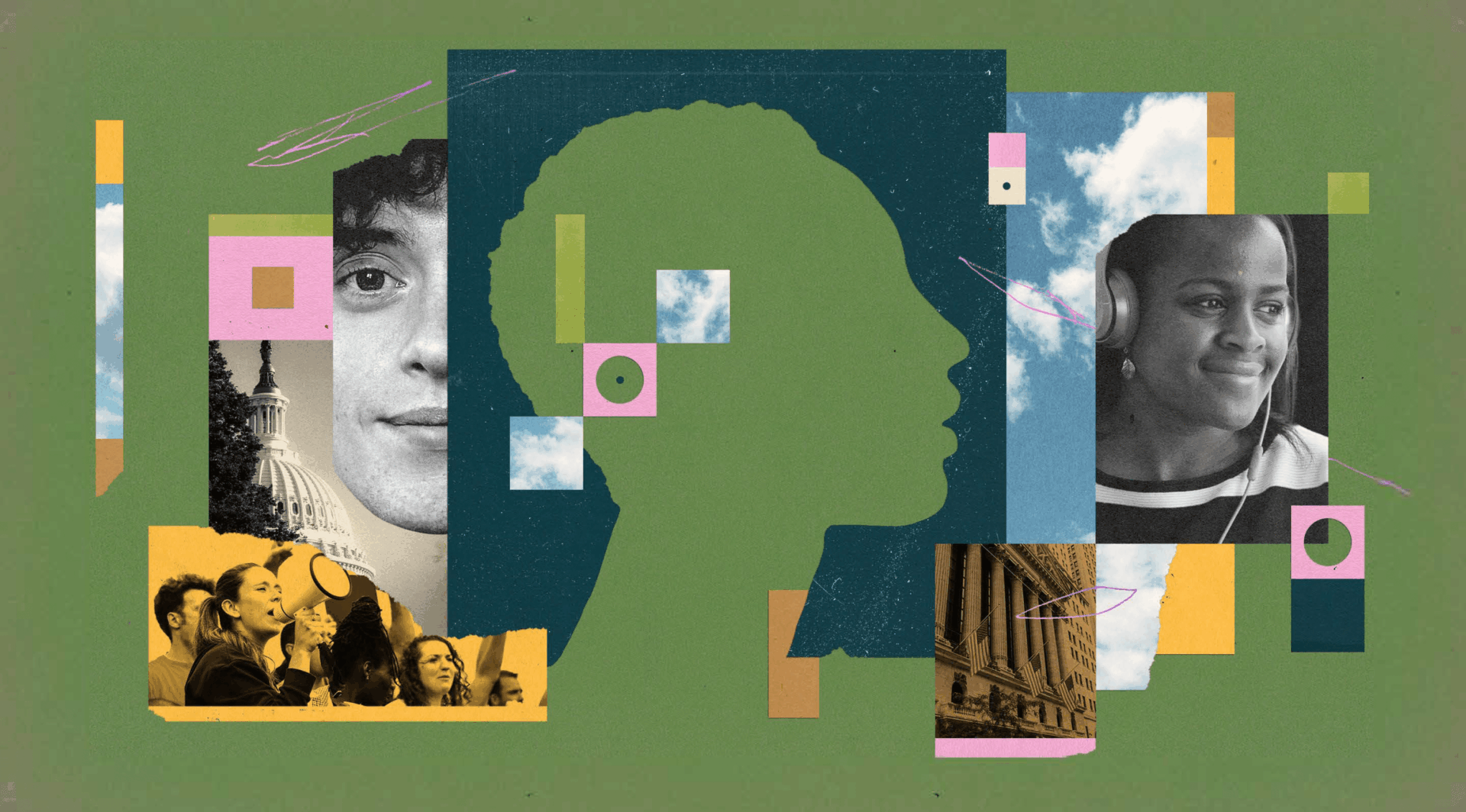
Across the county, young leaders are using art to build community and imagine futures that don’t yet exist. And through our work at CRG this year, including our Airplane Mode events, one thing became undeniable: Art isn’t the side dish to youth leadership. Art is leadership.
When young people create, they’re not “doing art projects.” They’re building public awareness. They’re shaping narratives. They’re shifting culture. They’re leading movements.
And 2025 reminded all of us that creativity is one of the most powerful tools young people have to make meaning, and make change.
Everywhere I go, I see young people using creativity to confront the urgent issues shaping their lives. They’re creating murals to grieve gun violence and spoken-word pieces about free speech and feeling silenced on campus. They’re writing songs about mental health and cost of living stress, producing short films about immigration and border stories, choreographing movement pieces that explore community safety, and designing zines about identity, belonging, and what it means to protect personal liberty in a digital age. I’ve met young people turning climate pragmatism into innovation challenges, blending entrepreneurship with art to tackle economic opportunity, and remixing history to question government overreach and redefine civic responsibility. On stages, in classrooms, online, and in community spaces, young people across the political spectrum are using creativity to make sense of their world, and to say, in their own ways, what matters to them, what scares them, and what they’re ready to champion.
Creativity gives them the language adults often struggle to find. It lets them speak freely, across identity, geography, and generation.
This fall, those truths came alive at Airplane Mode, CRG’s new third-space events where young people were invited to slow down, unplug, and listen differently. And what did they bring into the room?
Art. Everywhere.
Poetry circles. Live illustration and collaging. Collective storytelling. Creative reflections on topics that matter. Every gathering became a canvas. One that proved that when you create space for youth imagination, leadership pours in through every crack.
Airplane Mode wasn’t intentionally designed as an “arts event” but young people made it one because art and creative expression is how they lead.
CRG isn’t alone in this belief. Across the country, from major cities to small towns, extraordinary organizations are treating creative expression as civic power. They’re building ecosystems where young people’s artistry becomes community impact, identity-building, critical thinking, and leadership in real time. Here are just a few:
Youth Speaks (San Francisco, CA)
Where spoken word becomes action, healing, and civic imagination. These young poets use the stage to shape culture and community consciousness.
Appalshop’s Youth Media Program (Whitesburg, KY)
Young people use filmmaking, radio, and oral history to document local culture, mining towns, economic transition, and what opportunity looks like in rural America. Their work bridges tradition, identity, and community voice.
Mosaic Youth Theatre of Detroit (Detroit, MI)
Young actors reclaim the city’s stories and elevate Detroit’s legacy, showing what youth-led storytelling can mean for local pride and community resurgence.
Mural Arts Philadelphia Youth Program (Philadelphia, PA)
Young people turn neighborhood walls into public declarations of justice, belonging, and historical memory.
Youth Leadership Institute of Central Wisconsin (Wausau, WI)
Teens use photography and digital storytelling to explore themes like free expression, local economy, immigration, and public safety, often from a perspective rooted in Midwestern values and community interdependence.
Folger Shakespeare Library (Washington, D.C)
Through programs like The Next Chapter, students reimagine Shakespeare through spoken word, remix, movement, and personal storytelling, using classic texts to spark conversations about hope, fairness, power, and civic responsibility.
Indigenous Youth Arts Collective (Great Plains + Mountain West)
In tribal communities, young artists create beadwork, spoken word, dance, and film about land rights, belonging, language preservation, and identity. Their creative work connects ancestral knowledge with modern leadership.
Hamilton Education Program (National)
Inspired by the play Hamilton, students create original poems, raps, and monologues that reinterpret U.S. history, building civic knowledge, cultural ownership, and creative confidence.
Everywhere I go, I see young people using creativity to confront the urgent issues shaping their lives.
Kaya Henderson
What these organizations understand is simple: Art is youth civic participation. Art builds identity. Art strengthens the civic fabric. Art is leadership.
As we move into 2026, the call to action is clear:
- Fund youth arts as civic infrastructure. Not as after-school extras. As core leadership pathways.
- Build intergenerational creative rooms. Where adults don’t just mentor. They co-create, listen, and evolve.
- Protect creative spaces in marginalized communities. They are often the first to lose arts access and the last to receive investment.
- Let young people lead the storytelling. Give them the platforms. The budgets. The trust.
No knock on “arts and crafts” but this isn’t it. This is narrative power. This is community building. This is community power in motion.
This year, CRG witnessed creativity transform rooms, shift conversations, and build community in ways that no policy document or strategic plan could.
Through Airplane Mode and beyond, young people showed us that imagination is not a soft skill. It’s a leadership competency.
As we close 2025, I’m walking into 2026 with this conviction: If we want to build a future worthy of young people, we must build it with their art and creativity at the center.
In 2026, let’s honor that by resourcing it, elevating it, and following where it leads.
Standing in Hope and Gratitude: Leading With Vulnerability and Purpose
Bridging Divides with Humility: A Leadership Journey Rooted in Purpose

Young People Are Not Just the Future—They Are the Present
Turning Compassion Into Action: A Lifelong Fight to Protect Children
Dignity, Trust, and Legacy: What Aspen FSP’s Community Advisory Group Has Taught Me
A Blueprint for Action: Lessons from the National Strategy to Prevent Scams with Nick Bourke
What Did You Learn in 2025?