Not Just Tacos Here

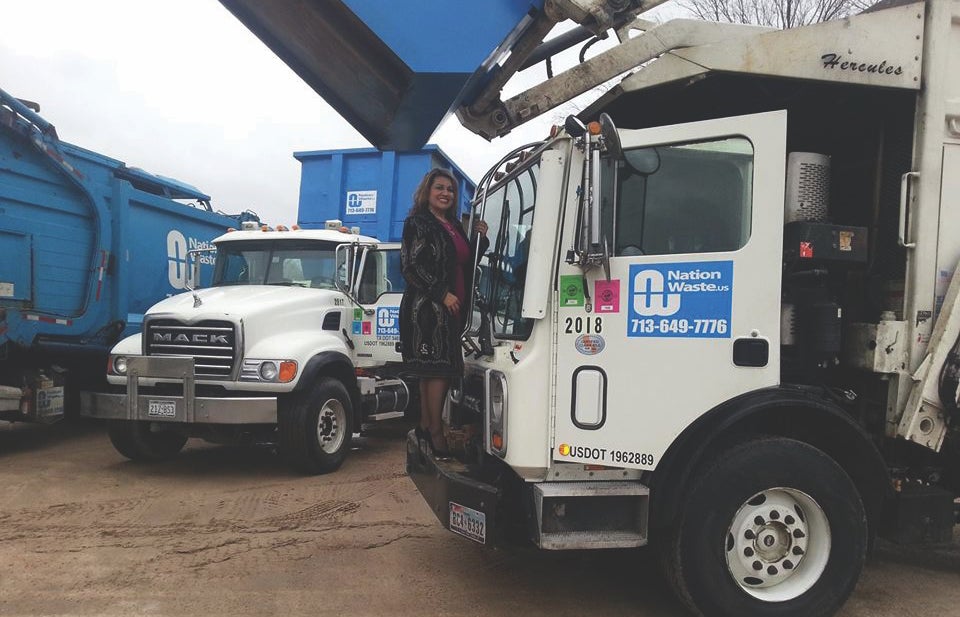
Nation Waste President and CEO Maria Rios

Maria Rios owns a thriving waste-management company: Nation Waste. Starting with a business plan, a bank loan, and a truck, she built a multimillion-dollar business from the garbage heap up. Rios’s road to the top hasn’t been without bumps though. She once walked onto a jobsite to pitch her business, only to be turned away; the superintendent said he didn’t need any tacos. Rios handed him her card and informed him his dumpsters were overflowing. A week later, she got a call, an apology, and a loyal client.

Rios’s experience illustrates how Latino Americans are challenged by stereotypes that make it difficult for them to grow businesses. And yet Latinos have started businesses at three times the rate of the general population, and the number of Latino-owned businesses has more than doubled over the last 13 years. If small businesses are the lifeblood of the US economy, Latinos are its heart.

Still, a majority of Latino businesses stay small. The unmet potential of Latino business growth leaves a lot of economic opportunity on the table. That’s why the Institute’s Latinos and Society Program examined why these businesses have trouble scaling up and growing. The program partnered with the Surdna Foundation and the Latino Business Action Network at Stanford University and met with a high-powered group of business leaders. The partners found a commonality among Latino businesses: for banks to see their obvious potential, they need to be recast from a deficit community to the asset community they are. That way more Marias (and Miguels) can keep the economy humming.

Longform Publications Section 4: Strengthening Practices to Improve Job Quality

Tools: Employee Ownership

View tools and resources related to employee ownership.

Blog Posts Job Quality Fellows Profile Series Longform

Centering Workers in Workforce Development

The Chicagoland Workforce Funder Alliance collaborates with employers and stakeholders to boost employment, earnings, and equity for local workers.

Blog Posts Job Quality Fellows Profile Series Longform

Lessons and Leadership To Foster Economic Justice for Illinois Workers

LEP trains workers to promote equity, enforce rights, build unions, develop leaders, ensure workplace safety, and advance economic justice.

Blog Posts Job Quality Fellows Profile Series Longform

Worker Owned and Worker Driven

While the rideshare apps have increased convenience, they’ve eroded job quality. See how the Drivers’ Cooperative is helping to end exploitative conditions.

Blog Posts Job Quality Fellows Profile Series Longform

Creating Employee-Owned Businesses That Provide Good Jobs and Succeed

Through employee ownership, The Industrial Commons is building a new Southern working class that erases the inequities of generational poverty.

Blog Posts Job Quality Fellows Profile Series Longform

Strengthening the Hidden Resilience Workforce

We see the effects of climate change, but we rarely see the people who help to rebuild — and they often lack safe conditions, decent pay, or benefits.

Blog Posts Job Quality Fellows Profile Series Longform

Advancing a Pro-Worker, Pro-Climate Agenda in Texas

The Texas Climate Jobs Project advances a pro-worker, pro-climate agenda — helping to solve the climate crisis while creating millions of good jobs.

Blog Posts Job Quality Fellows Profile Series Longform

Organizing and Coalition Building for Structural Change

LAANE, led by Job Quality Fellow Roxana Tynan, is fighting to build an economy rooted in good jobs, thriving communities, and a healthy environment.

Blog Posts Job Quality Fellows Profile Series Longform

Organizing Unemployed and Underemployed Workers

UWU, led by Job Quality Fellow Neidi Dominguez, engages unemployed/underemployed workers, a population that has not been mobilized at scale since the 1930s.

Blog Posts Longform

How Local Journalism Can Bring Communities Together

MIT Center for Constructive Communication Director Deb Roy explains how the caricatures Republicans and Democrats paint of each other diverge from reality, and the ways local newsrooms can leverage their “trust capital” and emerging technology to promote listening and understanding amid disagreement.