
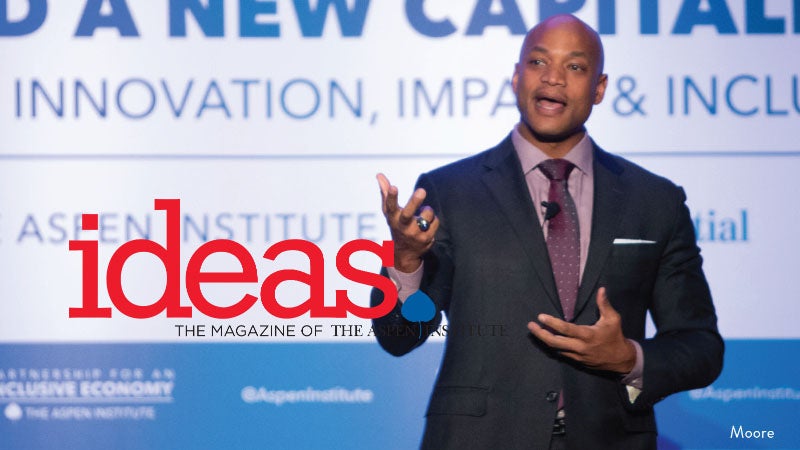
“The vast majority of Americans living in poverty are the working poor,” said Wes Moore, the CEO of the anti-poverty organization Robin Hood, to a packed room of leaders in finance, nonprofits, and social enterprise. “They are working not just one but, in many cases, multiple jobs. This is not just unsustainable—it’s immoral.” This set the tone for Toward a New Capitalism, a summit in Washington, DC, focused on impact investing and was co-hosted by the Institute and Prudential Financial. The event was the second major convening of the Aspen Partnership for an Inclusive Economy, a first-of-its kind, institute-wide initiative that unites changemakers with leaders from the public, private, and nonprofit sectors to drive greater economic security, opportunity, and resilience for all. The problem is real, said Institute CEO Dan Porterfield: “More than 50 million Americans live in or near financial crisis.” The good news is there was a shared belief that community-driven investment can make a real difference. Demonstrating this commitment, Prudential announced it had reached a significant milestone: a $1 billion impact portfolio that generates both a financial and a social return. Prudential Chairman and CEO Charles Lowrey believes those in his line of work have a “moral and a business imperative to engage on the most challenging issues of our time.” Panels tackled next-generation finance and, crucially, centering impact investing in communities. Done properly, that means recognizing the link between economic inequality and injustice. “When we get to the root of it, it’s structural racism,” said Andrea Chen, the executive director of Propeller, a New Orleans–based nonprofit that supports entrepreneurs. “If we don’t have a strong racial equity sense to our work, we’re actually working against ourselves.” Monika Mantilla of Small Business Community Capital reminded the room that minority communities “are actually probably the biggest force of economic creation, value, and development in this country.” Economic inequality remains a daunting challenge, but the forum’s audience left inspired to carry this momentum forward. As Moore said at the beginning, “We must ensure that these conversations become action plans, and those action plans become movements.” The Aspen Partnership for an Inclusive Economy was launched in partnership with the Mastercard Center for Inclusive Growth.
Toward a new Capitalism

Publications Section 4: Strengthening Practices to Improve Job Quality
Tools: Employee Ownership
View tools and resources related to employee ownership.

Job Quality Fellows Profile Series Longform
Centering Workers in Workforce Development
The Chicagoland Workforce Funder Alliance collaborates with employers and stakeholders to boost employment, earnings, and equity for local workers.

Job Quality Fellows Profile Series Longform
Lessons and Leadership To Foster Economic Justice for Illinois Workers
LEP trains workers to promote equity, enforce rights, build unions, develop leaders, ensure workplace safety, and advance economic justice.

Job Quality Fellows Profile Series Longform
Worker Owned and Worker Driven
While the rideshare apps have increased convenience, they’ve eroded job quality. See how the Drivers’ Cooperative is helping to end exploitative conditions.

Job Quality Fellows Profile Series Longform
Creating Employee-Owned Businesses That Provide Good Jobs and Succeed
Through employee ownership, The Industrial Commons is building a new Southern working class that erases the inequities of generational poverty.

Job Quality Fellows Profile Series Longform
Strengthening the Hidden Resilience Workforce
We see the effects of climate change, but we rarely see the people who help to rebuild — and they often lack safe conditions, decent pay, or benefits.

Job Quality Fellows Profile Series Longform
Advancing a Pro-Worker, Pro-Climate Agenda in Texas
The Texas Climate Jobs Project advances a pro-worker, pro-climate agenda — helping to solve the climate crisis while creating millions of good jobs.

Job Quality Fellows Profile Series Longform
Organizing and Coalition Building for Structural Change
LAANE, led by Job Quality Fellow Roxana Tynan, is fighting to build an economy rooted in good jobs, thriving communities, and a healthy environment.

Job Quality Fellows Profile Series Longform
Organizing Unemployed and Underemployed Workers
UWU, led by Job Quality Fellow Neidi Dominguez, engages unemployed/underemployed workers, a population that has not been mobilized at scale since the 1930s.
Longform
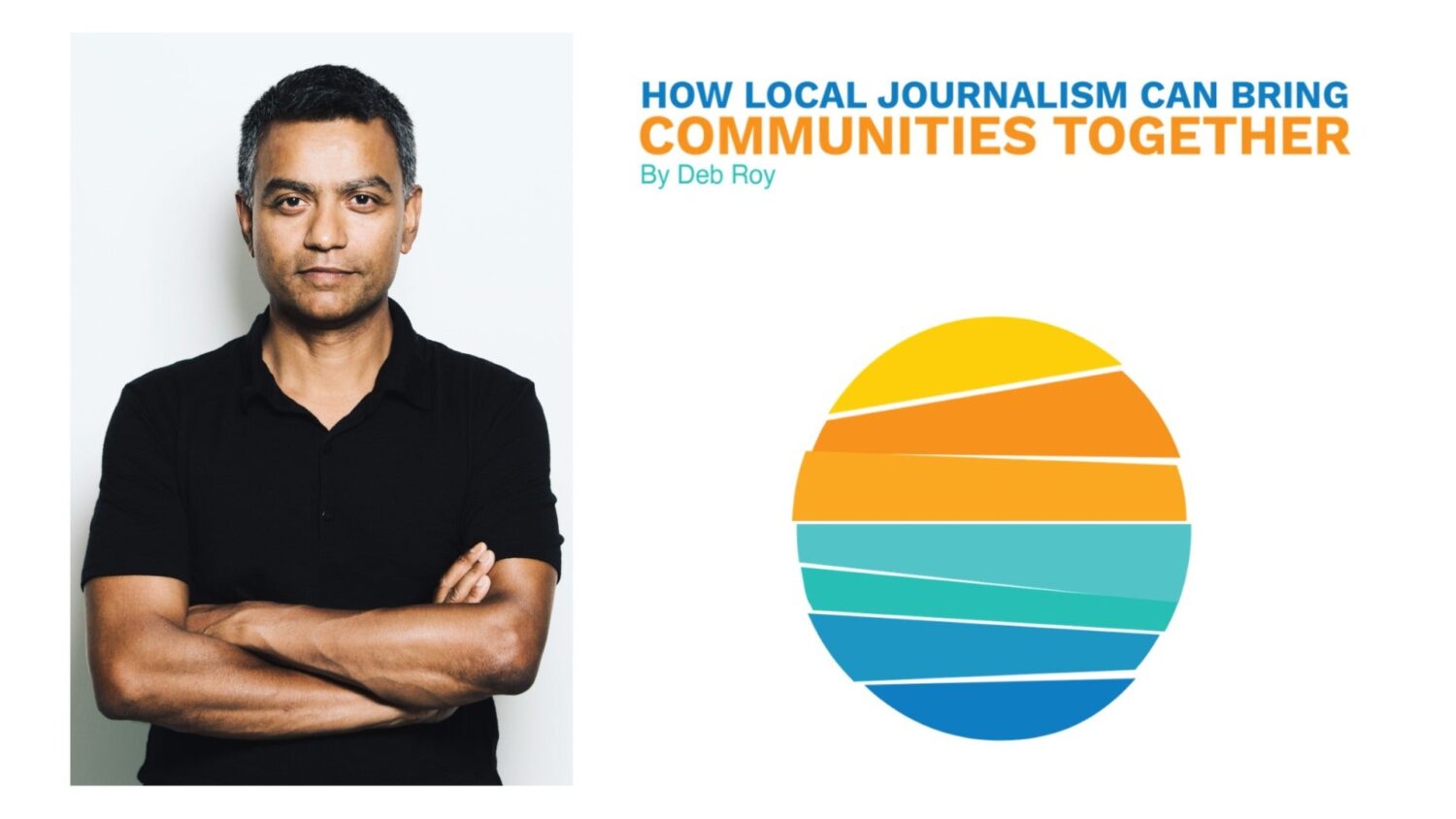
How Local Journalism Can Bring Communities Together
MIT Center for Constructive Communication Director Deb Roy explains how the caricatures Republicans and Democrats paint of each other diverge from reality, and the ways local newsrooms can leverage their “trust capital” and emerging technology to promote listening and understanding amid disagreement.