Aspen is a place for leaders to lift their sights above the possessions which possess them. To confront their own nature as human beings, to regain control over their own humanity by becoming more self-aware, more self-correcting, and hence more self-fulfilling.
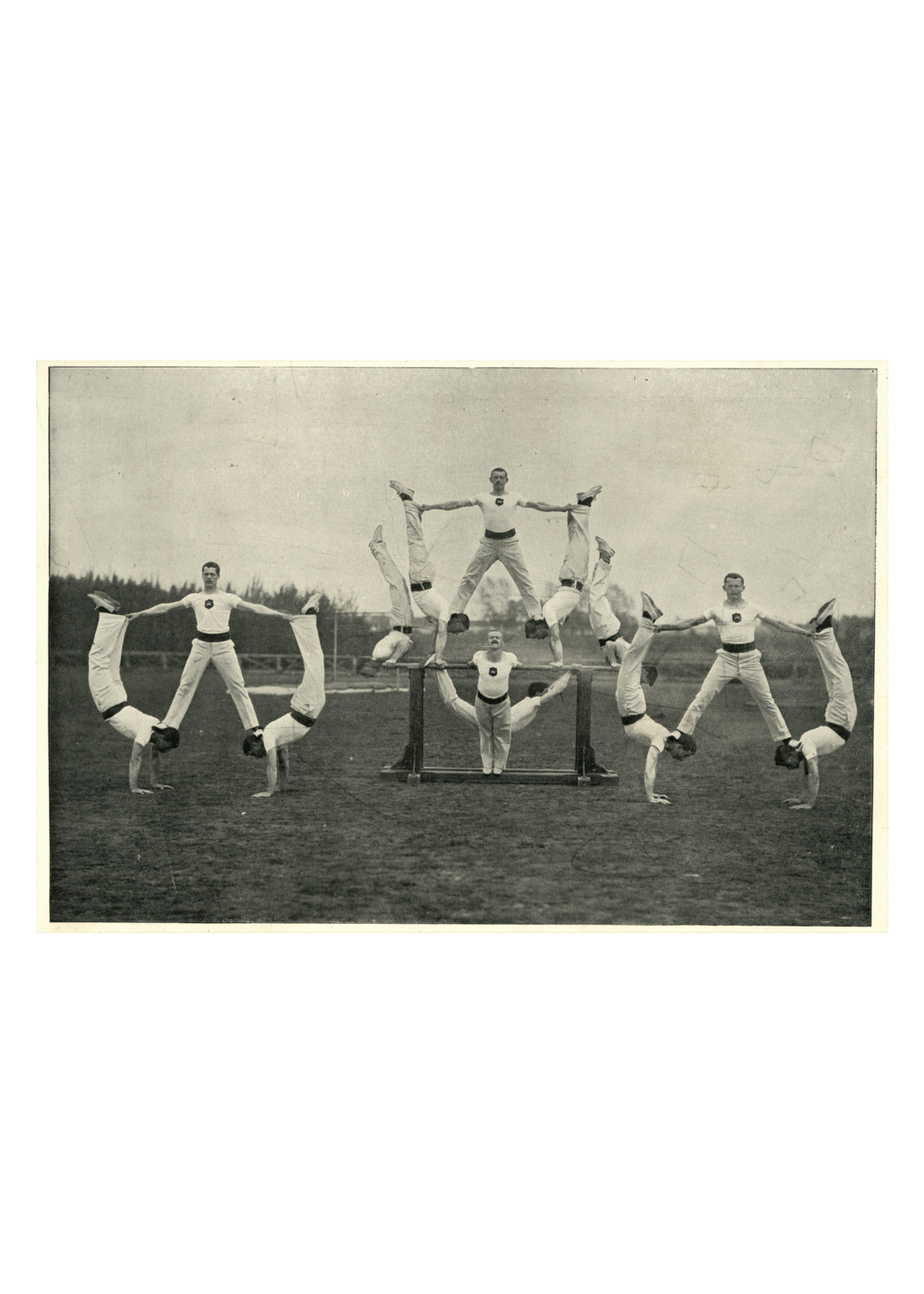
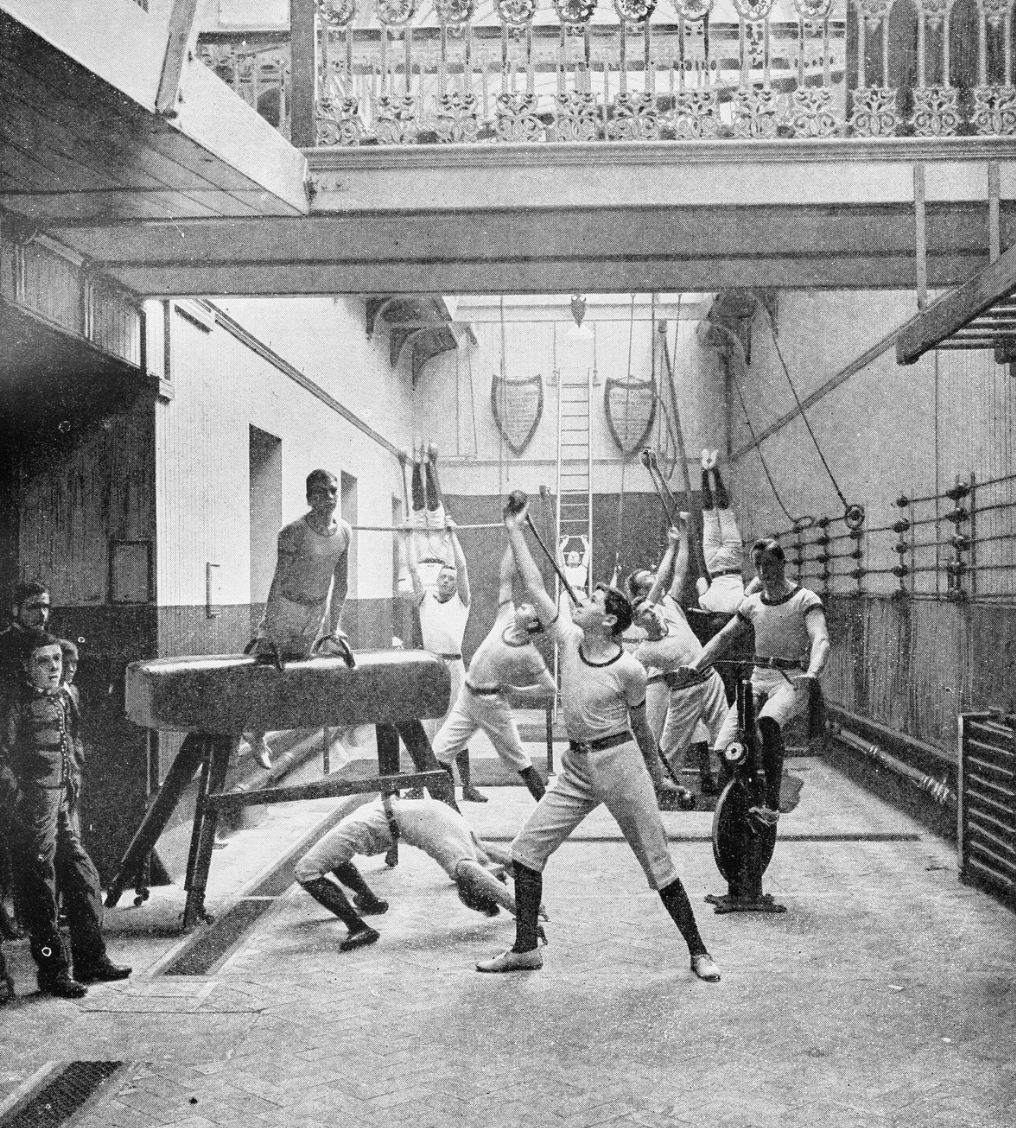
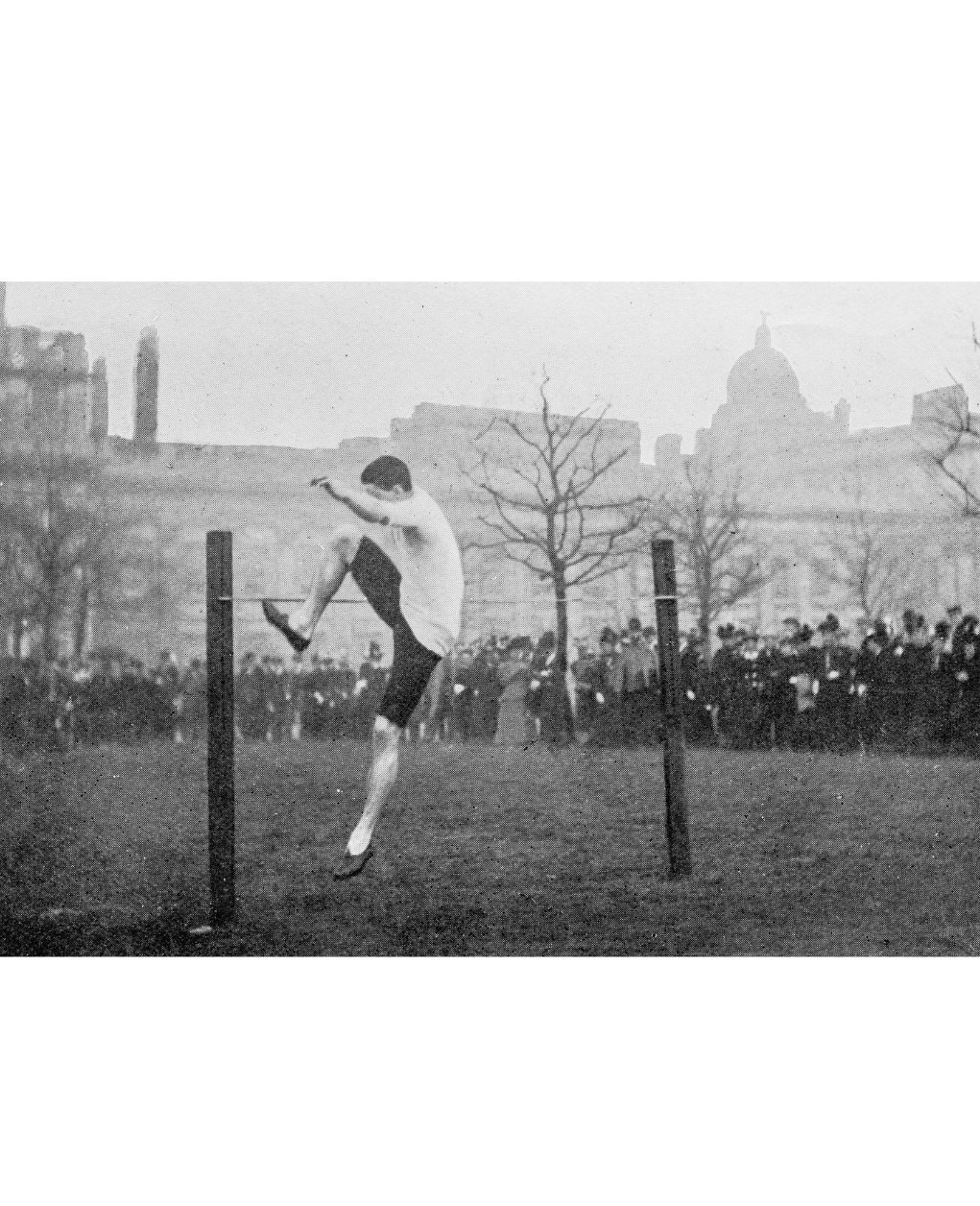
Why We Play is a groundbreaking conversation series anchored in a simple, powerful truth: that the games we play don’t just reflect modern life but in fact have shaped it, transforming an array of societal institutions since the 1890s when sport was introduced as a tool of nation-building in many countries.
Organized by the Aspen Institute’s Sports & Society Program in collaboration with the Los Angeles County Museum of Art (LACMA), we are convening athletes, artists, and authors in roundtables and other events to explore how sport has shaped our ideas about everything from competition and identity to community, civil rights, and politics.
Insights from these conversations, paired with selected artworks and supported by Manatt, Phelps & Phillips LLP, will shape a major LACMA exhibition presented ahead of and during the 2028 Olympic and Paralympic Games, along with a companion book.
In collaboration with:
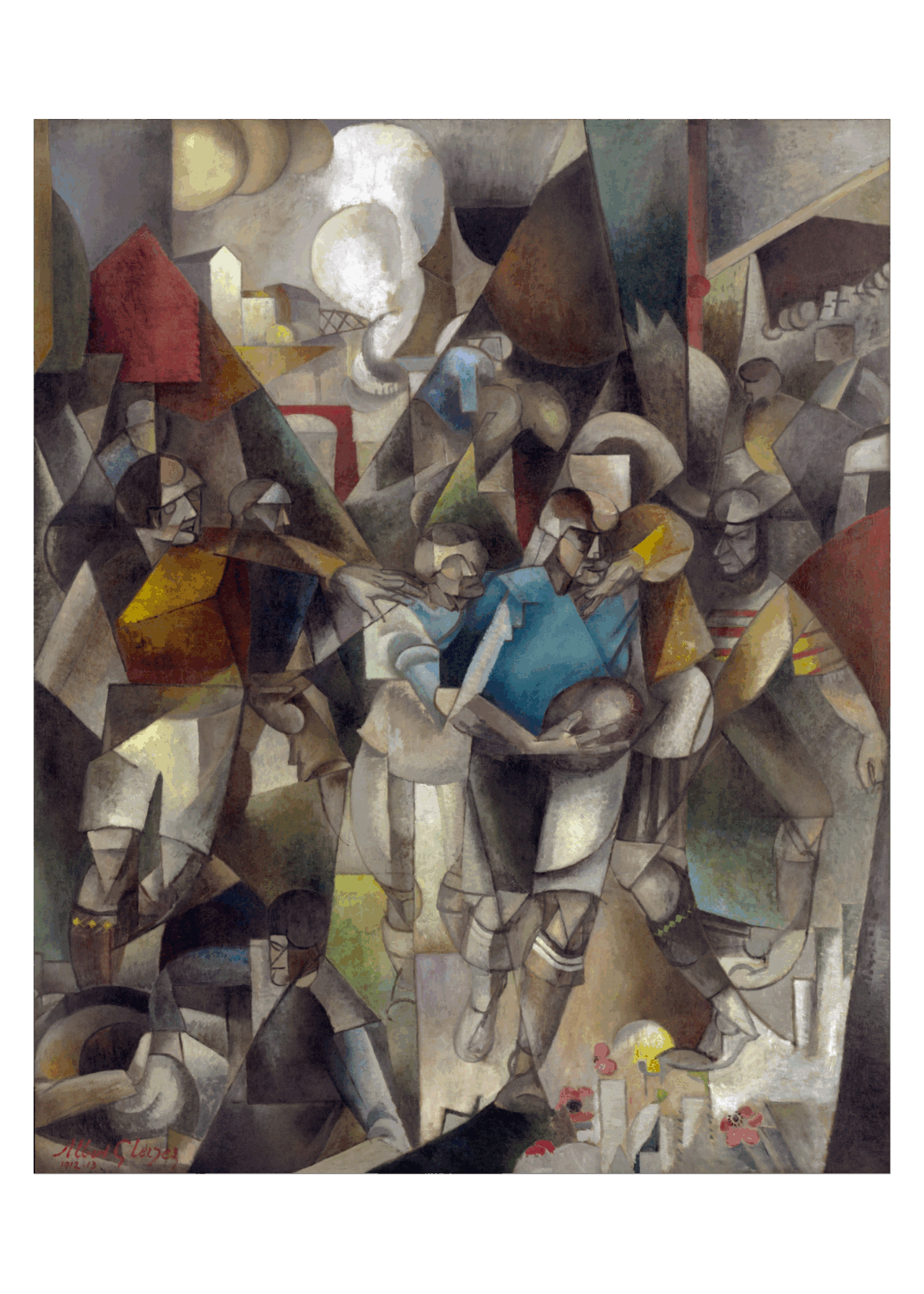
Image: Les Joueurs de football (Football Players), Albert Gleizes (1912-13)
Key Questions
The conversation series explores three themes that shape Why We Play today: Belonging, Freedom, and Power. Each event is co-moderated by Tom Farrey, executive director of Sports & Society, and Britt Salvesen, head of photography at LACMA, who also will serve as co-curators of the exhibition and co-editors of the book. In this section, you can watch videos, read pieces, and share your thoughts in response to key questions raised throughout the series.
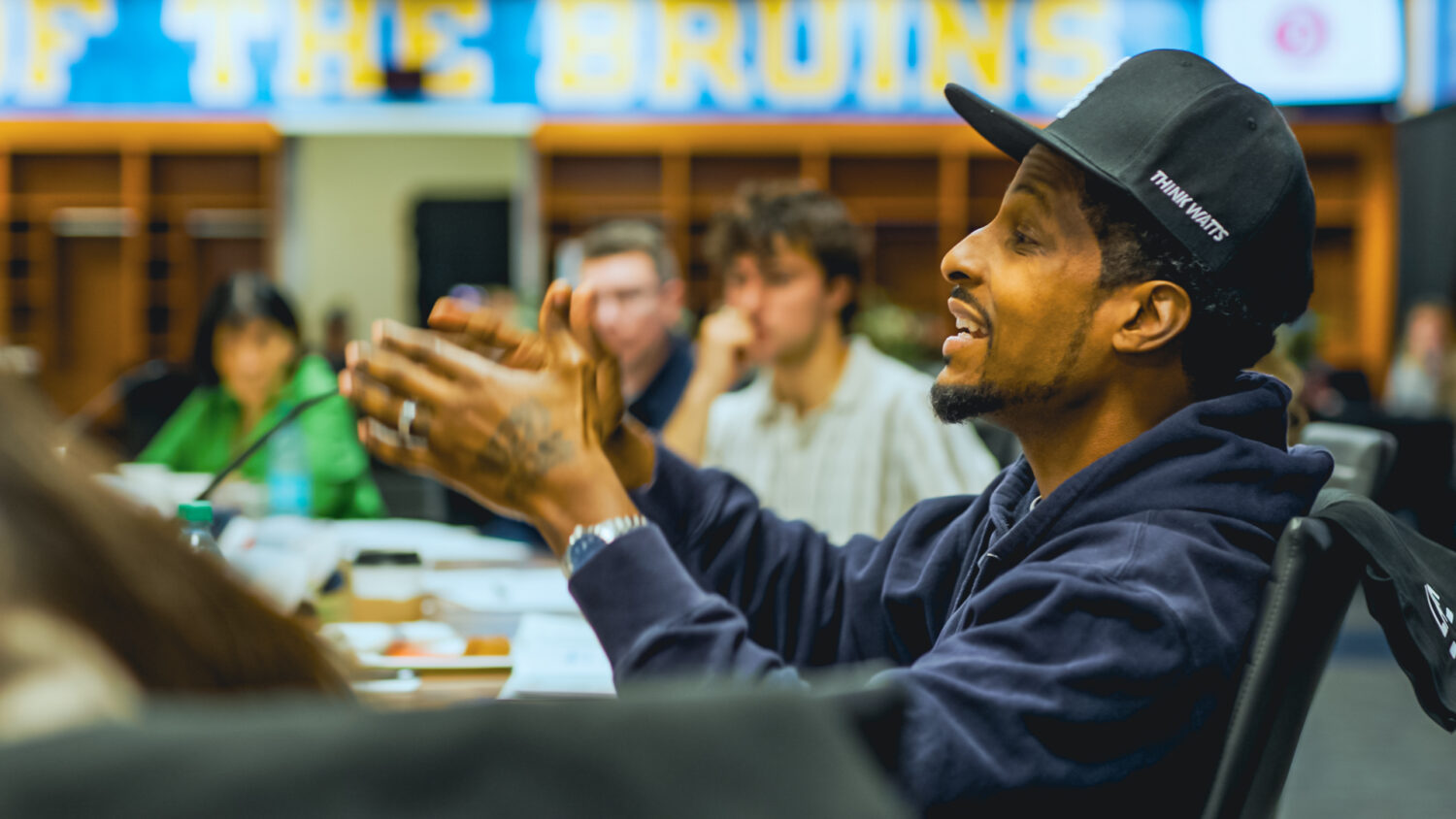
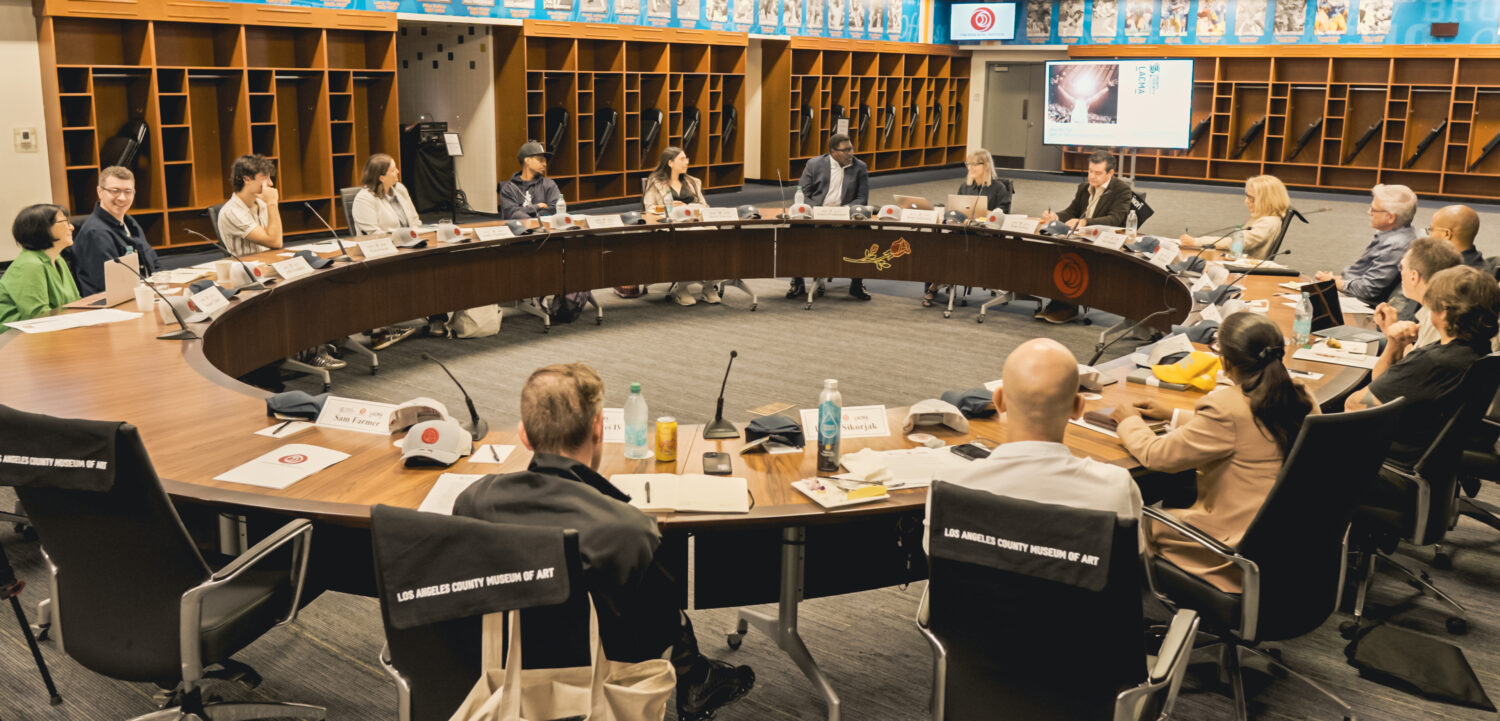
Watch a 10-minute recap of our inaugural roundtable in the Why We Play series, hosted with the Rose Bowl Institute in one of the historic locker rooms of the Rose Bowl, one of the great cathedrals of the early 20th century dedicated to bringing people together at scale.
Best-selling author Michael Lewis talks with Tom Farrey at the 2025 Project Play Summit about how youth sports have transformed parenting and what today’s commercialized model reveals about family, ambition, and growing up in America.
At the 2025 Project Play Summit, Britt Salvesen of LACMA introduced Why We Play by drawing thoughtful connections between art and sport, from creative process to shared challenges. Her remarks helped frame the project as both a reflection on history and a forward-looking invitation to rethink the purpose and power of sport.
The Sports & Society Program wants to explore topics during the series that matter to you. Please send us an email with your suggestion of a question that could be posed to the athletes, artists, and authors that we convene at roundtables and other events.
It’s hard to imagine now, but sport was not always a core feature of American life – as was the case in other countries. Activities like prizefighting and horse racing were common, but only after the Civil War were team sports like baseball introduced. Participation and spectator forms of sport had yet to change our society and key institutions in meaningful ways.
This decade-by-decade timeline traces the evolution of sport and how, starting in the 1890s, the games we play began to shape society – from schools and cities to religion, business, law, and fashion. As photography replaced painting as society’s main tool to capture reality, art changed as well, becoming more interpretive of the scenes unfolding before our eyes.
1890s
The Birth of Modern Sport
Religion The Muscular Christianity movement aims to recruit young men into the church and recast Jesus as a righteous, conquering figure rather than a model for “turn the other cheek.” The International YMCA Training Center (now Springfield College) gives the movement a boost. Students and alumni invent basketball and volleyball and use the games to promote faith-based youth development, linking physical activity with moral teaching.
Diplomacy In 1896, the first modern Olympics take place in Greece, offering silver and bronze (no gold) medals in 43 events. Fourteen countries, mostly European plus the U.S., send 241 male athletes, the largest participation in an international sports event to date. The Games emerge during a period of global expansion and are promoted as a tool of peace through competition rather than war.
1900s
Embedding of Modern Sport
Education In Europe, students go to school for academics and play sports in clubs. In the U.S., the two begin to merge at the K-12 level, creating the interscholastic model for sports. Ties between sport and universities deepen after 1906 when President Teddy Roosevelt encourages the governance of college sport, leading to the formation of what becomes the NCAA.
Urban Design Cities like New York begin building thousands of green spaces to relieve overcrowding and pollution. These places to play help get youth off the streets and into activities that support health and positive energy. Early adopters create a culture of fandom that later fuels the development of multi-billion-dollar sports stadiums, often built with public support.
1910s
Reaping of Sport Investments
Military Military recruiters promote sports as nations need soldiers for global conflicts. During the 1910s, especially World War I, the military expands its use of sport to build fitness, discipline, and teamwork. Organized athletics become central to training and military culture. Industry As sports grow, several industries benefit and reshape their business models. Railroads and city transit move fans to games; tobacco companies use trading cards to sell cigarettes; sporting goods manufacturers create equipment; breweries boost sales through sports culture.
1920s
Turning Athletes into Heroes
Media Radio transforms sports into a shared national experience. Live broadcasts bring games into homes, turning athletes like Babe Ruth into household names and establishing sports journalism as a major media fixture. Coverage creates rituals that unite Americans across class and region and reshapes media business models. Civil Rights Sports help reshape early racial narratives. Rather than a single movement, the decade produces flashpoints, iconic figures, and contested spaces that elevate minority athletes and challenge white supremacist norms. Negro League stars gain visibility through Black newspapers, while Olympic legends Jim Thorpe and Duke Kahanamoku broaden the definition of an American hero, paving the way for Jesse Owens’ impact in 1936.
1930s
Deepening Public Engagement
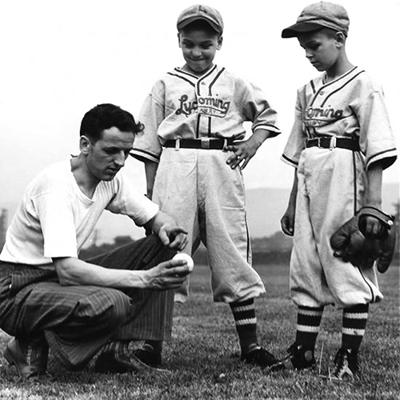
Infrastructure During the Great Depression, the federal government develops tens of thousands of sports facilities. Recreation construction provides jobs and strengthens communities by creating accessible public spaces for play, exercise, and cultural gathering. Childhood Play, including physical play, is instinctive for children. In 1939, Carl Stotz founds Little League, offering structured opportunities for teamwork and sportsmanship after schools step back from sports before high school. Youth sports help families reconnect and build new traditions around community life.
Image: Carl E. Stotz with his nephews, 1939 (littleleaguelegacy.com).
1940s
Building Resilience and Equality
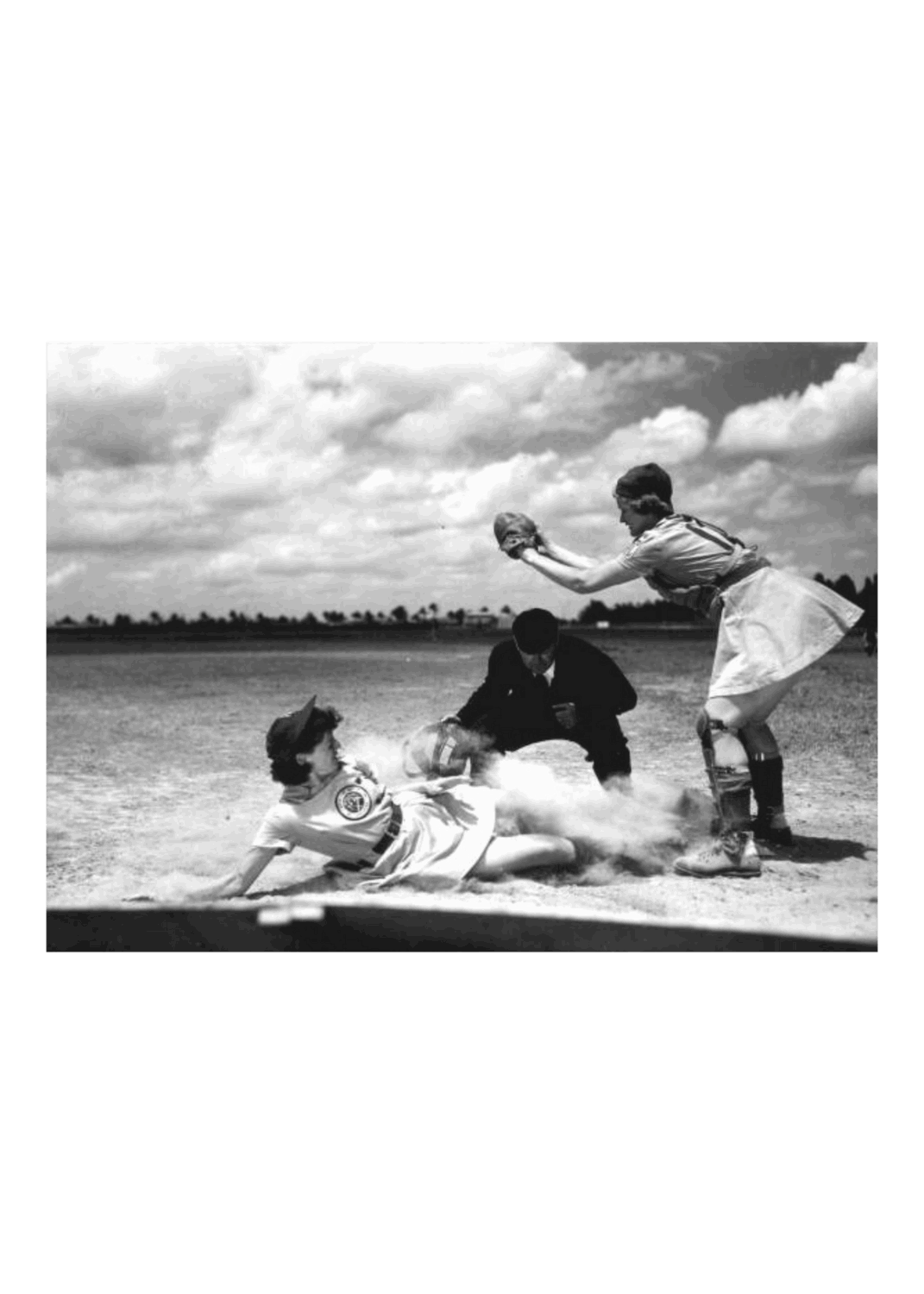
Gender Roles During World War II, women step into roles traditionally held by men, reshaping perceptions of women’s capabilities. The All-American Girls Professional Baseball League gains national attention and expands athletic opportunities for women, laying the groundwork for future gender equality movements.
Racial Barriers In 1947, Jackie Robinson broke Major League Baseball’s color barrier by joining the Brooklyn Dodgers, ending decades of segregation in the sport. With support from Branch Rickey, Robinson’s courage and performance challenged racial prejudice and accelerated integration across professional athletics – and, eventually, society.His courage helps spark broader civil-rights momentum that grows through the 1950s and 1960s.
Image: All American Girls Professional Baseball League player Marg Callaghan sliding into home plate as umpire Norris Ward watches- Opalocka, Florida (photographer unknown)
1950s
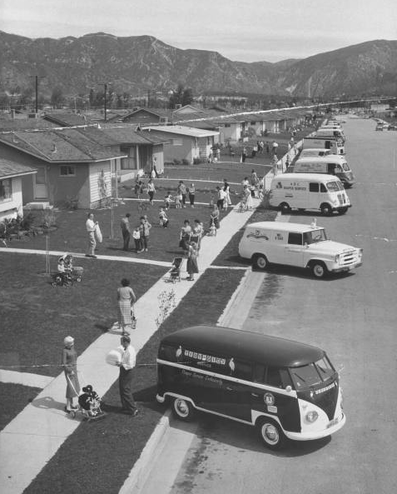
Building the Burbs
Parenting Post-war suburban growth reshapes American family life. New communities include parks, fields, and recreation spaces as youth sports become central to childhood. Coaching becomes a common way for fathers to bond with their children.
Mass Culture Television brings live sports into most homes, giving athletes recognizable faces and accelerating commercialization. Top players become celebrities; regional teams become national brands; football rises in popularity. Sports help create shared cultural experiences.
Image: Postwar suburban housing in California (source: calihist.weebly.com)
1960s
Catalyzing Social Change
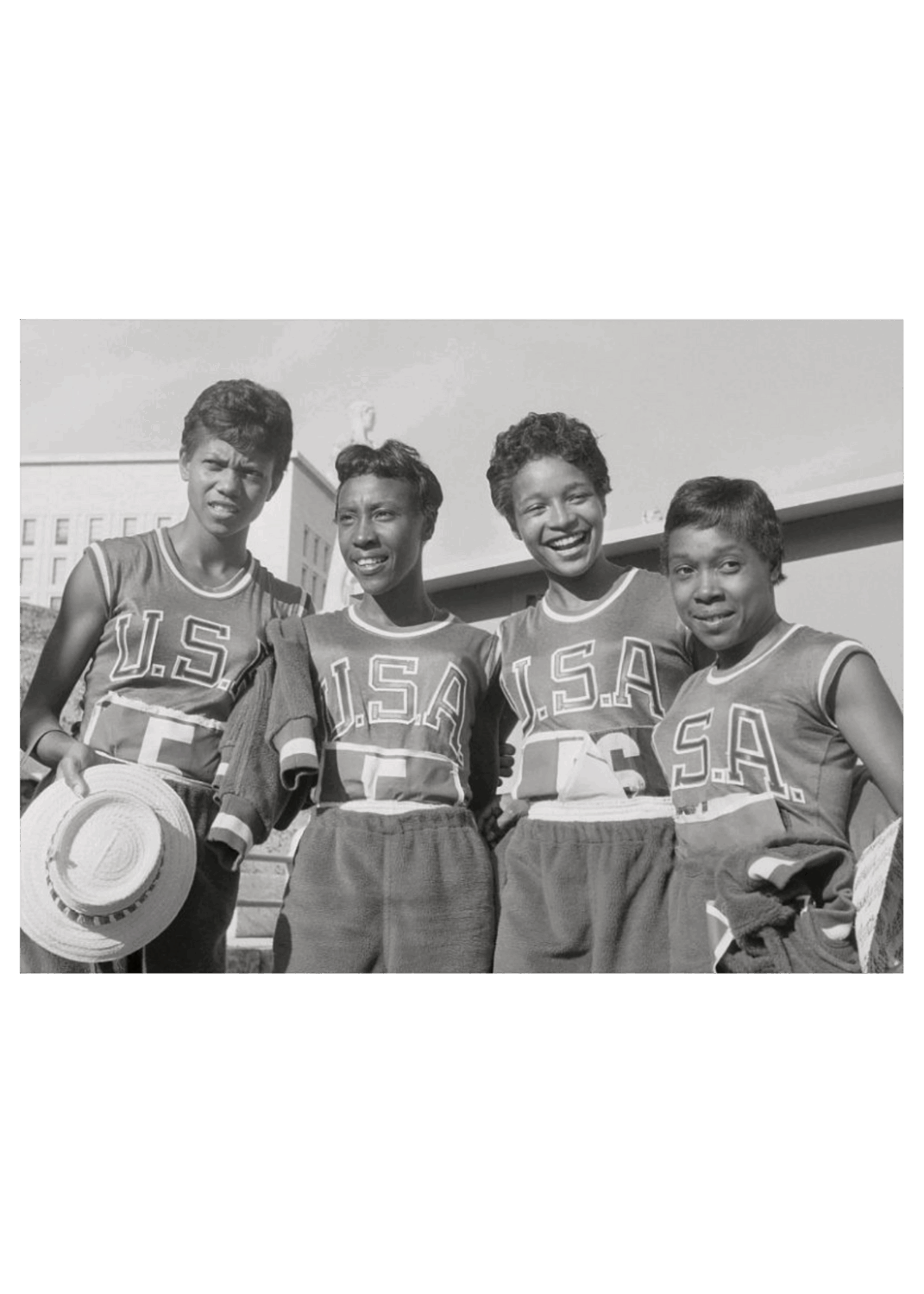
Civil Rights Athletes become major voices in the Civil Rights Movement. Muhammad Ali, Wilma Rudolph, Bill Russell, Billie Jean King, Jim Brown, and others use their platforms to challenge inequities in sports and society, pushing national change.
Geopolitics At the 1968 Olympics, Tommie Smith and John Carlos raise the Black Power salute, showing how sport shapes global dialogue on racial injustice. Athletes like Arthur Ashe challenge apartheid in South Africa, turning sports arenas into battlegrounds for human rights.
Image: American sprinters Wilma Rudolph, Lucinda Williams, Barbara Jones, and Martha Hudson at the Rome Olympics (1960) (photographer unknown)
1970s
Fostering Visibility
Gender Equity In 1972, Congress passes Title IX, prohibiting sex discrimination in federally funded education. The law expands athletic opportunities for women and girls, reshaping schools and accelerating the gender equity movement. Research shows the majority of women in corporate C-suite roles played sports growing up.
Cable Television The 1979 launch of ESPN and cable television transforms how Americans watch sports. Live games, highlights, and 24/7 coverage expand athlete visibility and cement sports as a major entertainment category.
1980s
Promoting Commercialization
Marketing Sports explode as a force in global marketing. Athlete endorsements surge, Nike’s Air Jordan line revolutionizes branding, and the 1984 Los Angeles Olympics set a new standard for corporate sponsorship.
Diplomacy During the Cold War, sports becomes a stage for political messaging. The U.S. boycott of the 1980 Moscow Olympics and the Soviet boycott of the 1984 Los Angeles Games shows how international competition intertwined with diplomacy and ideology. The Eastern Bloc loses the larger battle, crumbling as Soviet-influenced states by the end of the decade.
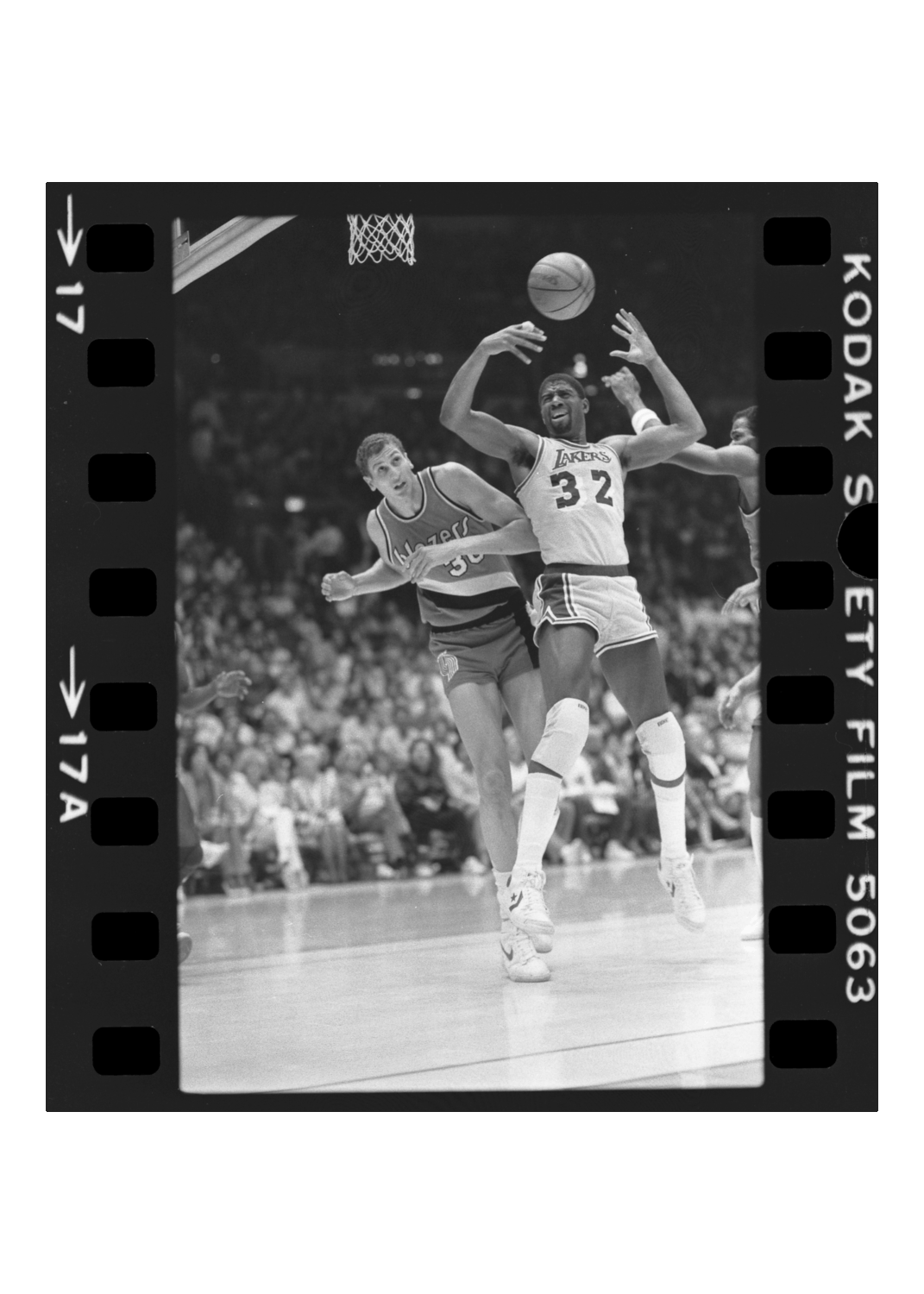
Image: Magic Johnson and Trail Blazer’s Sam Bowie playing in Lakers game in Los Angeles, Calif., 1985, photographed by Lori Shepler
1990s
Leveraging Technology and Assessing Harms
Public Health In 1996, the U.S. Surgeon General releases the first national report on physical activity, framing exercise as essential for preventing chronic disease and shifting how communities and institutions approach wellness.
News Media Sports consumption changes through expanded cable coverage, standard use of instant replay, and the rise of internet-based fantasy sports and websites such as ESPN SportsZone (later ESPN.com). Cable politics shows adopt the “embrace debate” model popularized by sports media.
2000s
Leveraging the Digital Shift
Youth Health & Policy Concerns about childhood obesity and declining youth sports participation emerge. High costs, early specialization, and reduced school PE create barriers, prompting policy and public health efforts to expand access to physical activity.
Global Expansion American sports reached wider international audiences as the NBA expands globally and Olympic viewership grows. International athletes reshape U.S. leagues and serve as a form of soft power overseas for the U.S., making sport an even stronger cultural connector.
2010s
Elevating and Protecting Athletes
Fashion Sport continues shaping everyday fashion – sneakers instead of shoes, baseball caps instead of fedoras, the liberation of women’s bodies through increasingly increasingly less clothes to enable freedom of movement. Now, sport claims its ultimate victory: “Athleisure” replaces traditional work clothes.
Activism Social media lets athletes speak directly to the public, without having to route their point of view through the filter of a sports journalist. Colin Kaepernick, WNBA players, and others lead national conversations on justice, climate, and politics. Congress creates the U.S. Center for SafeSport in 2017 to prevent abuse in sports.
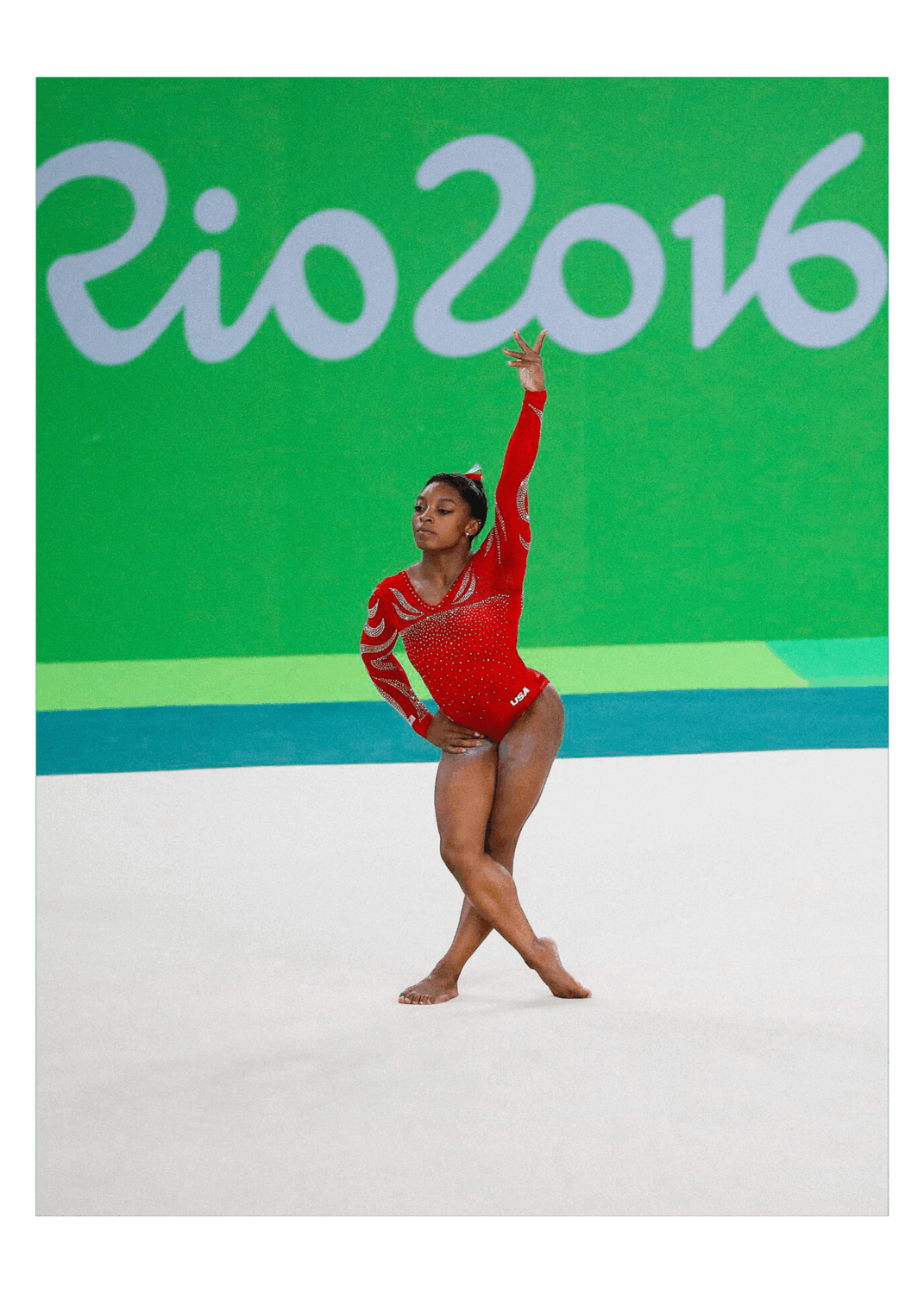
Image: Rio de Janeiro – Simone Biles durante treino da seleção de ginástica artística dos Estados Unidos, na Arena Olímpica dos Jogos Rio 2016. Photo by Fernando Frazão for Agência Brasil Source
2020s
Sharpening Performance
Business The analytics movement starts decades earlier with a low-budget baseball team in Oakland and Michael Lewis’s Moneyball, which popularizes its methods. Today, data is a standard tool that companies use to make decisions and evaluate impact.
Public Health The COVID-19 pandemic reshapes sports nationwide. Shutdowns and safety protocols, with the NBA and U.S. Olympic Committee among the first to cancel games, require schools, teams, and leagues to rethink participation, public health standards, and access to play.
Youth Development Streaming, sports betting, and athlete-created content transform the sports economy. New NIL rules let college athletes earn money from their name, image, and likeness, shifting how young people connect with sport.