
Nearly half of the workforce earns wages that cannot cover a family’s basic needs. Over the past four decades, we’ve seen wages stagnate for low- and middle-wage earners – particularly Latinx and Black workers, increasing the racial wage gap. While it is clear that employment alone does not ensure financial security today, workers’ experiences during the COVID-19 pandemic show the potential for truly inclusive benefits, payments, and financial systems to be enormously powerful foundations of economic stability, resilience, and security for households and the nation.
If work is to provide a real pathway to financial security, public and workplace benefits need to reflect the realities of 21st century employment, which includes a workforce increasingly required to engage in nonstandard and sometimes multiple jobs and where job stability is not guaranteed.
Download “The Complete Financial Lives of Workers: A Holistic Exploration of Work and Public and Workplace Benefit Arrangements” today to learn:
- Four conditions of work and benefits that allow LMI workers to thrive – informed by front-line insights from Aspen’s Consumer Insights Collaborative
- A new matrix to unpack and highlight the major connections between work and benefit arrangements and workers’ prospects for financial security
- Five key recommendations to build a benefits system that meets the needs of all workers and addresses the inequities observed in the current labor market and benefits systems
Related Event
On April 28, 2021, the Aspen Institute Financial Security Program and WorkRise co-hosted a public event exploring our research about building better on-ramps to financial security and economic mobility. Watch here.
Funder
This paper was developed as part of the Global Inclusive Growth Partnership, a collaboration between the Aspen Institute and the Mastercard Center for Inclusive Growth. It was also developed with generous support from JPMorgan Chase & Co., The Prudential Foundation, and the W.K. Kellogg Foundation.
Leading with Empathy: Strengthening Benefits Delivery with Mike Wilkening

A Persistent Challenge: How Financial Shocks Continue to Undermine Family Financial Security

Beyond Income: Worker Financial Security and the Role of Benefits Inside and Outside of the Workplace

Video: We Don’t Have to Choose Between Financial Stability and Wealth


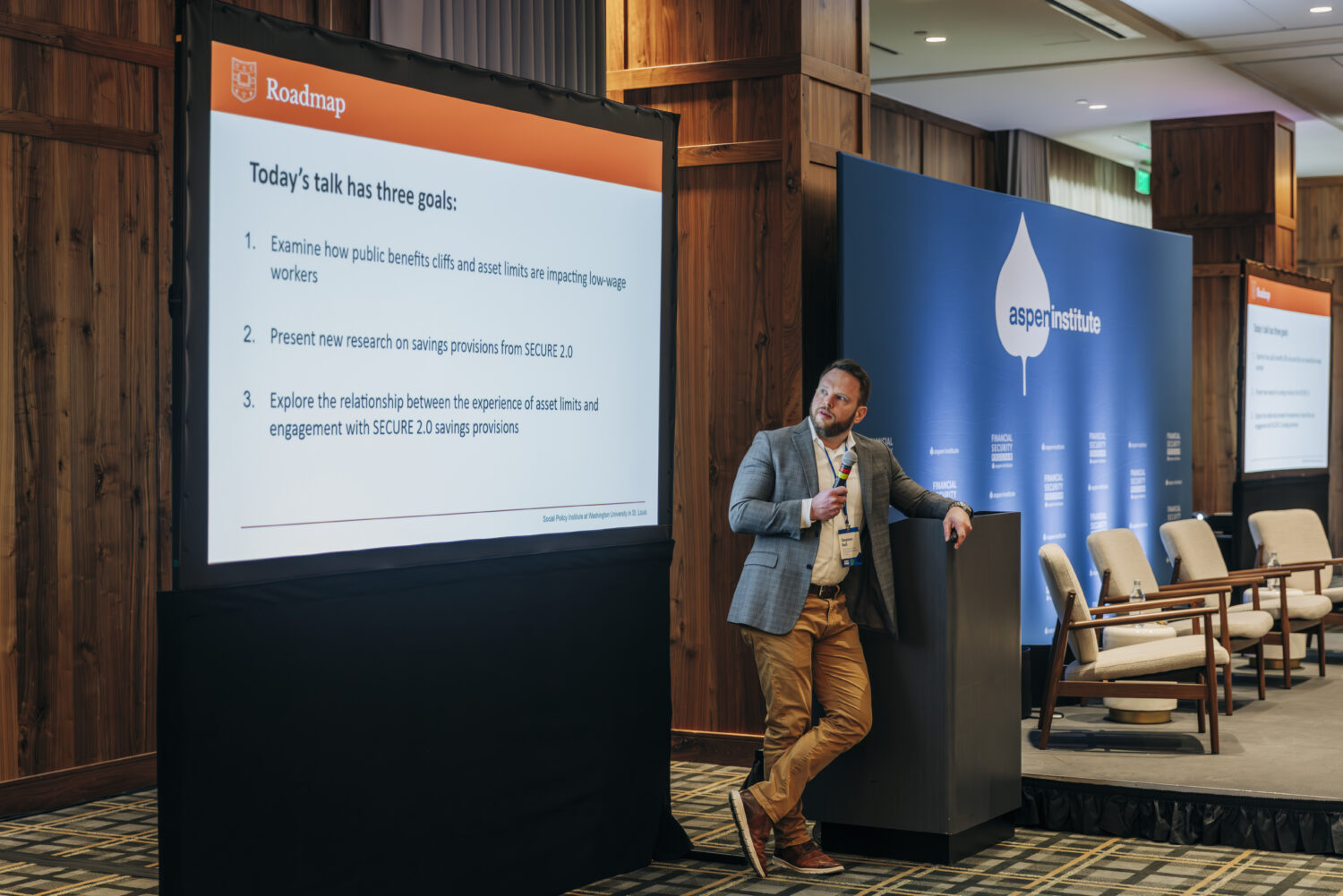
How Work and Savings Penalties Block Financial Security and Economic Mobility

Learning from Young Adults to Improve Public Benefits for All