When things get tough, folks turn to the connectors of Palm Beach
Subscribe to Weave’s Newsletter
This story was originally published on Weave’s newsletter. Every week, you’ll get resources on how to weave our communities and restore social trust.
A few years back, Katrina Blackmon started visiting different neighborhoods across Palm Beach County, FL. She hosted meet-and-greets to get to know the residents. She’d ask them a simple question: “Is there someone in the neighborhood that everyone knows and trusts?” Her goal was to find and recruit these folks to become community connectors.
The community connectors help improve the health and wellbeing of the neighborhood by serving as a bridge between residents and private and public health services. “They are like unofficial mayors,” says Blackmon. “They are resident advocates that care deeply about their neighbors and their mental and behavioral health. They know their neighbors well. Some go door-to-door to get to know folks, while others are known from their work in the community.”
For a neighbor who wishes to remain anonymous, the connector in her neighborhood, Alondra Colon, was a lifeline. After her husband was taken to a nursing home when his dementia worsened, she felt lost and alone. “The day arrived that I dreaded for a long time. I knew there was no way around this. But it all came so soon,” she says. “For the first time in my life, I was open to receiving help.”
She reached out to a friend, who had heard about the community connectors at a back-to-school event, and she connected her to Colon. The connector visited her house and listened to her story. Together, they identified a plan for action and Colon helped her connect with mental health, financial assistance, and other support services. “I now see a therapist on a biweekly basis. My therapist has helped unwind my feelings of separation anxiety from my husband and regain my self-confidence and purpose. I’ve overcome the feeling of guilt when trying to enjoy myself,“ she says.
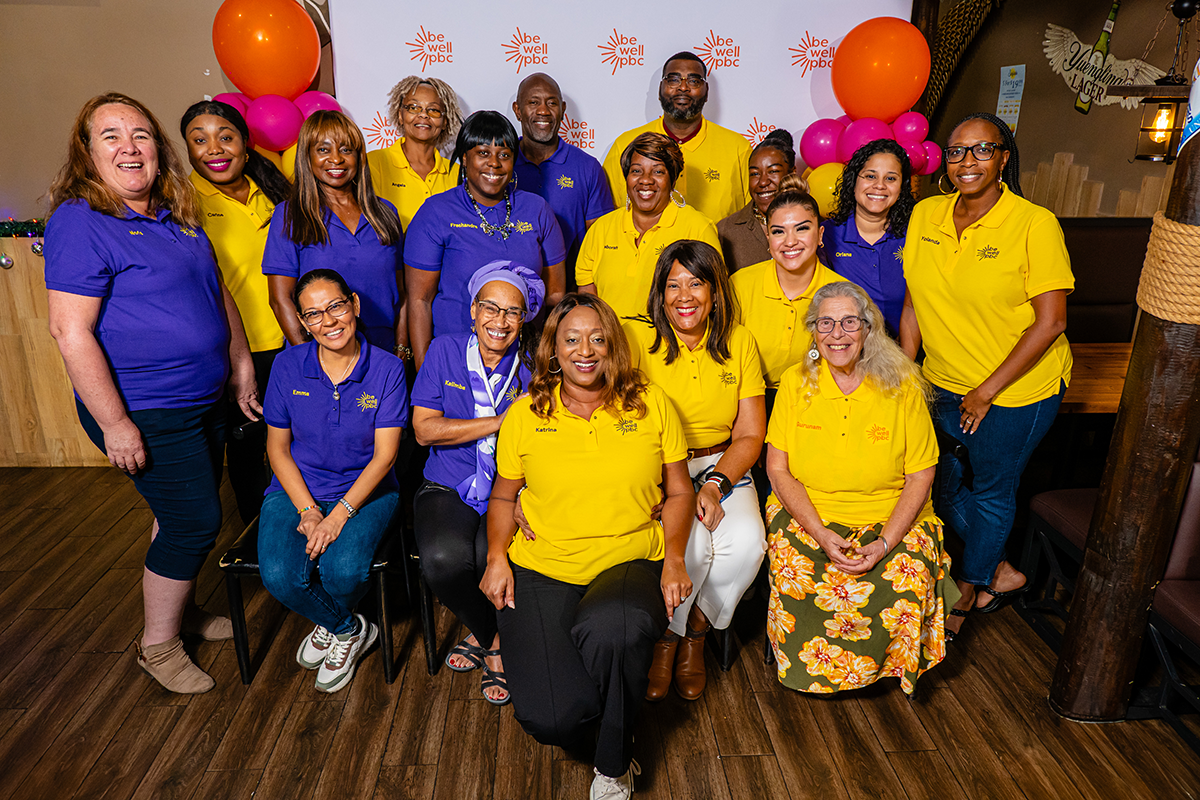
Over the past two years, Blackmon has recruited 20 community connectors that serve several neighborhoods across Palm Beach County. These folks have full-time jobs outside of their connector role and do this work on a volunteer-basis to serve their communities. They come from all professional backgrounds – some are mental health professionals, one works in a reentry program, another works in construction, and a few in fitness. They all go through a series of training sessions on community building and on how to help folks navigate mental health, substance abuse, and self care.
The community connectors program relies on the trust built through relationships, says Blackmon. For example, in neighborhoods with a predominantly Haitian community, the connectors do their outreach primarily at churches, where they’ve built relationships with parishioners. “They do their conversations through a faith-based lens, trying to break the stigma attached to talking about mental health by meeting them where they feel most comfortable.”
The community connector program is part of an initiative called BeWell PBC, a community-driven movement started in 2019 that brings together residents, providers, businesses, foundations, and faith-based groups to improve behavioral health and wellness across Palm Beach County. “We are an initiative designed to be the voice of residents and bring them to the table with funders, government entities, and businesses,” says Blackmon, who works as Community Action & Communications Administrator for the organization.
The community connectors program is now in its second year. As they solidify their presence in the neighborhoods, they are working to expand their outreach to meet more residents. The connectors are organizing Mental Health Pop-ups in different venues, from back-to-school events to resident association meetings, to listen to residents and identify activities that might bring more of them together such as a movie night, bingo game, potlucks, yoga, poetry, or crafts.
“The connectors help neighbors deal with some heavy stuff like death, job losses,or domestic abuse,” says Blackmon. “But they also see their neighbors and neighborhoods become healthier. It’s hard and slow work, but they feel such a sense of pride and joy in being part of the solution.”
In Session: Danny Harris
Realizing the Potential of the Science Community to Support Rising Generations in STEM
Leading with Purpose: Why Bodily Autonomy is the Ultimate Act of Freedom
In Session Reflections
Why Current Solutions Fail Our Most Painful Financial Shocks: Insights from our Community Advisory Group
In Session: Alex Azar
Leading with Empathy: Strengthening Benefits Delivery with Mike Wilkening
In Session: Yuliya Tychkivska