
Volunteer for the Hard Stuff

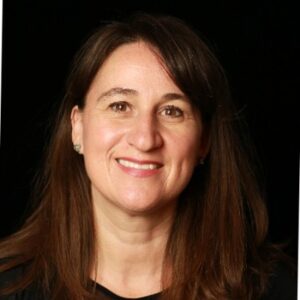
Tammy Thieman
Director, Amazon Career Choice, Amazon
Lessons in Leadership with Tammy Thieman
Tammy Thieman is an Amazon Director focused on employee upskilling. She leads Career Choice, Amazon’s education benefit available to 1.2 million employees across 16 countries, now including more than 300,000 participants connected to language learning, high school completion, skills-based certificates, and bachelor’s degrees through 600+ education providers worldwide. Thieman began her career as an active-duty Army officer and recently retired as a Lieutenant Colonel in the US Army Reserve, where she led the Pacific Northwest Command and General Staff College. She is an Aspen Economic Mobility Fellow.
What early professional experience shaped your approach to leadership?
The way I funded college was through an ROTC scholarship, which meant I served in the military afterward as an Army officer. The military was incredibly formative in how I think about leadership, work, and teams.
One lesson was to get really clear on the mission before doing anything else. I’ve carried that into my civilian experience. I want everyone on my team to have a clear view of the objective we’re trying to achieve and the role they play in getting there.
Another lesson the military teaches you is that leaders are expected to own the wins and failures of their people. If somebody doesn’t succeed, it isn’t just that individual who didn’t succeed. It’s also on the leader to ask what they didn’t do to help that person be successful. And when you achieve the objective, everybody recognizes that it was a team effort. We win together.
I think people might be surprised by how people-focused the military is. There’s certainly a top-down aspect to it, but there’s also this strong sense of team that has really shaped how I lead.
What professional advice do you wish you’d received earlier in your career?
The advice I wish I’d received is to volunteer for the hard stuff, even if it scares me. All through school, I was conditioned to get the A. I brought some of that mentality into my career: I’ve got to do the things I can get an A at. I was sometimes reluctant to take on the really hard thing because I might fail.
I wish I’d leaned into raising my hand earlier, even when there was a 70% chance something might fail. That’s honestly where I’ve learned the most. Taking those chances when the stakes were lower helped prepare me for higher-stakes projects and opportunities.
The other thing is to fail fast. I’ve learned a lot of that at Amazon: I can lean in and try something, but once I realize it isn’t working, I need to cut my losses and move on. I’ve had things fail, but I’ve learned key lessons that helped me make another project successful later.
What makes it possible for a person to lead with courage and conviction?
For me, leading with courage starts with a strong inner compass: knowing what I believe, what matters to me, and how I fit into the world. My faith in Christ provides a lot of that grounding. Everybody’s compass is different, but knowing mine helps me make difficult choices.
I also try to keep the end in mind. That goes back to what I learned in the military. When I’m clear about what I’m driving toward, I can continue through adversity without getting lost along the way.
And then there’s what I call a “coalition of the willing”: people who feel passionate about a shared goal beyond the fact that they’ve been assigned to work on it. They may be at different companies or working on different projects, but they’re looking for ways to connect their efforts. Having that inner compass, a direction, and people traveling the road with me gives me the courage to chase big things.
What professional accomplishment are you most proud of?
I’m proud that we’ve been able to grow Amazon’s Career Choice program to serve so many people. Career Choice is an education benefit that helps employees build skills for in-demand jobs, whether those jobs are at Amazon or beyond it. When I started working on the program, a few thousand people were participating. Last year, more than 100,000 people participated, and the program now operates in 16 countries.
Economic mobility is such an important mission. What excites me about this work is the opportunity to pursue it at scale while still asking: How do we keep the experience personal? How do we know it’s leading to meaningful outcomes for people?
Ten years from now, I hope we can look back and see that this work made a meaningful difference for individual employees and their families, as well as for how employers and education systems create opportunity together.
How has your Aspen experience shaped your view of the world?
Aspen reinforced for me how much we can learn from people who are working toward a common goal from different places. My Fellowship group is still in touch. Someone will share an article in our group chat, and a few days later I’ll find myself bringing that idea into a meeting at Amazon because it’s directly relevant to our work.
That’s my coalition of the willing in practice. We aren’t all at the same organization, but we care about economic mobility and keep helping one another think about the work. It’s a reminder that the people who can move an idea forward may be well beyond your own team or company.
What was the impact of your Fellowship experience?
One thing Aspen gave me was permission to pause. We started meetings by reading poetry, which, to be clear, is not how meetings typically start at Amazon! We’re a very data-driven company. But I found it refreshing to make space for reflection. It’s easy to start running toward the hill without stopping to ask why you’re running, what you’re trying to accomplish, and the best way to get there.
The Fellowship also helped me be more deliberate about building relationships across organizations, both internally and externally. For my Fellowship project, I explored how to think about the return on investment of education benefits for employees through Career Choice. Other Fellows helped me frame the questions, consider what mattered, and think through what might be less relevant. I brought that work back in a presentation to senior leaders at Amazon.
What keeps you grounded?
My faith keeps me grounded. I take a ferry to work every morning, and I use that time for personal devotion and reading the Bible. It’s an early ferry—I get up at 3:45 a.m.—but that time crossing the water is precious to me. It gives me a chance to center myself before getting caught up in the pace of the day and everything that needs to be done.
The Business & Society Inside View
Want more insights like these? Sign up to receive thought leadership and updates from the Business & Society Program each month!
