
For millions of U.S. workers, wage income is not enough to afford everyday life. To build financial well-being, households need a blend of wages, public benefits, and employer-provided benefits that are cumulative and coordinated. But the financial resources available to households earning low-to-moderate incomes can conflict and undermine one another. For instance, income and asset eligibility rules often make it hard for employees to use this full suite of resources without risking loss of benefits or income. These “mobility blockers” penalize workers, preventing them from accruing meaningful savings or accepting promotions that would advance their careers.
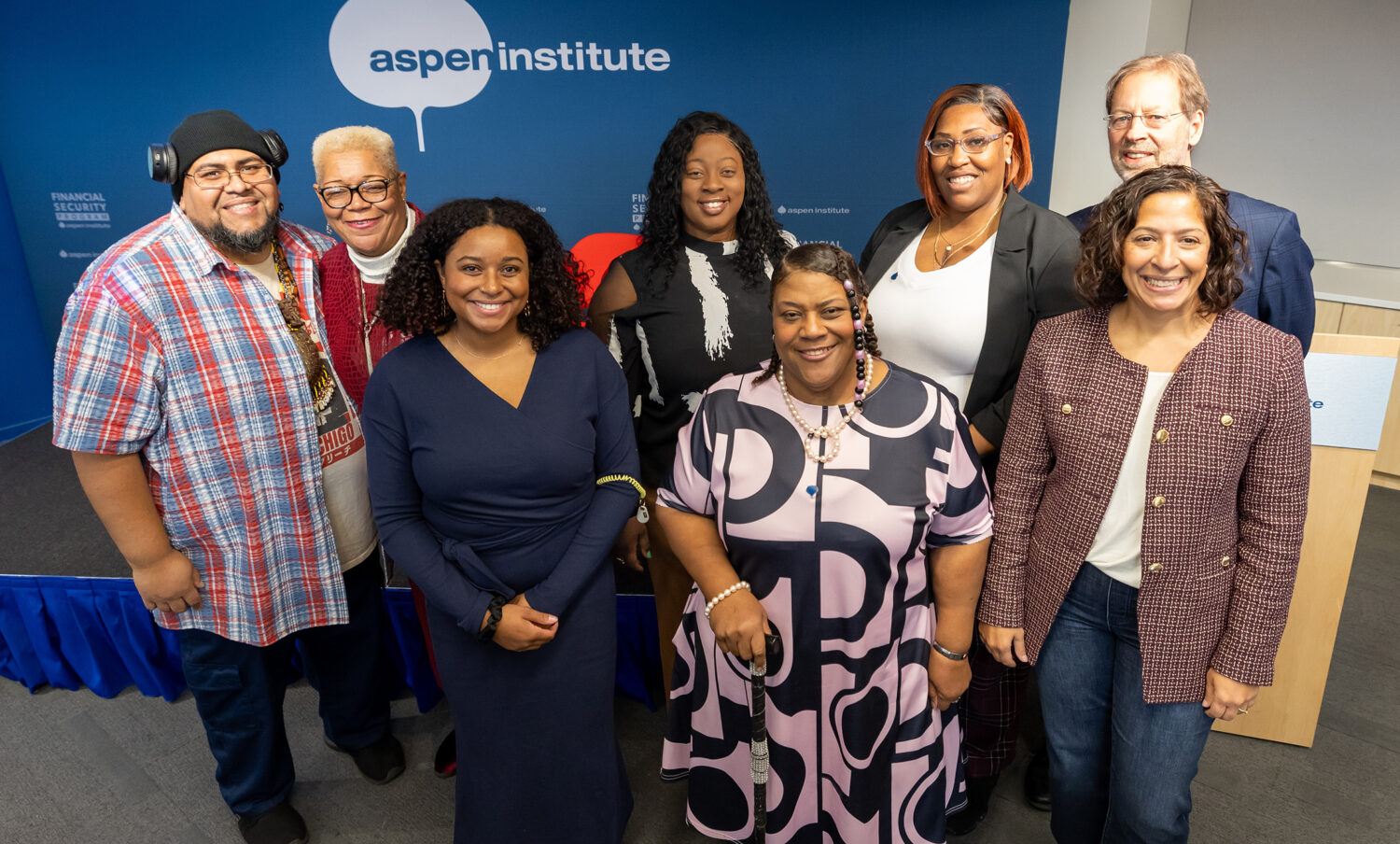
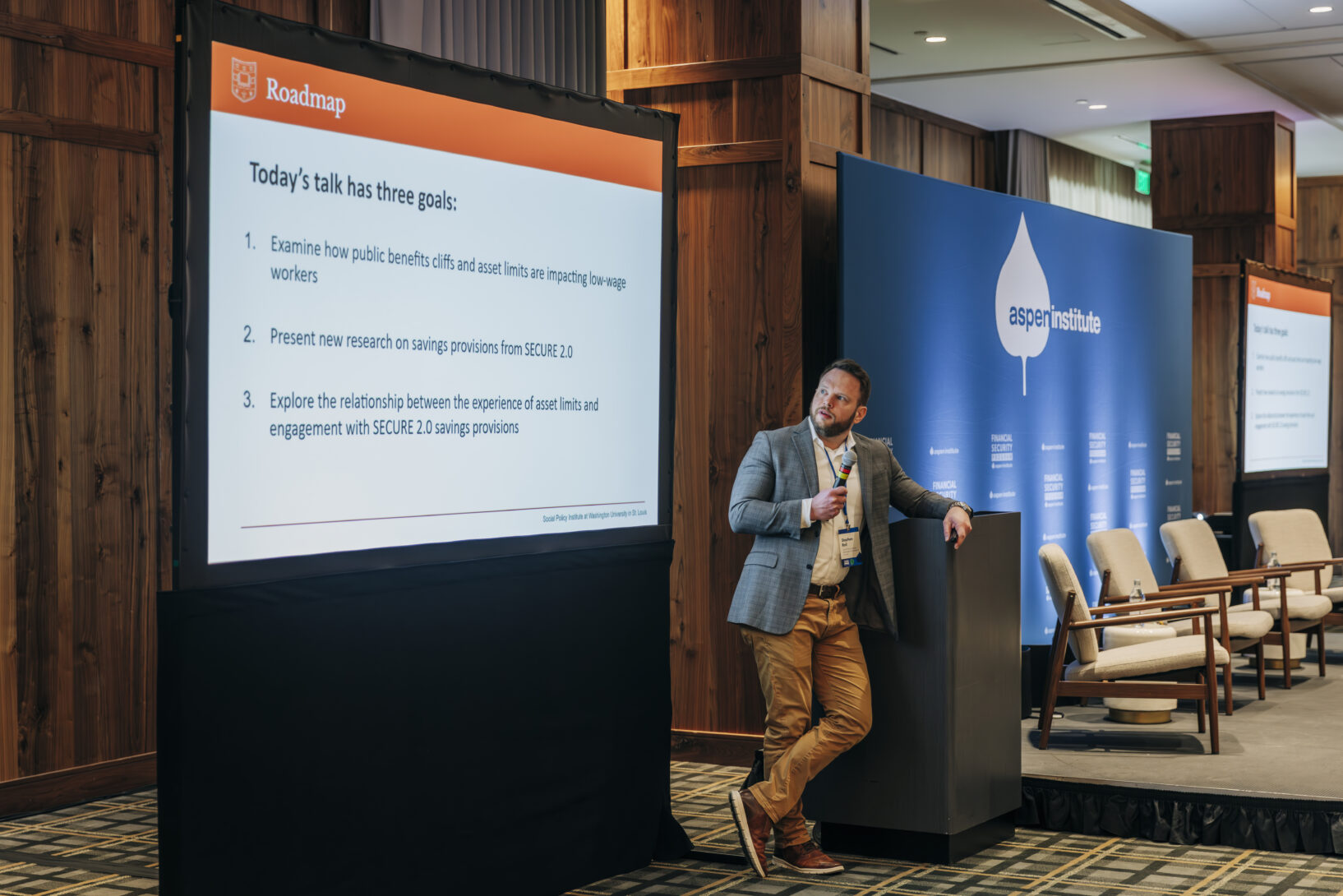
To better understand these barriers, Aspen Institute Financial Security Program (FSP), the National Academy for Social Insurance (NASI), and the Center for Social Development (CSD) at Washington University in St. Louis cohosted the recent webinar How Employers Are Tackling Mobility Blockers in Public Benefit Programs. Supported by JPMorganChase, the event elevated the challenges imposed by work and savings penalties for both workers and employers.
Here are five key moments from the discussion:
“I am on the ground floor, and I’m stuck.”
Logan Archer, a Southeast Texas Self-Advocate, aspires to own his own cattle company after earning his Future Farmers of America (FFA) degree. As a recipient of Social Security Income (SSI) and Medicaid, however, he is restricted by the $2,000 asset limit. “We are penalized for even attempting to live the American dream,” he said. “I can’t own a business or get the funding to own a business.” Archer described the difficult decision that many other SSI recipients must confront: advancing their career and aspirations or maintaining their income and access to healthcare.
“Our employees on SSI worry about losing their benefits if they work too many hours. They are the only people worried about getting a raise or bonus.”
Nan Gibson, executive director of the JPMorganChase PolicyCenter, added the perspective of employers and financial institutions, underscoring that asset limits can be a barrier to employment and entrepreneurship for people with disabilities. Asset limits also undermine people’s ability to build long-term savings. “They are leaving money on the table because they often can’t participate in the company’s retirement plan,” said Gibson. Workers receiving SSI and other public benefits need to navigate work and savings penalties in ways that ultimately hinder their economic mobility.
“The benefit of saving an additional $1,000 is much less than the risk of being kicked off Medicaid and SSI.”
The Center for Social Development’s latest research puts numbers behind the experiences of people like Logan. CSD co-director of research and policy innovation Stephen Roll shared that that low-wage workers who receive public benefits are forced to make sacrifices to avoid meeting asset limits and benefit cliffs, such as not taking additional work hours; keeping savings below the limit; turning down a raise, promotion, or job; or asking to be paid less.
According to the study, 22 percent of these low-income workers reported engaging in at least one of these behaviors. Roll illustrated the counterproductive nature of these income and savings caps, saying, “These are the two primary ways that people have to escape poverty: increasing your earnings or increasing your savings … and we have a huge number of workers reporting that they are having to forgo earnings and forgo savings.”
“If we want the U.S. economy to grow and for us to all benefit from that growth, it is going to require the full mobilization of the available workforce.”
Jason Tyszko, senior vice president at the U.S. Chamber of Commerce Foundation, dug further into the perverse effects of work and savings penalties on employers in the midst of a shrinking labor market. “We cannot be disincentivizing people to work,” Tyszko said, but he also noted the risk of losing benefits compounded with complexity and uncertainty surrounding benefit cliffs and asset limits drive people to make choices that ultimately limit their income and savings.
“How can we fix this system so people aren’t trapped?”
Leap Fund executive director Shoshana Marder laid out the different pathways for meaningful policy reform: mitigate, bridge, and/or eliminate work and savings penalties. Marder underscored the need for key stakeholders to act now: “[Today] there is more economic uncertainty which means there will likely be more people receiving or needing to receive these benefits.”
Rebecca Vallas, CEO of the National Academy of Social Insurance, closed the discussion, saying, “Life doesn’t happen in siloes to people who are actually impacted and living policy.” Unfortunately, current policy puts Logan Archer, and the millions of SSI recipients across the country, at risk of losing income and access to essential medical care should they follow their dreams. Legislative efforts such as the SSI Savings Penalty Elimination Act create momentum for real change. Employers, financial institutions, and policymakers all have a stake in ensuring that households are equipped with the resources and opportunities to achieve financial security.

Capturing the Impact of Public Benefits Coordination

Setting a Vision for a More Integrated System of Public and Workplace Benefits

Learning from Young Adults to Improve Public Benefits for All

Standing in Hope and Gratitude: Leading With Vulnerability and Purpose
Bridging Divides with Humility: A Leadership Journey Rooted in Purpose


Young People Are Not Just the Future—They Are the Present

Turning Compassion Into Action: A Lifelong Fight to Protect Children