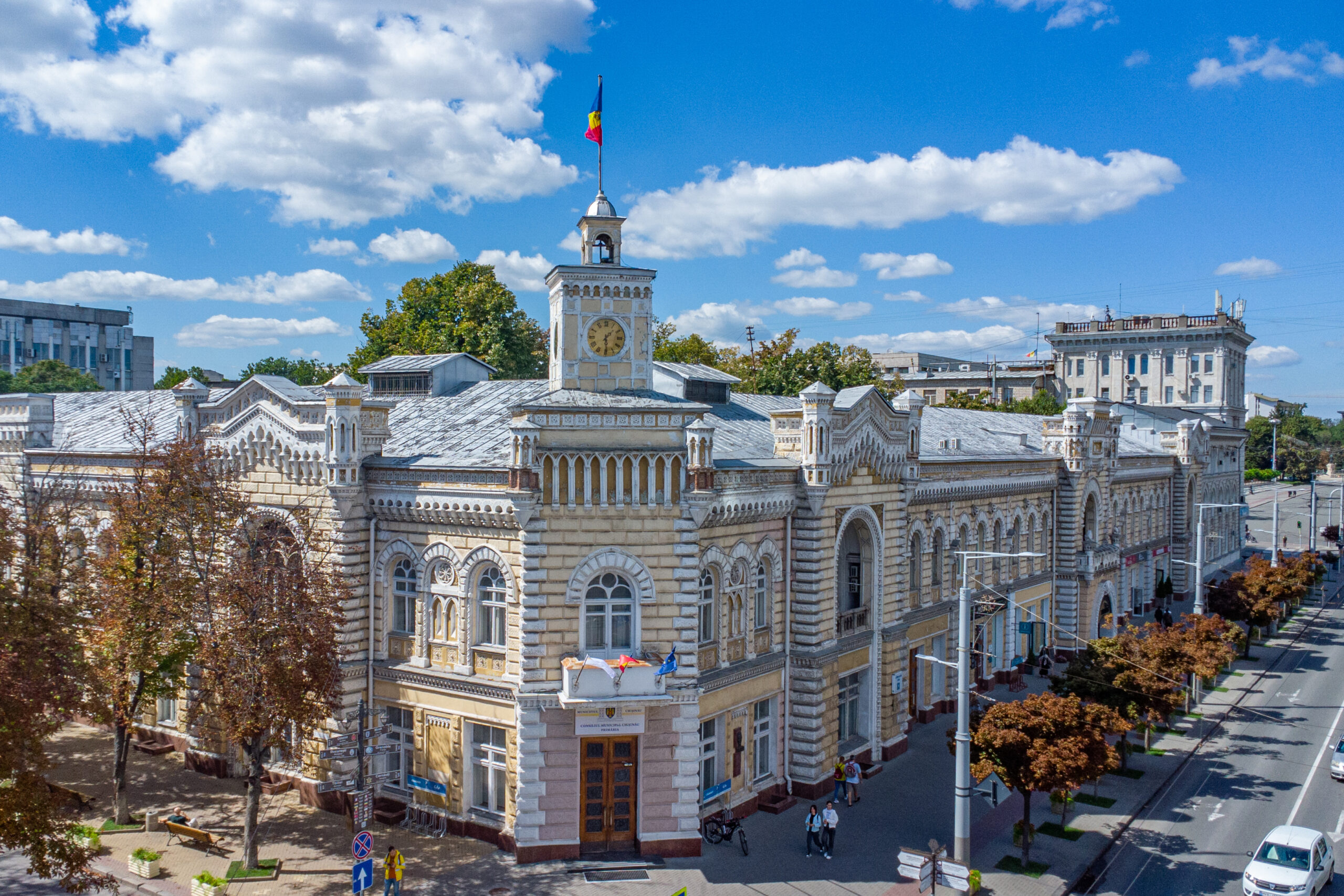
A Leadership & Public Policies Seminar, conducted in English, organized by the Aspen Institute Romania, in partnership with the Aspen Institute Socrates Program and with the support of the Technical University of Moldova (UTM).
Powered by the Aspen Institute Romania Chișinău Office.
Please contact [email protected] if you are interested in participating
Energy Security & Critical Infrastructures in the Republic of Moldova
The first Regional Socrates Seminar organized in the Black Sea Region will welcome participants not only from the Republic of Moldova, but also from its two neighboring countries: Ukraine and Romania.
The seminar will convene a diverse group of 20-25 participants, from public sector, business, civil society, academia, and international organizations for a Socratic text-based dialogue, inspired by the Aspen Method.
The seminar will tackle topics related to energy security, critical infrastructures, regional interconnections and societal resilience, in the context of multiple hybrid threats and Republic of Moldova’s path to European integration.
The Regional Socrates Seminar will seek to discuss how Republic of Moldova could strengthen its response to the multiple challenges it faces, with support from its neighbouring countries, in the context of wider systemic transformations that affect the region. The Seminar will also seek to incentivize debates on optimal ways of pursuing an enhanced Euro-Atlantic resilience agenda, including by exploring necessary synergies between relevant institutions and societal stakeholders. Through reflective discussion and interdisciplinary exchange, participants will explore the tensions, trade-offs, and strategic choices shaping Republic of Moldova’s European future.
Background and context:
Energy independence, energy security, and critical infrastructure are essential for the resilience of the Republic of Moldova because they reduce the country’s political and economic vulnerability and directly protect citizens from major crises. In just four years, Moldova has moved from total dependence on a single supplier- Gazprom to more than 10 different gas sources, and since December 2022 it has no longer consumed Russian gas on the right bank of the Dniester, eliminating the risk of energy blackmail. Investments in critical infrastructure—such as the Iași–Ungheni–Chișinău gas pipeline connecting Romania to the Republic of Moldova, and other projects under development, have connected the country to the European energy market and ensured continuity of supply even in a volatile geopolitical context. At the same time, the development of more than 850 MW of renewable energy capacity and the ability to fully cover national electricity consumption from domestic renewable production at peak moments demonstrate that energy security is a key prerequisite for stability, economic growth, and national independence.
The broader context shows that this transformation is not accidental, but part of a strategic effort to build a competitive, sustainable energy sector fully integrated into European markets. This includes accelerating the deployment of renewable energy sources and supporting both households and businesses in adopting green technologies and energy storage solutions. Every megawatt of renewable energy installed becomes a pillar of energy and national security, while also strengthening resilience to future crises. In the medium and long term, Moldova aims to achieve deeper integration with the European Union’s energy networks and markets by 2030, including expanding domestic electricity generation capacity, increasing strategic reserves of natural gas and petroleum products, and continuing market reforms to ensure transparency, competition, and long-term access to affordable energy.
In a very challenging and increasingly tense geo-political and geo-economic regional context, the security and sustainability of the energy sector are key elements in ensuring the long-term resilience of the Republic of Moldova in the face of authoritarian influences. The seminar aims to debate the strategic measures the country needs to take to ensure the success of this long-term process and what the role of its neighbouring countries would be like.
Key themes of the seminar:
- The New Energy Order: Europe, the Transatlantic Partnership and Strategic Energy Security
As the global geopolitical landscape is reshaped by growing strategic competition, Russia’s war against Ukraine, technological transformation and the accelerating energy transition, energy has become far more than an economic commodity – it is now a cornerstone of national security, democratic resilience and economic competitiveness. Europe and the transatlantic partnership are redefining their approaches to strategic autonomy, critical infrastructure protection, secure supply chains and energy independence in response to an increasingly volatile international environment. Against this backdrop, questions surrounding the future of Europe’s energy architecture, the evolving role of the European Union, NATO and the United States, and the strategic importance of the Black Sea region are becoming central to public policy, economic stability and regional security. The session explores the leadership dilemmas, policy choices and strategic trade-offs shaping the new energy order.
- The Black Sea Region: Building Resilience through Regional Cooperation – Ukraine, Romania and Moldova
As the Black Sea region gains strategic importance within Europe’s evolving security architecture, regional cooperation is becoming an essential driver of long-term resilience. The growing interdependence between Ukraine, Romania and the Republic of Moldova highlights the importance of interconnected infrastructure, integrated energy markets, diversified supply routes and trusted partnerships capable of responding to common geopolitical and economic challenges. Regional cooperation increasingly extends beyond energy, encompassing security, economic development, infrastructure investments, emergency preparedness and European integration. Strengthening resilience requires coordinated policies, effective institutions, public-private collaboration and a shared vision for a more secure, connected and prosperous region that delivers tangible benefits to both businesses and citizens.
- Resilience Under Pressure: Protecting Critical Energy Infrastructure in a Hybrid World
As hybrid threats continue to evolve in scale and complexity, protecting critical energy infrastructure has become a defining challenge for governments, businesses and society alike. Cyberattacks, physical disruption, disinformation campaigns, supply chain vulnerabilities and climate-related risks increasingly test the resilience of essential systems and the ability to ensure continuity of critical services. Building resilience requires stronger governance, effective regulatory frameworks, coordinated crisis response mechanisms and closer cooperation between public authorities, infrastructure operators and the private sector. Beyond safeguarding assets, resilient infrastructure underpins economic stability, public confidence and the everyday security of citizens in an increasingly interconnected world.
- The Future of Energy: Balancing Security, Competitiveness and the Green Transition
As European countries accelerate decarbonisation while navigating an increasingly uncertain geopolitical environment, the energy transition has become one of the defining strategic challenges of our time. Achieving climate ambitions must be balanced with energy security, affordability and industrial competitiveness, particularly in a region where geopolitical tensions, market volatility and infrastructure transformation continue to shape policy decisions. For countries such as the Republic of Moldova, Ukraine and Romania, the transition presents both significant opportunities and complex challenges, requiring investments in resilient infrastructure, renewable energy, digitalisation, storage and cross-border connectivity. The session explores how innovation, public policy and strategic leadership can reconcile these competing priorities while ensuring that the transition delivers secure, reliable and affordable energy for all.
Seminar format and participants
The Aspen Regional Socrates Seminar on Energy Security & Critical Infrastructures in the Republic of Moldova is an international Leadership & Public Policies Seminar, organized by the Aspen Institute Romania for the 1st time in Chișinău.
The seminar brings together approximately 25 participants, who are invited to explore relevant questions about the challenges and opportunities of the contemporary world.
During the 2 days of the seminar, the participants are challenged to explore contemporary critical issues facing the world and to have an informal, constructive debate on topics of high relevance. The format of the event is closed door, designed as an expert-moderated text-based dialogue, conducted in English, taking place under the Chatham House rules.
By attending the Seminar, participants become Aspen Alumni and join the growing community of Fellows and Alumni of the Aspen Institute Romania, already covering more than 40 countries and more than 2,000 individuals from across the globe.
Moderators
Costinela Drăgan
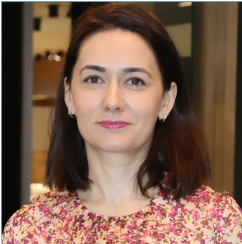
Costinela Drăgan is Director of Sustainability and Corporate Social Responsibility at Rompetrol, with 20 years of experience in the energy sector. She leads the Group’s sustainability strategy and transition agenda, integrating environmental performance, emissions management, stakeholder engagement, and community investment. She is an Aspen Young Leaders Program Fellow (Aspen Institute Romania, 2015) and an Aspen Institute Italia Alumna (2018).
Costinela holds a PhD in American Studies from the University of Bucharest and an Executive Master of Management in Energy from BI Norwegian Business School in Oslo. She has also been actively involved in projects with significant social impact, serving as an Honorary Board Member of the Adunații Copăceni project, run by Hospices of Hope (2016–2020), an initiative dedicated to children and young people living with chronic or terminal illnesses.
Between 2017 and 2019, Costinela served as President of the Global Compact Network Romania, the local network of the United Nations Global Compact, promoting UN principles on human rights, the environment, and responsible governance in the business community.
Sergiu Tofilat
Financial and Energy Policy Analyst, Community WatchDog.MD
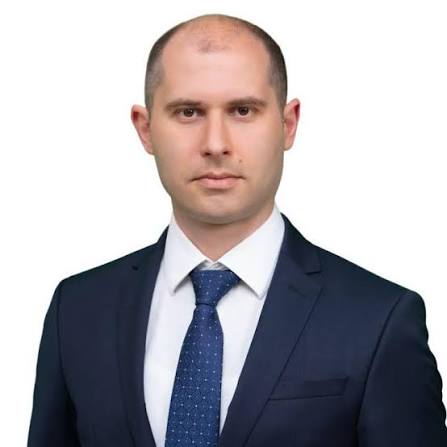
Sergiu Tofilat is a policy analyst in finance and energy, co-author of a number of research papers related to the misappropriation of funds in the gas sector, financing of separatism via the gas supplies to the breakaway Transnistria and the artificial increase of Moldova’s gas debt to Gazprom.
His research laid the foundations for drafting the terms of reference for the international audit of Moldova’s gas debt. Sergiu drafted the Global Magnitsky law bill for Moldova, as well as an amendment to the law on natural gas, which allows the reduction of the transmission tariffs.
As a whistleblower, he submitted several complaints to the law enforcement authorities on the embezzlement of funds in energy sector. Currently, under one of his complaints is being prosecuted the former pro-Russian President of Moldova, Igor Dodon.