

What we know about the new policy that will reach households in 2026—and what philanthropy, state and local governments, and employers can do to make sure low- and moderate-income households benefit.
Set to roll out in 2026, Trump Accounts are a new federal policy that, if implemented well, could offer millions of Americans an on-ramp to lifelong wealth building. In its pilot phase, babies born between 2025 and 2028 will receive a $1,000 deposit from the federal government, invested in the stock market, if they open an account. Children younger than 18 will also be eligible to open accounts, and external organizations—philanthropy, state and local governments, and employers—can make contributions to them.
Cohosted by the Aspen Institute Financial Security Program and the Urban Institute, this two-hour webinar dug into what we know about Trump Accounts, what role philanthropies can play in implementation, and how we can promote participation among low- and moderate-income households.
Speakers
- Ray Boshara, Senior Policy Advisor, Aspen Institute Financial Security Program and Center for Social Development, Washington University in St. Louis
- Madeline Brown, Senior Policy Associate, Urban Institute
- Jason Ewas, Associate Director, Aspen Institute Financial Security Program
- Jill Hawley, Chief Impact Officer, Gary Community Ventures
- Amit Khanduri, Director of Programs, Georgia Resilience & Opportunity Fund
- Matt Lira, Executive Director, Invest America
- Signe-Mary McKernan, Vice President, Family and Financial Well-Being Division, Urban Institute
- Benita Melton, Program Director, Education, Charles Stewart Mott Foundation
- Ida Rademacher, Vice President, Aspen Institute; Co–Executive Director, Aspen Institute Financial Security Program

Ray Boshara, Senior Policy Advisor, Aspen Institute Financial Security Program and Center for Social Development, Washington University in St. Louis
Ray Boshara is a Senior Policy Advisor at both the Aspen Institute Financial Security Program and WashU’s Center for Social Development. From November 2022 until June 2024, Ray served as a Legislative Fellow with U.S. Senator Bob Casey, where he developed Senator Casey’s 401Kids proposal, which would automatically establish lifelong, progressively funded investment accounts at birth for all children. With Ray’s expertise in early wealth building policy, Ray advised Congress and the Administration on Trump Accounts, signed into law in July of 2025.
Previously, Ray served over 11 years at the Federal Reserve Bank of St. Louis, where he founded a research center on household balance sheets and wealth inequality. Before moving to St. Louis in 2009, Ray was Vice President of New America, a DC-based think tank.
In the fall of 2021, Ray published The Future of Building Wealth in partnership with the Aspen Institute and previously published The Next Progressive Era with Phillip Longman. He has written for the Washington Post, The New York Times, and Atlantic Monthly, and has appeared on CBS Sunday Morning, NPR, Bloomberg, and CNN, among others. He has advised presidential candidates and every Administration since George W. Bush’s and has testified before the U.S. House and Senate several times. Raised in Akron, Ohio, Ray is a first-generation graduate of The Ohio State University.

Madeline Brown, Senior Policy Associate, Urban Institute
Madeline Brown is a senior policy associate in the Research to Action Lab at the Urban Institute, where she promotes racial equity and inclusion in local, state, and federal policy. Brown recently served as a Senior Policy Advisor to the Counselor for Racial Equity at the U.S. Department of the Treasury, where she focused on supporting the development of a wealth-building agenda at Treasury. She currently co-leads a growing body of research on early wealth building: she was the lead author on a literature review of potential impacts of baby bonds and led the work to update Urban’s DYNASIM microsimulation model to assess the nationwide impacts of baby bonds. For the past three years, Brown has also led Urban’s early life wealth building community of practice, which includes researchers, practitioners, and policymakers. She is a regular resource to the media, researchers, and practitioners on baby bonds, wealth equity, and early wealth building programs, including Trump Accounts. Brown served on the California HOPE Accounts task force and hosted quarterly meetings with the implementing agencies of DC’s Child Wealth Building Program, providing best practices from the research and guidance on program regulations. Brown graduated summa cum laude with a bachelor’s degree in political science and Spanish from Emory University and received a master’s degree in public administration and policy from the School of Public Affairs at American University.

Jason Ewas, Associate Director, Aspen Institute Financial Security Program
Jason Ewas advances person-centered solutions that provide everyone in America with access to well-designed savings tools and rates of return that can generate financial stability and wealth building across a lifespan, from young adulthood through retirement.
Prior to joining Aspen FSP, he was the Senior Policy Manager at Commonwealth, a nonprofit focused on advancing financial security. While there, he led Commonwealth’s partnership with the CFPB to clarify regulations on emergency savings, managed a project with a Fortune 100 company to lay the groundwork for a cutting-edge emergency savings program, and organized and executed a rapid campaign around raising awareness of crucial pandemic-related tax changes in 2021.
Jason was also the founder and first Director of the Economic Mobility Lab in the Mayor’s Office at the City of Boston under Mayor Martin J. Walsh. At the Lab, he set the strategic direction for the office, managed a team, and collaborated with departments to advance innovative projects on childcare and Children’s Savings Accounts, which have remained major projects at the City several years later. He also led the City’s work in supporting employee-owned companies.
He has a Master of Public Administration from the McCormack Graduate School at University of Massachusetts Boston and a Bachelor of Arts in English from Cornell University.

Jill Hawley, Chief Impact Officer, Gary Community Ventures
As Chief Impact Officer, Jill Hawley oversees the Philanthropy team, which works in partnership with Gary’s Policy & Advocacy, Impact Investments, Ventures and Communications & External Affairs teams to improve outcomes for Colorado children and their families. Prior to joining Gary, Jill served as a Senior Program Officer on the K-12 team at the Bill & Melinda Gates Foundation. While at the foundation, she worked to advance college and career readiness outcomes through various grant portfolios.
Prior to her time at Gates, Jill served as Associate Chief of Academics at Denver Public Schools (DPS) and as the Associate Commissioner of Achievement and Strategy at the Colorado Department of Education. While at the Colorado Department of Education, Jill oversaw the implementation of Colorado’s new academic standards, aligned assessments, early literacy and educator effectiveness initiatives. At DPS, she deepened her understanding of how these initiatives play out in a large, urban district.
Jill enjoys spending time with her husband, son and daughter. She has an MBA from the Harvard Business School and a bachelor’s degree in public policy from Stanford University.

Amit Khanduri, Director of Programs, Georgia Resilience & Opportunity Fund
Amit Khanduri brings over a decade of experience advancing economic rights. He bridges theory and practice, bringing to life evidence-based and policy-relevant solutions to reduce inequality and advance our collective understanding of what an inclusive economy looks like.
Amit is currently Director of Programs at the Georgia Resilience & Opportunity Fund, where he leads efforts to narrow wealth inequality in Georgia — including through GRO’s accelerated Baby Bonds pilot and GRO’s policy work.
Previously, he helped direct over $50 million to expand economic opportunity at LISC Atlanta, expanded access to good jobs while at the City of Atlanta, and advised federal agencies on systems change as a management consultant at Deloitte.
Amit holds a Master’s degree in Public Policy from Duke University and a Bachelor’s degree in Business Administration from Georgia Tech.
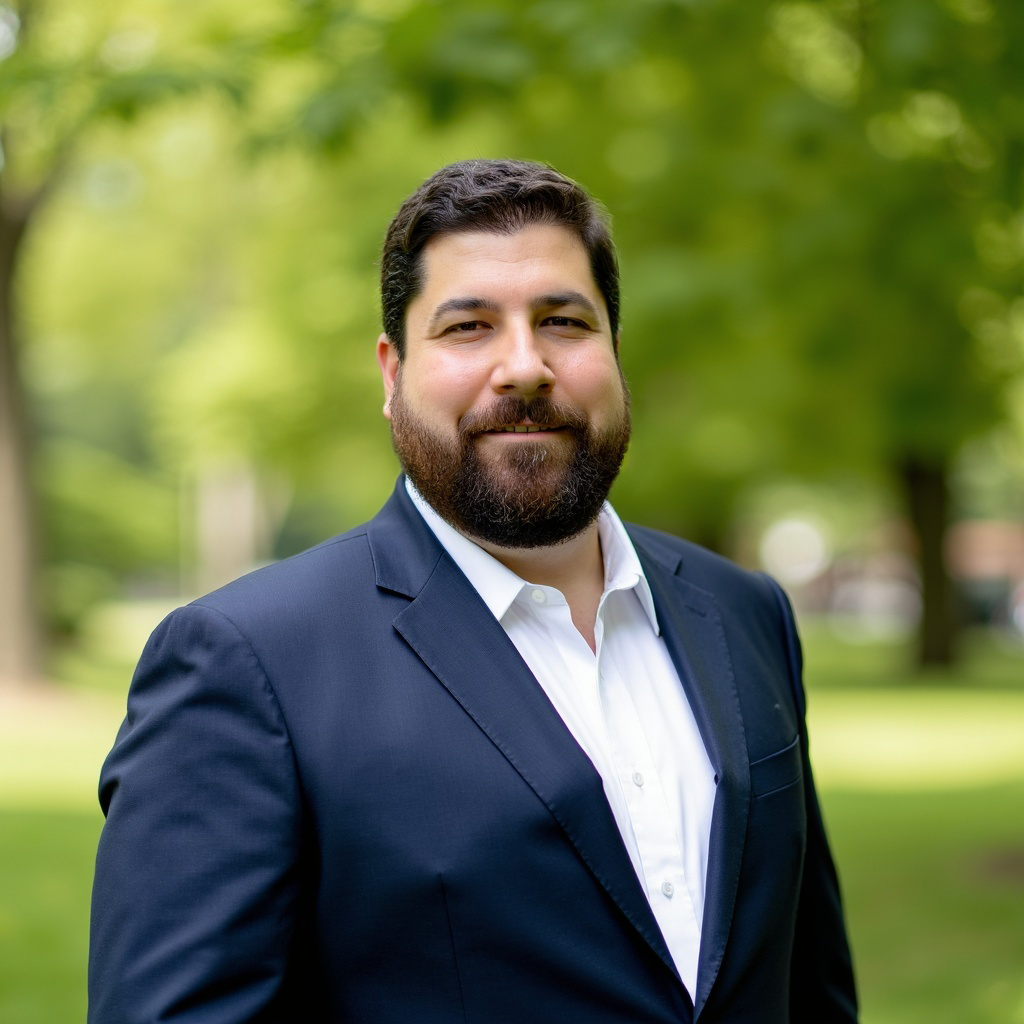
Matt Lira, Executive Director, Invest America
Matt Lira currently serves as the Executive Director of Invest America. Lira brings a unique mix of experience across government, national campaigns, and the private sector, with a career spent at the intersection of policy, politics, and the digital economy. Known for building bipartisan coalitions and delivering practical results, he approaches public problem-solving with a pragmatic, future-focused perspective.
Previously, Matt served as Special Assistant to the President for Innovation Policy in the White House Office of American Innovation, where he led efforts to modernize federal digital services, bolster U.S. global leadership in emerging technologies, and advance policy reforms that strengthened the nation’s innovation ecosystem. Before the White House, he was a senior advisor to House Majority Leader Kevin McCarthy and House Majority Leader Eric Cantor, helping shepherd bipartisan legislation such as the JOBS Act and the TALENT Act (the final law signed by President Obama) to expand economic opportunity and bring private-sector expertise into government. Lira has also worked on several national campaigns, served as an Institute of Politics Fellow at the Harvard Kennedy School, and as an advisor to a range of national organizations and companies.
Across all of these roles, Matt has earned a reputation as a pragmatic bridge-builder—someone who brings together public, private, and civic leaders to tackle big challenges and pursue practical reforms that strengthen America’s long-term competitiveness.
Signe-Mary McKernan, Vice President, Family and Financial Well-Being Division, Urban Institute
Signe-Mary McKernan is vice president of the Family and Financial Well-Being Division. She is a wealth and financial well-building expert with two decades of experience researching the impact of wealth-building programs and policies on family well-being. She coedited the book Asset Building and Low-Income Families and coauthored a chapter in the Oxford Handbook of the Economics of Poverty. Before joining the Urban Institute, she was lead economist on credit issues at the Federal Trade Commission. She has been a visiting and adjunct professor at Georgetown University.
Her research has been published in books, policy briefs, reports, and refereed journals including the Journal of Public Economics, American Economic Review Papers and Proceedings, Demography, and Review of Economics and Statistics. She has testified before Congress and the District of Columbia Council and been cited in media outlets such as the New York Times, Washington Post, Forbes, and Time. She has a bachelor’s degree from UC Berkeley and a PhD in economics from Brown University.

Benita Melton, Program Director, Education, Charles Stewart Mott Foundation
Benita Melton, director of the Mott Foundation’s Education program, has worked for the Foundation for nearly 30 years. She joined Mott as an associate program officer in 1995, was promoted to program officer in 2000 and program director in 2015. She has worked primarily on federal and state budget and tax policy issues, as well as strategies to help low- and moderate-income families save money and build assets. A Michigan native and graduate of Michigan State University, Melton earned a bachelor’s degree in finance and accounting. She is a member of Asset Funders Network Executive Committee and active in other grantmaker affinity groups.
Prior to joining Mott, she worked for the Pistons-Palace Foundation, the philanthropic arm of the Detroit Pistons basketball franchise.
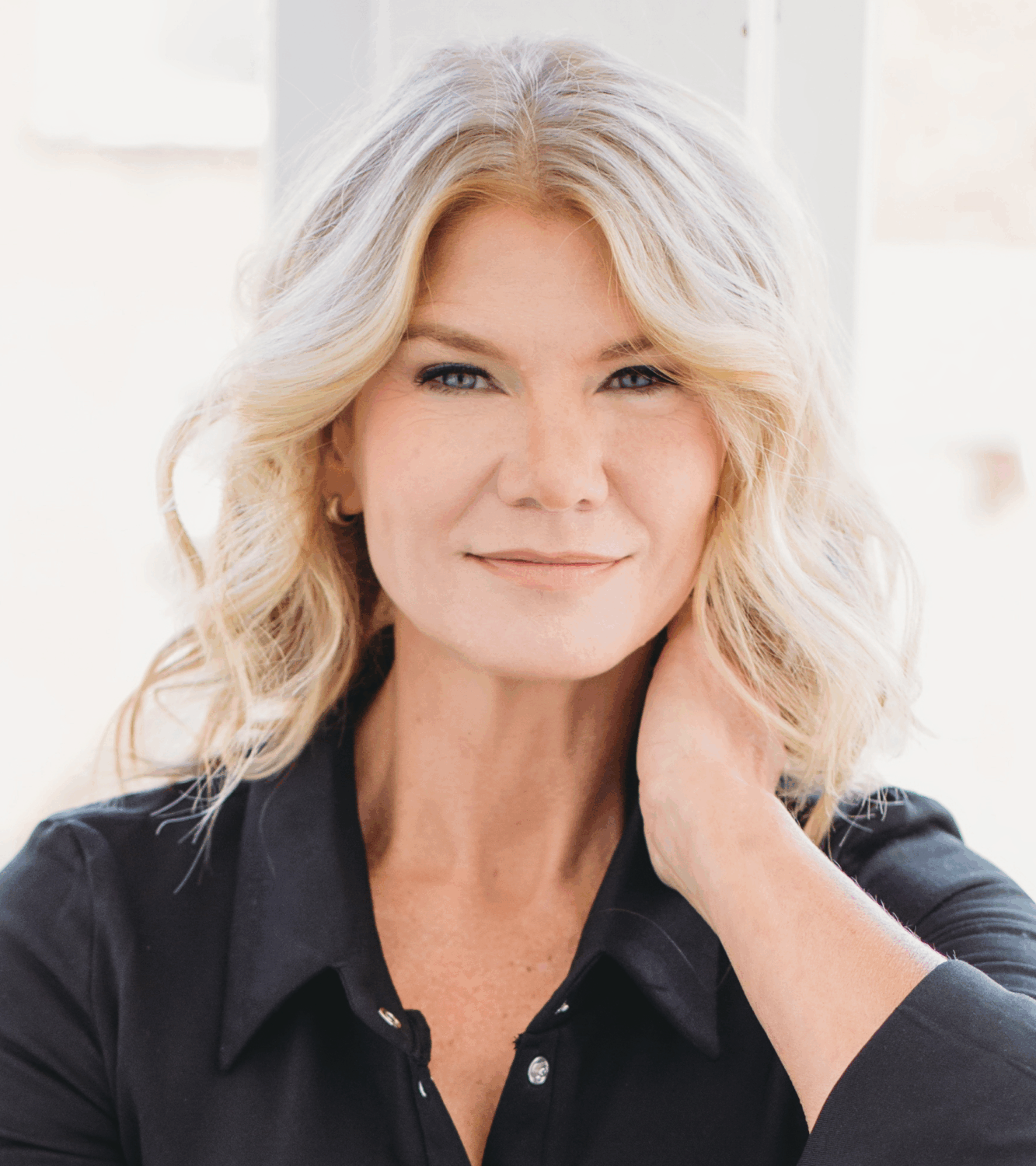
Ida Rademacher, Vice President, Aspen Institute; Co–Executive Director, Aspen Institute Financial Security Program
Ida Rademacher is a vice president at the Aspen Institute and co-executive director of the Aspen Financial Security Program. She also launched and leads the Aspen Partnership for an Inclusive Economy. A leading voice on Americans’ financial health, Ida is also known for building innovative teams, initiatives and events that fuel new insights and fresh thinking about how to simultaneously build economic inclusion and economic growth. Her efforts have resulted in the creation of several cutting-edge initiatives and events, including the Expanding Prosperity Impact Collaborative (EPIC), the Aspen Leadership Forum on Retirement Savings, Benefits21, the Global Inclusive Growth Summit and The Future of Wealth.
In Ida’s prior work as Chief Program Officer at Prosperity Now (formerly CFED), she created the multi-institutional team responsible for leading the U.S. Consumer Financial Protection Bureau’s Consumer Financial Well-Being Metrics Project, and also led the creation of Upside Down, a program examining ways the U.S. income tax code generates disparate wealth building opportunities and contributes to growing levels of wealth inequality. Ida has testified on numerous occasions before Congress and contributes regularly to news and commentary on economic policy and consumer finance topics in outlets including the New York Times, the Wall Street Journal, the Washington Post, Politico and Marketplace.