Person-Centered Language
Contents
Why Language Matters
A theme that consistently emerges when working with community leaders is that the words we use matter. They convey individual experiences and backgrounds, power, and other subtext, especially in communicating about the problems we seek to solve as a society. Two people can have completely different meanings or interpretations of the same word, which can create confusion, a lack of clarity, and mistrust.
Language and how it is communicated is especially important when working alongside people with lived experience of financial insecurity, where a lack of follow-through, unclear expectations, and a mismatch of intention and impact have long existed in policymaking.
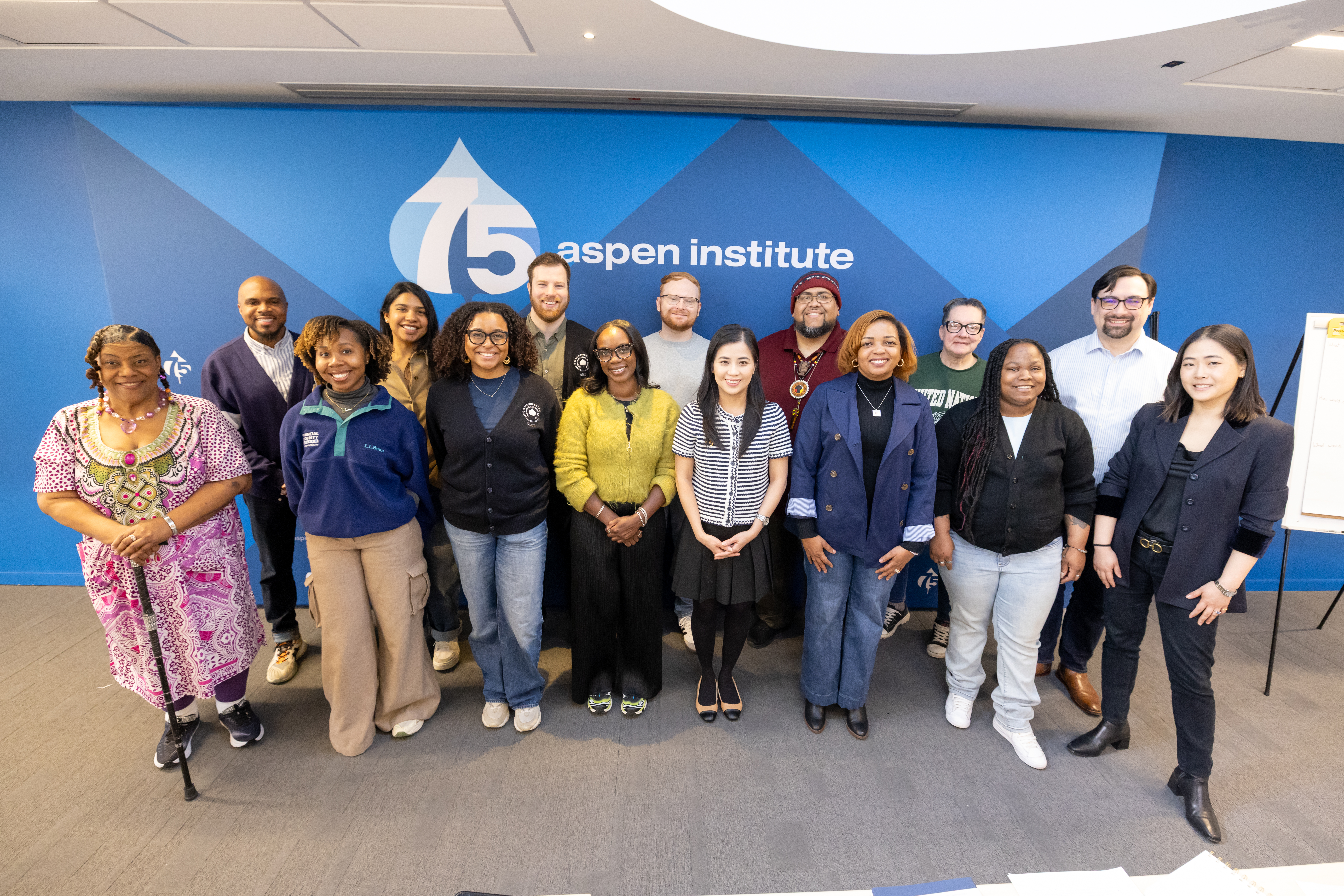
The Person-Centered Community of Practice (PCCP) aims to shift this paradigm. Together, we share learnings from our respective organizations’ work and collaborate on how we can synthesize and communicate these lessons to help other organizations that are on their own person-centered journey.
PCCP leaders noted that having shared language was a key starting point for organizations looking to adopt person-centered practices. To support these efforts, we have developed a set of common terms to ensure that everyone has a clear and shared understanding of how we talk about person-centered work internally and externally.
About This Resource
Together, we have produced a glossary of terms with plain-language descriptions and related resources, defining the language that PCCP members frequently use to describe person-centered work. This list is not exhaustive but rather a starting point to build upon. Just as language is a living endeavor, we aim for this resource to be revised regularly to be reflective of our expanding, evolving, and fundamentally human work together.
Core Concepts
Person-centered Approaches
Ways of developing policies and designing programs that respect the expertise of people most impacted by them. These approaches are shaped by and responsive to experiential knowledge in communities and core values of dignity, respect, accountability, sustainability, and adaptability.
Other organizations may use terms like human-centered, user-centered, or participatory policymaking. As a community of practice, we choose to use person-centered to ensure our work is grounded in communities and, as one member puts it, “recogniz[es] peoples’ strengths, aspirations, and agency.”
Economic Well-being
A level of economic stability that allows someone to live a dignified life, pursue happiness and joy without sacrificing basic needs, and have the foundations needed to thrive.
For PCCP members, economic well-being is a more holistic term that encompasses peoples’ full lives, placing greater emphasis on experiences that are not captured through traditional metrics like income, assets, and debts.
Lived Experience
Having direct experience with a circumstance, condition, program, or other intervention.
In our efforts to influence policymaking and program design, these experiences often reflect periods of economic insecurity or conditions of diminished economic well-being. Lived experience offers an expertise that complements, and cannot be replaced by, knowledge gained through educational training.
PCCP member organizations work with a range of community leaders across the U.S. These leaders offer insights that are grounded in their own lived experience, shaped by their leadership in their communities, and informed by the diverse perspectives of their communities.
Power Building
Power shapes how people with lived experience participate in policymaking and program design and how an organization does its work.
It is the responsibility of organizational staff who work alongside community leaders to recognize and remove power imbalances in decision-making. Power Building is an organizational disposition and active practice that fundamentally shifts influence from staff to community leaders. Actions could include intentionally placing equal or greater weight in community perspectives and finding creative ways of communication and expression to make sure all voices are heard.
Responsiveness and Accountability
Organizations are responsive to people with lived experience by making and following through on commitments. This requires awareness and respect by all parties of cultural, social, economic, and generational circumstances that shape perspectives, expectations, and needs.
Organizational staff should take ownership and be transparent about their actions, ensure community leaders are part of the decision-making process, proactively communicate the outcomes—whether they are positive or negative—and provide space for correction and improvement through open feedback opportunities. Over time, holding oneself and others accountable for shared expectations and actions deepens relationships and trust.
Co-creation
The collaborative and iterative process that lived experts and trusted partners take to work together to develop new insights, ideas, projects, or approaches.
True co-creation doesn’t happen only at one step of a project; it should actively involve all parties throughout the entire process, from understanding a problem or root cause to designing solutions and revisiting them regularly for steady improvement. Co-creation assumes and creates opportunities for the leadership and agency of community leaders.
One PCCP organization, Center for Law and Social Policy, defines co-creation as “an approach to community engagement that centers working relationships with community members.” Other organizations may use slightly different language, like co-design, to describe this process. PCCP member ATD Fourth World, uses a “Merging of Knowledge” approach in their work that acts as both a “set of values and a methodology.” This approach equally weighs and weaves together the expertise of people living in poverty, academics, and professionals “to come to a collective understanding of poverty and build holistic solutions.”
Trusted Partner
A person, group, or organization that establishes and strengthens trust over time by consistently demonstrating respect, reliability, authenticity, transparency, responsiveness, and accountability. All trusted partnerships require significant time to build organic relationships, shared expectations, and truly co-created work.
Related