An art studio helps a Pennsylvania city connect and tackle issues
Subscribe to Weave’s Newsletter
This story was originally published on Weave’s newsletter. Every week, you’ll get resources on how to weave our communities and restore social trust.
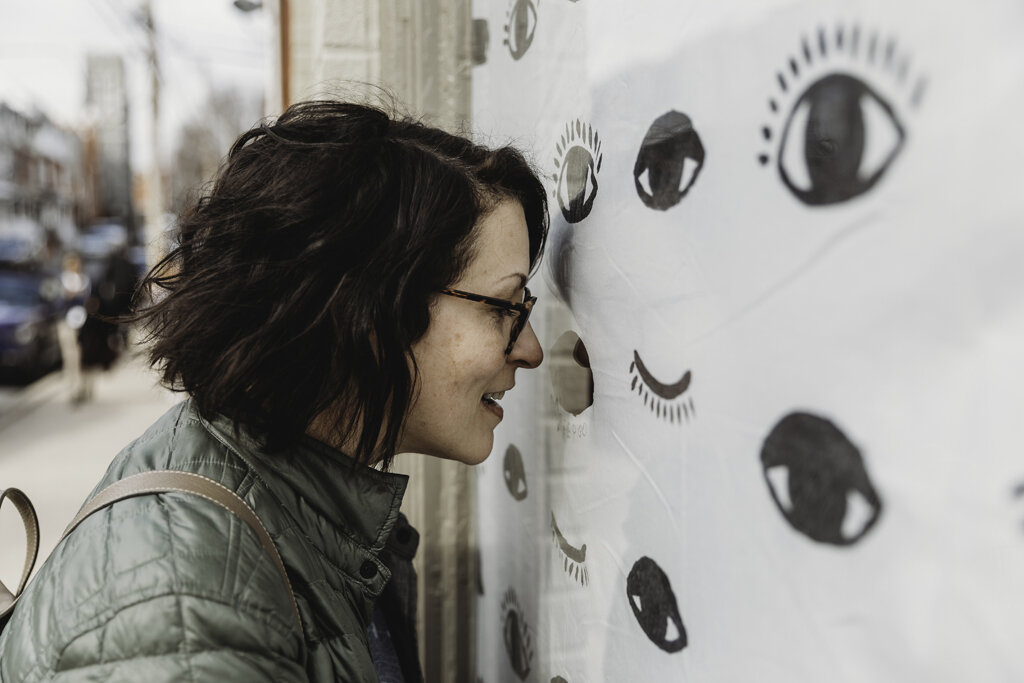
If you walk down Chestnut Street in downtown Lancaster, PA, you might find a decorated window with an invitation to take a peep inside. If you do, you’ll find a neighbor doing something artsy – and often unusual – inside.
People might be trying out a dance, performing a monologue, playing a guitar or violin, or even cooking up a dish. Every day for a month, you’ll find a different neighbor there. Folks sign-up and can do whatever they want in the space – of course, with a few guidelines to keep it clean and neighborly.
Why? – you may be wondering. Why not? – asks artist Libby Modern, who runs the window and the studio inside.
“A lot of people when they are out in the world feel isolated and don’t feel comfortable starting a conversation or engaging with someone, even if they are their next-door neighbor,” she says. “The whole idea is to get people to start conversations, so that as you walk by a neighbor you can stop them and say, ‘I saw you at the art peep show!’”
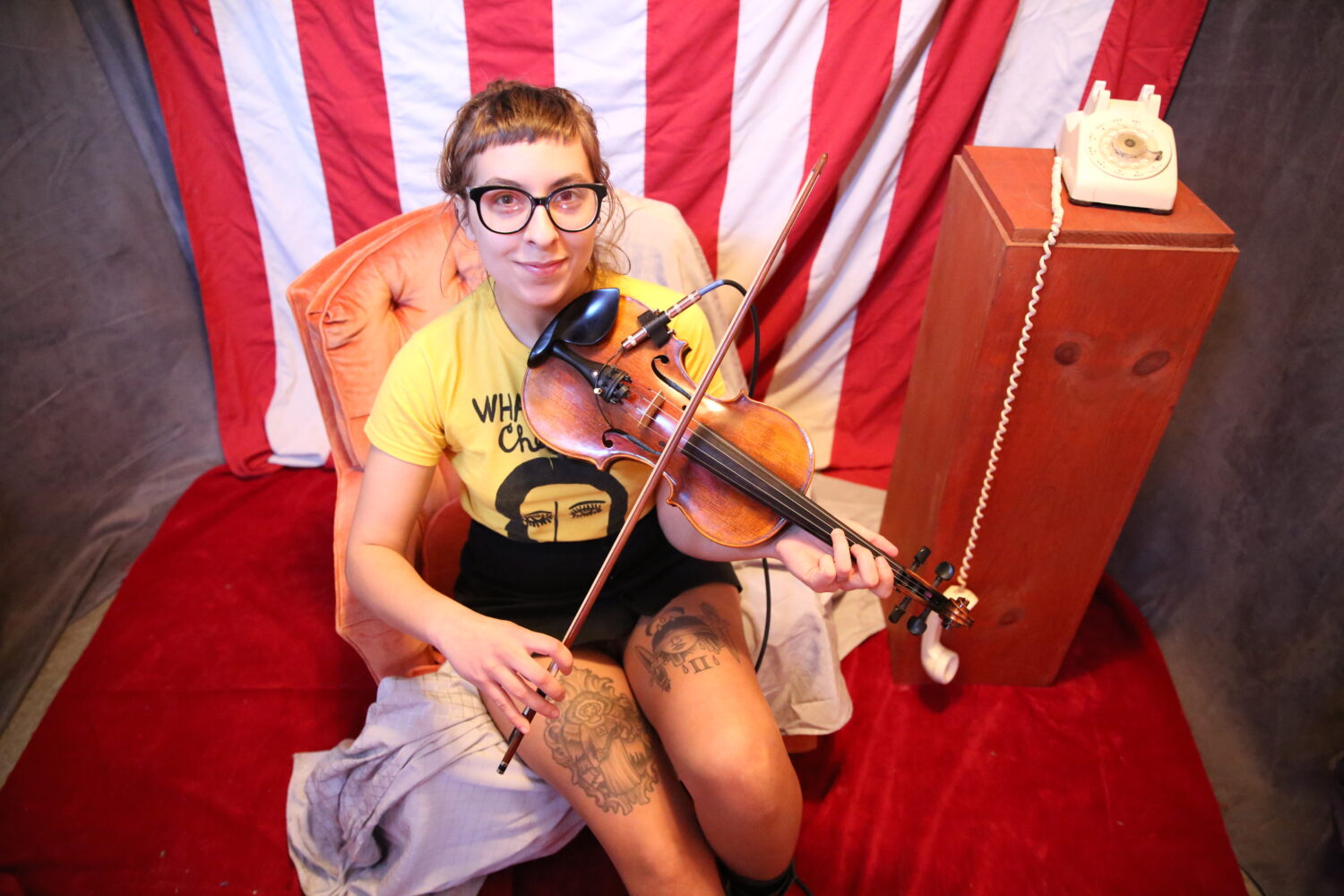
A neighbor performs for a day at the art peep show in Lancaster, PA. Photo credit: Michelle Johnsen
Modern says the peep show evolved naturally. About 14 years ago, she rented a place with big windows as her graphic design and painting studio. Folks would peek into the studio as they walked by. To encourage them, she started putting paintings or small installations in the window. Then she created a storefront short story series. “I would put a sentence of a short story there every day until the story was done,” says Modern.
Folks saw it as an invitation and started walking in to talk. Middle schoolers would come after school looking for something to do and Modern would let them paint. Adults said they wanted to do art, so she opened her studio to them. She started organizing concerts and lectures. Over time, she had created community.
The studio, she says, became a space “where you see some of the same people and some new people, where you all are experiencing a communal art experience that is so different and exciting that you want to invite your friends and family in. It sparks a web of connection.”
And the power of connection has grown well beyond the Art Peep Show.
For example, when the city planned to create bicycle lanes, the town meeting got heated. Some folks were angry about losing parking spaces and traffic getting worse. So Modern partnered with the city and artfully decorated some bikes. “We created this space where people could come and borrow these crazy bikes and ride them around town and then come back and talk about how they feel about biking,” she says.
“It gave people a space where they could interact with this issue in a way that was full of delight and introspection, rather than anger and frustration.”
City officials have now brought collaborative art into their civic engagement work. They invite artists to create community art projects that capture insights and opinions on how to improve public services. Last February, the city launched the Neighborhood Art Project, a new initiative designed to encourage public art and creative placemaking in neighborhoods, and continued their Love Your Block program, which awards grants to residents dedicated to revitalizing their neighborhoods through community-led projects, including art initiatives.
“Art is all about giving people a chance to imagine different futures and different possibilities,” says Modern. “And when you create the space for people to share it together, it creates so many possibilities and opportunities for them to connect.”
You can explore many of Modern’s participative community artworks on her website. Weave is interested in knowing how many folks are using art to weave connection and trust in their communities. If you are, share your story in this survey. We may mention your project in a future newsletter and organize a community discussion on Art and Weaving.
A Clear Path Forward: Catalyzing Success for Working Learners in Texas Nursing Programs

Reflections and Horizons
Socrates Seminars
A Short Guide to the Longevity Economy
In Session: Danny Harris
Realizing the Potential of the Science Community to Support Rising Generations in STEM
Leading with Purpose: Why Bodily Autonomy is the Ultimate Act of Freedom
In Session Reflections
Why Current Solutions Fail Our Most Painful Financial Shocks: Insights from our Community Advisory Group