
Birmingham and Beyond: Mayor Woodfin’s Local Leadership and Lasting Impact
Raegan Harris
Intern
From April 27-29, hundreds of mayors, city innovators, academics, artists, and other urban leaders gathered in Madrid for Bloomberg CityLab 2026. Hosted by Bloomberg Philanthropies and the Aspen Institute, CityLab 2026 featured three eventful days of connection, dialogue, and ideas exchange about some of the most pressing challenges and opportunities facing cities around the globe. Attendees explored issues ranging from housing affordability to youth leadership to public space, set against the backdrop of Madrid’s vibrant urban landscape.
I have interned on the City Innovation Team at the Aspen Institute since last September and have contributed to CityLab Madrid from its initial planning through its execution. As someone with a deep love for urban environments, the experience gave me firsthand exposure to many of the shared urban challenges and replicable solutions discussed throughout the conference.
Since returning from Madrid to my home in Alabama, I have continued reflecting on the CityLab ethos of thinking globally while acting locally. I have considered which innovations discussed in Madrid might benefit the cities of my home state, and in turn have reflected on what Alabama’s cities might have to offer to the rest of the world.
Birmingham, Alabama – a city rich in culture, history, and industry – has a lot to offer. Today, much of that is thanks to Mayor Randall Woodfin, now serving his third term in office.
Mayor Woodfin grew up in the city he now governs. After graduating from Morehouse College and Samford University’s Cumberland School of Law, Mayor Woodfin served as a city attorney, and then President of the Birmingham Board of Education. Since taking office in 2017, he has been guided by a philosophy of “putting people first”, advancing this vision through a focus on enhancing education, expanding economic opportunity, and leveraging public-private partnerships.
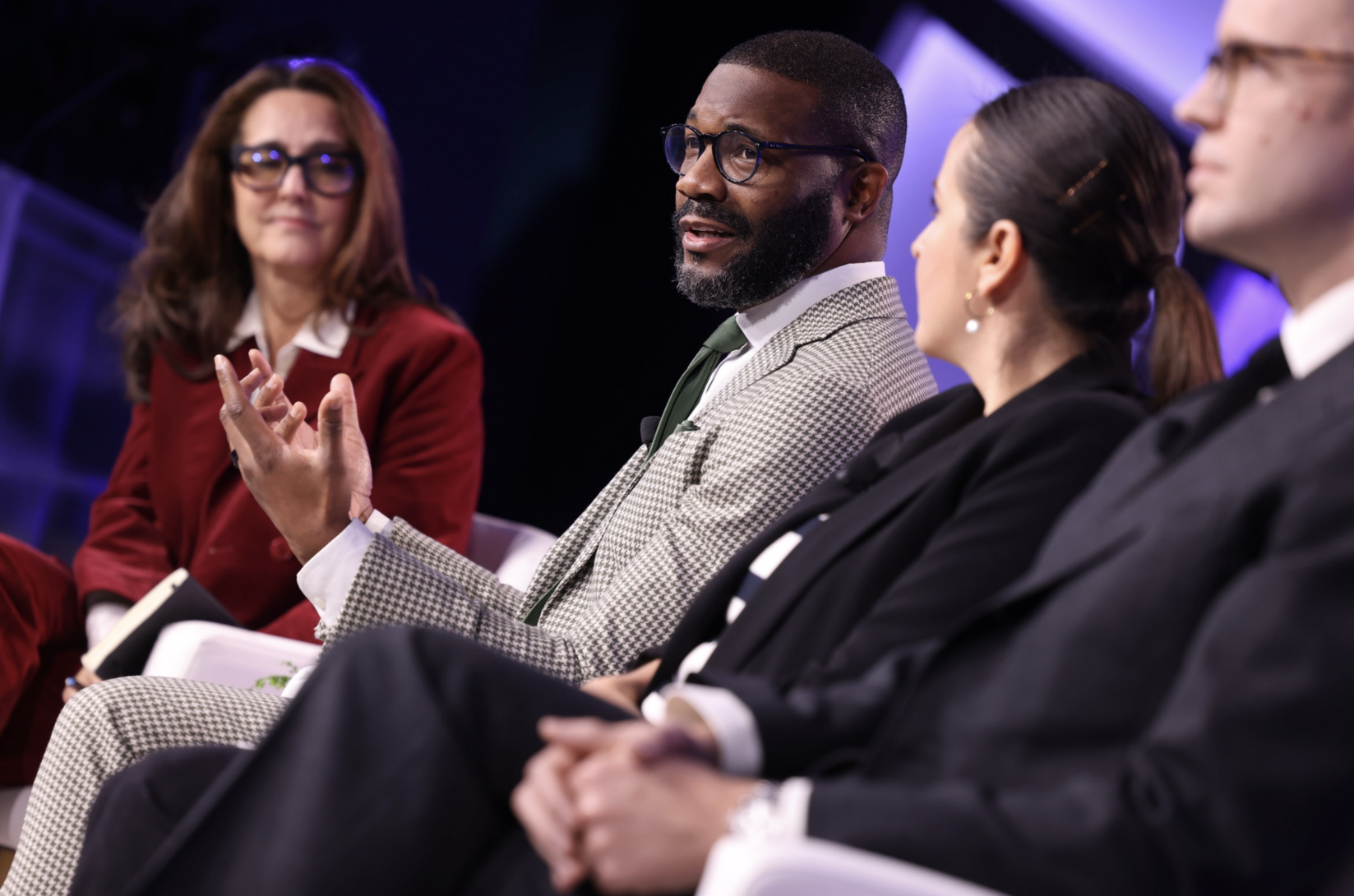
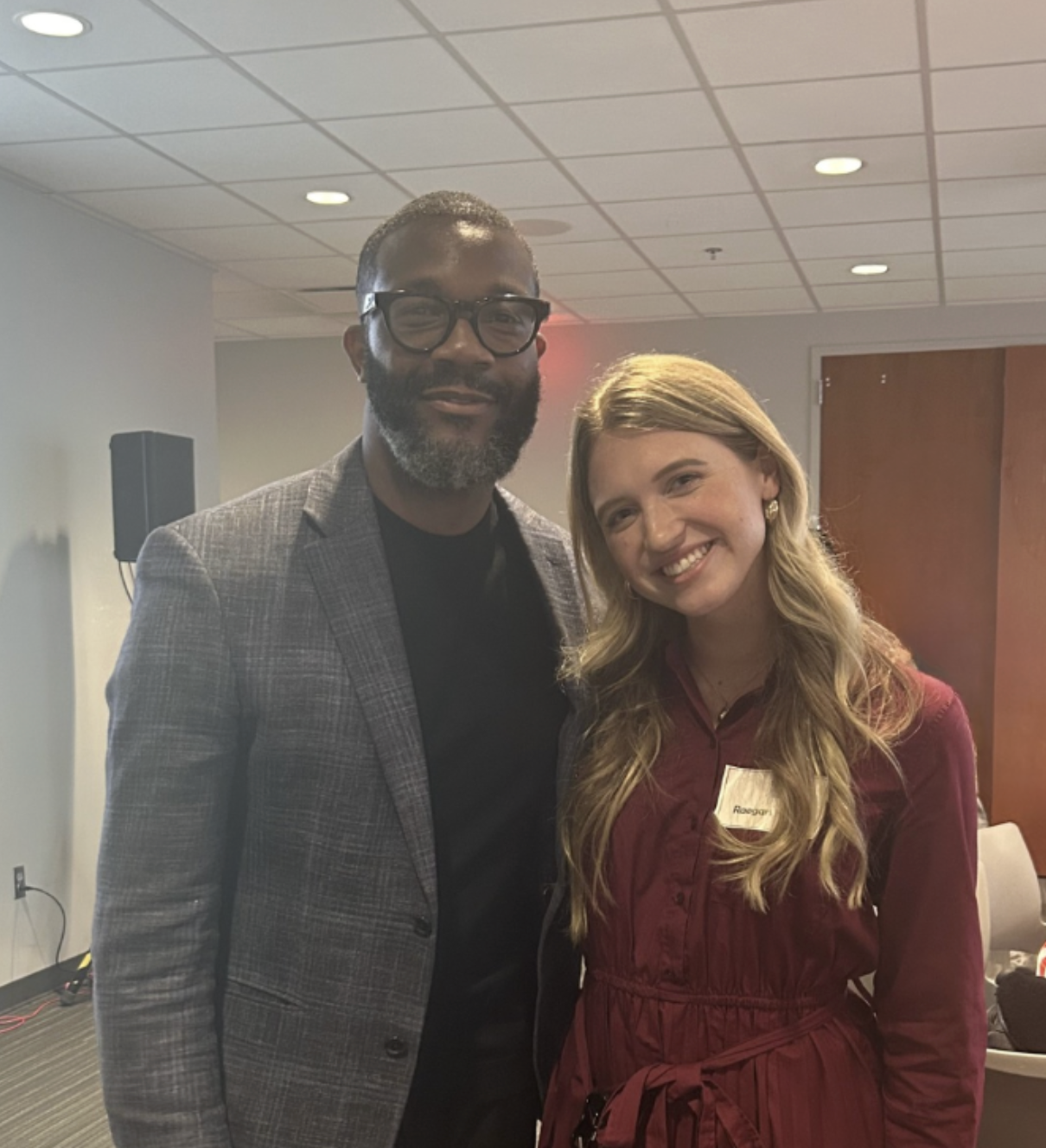
In 2025, Mayor Woodfin released Son of Birmingham, a memoir that is simultaneously humorous and poignant. When I met with him in March 2026 to discuss his book and his experiences both speaking at and attending past Bloomberg CityLab convenings, our conversation evolved into a broader reflection on leadership, legacy, and his first-term energy, third-term wisdom as Mayor of Birmingham.
As I placed my phone down to record our conversation, Mayor Woodfin shook his head and moved it closer to himself, saying, “No, no. I’m softspoken.” With an air of authenticity and quiet confidence, Mayor Woodfin began to tell me about his journey into leadership and his goals for the City of Birmingham.
In your book, Son of Birmingham, you talk about how your upbringing in Birmingham shaped your commitment to the city. Now that you’re in your third term, how has your perspective on the city evolved?
I would say I have first-term energy, but I know where the landmines are and how to avoid them. Coming into office, you’re fresh, you think you can do anything with reckless abandonment. Then you hit some walls. So my perspective has changed in the sense that I have time and experience under my belt, but I still have first-term energy. This job requires you to keep a sense of urgency, and for those who fail to keep that sense of urgency and get relaxed in the job…that’s the moment you’re not putting people first. I’m still inspired to be in this position. We don’t have a lot of time. We got to get it done.
You just mentioned your motto, “Putting People First”. In your book, you extensively discuss the concept of servant leadership. Do you have any advice for local government officials who want to become better servant leaders and put their people first?
Listen more than you talk. I think those who want to be in public service – whether it’s civil service, working for an elected official, or being the elected official – we are best at tending to issues and solving problems on people’s behalf when we listen more than we talk. I’ve learned that city hall does not have all the answers. I’ve also learned that city hall has to be humble enough to go find the answers. A lot of the time that requires us to be quiet. If we do talk, it should be in question form. It turns out, when you seek understanding from the people you represent, when you seek their input, when you value their ideas, when you are able to listen to not only their concerns, their worries, their problems, but their hopes and their dreams and wishes, you’re actually able to work on their behalf.
“I’ve learned that city hall does not have all the answers. I’ve also learned that city hall has to be humble enough to go find the answers.”
Another major theme of your book involves Birmingham’s Civil Rights legacy. What would you tell local leaders who want to not only modernize government, but also prioritize repairing historical harm and honoring local changemakers?
I’ll start with the historical harm first. That requires an extreme deep dive of vulnerability. Even in modern times, in the Civil Rights district here in the City of Birmingham, there’s been harm caused by people coming in saying they want to do something to the district. There’s been other harm, with a local she-ro being recognized, and then that honor being taken away. All of that combined, just since I’ve been mayor, has created a significant amount of mistrust, or distrust, whatever word you want to use, to be created. So, when you have systematic harm, or deep trauma, or no trust, it requires you to slow down before you can make the investments and move forward.
What that looks like is not necessarily an apology tour, but more so a tour that allows you to hear from the people that have been harmed. Hear from the people that have been hurt. Hear their cries, their concerns. They’re not victims for victims’ sake, but if they are a part of the historic nature in this district, then it’s incumbent upon us to find out those harms. If we are a part of the harms, then it’s necessary and it’s warranted for us to offer a sincere apology. Not just this blanket apology, just because. You got to get overly vulnerable to understand; what were the mistakes, where did we mess up? Then you can heal and move forward. Ideally, you can move forward together with those who felt the harm or who feel the pain.
On the legacy piece, I would think that we do that every year. We do it in various forms, but every Magic City Classic [an annual rivalry football game between Alabama A&M University and Alabama State University] we honor a person that is steeped in Birmingham’s legacy and struggle, or who champions change for the betterment of all people in Birmingham. Many of them have been a part of the Civil Rights Movement. Two of my favorite ones have been Dr. Richard Harris, first Black mayor of Birmingham, and the other was Odessa Woolfolk, who was a teacher during the Civil Rights Movement and literally turned her back as her students walked out of the classroom or climbed out of the window to go protest. And she’s just a legit she-ro. We found ways to honor her legacy by literally creating a program that was all about her. We honor the awardees by letting them be in a parade where thousands of people on this parade route see them. We cap it off when they’re honored in front of about 70,000 people during halftime at the Magic City Classic.
In the past, you have both attended and spoken at Bloomberg CityLab. You’re well aware that CityLab revolves around the sharing of replicable urban governance solutions. What’s an innovation in local governance that you’re most proud of, and how has it significantly impacted the way Birmingham operates?
Yeah, so, I would first just give a shout out to Michael Bloomberg, his entire team, Patti [Patricia E. Harris, CEO of Bloomberg Philanthropies], and CityLab. I personally and professionally subscribe to the idea that there are more solutions than there are problems. What I’ve always appreciated about CityLab, whether it’s been in Detroit, DC or Amsterdam, any other places they’ve held it, is that it’s an incubator of ideas, best practices, and solutions.
Here, Birmingham Promise is the shining star. It is the standard of innovation within city hall. It’s a simple notion that Birmingham children – who live in our city limits, who finish our high schools – should not be stopped by a financial barrier from attending The University of Alabama, Alabama State, or any other public or two-year college.
I mean, you know your own personal journey of figuring out how expensive graduate school is. Apply that to our children here in the city limits of Birmingham, just to be able to afford undergrad. It really is a notion architecturally designed here in City Hall to build a program that supports, not only tuition free scholarships through a public-private partnership, but supports the city of Birmingham’s responsibility and role of investing in the future workforce of Birmingham. I never want you or anyone to think Birmingham Promise is charity work or something just to make people feel good. It’s an economic mobility strategy for the next and youngest generation.
They can be gainfully employed while in high school, be exposed to a career that they have an interest or dream or passion in, and be able to go out to college, major in that, and already have relationships with that employer. Every summer, they go back to that employer. When they’re in your position, if they don’t want to go to a graduate program, they can take a job opportunity with that same employer. They bring that talent back home, become a part of our city’s workforce, and are able to take care of their family and provide for themselves. Oh, and by the way, they’re able to graduate from college debt-free. So that was all intentionally designed and created here in City Hall, and then we were very intentional about literally kicking it out of city hall so that it can be sustainable. We created its own board, 501(c)(3) status, its own executive director, and now I serve on the board. The commitment from the city has been $10 million the first five years, and we’ve just renewed another $10 million over the next five. We’re in the sixth year, and we’ve been able to do about $17 million towards tuition scholarships.
Birmingham Promise is a fundamental game changer of how you design something in city hall that can not only sustain each young person’s individual future, but also sustain our city’s future workforce.
Do you have any advice for urban leaders who would want to start a similar program?
Yes. You start with building something that can work for your community. Be bold and broad. Don’t narrow it, because then you narrow the opportunity.
Also, this is probably the most important public-private partnership that you can have. In this conversation of cradle to career, the bookend is this Birmingham Promise program. The advice that I would give to any mayor in a midsize or large city is that it’s probably the best partnership you can have with your corporations, your small business owners, your entrepreneurs, because all of them need a pipeline for their workforce.
This year, much of CityLab’s programming revolved around ideas of belonging and connection. What does this mean to you in the context of Birmingham today?
We find ourselves at the local level, and definitely at the federal level, on this line of hope and fear. I think we’re traversing that world. Particularly in this country, the last 416 days have required us to find our tribe, to connect and reconnect with those who are holding on to this intangible of hope, to do the things we need to do to get past this moment, because it won’t always be this way.
I tell people, from a historical standpoint, that Birmingham, Alabama, did not start the civil rights movement. But here in Birmingham, the movement did scale up, and because of that scale up, it led to the Civil Rights Act of 1964. The things that happened here in ‘63 where children, preteens and teens and young adults put their bodies on the line, and the world saw…that was a tribe. That was a tribe of people willing to come together, to take risks. I think at CityLab, you have a tribe of people coming from around the world to say, “How can we connect and reconnect on best solutions and best practices? How does government show up for people?”
Do you have any other major takeaways from your times attending CityLab that you’d like to share?
I’ve always been fascinated by the fact that midsize, large, and even to an extent, small cities, have the same problems we have. They have the same issues around public safety and public infrastructure, and around how we show up in community as it relates to community development, economic development and quality of life. What I love about CityLab is it’s designed so that our problems, as well as our hopes and dreams, extend well beyond our borders. As much as I like speaking at CityLab, I love listening even more. You find that some of these international cities are really creative on some of the same issues we’re dealing with. It’s fascinating to learn what’s going on around the globe. CityLab provides you a global perspective on how to solve things that affect your local community.
“What I love about CityLab is it’s designed so that our problems, as well as our hopes and dreams, extend well beyond our borders.”
At this moment, what is giving you the most hope for Birmingham’s future? What are you most excited about?
I’m most excited about our youth. There’s a conversation I’m having right now with every adult in this community who will listen to me – corporate Birmingham, small business entrepreneurs, faith leaders, community leaders, neighborhood leaders, parents, school system educators – about our collective responsibility to support and educate our children.
The hope is that there’s genuine progress happening around student achievement. Two years ago, our school system had a 71 report card, and of all the schools combined, there were 15 F’s. Last year, it went up six points. It was a 77 and only 1 F. So this year, my expectations are high for what we do for our children. I expect to have zero F’s. It gets deeper than that. I’m excited about and hopeful about the work we do on the front end, marrying Birmingham Promise to early childhood, what we do for birth to five, and that notion that when children are born in the city, they are exposed to early childhood education. It puts them on the path for when they walk into any elementary school in the city. I’m very excited about that, very hopeful about that.
I liked how you titled each chapter of your book after an Outkast song. Is there a song that you’d give to this upcoming term?
Oh, that’s a great question that I have not thought about. I’m going to think about this all day.
Interested in which songs made the Mayor’s book? Check out the Son of Birmingham playlist.
Reflecting on my conversation with Mayor Woodfin and my experiences at Bloomberg CityLab Madrid, I began to notice common struggles and shared opportunities across cities, particularly in areas such as workforce, housing, and youth leadership. I concluded that meaningful urban innovation depends on two things: cities learning from one another and leaders remaining deeply connected to the communities they serve.
In 2023, Mayor Woodfin spoke on a CityLab panel called “What Happens When City Leaders Share Ideas”. He discussed how the Birmingham Promise Program was inspired by the Kalamazoo Promise program in Michigan and shaped by a tour of apprenticeship initiatives across Germany. It is because of Mayor Woodfin’s close contact with Kalamazoo and nine German cities that thousands of Birmingham children have been able to attend college debt-free.
In Madrid, I saw this same process of idea-sharing among cities unfold in every plenary, breakout, and informal conversation.
During one lunch period, I found myself seated with three mayors and an urban scholar, each from a different country. Together, they discussed the challenges their cities faced with providing accessible and affordable housing – an important topic of conversation in Birmingham and around the world. The previous day, Mayor Brandon Scott of Baltimore and Mayor Jaume Collboni of Barcelona had discussed affordable housing innovations with host of NPR 1A’s Jenn White. In that same opening plenary, Prime Minister of Spain Pedro Sánchez had claimed that the inability to obtain housing was Spain’s most significant source of inequality. Over the course of that lunch conversation, the four urban leaders at my table moved from shared frustration to mutual excitement over the new ideas they had gained. They exchanged business cards, and I thought about how important it was for such a space to exist.
Yet these exchanges between cities are only effective when urban leaders remain connected to the lived realities of their own constituencies. Mayor Woodfin told me how mayors should listen more than they talk, and strengthen communication channels by intentionally moving throughout their community to hear peoples’ stories and co-create solutions for a better future. At Bloomberg CityLab Madrid, Prime Minister Pedro Sánchez closed his speech with a challenge that communicates this idea well. He encouraged attendees to “continue to lead with proximity, always side-by-side with your citizens, no matter how long they have been registered or where they come from. Always use the best tools that we have, that are evidenced by this initiative: knowledge, evidence, and science. In short, that which makes us dignified and human” [translated from Spanish].
It is my belief that this combination of collaboration among city leaders and connection to constituents – exemplified by Mayor Woodfin and by the principles of Bloomberg CityLab – will lead us to a more collaborative, sustainable, and just world.
RAEGAN HARRIS served as an intern with City Innovation from fall 2025 to spring 2026. She recently graduated from the University of Alabama with a degree in Urban Planning and Community Development, and is beginning a Master’s in Community and Regional Planning at the University of Texas at Austin. Raegan is passionate about building more equitable, sustainable, and connected cities.
