
Helping Afghan women gain freedom in Arkansas
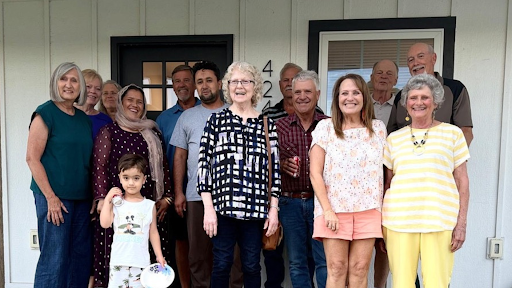
How a driver’s license is unlocking freedom for Afghan women in Arkansas
After the Taliban takeover of Afghanistan in 2021, around 200 Afghan refugee families settled in northwest Arkansas. A local organization, Canopy, helped the new families settle into their new lives in a foreign land. And the families soon discovered that their new communities had a remarkable hidden gem: an Afghan woman named Orzalah Bowers.
Bowers had emigrated from Afghanistan to Germany as a child, and then in 2018 to northwest Arkansas with her husband. Despite being married to an American, Bowers experienced profound culture shock when she arrived. When meeting her husband’s family for the first time, their Southern accents were incomprehensible to her. So Bowers taught herself how to understand them by watching hours of the Andy Griffith Show.
More importantly, Bowers didn’t have a driver’s license. Unable to go anywhere on her own in her new American town, Bowers felt trapped at home with two small children. Even walking felt unsafe because the streets in her neighborhood had no sidewalks.
“Not being able to be outside and to connect with other people, it was very hard for me,” Bowers says. “In Afghanistan, we are very social. We love to gather, we love to have friends over and cook.”
When the new Afghan families arrived, Bowers saw immediately that the women felt isolated in their homes. Many of their husbands had worked as translators for the US military and spoke English, but the women did not.
“Gaining independence is primarily about learning the language because without language you can’t do anything else, especially driving,” Bowers says. She knew that a driver’s license would be their “ticket for freedom.”
Arkansas doesn’t offer its driving test in Dari or Pashto, the languages most Afghan refugees speak, so learning English is the only way to get a license. Bowers felt she had to do something to help, so she asked around for volunteer tutors who could teach English to the new arrivals right in their own homes.
She found her first volunteer during a chance encounter at one of her children’s sporting events. Bowers overheard a woman telling a friend that she wanted to go abroad on a missionary trip, but her husband wasn’t ready for it yet. Bowers jumped in and introduced herself. Later, she suggested that she try out a missionary trip right here in your neighborhood. The woman agreed. She and her family have now become close friends with their Afghan “students.”
Today, Bowers coordinates six other tutors, including her father-in-law. New tutors can feel nervous about navigating the cultural differences, so Bowers goes along at first to smooth the way and act as a translator. Soon, the families get so comfortable that they “are way better without me in the room,” she laughs.
Bowers loves seeing her friends “visiting these Afghan ladies and learning through cooking and talking and having fun. It’s just beautiful.” In fact, she says, the whole northwest Arkansas community has embraced their new Afghan neighbors. “What I see is people waiting with open arms to come and hug you and say, ‘Welcome to my part of the US!’ It’s beautiful to see how this community is almost like living in a huge family.”
Bowers received a 2026 Weaver Award for her efforts. She is hoping to use the award to start a non-profit that will expand the reach of her tutoring project to include more people and other languages.
“It’s just in my heart to be there and help people,” she says. “And I don’t want to do it in one little spot. I want to do it for everyone. Being here and seeing the way people help each other has just inspired me.”
Subscribe to Weave’s Newsletter
Every other week, you’ll get resources on how to weave our communities and restore social trust.
