Aspen is a place for leaders to lift their sights above the possessions which possess them. To confront their own nature as human beings, to regain control over their own humanity by becoming more self-aware, more self-correcting, and hence more self-fulfilling.
In 2025, criminals stole an estimated $196 billion from U.S. households. Scams at this scale are a national security and financial crisis, and no single company, agency, or sector can solve them alone.
Over the past year, leaders across financial services, technology, retail, government, and consumer advocacy have taken meaningful steps to prevent scams and protect consumers. Now, the work needs sustained investment and coordinated action from both the public and private sectors to continue this momentum.
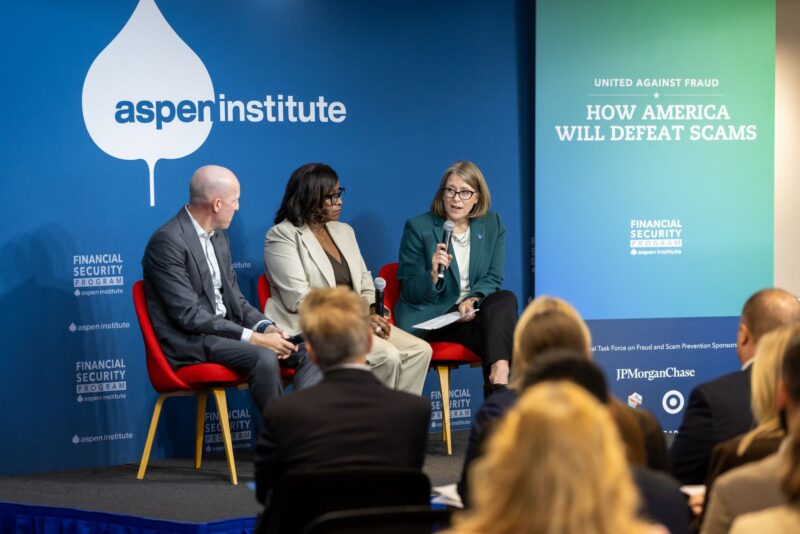
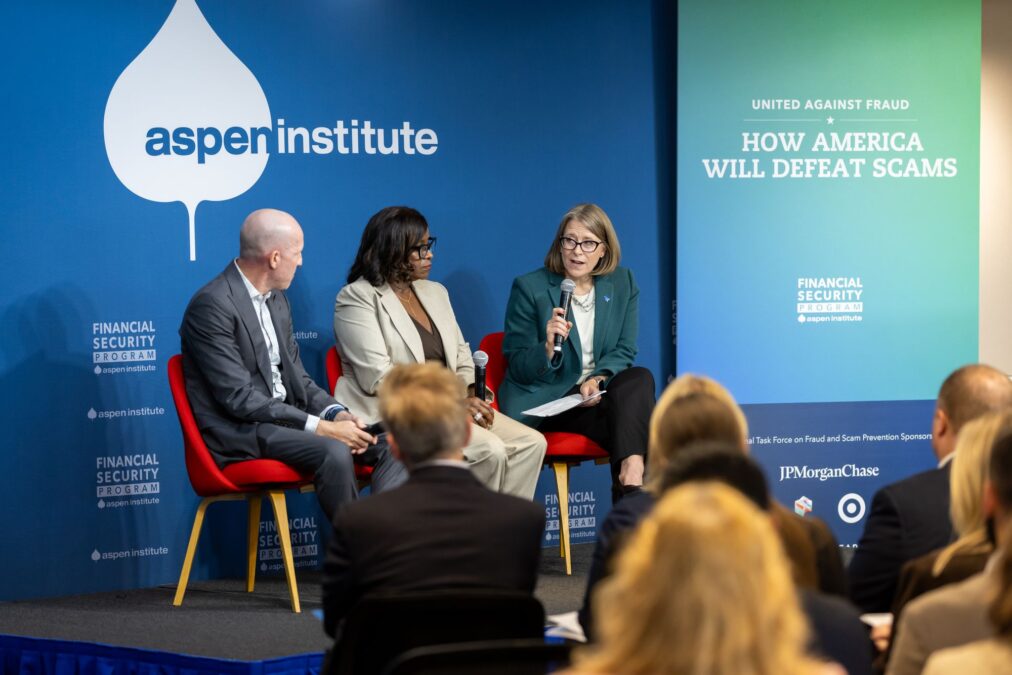
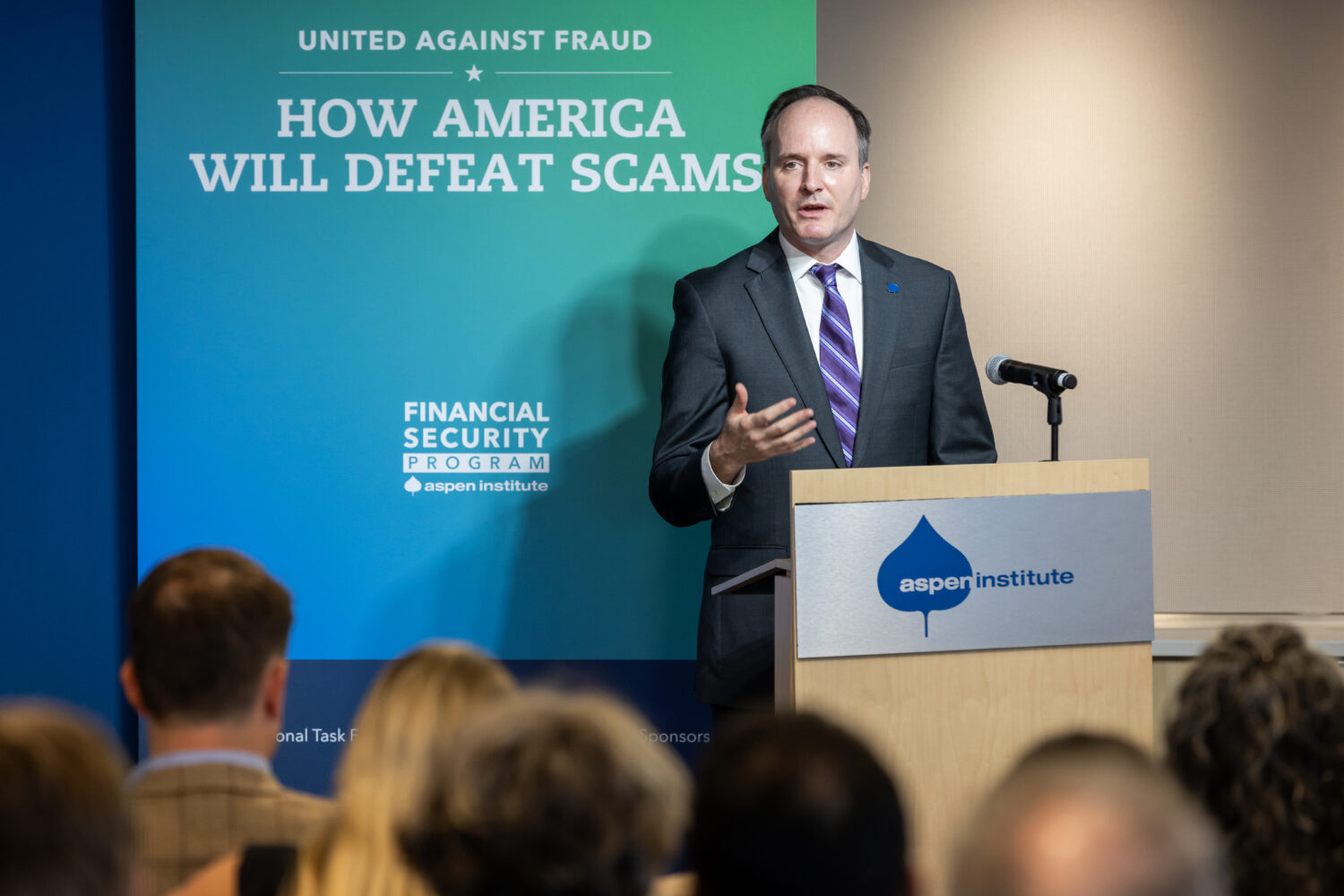
Join the Aspen Institute Financial Security Program’s Scam Prevention Initiative for the first annual State of Scam Prevention on December 2 at 1:30-3:30 p.m. ET. Together, we will:
Set actionable priorities for 2027
Celebrate progress and recognize the achievements of the past year
Aspen FSP has launched the Scam Prevention Initiative, an effort to drive systems-level change and advance practical solutions to combat scams and fraud.
A new White House Executive Order (March 6, 2026) is an important milestone in America’s fight against fraud and scams. Here, we outline several priorities that could help shape a strong federal action plan.
In this Q&A with Aspen FSP Fellow Nick Bourke, we go behind the scenes of National Task Force to Prevent Fraud and Scams and how it led to the an actionable strategy for multi-sector action.
This brief highlights new findings on the prevalence of fraud and scams in the United States, based on an analysis of data from the Understanding America Survey.
The U.S. needs a whole-of-ecosystem approach to stop fraud and scams. Read the proposed national strategy from the National Task Force on Fraud and Scam Prevention.