
Moving from Consensus to Consequence in Global Fraud and Scam Prevention

Erin Borġ (Thiemann)
Associate Director, Inclusive Financial System
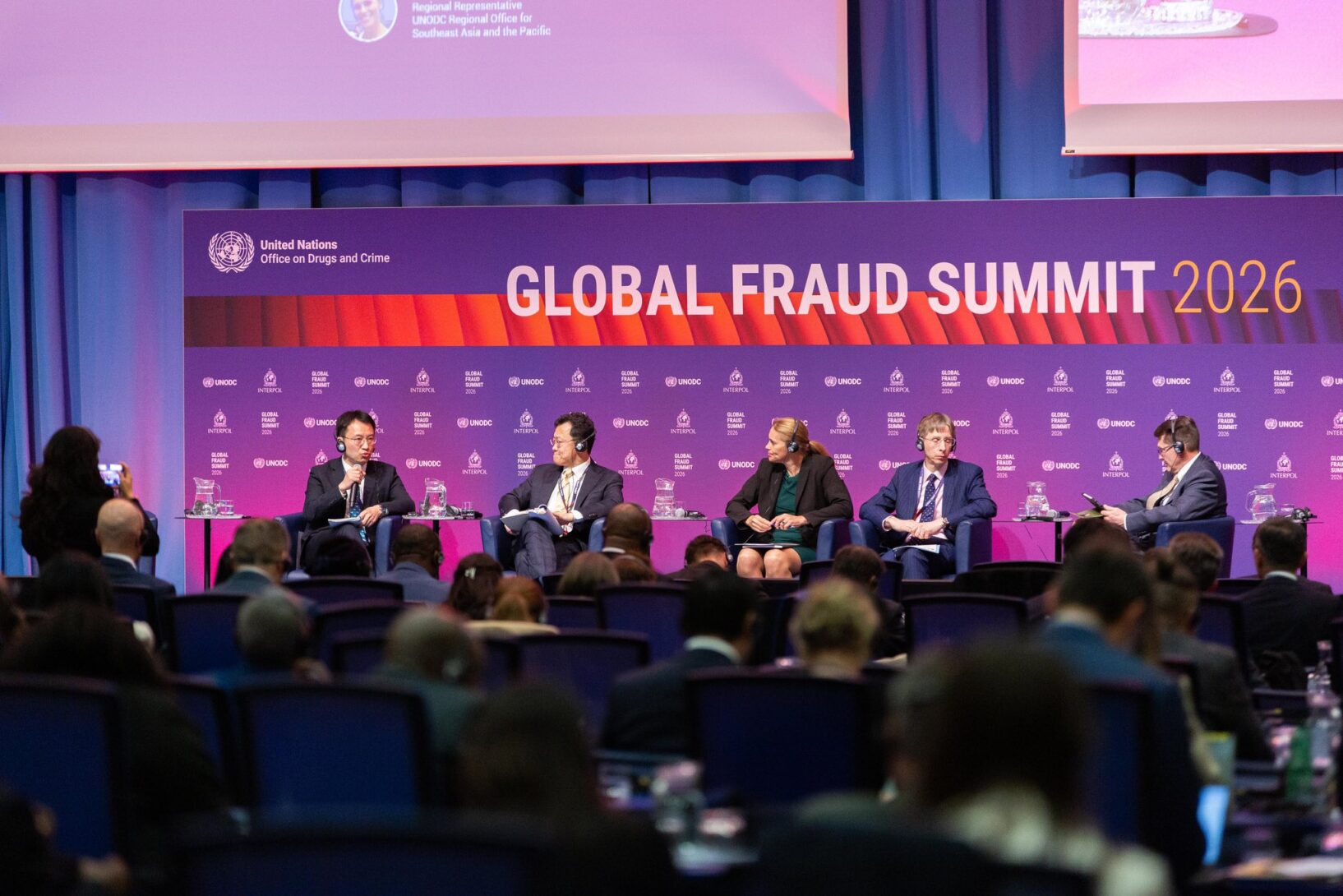
I recently spent a whirlwind few days in Vienna for the 2026 UNODC Global Fraud Summit, and if I had to summarize the atmosphere in one word, it would be momentum.
For years, a community of private, public, and social sector leaders have worked tirelessly to establish the undeniable fact that fraud and scams are a global crisis, with real people losing billions of dollars every year. In fact,when we convened the National Task Force on Fraud and Scam Prevention in 2024-2025, a significant portion of our mission was simply proving the sheer scale of the threat.
Now, in 2026, we have reached a turning point. We see clear evidence from every corner—media headlines, decisive government actions, and reports from civil society—documenting the true extent of the harm. We all should be incredibly proud of this breakthrough, as fraud and scams have officially entered the global zeitgeist. Now we get to move beyond “admiring the problem” to the messy, complicated business of solving it.
Given that we are no longer fighting just individual criminals but rather a sophisticated, multi-billion dollar business model, the global conversation has converged around three key solution areas:
- Have everyone at the table: Fraud and scams aren’t just a “law enforcement problem” or a “financial services problem.” They are a systemic challenge that requires a unified front involving governments, the private sector, and civil society. What’s more, the United States, despite our unique resources and reach, cannot solve this crisis in a vacuum. Scams are borderless by design, and protecting our citizens requires us to work in lockstep with the 180+ nations currently being confronted by these same adversaries. When we align our public and private defenses globally, we eliminate the jurisdiction-hopping that criminals rely on to stay out of reach.
- Disrupt the business model: Criminals thrive in the gaps between defenses. To make fraud less lucrative, we must share intelligence across all the touchpoints criminals target—from telecommunications networks and tech platforms to financial institutions. However, radical agreement on the need to share is only the first step. To achieve real-time disruption, we must dismantle the legal and regulatory barriers that currently inhibit the flow of information about bad actors. This means creating clear, safe frameworks for intelligence sharing across the board: private-to-private, private-to-public, and public-to-private. Until we fix these structural friction points, we are essentially fighting a high-speed digital war with one hand tied behind our collective back.
- Move toward action over awareness: While consumer education is a necessary “floor,” it cannot be the ceiling. While there are reasonable steps any of us can take to stay safe—much like a tourist knows not to wave a wad of cash around in a crowded square—we cannot expect that same tourist to walk into a legitimate-looking shop and instinctively know whether it’s a front for a sophisticated money laundering operation. After all, modern scams are not “some guy in a basement”; they are an industrial-scale enterprise run by Transnational Criminal Organizations (TCOs). When the adversary is a professionalized team of dozens working in concert to deceive, our collective public and private defense mechanisms must step up to the plate, focusing on structural safeguards that detect and disrupt these schemes before they ever reach a person’s phone or bank account.
While the Summit largely celebrated how far we’ve come, the hallway scuttlebutt centered on the practical hurdles that remain. Two major themes emerged that we must address if we want to move from consensus to consequence:
- Measuring Outcomes at Scale: While there is strong private-sector agreement on the importance of information sharing, leaders there aren’t yet sharing the data at scale, so I left feeling curious about whether the current intelligence exchanges are leading to measurable outcomes at scale. How are we defining success—is it the number of signals shared, a quantifiable dip in successful fraudulent transactions, or something else? Whatever the answer, we need a shared data-driven understanding of what actually moves the needle toward disrupting the scams business model.
- The Safe Harbor Gap: If we want the private sector to share confidently, we must provide the legal and policy frameworks that allow them to do so safely. Because without robust safe harbor protections, many organizations feel they are sharing at their own risk—balancing the desire to catch criminals against the very real threat of liability if they get it wrong.
The U.S. Opportunity (and Responsibility)
Overall, I was struck by how many of the private sector leaders driving innovation in scam prevention are based in or operate out of the United States. This gives us a unique opportunity—and a unique responsibility—to move swiftly and build on this global momentum.
And while the private sector is leaning in, I hope to see an even larger public sector delegation at the next summit to match the creative problem-solving of our industry leaders with the full weight of our public institutions. Aspen FSP has been encouraged by the strong signal sent by the recent Executive Order, the Scam Center Strike Force, the bipartisan Stop Scams Caucus, and Task Force lead Kate Griffin’s March testimony to the Joint Economic Committee; as well as in smaller but no less significant ways, such as the U.S. Treasury’s Financial Literacy and Education Commission (FLEC) asking questions in its Feb. 2026 RFI about how the agencies comprising the FLEC should be thinking about fraud and scam prevention.
In short, we need a whole-of-ecosystem response to undermine the criminal scam business model across the entire scam lifecycle, strengthen systems, and protect consumers. Participation and collaboration are essential. Corporate leaders need to act decisively to suppress scam activity–and Congress needs to empower their comprehensive private-sector response. Together, we’ll keep up–and win–the fight.
How State and Local Governments Can Advance Early Wealth Building for All

Lessons From Down Under: What Australia’s Retirement System Really Teaches Us About Trump Accounts and Social Security
Turning America’s Anti-Scam Strategy Into Action
Built for the Next Generation: Young Adult Perspectives on Federal Early Wealth Building Policy
The White House Acts on Scams: What Comes Next
The World Is Watching: What Comes Next for 530A Accounts (“Trump Accounts”)
Trump Accounts are Law. Now What Comes Next Matters Most.
A Blueprint for Action: Lessons from the National Strategy to Prevent Scams with Nick Bourke

Why We Need a Baby Bonds Learning Community Now More than Ever

A Pervasive Threat: Analyzing Recent Survey Data on Fraud and Scams
Stay Connected
Join our work to build financial security for all.
Subscribe to Our Newsletter
Stay up to date with our latest news and events.
