Putting Resources in the Right Hands: How One Fellowship Is Supporting Financial Services Professionals on Native Reservations
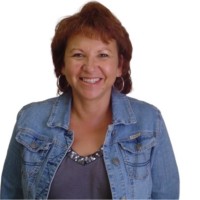
Angie Main
Executive Director, NACDC
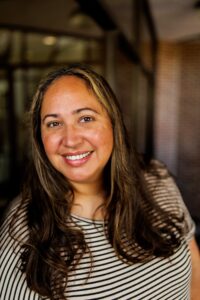
Leona Antoine
Project Director, NACDC
Community Development Financial Institutions (CDFIs), and Native CDFIs in particular, play a critical role in the financial security of local communities and Native reservations. Aspen FSP and our partners at Wells Fargo are working with NACDC Financial Services (NACDC) to understand how CDFIs and other financial institutions can prepare Native community members for employment in the financial sector and promote financial stability in their communities.
To learn more, we sat down with NACDC’s Angie Main and Leona Antoine, who are piloting the Yellowbird Fellowship, which offers training for Native people working or interested in financial services. This year-long program is designed to develop professional skills in accounting and Native CDFI lending, as well as promote Native leadership and community development.
Can you tell us about your backgrounds, professional experiences, and the specific roles and responsibilities you currently hold within the organization?
Angie: I’m Angie. I’m the Executive Director for Native American Community Development Corporation Financial Services (NACDC). I’ve been in this position for 14 to 15 years now. We provide business and residential lines of credit and offer small dollar loans to Native Americans throughout Montana.
Leona: I’m Leona Antoine, and I’ve been with NACDC for two years. I am a project director, specifically with the Economic Development Agency’s Build Back Better Regional Challenge grant and the Mountain | Plains Regional Native CDFI Coalition.
What is Mountain | Plains Regional Native CDFI Coalition (the Coalition) and what regions do you all serve?
Angie: We started meeting with other Native CDFIs in 2020 to see how everyone was doing and share resources throughout COVID. But it was also just a chance to get together. Eventually, it turned into a formal coalition that included eight CDFIs across Montana, South Dakota, and Wyoming.
In 2022, we applied for funding through the Economic Development Agency Build Back Better program and received a $45 million grant. With this funding, Native CDFIs could take the lead on five different projects: storytelling; workforce and professional development; shared services; innovation, building, and construction for the Crow reservation; and a revolving loan fund. Leona and I are leading the development and implementation of the workforce project.
How do Tribal CDFIs and financial institutions support the financial security of Native communities? And what do you wish others outside of the community knew about lending in Native spaces?
Angie: The biggest thing we do for financial security is that we provide a lot of technical assistance, training, and counseling. It’s not just about lending; we provide emotional support. We have first-hand knowledge of what an individual is going through when they get into a cycle of money management, and we help them get back on a path of well-being. Mainstream financial institutions don’t do that.
Because we’re relatable and most of my staff is Native American, we create a safe place for these individuals. Money management is emotional, and people often don’t want to share. We have to get all of that out of them, because we have our due diligence, too.
What I wish people knew about lending in Native spaces is simply the fact that we’re there. People should know that they can trust us. If you’re going to make an investment, and you want to make a difference in Indian Country, trust us to take your investment and make it go a long way.
We’re myth-busting with this coalition. For example, 85 percent of our loan portfolio is on trust land, with a 0.003 percent default rate. And we have deployed $30 million in Montana Indian Country. You can trust that we know what we are doing. We’ve become more than just a Native CDFI; we’ve become a focal point for a lot of other things, like the Mini Bank program, trauma care work, and the annual Native Art Show.
Leona: As Native CDFIs, we do have solutions for a lot of the things that are happening. If you put the resources into the right hands, people know how to guide those solutions to create more wellness within the communities. The challenge is that, although we have the trust of Tribal community members, we still don’t have that trust from outside folks (e.g., funders) of knowing what is best for our own people.
What is the Yellowbird Fellowship and how did it come about?
Leona: We started with an assessment within the Coalition, which we then extended the survey to other Native CDFIs, both on and off reservation, to look at the highest needs for workforce development. From the assessment, we identified lending positions as the priority, with the need for training emerging as the highest need. Native CDFIs estimate that it costs over $56,000 in training just to get someone into a position where they would be able to independently see a loan through from beginning to closing.
We talked about different types of programs, and one thing Angie emphasized was that training has to be accessible to people in the communities, before they step into the CDFI. A lot of existing training is available after somebody is employed. The goal was to make it available for anybody interested, so they could come to a Native CDFI with some experience to work in a lending position with little to no guidance.
Angie: As part of the grant application, we were tasked with developing a pool of Native Americans interested in finance careers. That includes working for Native CDFIs but also working for Tribes or other placements within the finance departments of organizations such as private colleges. We are trying to develop and refine this training so that it is available to Native Americans throughout Indian Country. When we try to hire within our own communities, the skilled labor just really isn’t there. We usually end up either hiring a non-Native person or hiring remotely. We also try to recruit from local banks.
That’s the background on why we needed to build our own pool of individuals educated in finance. It usually takes anywhere from three to four, maybe even up to eight years to train an individual that you hired locally. We are piloting this fellowship right now and hope to refine the curriculum. We’re also trying to develop an app to make the curriculum available and to sustain the fellowship program by charging for those services.
What is unique about the approach that you took to building and designing this fellowship?
Leona: Within the coalition, one of the foundational pieces is shared leadership. As we created this, we really looked at the inside first. Both of us have backgrounds in education, and one thing I often see with education on the reservation is that the work comes from the outside in. With this project, we were able to start from the expertise we have within the Coalition.
Tribal members are comfortable when they come into our offices and are able to get the services they need. We’re able to work with them and meet them where they’re at. Starting from that knowledge, we’re able to really get that character-based lending approach with our fellows. When they go into a CDFI, they don’t need to change their mindset. The curriculum is based on years of expertise and care and respect for community members.
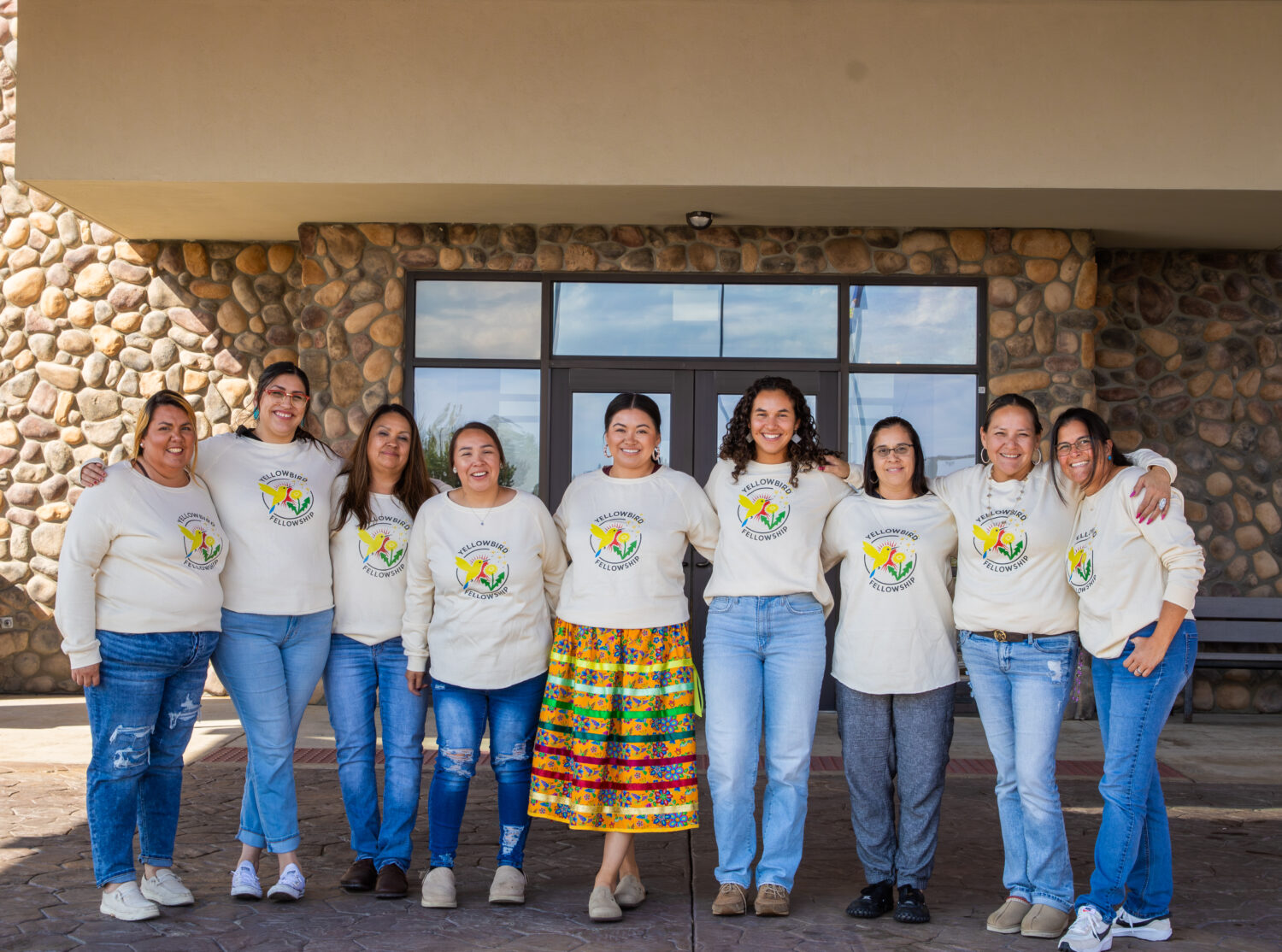
Yellowbird Fellows pose at a recent gathering in Browning, Montana (Courtesy of NACDC Financial Services).
What unique characteristics define the leaders of Native CDFIs, and what specific approach is required for the work they undertake?
Angie: Something that is unique to our coalition is that the majority of the leaders within the coalition are Native American women. It’s not anything we marketed or advertised for; it just happened. Native women have always been the caretakers, the fire keepers of our tribes. It’s part of the culture.
The work of a Native CDFI requires a specific approach: Clients may come in with very little self-confidence or a distrust of outside financial institutions. We have to handhold through the whole process—through training, assistance, and counseling—to help them overcome credit issues and get a loan. We do a lot of creative financing to meet our individuals where they are. It only makes sense that these positions are held by women.
If you look at Native CDFIs throughout the nation, the majority of the leaders are Native women too.
Leona: With that in mind, one of the things that we had talked about was childcare services because we knew that the majority of the women in the pilot program have kids. We started by ensuring that the fellows would be able to participate during the regular workday.
We also brought in another team member, Ginna, from a tribal college who did a lot of work in student support. Her knowledge helped with building out the mentorship program and wraparound services. We have mentors for each of the fellows, and Ginna does quarterly check-ins. In our first convening, the majority of the time was spent on relationship building so that when they moved into a virtual setting, they would have that community. We take the approach of this being a community of learners versus a cohort.
What do you hope to change with the creation of this program? What will it take to offer this fellowship beyond the pilot period?
Angie: We want Native leaders to see a place for themselves within Native CDFIs—actually, across the nation—and that there are opportunities for careers in finance. We hope to help people see a career path in working at a Native CDFI. We’re really trying to build partnerships because everyone realizes that this curriculum is really needed within Indian Country. We’re doing media marketing, building those partnerships, and raising awareness about how this will benefit Indian Country.
Leona: It’s about getting people out into the finance industry, even beyond Native CDFIs, into other areas like Tribal finance departments, the Bureau of Indian Affairs, and the banks surrounding our reservations. This will provide an easier way for us to work with them and with Tribal members.To move it to a regularly offered fellowship, a lot of what Angie said is true: We have the staff and a strong team who can carry this program beyond this year. We’re really focused on what a recruitment plan looks like and where we need to focus limited resources for engagement.
What keeps you motivated to keep doing this work?
Angie: Born and raised on an Indian reservation, you have that insight into the needs that aren’t being met. I’ve always worked in Indian Country because it’s most familiar, and I know areas where I can help. I do a lot of fundraising, and as a result NACDC have deployed over $30 million in Montana Indian Country. Our clients include people who can’t get a loan anywhere else, and then we get them to a point where they’re finally closing, and they get the financing for their home or business. They get emotional, and they cry. It’s a sense of real help and providing for a need.
And I’ve always had female role models. These strong Native women were working so hard to provide services and support for Native communities, and that has also driven me.
Leona: It’s the same for me, having role models who showed how to lead in Native communities. I grew up on a reservation and was able to see the strengths of our culture, especially language and culture revitalization efforts. I was fortunate to see programs be created as people asked for them. There is a really similar movement now with finance.
This work goes beyond rewarding; you get to help other Native people and work with your communities to see those successes happen. This is one of the spaces where you’re able to use your knowledge. It’s almost like this Coalition is really rewriting the rules. It’s a good product of self-determination, showing what could happen when you trust in women and community members to lead.
Do you have any advice you would offer to somebody thinking about creating a pathway like this in their own community?
Leona: It was really important for us to protect the space. We don’t have a lot of spaces that are created for Native people, that are created by Native people, and led by Native people, where we can just be ourselves. Trying to keep that space maintained in this fellowship was key. We made sure it was driven by Natives in the field who have the expertise. The instructors come from the communities.
Native communities sometimes default to saying, “We have this need, but we don’t have a resource.” But we have everything. We have all the resources: mentors, instructors, and content to create a whole curriculum. Once you make that decision to keep it within our communities, all the resources come to you.
Related

What Expanding Native American Representation in the Legal Field Can Teach Us About Building a More Diverse Financial Services Industry