Aspen is a place for leaders to lift their sights above the possessions which possess them. To confront their own nature as human beings, to regain control over their own humanity by becoming more self-aware, more self-correcting, and hence more self-fulfilling.
You can participate in one of the three concurrent summer seminars.
Please email [email protected] if your first choice seminar is full.
Is Human Connection Worth Fighting For?
Collaboration, Leadership, and COmmunication
Work has always been relational — and whether you lead a team, collaborate across functions, or simply have to get things done alongside other human beings, you know how much relationships shape everything else. But right now, something is shifting. As AI takes over more of our tasks, from drafting our emails, summarizing our meetings, to analyzing our data, we are being quietly relieved of the very moments that used to create connection. The awkward conversation. The honest feedback that someone needed to hear. The disagreement that, when handled well, leaves a team stronger than before.
And yet: people remain as complicated as ever. We still have colleagues who undermine us, managers who make us feel small, and teams that can’t seem to get out of their own way. We still avoid hard conversations, smooth over tensions that deserve to be named, and mistake politeness for trust. The relationships that make work meaningful — and make teams perform — are not getting easier. If anything, they’re getting harder to prioritize.
So what does it take to thrive at work when relationships feel this messy? And in an age when AI promises to smooth over friction, why might we actually want to preserve it? These questions sit at the heart of what it means to work alongside other human beings, and they have never been more pressing than now, when the alternative to doing this work is so readily available. How we answer them may determine not just how well our teams perform, but whether we preserve something essential about what it means to work together at all.
Together, we’ll explore:
When a colleague’s behavior makes work feel impossible, where do we even begin?
When working with others feels like the hardest part of the job, how do we still find a way to do our best work together?
How do we speak honestly at work without blowing up the relationships we depend on?
What do we lose when we outsource the friction of human relationships to technology — and what might we gain by leaning into it instead?
Can conflict actually make a team stronger? And if so, what separates productive tension from the kind that just does damage?
What would it mean to have a real relationship strategy — not just an operations strategy or an AI strategy — and how would that change how we lead?
In a workplace increasingly shaped by algorithms, what is the irreplaceable work that only humans can do — and are we doing it?
This is not a seminar about being nice. It’s about being honest, with yourself, with your colleagues, and about what it actually takes to build something meaningful together. The cost of getting this wrong isn’t just a dysfunctional team. It’s the slow erosion of the trust, candor, and connection that make work, and us, fully human. Because the teams that thrive are not the ones that avoid the mess. They’re the ones that learn to find the magic in it.
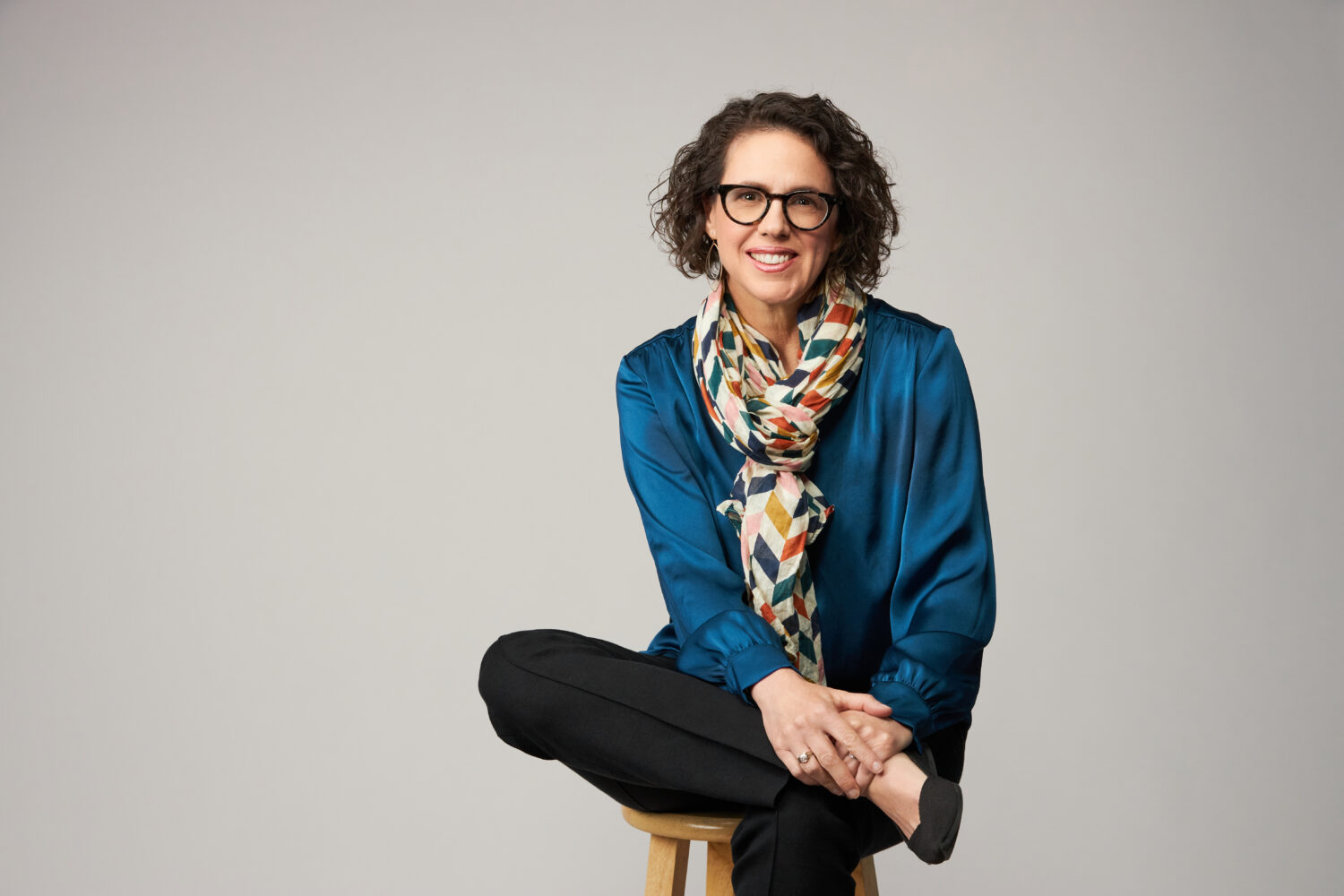
Moderator: Amy Gallo is a workplace expert who writes and speaks about gender, interpersonal dynamics, difficult conversations, feedback, and effective communication. She works with individuals, teams, and organizations to help them better collaborate, communicate, and transform their culture to support dissent and debate.
Gallo is the best-selling author of Getting Along: How to Work with Anyone (Even Difficult People) and the HBR Guide to Dealing with Conflict.
How Long Should We Live?
Medicine, Longevity, and the Politics of More Time
For as long as humans have understood that life ends, we have searched for ways to extend it and cheat death. Today, that ancient pursuit is entering a new era. Longevity has become one of the defining ambitions of our moment. Some of the wealthiest people on the planet are financing research devoted to reversing the biology of aging, and a growing number of scientists now speak of aging itself as a condition that medicine might one day treat. Advances in medicine, biotechnology, genetics, regenerative medicine, biohacking, and artificial intelligence have raised the possibility that once belonged to myth: that we might slow or even halt the act of growing old.
Whether that ambition lies within reach is open to fierce debate, with some demographers arguing that radical gains in human life expectancy are implausible, while others believe breakthroughs in the biology of aging could overturn our current models and projections. This seminar with wrestle with both possibilities, but ask the most important question:
What happens if we succeed?
A world in which people routinely live healthy lives to 120, 150, or longer would change far more than medicine. It could fundamentally reorganize the architecture of human life, including entire societies and their economies. Childhood, education, work, marriage, parenthood, retirement, and old age have developed around assumptions about how long we live. If those assumptions change, do our existing stages of life simply become longer, or do entirely new ones emerge? Could we have multiple careers, families, periods of education, and reinvention? What would it mean to be “middle-aged” in a 200-year life? And, can our societies afford the costs of the future, and who would pay for it?
Longer lives could also change our relationship to the future. Human beings and the institutions we build are often criticized for thinking in years rather than generations. But what if the distant future were no longer someone else’s to inherit? Would we take issues more seriously if we expected to personally experience the world of 2150? Would leaders invest differently in social protection, in infrastructure, institutions, scientific research, or other projects whose benefits might take a century to realize? Could longer lives expand our capacity to undertake work that exceeds the boundaries of a conventional lifetime?
Or might the opposite occur? More time could mean more opportunity to accumulate wealth, consume resources, entrench power, and deepen existing divisions. A generation that never needs to yield its place could leave the young waiting indefinitely to take theirs, and what anger and despair might arise from that?
We know that medical breakthroughs have never been distributed equally. In the US, the richest outlive the poorest by nearly 15 years. We chase the frontier of human lifespan while millions of people fall short of an ordinary one. If radical longevity continues to be a luxury good, will we simply have perpetuated a world where money buys time itself? Meanwhile, the gap between lifespan and healthspan continues to grow, with the latest evidence suggesting that globally people are spending up to 15% of their lives in poor health, even as lifespans increase. What is the purpose of extending life without improving health?
This Socrates seminar will examine longevity through the lenses of medicine and public health while exploring its implications for politics, ethics, technology, inequality, family, work, leadership, and our obligations to future generations.
Together, we will ask:
What is medicine for: to prevent disease, improve health, extend life, or ultimately overcome aging itself?
If humans lived to 150, how would the arc of life change? How might we reinvent the stages and purpose of a human life?
What does it mean for us to pursue radical longevity while life expectancy stalls for so many? What should government or other institutions entrusted with our protection, do to improve health and ensure these advances reach all?
Would longer lives make us more willing to invest in institutions, relationships, and challenges that unfold across generations?
What happens to society if additional years of healthy life are available to some people, communities, or nations before others?
And if we gain unprecedented power over how long we live, who decides how long is enough?
This seminar will be led by Dr. Ashwin Vasan, physician-epidemiologist and former Health Commissioner of the City of New York, who led HealthyNYC, an effort to write life expectancy and mortality reduction goals into city law.
Moderator: Dr. Ashwin Vasan is a primary care physician and epidemiologist who has spent more than two decades working to give everyone a fair shot at a long, healthy life. He pairs frontline patient care experience with executive leadership and policy expertise, turning a deep understanding of complex health systems into ambitious policy and pragmatic solutions. Years of work across the United States and the global South, from sub-Saharan Africa to India, have shaped his view of the world’s most pressing health challenges and their solutions, making him a trusted voice on the forces that shape health and wellbeing, from public institutions and technology to the social conditions of everyday life.
Frequently Asked Questions:
What is a Socrates seminar?
The Socrates Seminar is a collaborative weekend-long event for participants from different fields. Participants contribute their understanding of and reactions to carefully selected readings, with the guidance of moderators who are experts in their sector. This is not a panel discussion, nor is it a tutorial where the experts share their knowledge. The seminars take place on Aspen Meadows Resort campus.
How many seminars can I participate in?
You will register for one seminar of up to 24 participants for the entire weekend. Meals and programming are with the entire group, which includes participants from all three concurrent seminars.
What if my preferred seminar is sold out?
Unfortunately, we cap seminar capacity and we might not be able to accommodate your request. We urge you to register as soon as possible. If you would like to discuss the seminars further, please reach out the Socrates Team directly via email and one of our team members will assist you.
What does tuition cover?
Tuition includes seminar attendance and materials and all meals during the program, which begins at 6pm on Friday evening and ends at 1pm on Monday after lunch.
Where can I stay?
We have a room block at the Aspen Meadows Resort, where the seminars take place, with a negotiated room rate for the duration of the seminar. There are also a range of hotels in Aspen that we can suggest for participants looking to not stay on campus. For those looking to roomshare, we will connect you with other participants looking to share the cost of a room.
Are scholarships available?
Scholarships for tuition assistance are available through the Socrates Program. Apply here. Please note: Scholarships are awarded on a rolling bases. We encourage you to apply as soon as possible.
Can I do a Socrates seminar on a budget?
We offer partial to full scholarships. Please apply here. Scholarships generally cover tuition, which includes all meals, but not travel.
How do I get to Aspen?
Flights into Denver tend to be more economical. If you choose to fly into Denver and are interested in ridesharing, we will connect you with other participants who are driving.
Can I bring a guest?
If you would like to bring a guest to join you for meals, you are welcome to for $600.00. These both can be purchased as add-ons when you register.
What transportation will be provided at the event?
If you are a guest of the Aspen Meadows Resort, they will take care of transportation to and from the airport. If you are staying at an alternative location, we recommend taxis and a free local bus.
The Aspen Meadows offers a complimentary shuttle that runs into Aspen every 30 minutes.
What is the timing of the seminars and programming for the weekend?
To join for the whole experience, you will want to arrive in Aspen by 6pm on Friday and depart after 12pm on Monday. Socrates Summer seminar sessions run from 2pm-6pm on Saturday and Sunday, and 8 am to 12 pm on Monday.
In the morning, until 2pm daily, you are welcome to explore and engage with everything Aspen has to offer. We have partnered with BlazingAdventures to offer discounted ski tickets and a la carte snow excursions.
What is the dress codes for the seminar?
Although we do not require a specific dress code, most people dress business casual and comfortable in the seminar rooms and bring something dressier for the evenings. We recommend that you pack for warmth and comfort in both the Winter and Summer. Please bring sturdy shoes that will allow you to walk through snow.
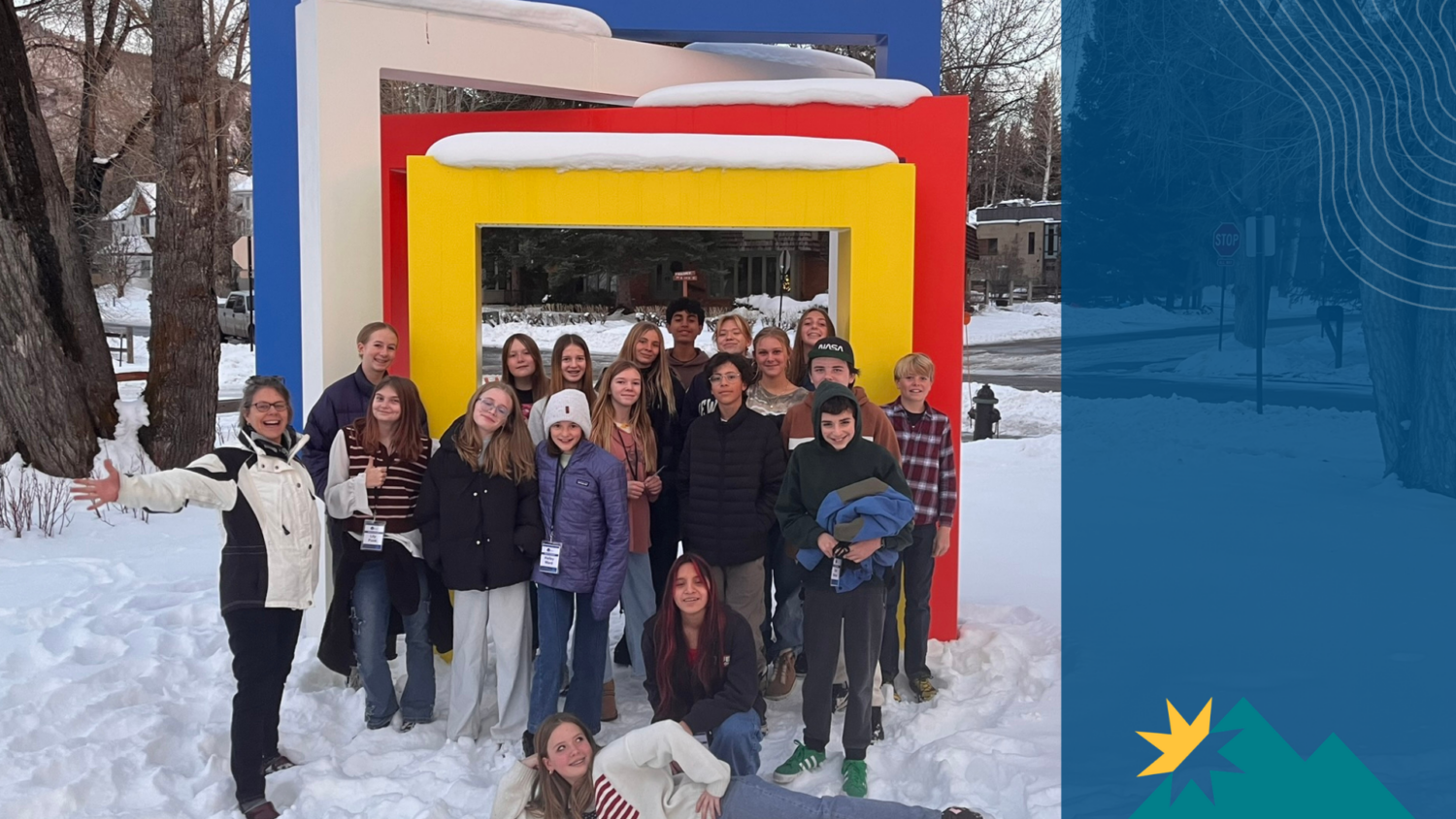
The four-day seminar is dedicated to enhancing leadership, problem solving, and critical thinking skills for middle school students living in the Roaring Fork Valley.
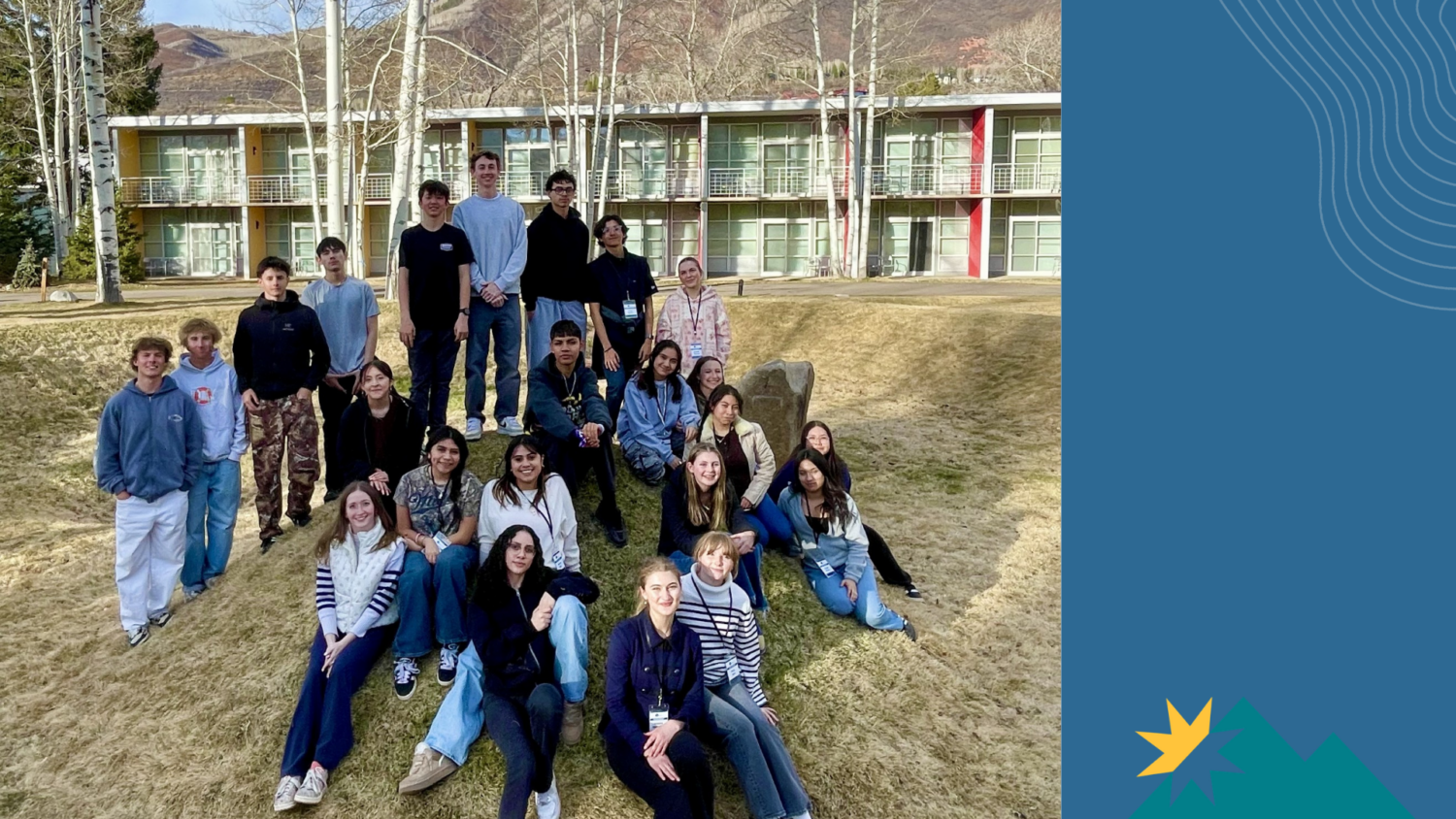
The four-day seminar is dedicated to enhancing leadership, problem solving, and critical thinking skills for high school students living in the Roaring Fork Valley.
This four-day virtual seminar is dedicated to enhancing leadership, problem solving, and critical thinking skills for high school students in a setting conducive to thought and fellowship.
The three-day seminar is dedicated to enhancing leadership, problem solving, and critical thinking skills for high school students in a setting conducive to thought and fellowship.
Join us for the WIN Summit on October 22nd where private-sector leaders, investors, and philanthropic organizations and funders will gather to talk about the future of the workplace.