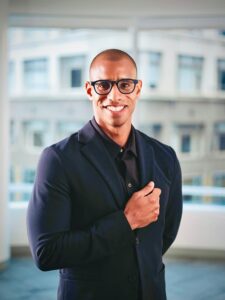
Raised in a single-parent household in South Carolina, Devin Murphy experienced firsthand how uneven access to opportunity can shape a person’s trajectory—an insight that continues to guide his passion for addressing wealth inequality. Grounded in the belief that “talent is distributed equally, but opportunity is not,” Devin brings his lived experience, intellectual rigor, and deep optimism to his work on economic mobility and inclusive wealth building.
As a Senior Fellow for Aspen FSP’s Future of Wealth work, Devin focuses on helping to shift the national conversation from income to assets, championing models that help families build resilience and long-term security. His efforts span co-designing the Future Wealth Solutions Lab to helping organize funders around innovative approaches that broaden ownership and expand shared prosperity. We connected with Devin to learn more about his vision for an economy that serves all of society.
Tell us a little bit about yourself. What makes you tick? What are you passionate about?
I grew up in poverty, in a single-parent home, in Spartanburg, SC—which, at the time, ranked in the bottom 10 percent of counties in the country for economic mobility. I wish I could say that I possessed some innate talents, but the reality is that I didn’t find my stride academically until high school, particularly when I joined the debate team. I’m acutely aware that financial resources and exposure to opportunity are the difference-maker in whether someone realizes their potential or doesn’t. That awareness leads me to devote my life to working on issues of economic mobility and wealth inequality. It really is about holding true to the idea that talent is distributed equally, but opportunity is not. If I were to summarize what makes me tick, it is a deep commitment to the fullness of human potential and the joy of finding creative ways to ensure people can fully live into their gifts.
What are the biggest challenges to economic mobility and closing the racial wealth gap?
To me, the biggest conceptual challenge for economic mobility and closing the racial wealth gap is that many people start and end with income as the primary driver, but that is a poor proxy for overall financial well-being.
Think about it. While poverty rates have hovered around 13 percent since the 1970s, the cost of basic needs—particularly housing, food, healthcare, and transportation—has risen faster than incomes. That is why we’re in an affordability crisis today. For this reason, I am drawn to Aspen FSP’s research showing that 45 percent of U.S. households have expenses at least as high as, if not higher than, their income. Moreover, 55 percent lack the necessary savings to weather a simultaneous drop in income and a spike in expenses. What that means is that much of the population living just above the poverty level is only one paycheck, hospital visit, or car repair away from sinking below it. So, we have to look at whether people have assets to weather storms to really say whether they are doing well. And, unfortunately, wealth inequality is growing at a rate far faster than income inequality.
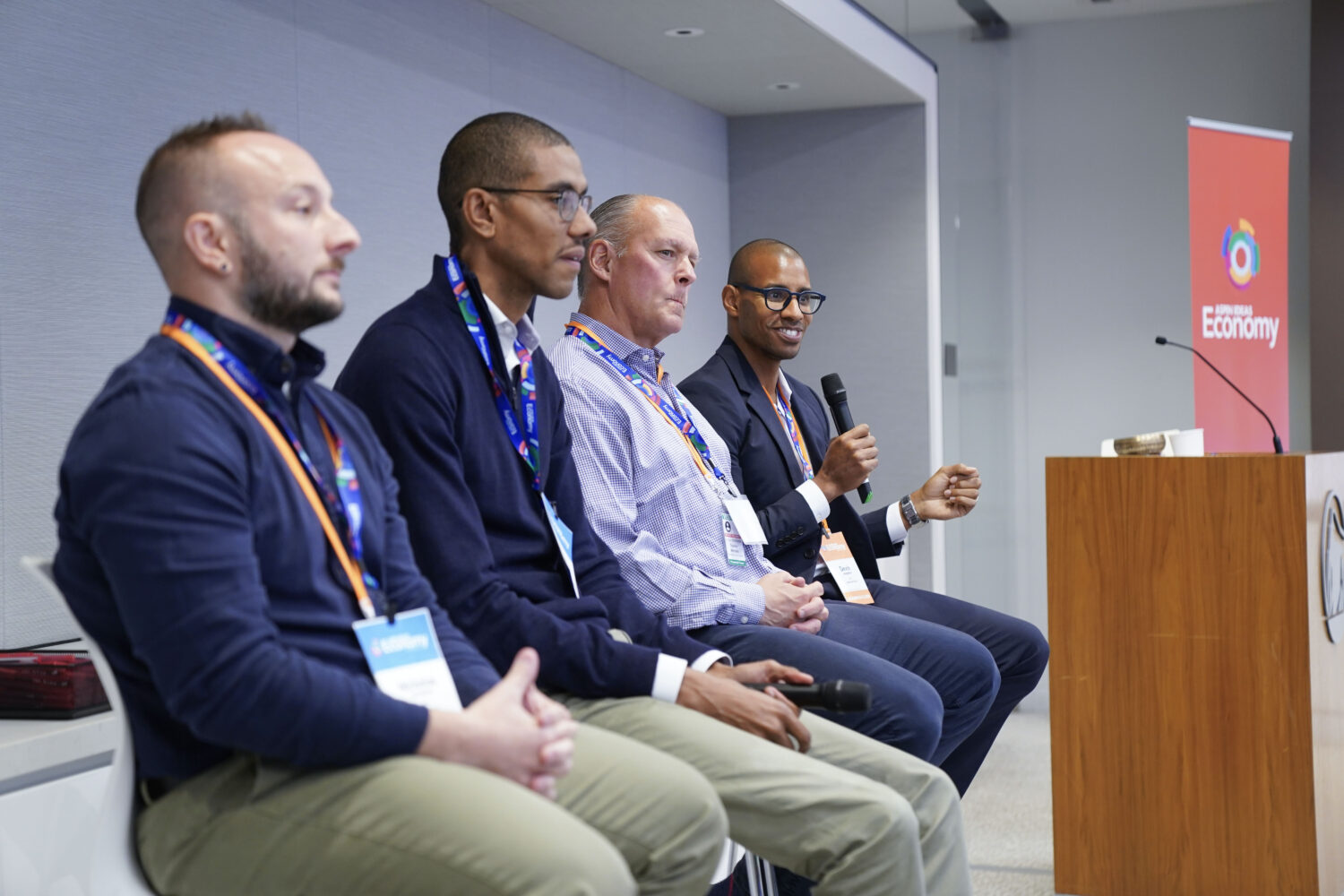
And, once you look at assets as the primary driver of inequality, it’s hard to turn back. So, my fundamental question is: How do we transform every transaction that involves a transfer of ownership into opportunities to share prosperity rather than concentrate wealth? A lot of the Wealth Innovation work that Aspen FSP has developed is very much in line with that ethos and philosophy. Now, our task is to get more resources flowing to models that support inclusive wealth-building in ways that allow people not just to survive but to thrive.
How did you start working with Aspen FSP?
I initially started working with Aspen FSP in April 2022, when Ida Rademacher offered a teaser on LinkedIn for the article 101 Solutions for Inclusive Wealth Building. I immediately reached out to her, and that became the start of a great relationship in which we began trading notes and ideas about what we wanted to see in the future of wealth in our country.
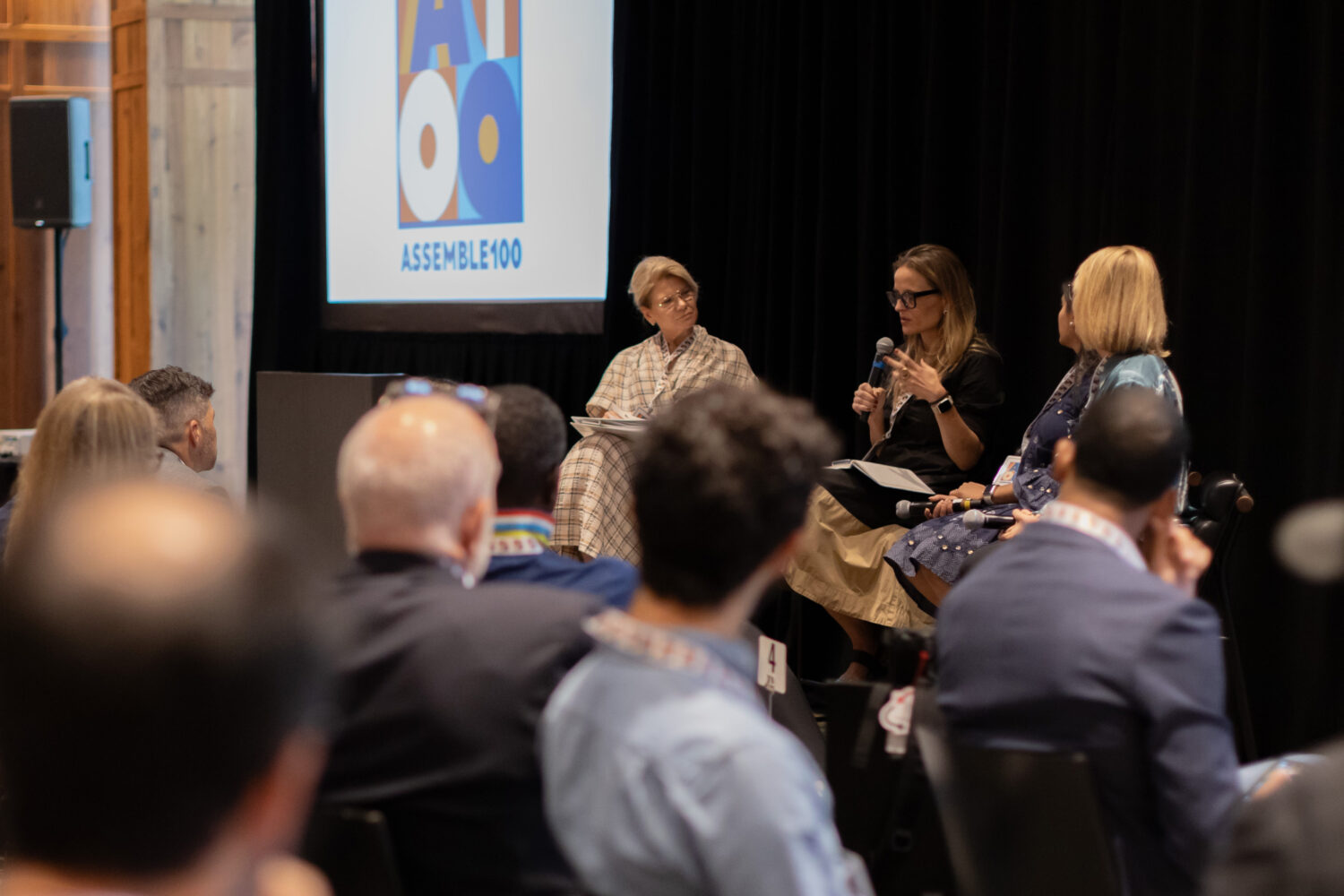
Those conversations led to my role in co-designing the Future Wealth Solutions Lab in October 2022, which sparked ongoing discussions and work, culminating in a partnership with Gary Community Ventures to host the ASSEMBLE 100 in September 2024. ASSEMBLE100 focused on how to garner more financing for models that broaden asset ownership and access to markets.
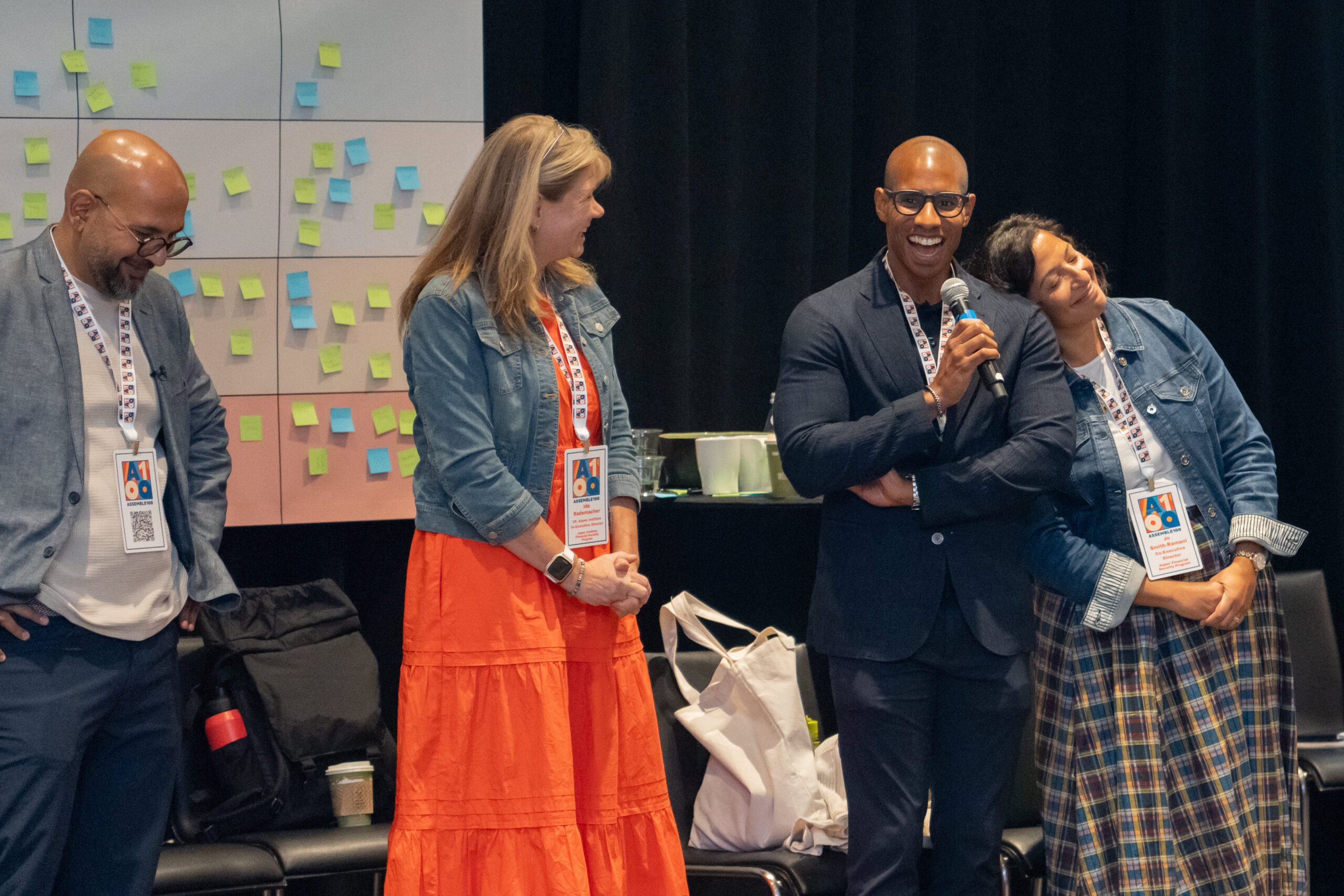
Now, as a fellow, I’m helping Aspen FSP organize funders around opportunities to invest in inclusive wealth creation and exploring the potential to create a shared narrative around the idea that we should have an ownership economy where all can benefit from the prosperity we collectively create. To get there, we need much more than philanthropy; we need an entirely new set of goals for financial markets. The total set of resources available in philanthropy is about $2 trillion across donor-advised funds and foundations. If you’re working in fixed-income markets, you’re in the 10s to 20s of trillions of dollars that could actually be allocated. So, figuring out a bridge between them could open up much more scalable approaches to inclusive wealth building.
Let’s talk about the role of storytelling in this work. What do people misunderstand about asset ownership? What narratives can change the script?
A common misconception about wealth building, particularly for low-income households, is that long-term investments are impractical when people’s immediate basic needs go unmet. That logic traps us in short-term thinking about current levels of taxation and spending. A better approach is to ask: How can we connect everyone to the abundance our markets create? That requires not a redistribution but a pre-distribution of resources, where widespread asset ownership ensures that more people can benefit from the world’s largest and strongest economy.
“For everyday folks, ownership actually makes a difference in people’s lives as it provides you with resilience. It provides you with peace of mind, the ability to invest in your future, and the ability to protect your children’s future.”
Here’s a simple analogy. We often think of labor versus management in zero-sum logic, where people are dividing up the pie of profits. But, a significant amount of economic growth today is created by the way we value assets. So, instead of divvying up earnings, let’s give employees a greater ownership stake through an employee stock ownership plan and other forms of employee ownership.
For investors, it is a win-win when employee-owners see their financial futures as aligned with management’s goals and then turn that alignment into value creation for their companies. When employees become committed owners, we all get to benefit from the larger pie.
For everyday folks, ownership actually makes a difference in people’s lives as it provides you with resilience. It provides you with peace of mind, the ability to invest in your future, and the ability to protect your children’s future. That’s the type of ownership economy everyone can believe in.
What does our society as a whole look like if we get it right? What will it look like if we successfully shape the markets to create widespread prosperity?
We are currently living in a moment where there are tectonic shifts in what people expect from society, and that causes anxiety. But those shifts are why I remain optimistic. For the last 50 years, we’ve lived under economic systems that have facilitated rising levels of income inequality and wealth concentration. Regardless of whether you are left of center or right of center, people are starting to say, “Wait a second, there’s something fundamentally unfair about that!”
So, there’s something actually really empowering about the possibility of a new consensus that ties together Oren Cass’s conservative economics and Darrick Hamilton’s moral economy. They both ask what our economy should do for society, rather than whether society’s health should be measured solely by GDP growth. If we do get it right, society should look like a place where economic growth is seen as effective when it increases people’s collective ability to exercise agency over their lives. That is what shared prosperity looks like.
Families Need Wealth. But How Much Is Essential?

Video: We Don’t Have to Choose Between Financial Stability and Wealth
Trump Accounts Are Here–Now Let’s Make Them Work for the Kids Who Need Them Most

Video: How Can Renters Grow Their Wealth?

It’s Time to Connect Financial Security and Economic Policy
Lessons from Expert Roundtables on Designing an Effective Early Wealth Building Policy
How the National Strategy for Financial Inclusion Can Help Households Build Wealth
4 Models for Investing in Inclusively Owned Commercial Real Estate