

Transcript
Liba Wenig Rubenstein (00:00:06)
Good afternoon. Good morning, everyone. Thank you so much for being here in the middle of this end of year rush and taking some time out of your busy week to reflect with us. I’m Liba Wenig Rubenstein. I’m the relatively new director of the Aspen Institute’s Future of Work Initiative. And I’m really thrilled to welcome you to this capstone conversation with some of the people I most admire in this future of workspace.
If you were in the waiting room for the last few minutes, you noticed that we were sharing a poem with you in the waiting room. And I don’t know if any of you had a chance to spend some time with it and read it, but I do want to start in true Aspen fashion regarding a text together for us all to consider. I invite you in the chat as you introduce yourself and say where you’re coming from. Also, if you have any reflections on this poem and what it brings up for you about work in this country and what the future of work could look like, what we want it to look like. I invite you to share that in the comments.
This is a poem by Jan-Henry Gray called Maid Poem #7: HR.
“At the Maid Museum, we honor the many who have cooked meals in other people’s kitchens, washed floors, labored on holidays, nourished the frail and tended the children. The Maid Museum houses art commemorating Maid Culture by the best artists of our time. On exhibit are wall size paintings, large scale photography, sculpture and installation. Artifacts, letters, and other ephemera are preserved and on display in the temperature controlled galleries. Our docents are robust, learned, but unrobotic.
They have mastered the pronunciations of all the maid’s names. Doing so is required research and research is synonymous with interest, which we value here. The museum is free. We are open 24 hours to accommodate the many faiths and habits in our community. The coffee is good and strong, and you will agree. Tea is served on every floor. Lunch too is good. There are complimentary house made pickles and free refills. All of our employees have health insurance, so that getting sick is not also shameful. Uniforms are provided. There is ride-share, snow days, sick days, paid vacation, direct deposit, and a generous R&D budget.
On payday at the Maid, every employee receives a brown envelope with a handwritten letter by one of the poets and residents thanking them for their service. Each note describes one thing done well during that pay cycle. The envelope may also include an image of you documenting that moment. Images called from surveillance footage. The Maid Museum is currently hiring. All applicants are welcome. We are an EOE.”
I invite you to think about, is this a job you would apply for? How do we use our imaginations to think about what we want work to be? Is this a utopia or a dystopia? Does it represent liberation or exploitation? Is it a parallel universe or a vision of the future? The dynamics and the tension between research and representation and storytelling versus real voice and power for workers.
We’re not going to get deeper into it, but I just wanted you … I wanted us all to sit with a text like this together. On the occasion of marking the 10th anniversary of Aspen’s Future of Work Initiative, but this conversation is not just about our 10th anniversary. We are at a real inflection point in the conversation about the future of work. This series that we’re marking the conclusion of Back to the Future of Work, which launched last year, was designed to take stock of a decade of predictions, reforms, and experiments. And I think it is really important to talk about the value of retrospection in a field often dominated by hype cycles and attempts to predict what comes next, especially when it comes to technology and artificial intelligence.
We are going to talk today about what we’ve learned as a field, including the fact that many of our assumptions about flexibility, about automation, worker voice and social protection turned out to be either incomplete or wrong. We may have overestimated the pace of some technological transformations and underestimated institutional inertia. We may have underestimated the centrality of worker power, voice, and really basic elements of economic security.
We’ve certainly learned that productivity and innovation do not automatically translate to shared prosperity. And I also think that in this moment of the acceleration of artificial intelligence, I just feel all the time the irony that the tech industry, which is part of where my professional background lies, has adopted this language of autonomy and agency for AI systems, while using or anticipating the use of those same systems to strip agency from human workers.
And at the same time, we’re seeing that being pro-worker is wildly in vogue among tech companies marketing themselves. I don’t know if your podcast feeds are playing the same ads that mine are, but I’m getting ads from Meta and Palantir touting their investments in AI that are benefiting American workers.
One of the things that we drew from this series and that we’re really committed to focusing on going forward is that the future of work is really fundamentally a question of power and agency, not merely one of technology. It is so clear that the social contract around work in this country has been broken and that … Whether AI delivers on the promises or the perils that we’re all talking about now, we need to forge a new social contract for the next era of work in America. We know that artificial intelligence will intensify longstanding tensions, power asymmetries, precarity, questions of dignity and agency. And we know that work is also a really critical part of the American dream and the promise and the culture of this country.
I’ve been thinking a lot about de Tocqueville’s idea that democracy depends on the habits of liberty, that we need to experience agency and freedom in our daily lives in order to be able to tackle the complexity and the friction and the messiness of democracy. I think that work is a primary institution where those habits are either formed or eroded, where the promise of the American dream is either affirmed or betrayed, and that really has implications for our broader democratic project. I am looking for and I hope we will all chart a course together toward a future of work that benefits democracy, and that’s going to require freedom from coercion, material security, and a real sense of reciprocity in this new social contract.
I am delighted to be joined today by three remarkable leaders and thinkers who have all been contributors to this series, this Back to the Future of Work Series. And they’re all folks who have shaped and challenged the future of work field, who have literally written the book that helps to guide our thinking. Today’s discussion will be both reflective and forward-looking because we know that transformative change only happens when we learn from the past and when we can cultivate the imagination and curiosity and courage among leaders, like all of you, that can help match and meet the bottom up organizing that workers have always done and will continue to do to make things better for themselves.
So we see our job here at the Future of Work Initiative at the Aspen Institute as creating the spaces where we can have those conversations, where those leaders can develop courage, share knowledge, and co-create solutions. And we hope that this conversation is one piece of that puzzle. Before I introduce our speakers, I’m just going to do a really quick review of our technology.
Everyone is muted. You have a Q&A button at the bottom of your screen where you can submit and upload questions. If you put a question in the chat, it’s not necessarily going to make it to our panelists. So please put your questions in the Q&A function. And then in the chat, you can … Running commentary, sharing your perspective, examples you want to share, resources, links, personal experience. We also encourage you to post about this conversation publicly on the social media platform of your choice.
We’re using the hashtag #talkgoodjobs. If you have any technical issues during this webinar, you can message us in the chat or email our technical team at [email protected]. The event is being recorded and will be shared via email and posted on our website. If you need closed captions, they’re available by clicking the CC button at the bottom of your screen.
Now it’s my great pleasure to introduce our terrific panel. In the interest of time, I will just match names to faces and you can read more about them on our website, their bios. We have Mary Gray, who’s a senior principal researcher at Microsoft Research and a MacArthur Fellow. Michelle Miller, director of innovation at Harvard Law School Center for Labor and a Just Economy. And Arun Sundararajan, Harold Price professor of entrepreneurship and the director of the Fubon Center for Technology, business and innovation at NYU Stern School of Business.
And it’s my great pleasure to turn things over to my colleague and fellow traveler, Anmol Chaddha, to moderate today’s conversation. Anmol is a fellow with us here at the Future of Work Initiative, but spends most of his time as a principal at the Omidyar Network. He helped to curate this editorial series Back to the Future of Work and has been thinking deeply about these questions throughout his career. Anmol, we’re really fortunate to get to collaborate with you and thanks for being here. I will turn it over to you.
Anmol Chaddha (00:12:10)
Thank you so much, Liba, for having us and organizing us and pulling us together for this, what I think is a really important conversation. And actually, I wanted to mention a few things before we jump into the panel here. First is that Liba mentioned this very quickly. Liba is the new director of the Future of Work Initiative at Aspen. We have been thrilled to have her in this leadership position and I think are really excited about what’s to come.
We thought about this idea of taking stock of where we’ve been over the last 10 years or so, and then what’s possible over the next decade with somebody like Liba in this position. So I think we’re really thrilled to be here with your leadership. And the second thing, Liba also mentioned this, briefly a series that I think the link has just been dropped into the chat. So Natalie Foster and I curated the series with Liba from a number of the leading thinkers and doers on questions related to the future of work.
And this is folks from the private sector, from the nonprofit space, from government and labor, thinking about, what are the important questions that we’ve approached over the last 10 years, what have been the holes and gaps in those conversations and the actual work and the policy work and the organizing, et cetera? As well as what are the key directions that we need to be heading to? So hopefully people get a chance to check out that series at that link there. The folks today are some of the contributors to that series, so we can dig deeper into their ideas and their pieces at that link there.
So I mentioned this a second ago, this is a question for everybody, for Arun, Michelle, and Mary. We’ve now been at least 10 years into what people have described as the future of work conversation or field or discourse, et cetera. I think at the time maybe it seemed like a bit of a buzzword, but one that definitely caught fire, essentially being institutionalized, whether it’s at philanthropies and funders that have future work programs or future of workers programs. We see it even in academia, this is not going anywhere anytime soon.
The question I have is what … It’s been far ranging, wide-reaching conversation. What do you think are the key things that this conversation or this field has gotten right over the last 10 years? And actually what I think is a little bit more interesting is what has it gotten wrong? What assumptions have been wrong and what have been the consequences of that? Let me start with Arun.
Arun Sundararajan (00:14:50)
I mean, first off, thank you for including me in this. It’s been a wonderful series to read and to participate in. Anmol, thanks to you and Natalie for curating this series. It’s been a very interesting set of articles to read. I think one of the things that the conversation got right was anticipating that more and more work that we do will manifest itself in non-employment work arrangements.
And I think we got used to it and we constructed a social safety net in the United States, predicated on the assumption that work will be organized as employment between an employee and an employer. For the last 10 years, we have been anticipating the shift towards freelance work, towards non-employment work, perhaps something … And we have been working towards trying to figure out ways in which we can reconstruct whatever social safety net we have in the United States and apply it to these non-employment work arrangements.
Perhaps what we may have not anticipated was that this wouldn’t just come as platform work. And I think a disproportionate amount of the conversation has focused around, how do we protect platform workers? How do we create safety nets for those people who find their work through a platform? The underlying assumption there is that there is actually this entity, the platform that can take on a subset of the responsibilities that the employer did and be the large actor in the room along with the government to facilitate the provision of the social safety net.
What we may not have anticipated is that a significant fraction of the growth in non-employment work is not platform work, but simply people being microentrepreneurial in other ways.
Anmol Chaddha (00:17:13)
That’s interesting. Some thoughts and follow-ups have come to mind, definitely. But let me get to Mary and then Michelle, and then we’ll work our way back.
Mary L. Gray (00:17:26)
I just want to add my thanks. I agree with Arun, that this series has been really generative and I’ve appreciated the curation you’ve done. When I think about when exactly that phrase became a buzzword, when the future of work started settling on the scene. I think the thing we perhaps got right collectively was realizing that we weren’t only talking about jobs and sectors. We were talking about lots of individual workers.
And so that shift that I think I saw happen quite quickly. We were talking about the future of workers, to echo Arun’s point. That we were going to be needing to think more broadly about, what does working life look like? And at least for me, I feel like the phrase itself took on a whole new meaning, when the pandemic hit, when I think more people could relate to what it looks like to be working really the last mile of so many different jobs. That meant you were toggling between what you might be doing face-to-face or in real life and how much you might be working through a digital system.
I think the thing we got wrong was not recognizing how ill-prepared we are for addressing the very diverse set of … A distributed set of workers involved in creating value in an information economy and a knowledge economy. It’s no longer about individual contributions. It is quite literally taking seriously that we’re looking at a world of aggregate teamwork. And so how are we going to value teamwork in settings that do a bit of a bait and switch of thinking some of it’s automated and some of it’s not?
We didn’t think through how much we were going to need to think about the both and of automation coming to groups of people doing work together who had very little in place to help them understand. How is someone else’s experience impacting at the end of the day, their productivity, their experience of work?
Anmol Chaddha (00:19:54)
That’s fascinating. Thanks, Mary. And Michelle, let’s hear your thoughts. What did we get right? What did we get wrong?
Michelle Miller (00:20:00)
Yeah. First, also want to share appreciation for being included in this conversation and for having the opportunity to speak with Mary and Arun. We’re very aligned in our analysis of what went right and wrong. I think that one thing from the perspective of a lot of people in labor that people got right was really looking at the changes in labor market organization brought on by platforms, even if they over relied on platforms as the design, as something to pay attention to.
I have this memory of warnings from some folks saying, “Oh, it’s just less than one percent of the workforce. Why are you paying attention to it?” And rightly, many people said, “Because this is profound and will grow.” It was very smart to anticipate that this was not a flash in the pan, but this was really a new work arrangement or an expanded work arrangement.
What I would say in terms of how many folks reacted to that was that we … Our sense of certainty outpaced our willingness to engage in curiosity. So we had a lot of certainty about how protections … The mechanism through which protection should be applied, and this gets to Arun’s comments about really relying on the W-2 model and trying to retrofit these work arrangements into that model.
And from an organizing and worker engagement perspective, talking to people who were being surveilled, who were having their work gamified, who were working in unsafe conditions and incurring debt in order to work. Talking about what felt, I think to many of them, this esoteric concern around classification made them feel like their immediate needs were not being addressed. And I think it also had an impact on blinding us too, being able to see what the future would bring in terms of AI and other automated systems, increasing opportunities to gigify work in different ways outside of the platform.
I hope that our next 10 years of the future of work involve us sitting in the muck of uncertainty and the curiosity around really listening to what workers are describing that they want and then figuring out how we create a system that meets those needs.
Anmol Chaddha (00:22:54)
Great. Thanks. That’s wonderful. We’re going to come back to that in a second, Michelle. And some of your comments are actually a great bridge back to what Arun, I think, flagged early on was essentially the relationship between workers and employers. We have this traditional employer-employee relationship. And one of the things that we’ve seen is both the early on speculation, as you said, Michelle. Maybe it was small in the data at the time, but there was a sense that something was shifting with that employer-employee relationship. And even if it started out as one percent of all workers were now gig workers or independent contractors, however defined. That something was definitely changing.
Arun, at the time, there was also a lot of optimism about the notions of flexibility, independent work. I think you mentioned this, the term you used was microentrepreneurs, which I think describes some folks who had this experience. Was it overly optimistic and relatedly, what are the trade-offs that are maybe being obscured by some of the focus on flexibility and the optimism around the independence of workers detached from employers?
Arun Sundararajan (00:24:18)
I tell my students in my entrepreneurship classes that there’s a misconception that being an entrepreneur is a good life because everybody sees the billionaire entrepreneurs who have succeeded, but whether you are substituting, starting a company after college, joining a traditional entry-level banking or consulting job. Or whether you are a platform entrepreneur, the reality is that entrepreneurship is not an easy life.
Part of the optimism, and especially the use of the term microentrepreneurship, which may have been motivated by its greater appeal compared to say, contingent worker. And it sounds much better to have an economy of microentrepreneurs. It was warranted to some extent because there are a lot of people who work traditional employment jobs or in employment arrangements who would be happier if there was an alternative.
I think the failure has been to come up with adequate protections that replicate what you get when you are employed. When you’re employed you … Apart from the social safety net, one of the most fundamental things you get is income stability. You’re able to predict how much you’re going to earn every month. You are able to predict that … You’re able to know that you’re going to get the same paycheck every month, and you’re also able to forecast that you will be getting this in a year.
That simply isn’t there when you’re a freelance worker, when you’re a gig worker, when you’re a platform worker, when you’re a microentrepreneur. It can be solved through different government programs. Your employer is fundamentally ensuring in some ways your cash flows, you’re not contributing exactly the same amount of work every month, but you’re getting the same amount of money. And so there are solutions to that, but over the last 10 years, we simply haven’t moved fast enough.
And so we are still leaving people who are in non-employment work arrangements in a somewhat precarious position when it comes to having the stability, the benefits, and the protections that people in employment arrangements get. A place where I think platforms have really succeeded is in delivering to some extent on the promise of absolute flexibility. There is still an array … I mean, you can work whenever you want. If you need to shut off at 3:30 and go and pick up your kids, which is one of the earliest examples that the founder of Lyft gave to me back in 2012. If you’re a single parent and you have to stop working to take care of your kids, platform work does give you that absolute flexibility more than any other work arrangement. Millions of people use it to supplement their income.
Perhaps where it’s fallen short to some extent is in the promise of decentralizing capital. As we know from writings over the last almost 200 years, back to Karl Marx, inequality in society goes down when you decentralize the ownership of capital, not just money capital, but structural capital. Like the ownership of your business. And platform work had the promise of genuine microentrepreneurship. And we’ve seen it to some extent with Airbnb hosts, where they are actually running tiny businesses, but that wasn’t as broad-based as many of us anticipated. And so perhaps it has not led to the extent of reductions in inequality that was promised 10 years ago.
Anmol Chaddha (00:28:32)
Yeah, thanks for that. And you have definitely put your finger on something that I think that … One of the things that the field across, whether it’s on the labor side and others have … I think have come to appreciate, is that the value … The extent to which workers actually value flexibility is an important idea. And I think that maybe folks initially were maybe to some extent more dogmatic about the classification issues and employer-employee relationships, et cetera, but there’s at least a demonstrated valuing of flexibility. And I think that speaks …
There may be something about the control over one’s work, that’s an important factor and it can be described in different ways. And one of the threads I think that this conversation even has been touching on in different ways is the role of power for workers. And you talked about it in terms of ownership of capital and maybe even their say in the work conditions, and that’s come up here and there.
As we were reflecting on this, this may have been one of the areas that was misjudged a bit at the beginning as well. And I think that maybe fill in some of the gaps Arun of what you’ve described as the disconnect between the initial optimism and some of the outcomes. Who has power in the labor market, how is it exercised and how institutions and policies mediate that power between workers and their employers? So question, I’m going to start with Michelle here. What does the last decade teach us about the role of worker power in shaping a healthy labor market? That’s one question.
And then specifically, you made a really strong argument that in your piece in the series that … Specifically around the questions around technology and now today, of course, AI is dominating that conversation that these aren’t necessarily new conversations. In your piece, you talk about 500 years of debates and conversations about technological change and how it’s reshaping work and what it means for workers, et cetera. That conversation has always been reacting to the technological changes as if they’re predetermined or inevitable and that the rest of the economy just deals with the nature of technological change and the implications for the economy and the labor market.
So first is the general question of, what have we learned from last decade about the role of workers having power in the labor market? And then relatedly, how does this relate to the way we talk about technology and the way we’re thinking about this with regard to AI or technological change more broadly?
Michelle Miller (00:31:13)
Yeah. I mean, I think in that first question, what we have learned. I think maybe we’ll say relearned as we often do about that, is that when workers actually have power in a labor market. They are able to engage in the problem solving and issue identification that is actually often invisible to employers and companies and policymakers that they … Because of their direct experience with doing the day-to-day work, they have a specific expertise about how it can be different and better, and that they have a role in shaping these systems and shaping markets that is often not valued by being able to engage in this problem identification and advocacy. And they have to be able to do that as a collective. They cannot be doing that as individuals.
There is some sense, I think, often in the way that labor power is written about, it is some even contest between an individual worker and the firm with which they are working, but actually firms represent coordinated power, just as worker organizations or unions represent coordinated power. And it’s not really an even negotiation if it is an individual worker, especially an individual worker in an atomized labor market, who is making requests or demands on the system.
And when I think about what is needed for workers in this context of being able to assert their imagination or assert an agenda. I think of really three things combined together, which are time, togetherness and leverage. One of the things that I’ve learned from working with various groups of workers, both at the center where I am now and a coworker. The organization I founded was that people actually need time, like an enormous amount of time to think through complex problems and solve them, and they need to be able to do that together.
And what we have seen specifically around AI is that the tech industry, these consulting firms, elected officials create a sense of urgency and rush, and they say, “It’s coming, it’s coming. You have to react right now.” And workers do not have … Either worker organizations or those of us who work with worker organizations are not afforded the same amount of time and ability to work together to react to what is happening and then to assert their own imagination. I’m riffing off of the work of the scholar, Ruha Benjamin, who talks a lot about imagination and UAW leader Shawn Fain, who talks a lot about time.
Dr. Benjamin describes our society and specifically our technological society as one in which we are living under the imaginations of other people, and that is because they have had the time and the money and the leverage to make what is their imagined sense of reality into something real. And while that sounds maybe a little woo-woo, it is actually possible to assert our imaginations about the future and our agenda for that through work organization and unions and time.
And I’ll close by saying that last piece, which is leverage is the most important thing because I’ve seen many experiments with bringing workers to tables where they get to say stuff, but they don’t have any capacity to get people to do the thing that they say. And so when we talk about leverage, that is the collective capacity to withhold your labor in order to be able to bring your employer to give you what you want. That’s why an individual worker going to an employer cannot win because their single contribution of labor is not enough to actually persuade an employer to change their mind.
Mary L. Gray (00:35:28)
Can I pick up a thread there? I think what strikes me the most about what Michelle’s saying is that for me, for all the brouhaha of AI, it is the opportunity to call the question on, what exactly is it modeling? And if we’re talking about AI in the workplace, we’re talking about not just modeling individual workers’ decisions. It’s really all of the work that’s going on in the scenes, when people are deliberating about how to make something come together.
So for any project, you’ve got folks who are basically figuring out, “I’m doing this. Are you doing that? Why aren’t you doing that?” All of that give and take as part of the decision-making process. For computer science, the assumption is I don’t need to know all the [inaudible 00:36:15] that goes into the collaboration, but I think I would argue that we are going to quickly see the diminishing returns of just scraping the internet as a way of modeling decision-making in specific workplace settings. Particularly when they’re going to involve a lot of creativity, a lot of communication, the things that technical systems are not built to really do well.
So I think it is an opportunity to pick up what Michelle’s saying. It’s an opportunity to say, “What is it that we are actually creating when we create AI systems and how dependent in the best sense both businesses and workers are on listening and incorporating workers’ expertise?” Not just having them sit at a table and test out AI tools that have already been built, but to be there to say, “This is the problem solving that we’ve already solved without your help, what could AI do to help us further?” That formulation is much more productive and much more reflective of what it is AI could be built to do. And I’m quite hopeful we could do that.
Anmol Chaddha (00:37:26)
Mm-hmm. Yeah, that’s fascinating. And it suggests a different AI that could be … To the extent that it’s augmenting workers in their work processes where they identify where the points are where … This could actually be beneficial technology to workers in their jobs and in the workplaces, rather than being displacing their tasks or the workers or replacing the work that-
Mary L. Gray (00:37:56)
And importantly, in their collaborations with each other, even the most independent worker ends up being interdependent with others to carry out whatever it is they’re doing. So I think it’s really coming to grips with, we are so interdependent, whether we’re in a firm or we’re a group of independent workers putting together a project. And how do we really focus on that as a source of worker power that isn’t presuming that it’s about individuals coming together, it’s recognizing how together individuals already are.
Anmol Chaddha (00:38:28)
That’s super interesting. And Mary, I’m going to stick with you and then get to Arun in a second there. It’s a related question to these questions around power and control, but people also talk about ownership. I think this is a theme in both of your pieces, our contributions to the series. Ownership around different aspects of work though. Mary, you talked about the … Or you write a lot about the workplace productivity data that maybe employers have ownership over and workers don’t have ownership over their own productivity data.
What’s a series of really big, big ideas that are themselves potentially disruptive and I think really exciting, you talk about the ownership of human intellectual capital, and especially in the context of mid-career transition infrastructure. That’s similar to a university system, but workers having ownership over that intellectual capital, which is a very … I think, a very fascinating, provocative way to think about that. So to each of you, first, Mary. So can you talk a little bit more about that workplace productivity data? Why is it especially important today more than maybe 10 years ago? And if there is ownership, and if the idea is that workers are potentially bargaining over the systems that are managing them in the workplace, what are the rights or what protections, what are the things that should be on the table in those negotiations?
Mary L. Gray (00:39:56)
I mean, I want to take one step back and say the reason I tend to focus on productivity data and shared productivity data is because at the end of the day, artificial intelligence, it’s software. It’s a new software, but it’s software and it’s built with large amounts of data to give it a boost. So to think about how much data is this really core raw material for advancing decision-making systems, AI.
I think points us to the real power left on the table right now, which is workers collectively saying it is our coordination of effort that is the value proposition of AI. So how can we control that value proposition? It’s not my individual emails, it’s how much are we interacting with each other around a specific problem and what resolution do we come to? Studying the process of how we come to an outcome, the more workers control the documentation, if you will, of their interactions, of their labor and indeed their human capital. But to see it as the aggregation of their efforts, the more they are collectively making decisions about what happens next with what they’ve generated. The more likely we are going to advance systems that are beneficial to workers, but are also beneficial to business.
And it’s back to the point that Michelle made quite early on, we know that the things that make not just workers’ lives more beneficial in terms of autonomy, but that control over decision-making is also what typically leads us to do our best work because we’re not doing it because somebody made us or because we should or because we’re being quiet. We’re bringing what we see as the most important contribution to any enterprise, big or small to the table.
So to be able to control, what do we collectively work out together is a real lever for change. It could look like unions advocating, that they are making those part of the negotiations for what it is that is implemented as a permanent installment of a particular tooling or model in the workplace. I do think paying attention how much data is still the most critical element and to claim that is a potential route forward.
Anmol Chaddha (00:42:40)
That’s fascinating. I think there’s tons of questions that are coming to mind on all this stuff, and hopefully we’ll be able to dig a little bit during the Q&A part in 15 minutes or so. Arun, I wanted to go to you about this idea that I mentioned about … That you’ve talked about and written about around the mid-career intellectual capital ownership for workers, maybe there in career transitions. Just pull that idea out a little bit more, describe it in more detail. It’s a new idea to a lot of people. What are the implications of something like that?
Arun Sundararajan (00:43:15)
Okay, so it’s two adjacent ideas. To Mary’s point, for example, productivity data is derived from my output to some extent. I’m doing something as a worker, there’s derived data that is available, is valuable. A lot of our conception of what one owns as a worker, as a creator, as a source of labor and talent has centered around the actual work, the output. So if you are employed, that is owned by your employer. If you are independent, then it may be owned by your client, once you give it to them.
The way in which you create it has typically … The ownership of that has not been called into question because it sat inside our hands or our head. And so the question of, do we own our own intellectual capital or our own human capital has not been posed in the past because it wasn’t really that relevant. But with generative AI systems that can actually replicate the creative process of particular individuals or groups of individuals, this question starts to come up.
I mean, you can record a surgeon doing surgery at high fidelity and potentially train a robotic surgeon to replicate their particular talent, record a foundry worker, musicians, writers, artists, of course. A salesperson’s cadence. So all of that in some ways goes beyond the scope of output ownership by others. That was implicitly part of where we settled in this contract between capital and labor.
It’s tremendously important for us to start to rethink, what are those boundaries? So someone can take everything that I have written and create some poor replica of me. It’s not clear whether I have control over that being done, unless it’s named after me. And so I haven’t retained ownership over the process. And the reason why this connects to mid-career transitions is in the following way.
I mean, Roy and Nilesh, in their article talk about the need for more shock absorbers in the economy in some sense because we’re in this period of great volatility. To me, the most critical one is an infrastructure that allows you to get from one occupation to another by reinvesting in your human capital because your occupation may no longer be a viable occupation because AI has changed work so radically.
We don’t have an infrastructure for mid-career occupational transition at scale in the United States. I mean, the community colleges I think were conceived as being something like this during the early fears of automation in the ’60s. Our world-beating university system is focused almost exclusively on early career education, not mid-career education. So we need that infrastructure, but we also need to sort out ownership of human capital at the same time because my incentives to reinvest in a new form of human capital to shift occupations are a lot lower if I don’t have good ownership over that human capital, having made that investment in my new occupation.
Anmol Chaddha (00:47:19)
So that’s a generally a new idea, I think, to a lot of folks. What are the implications then for workers in the labor market, and especially at an aggregate level? Does it rebalance or shift things in one direction? Does it have an effect on income and inequality or any of these other effects that we’ve seen in the labor market over the last several decades?
Arun Sundararajan (00:47:44)
Much like centralizing the ownership of capital exacerbates inequality. We haven’t considered whether … If you lose control over your human capital or your intellectual capital, and we don’t draw good boundaries around that, absent any other intervention. The natural trajectory will be towards exacerbating inequality. I might have been able to command a high salary after 10 years of becoming an expert salesperson. If that knowledge or capital can be extracted and made available to someone who’s at the entry level, it’s less likely … My wage bargaining power is likely to go down. And so it puts a downward pressure on the ability of people who created that human capital to be able to realize returns from it, and this could be inequality enhancing.
I think a lot of the … I’m talking about two separate things at the same time, in some sense, jumping back and forth between the human capital and the mid-career transition. I think that a lot of that mid-career transition burden is being born by companies right now, and it’s mostly transitions within. I’m repurposing talent in my organization from one occupation to another, but more and more of it is going to be transitioning out. We lack the equivalent of our university system for someone who is in their 30s, has a family, has a mortgage, and needs some way to reinvent themselves because artificial intelligence and related technologies are shrinking the number of people needed in their particular occupation today.
Anmol Chaddha (00:49:43)
Yeah. So it’s really interesting because the … That problem that you’ve described at the end there is not necessarily a new one. We’ve seen this in the context of deindustrialization, loss of manufacturing jobs, and the need to develop career transitions or drive transitions for workers who are affected. We’ve seen it with trade and trade assistance in the trade shocks, and none of it has managed to … I mean, I think this is obviously a very general, sweeping statement. I think by and large, the sense is that these haven’t been particularly effective programs and policies.
And so one is a question of, is it a failure of imagination? I want to move a little bit more thinking about the implementation and really moving from not that specific problem area, but this bigger question of … Throughout the series, all the contributors have laid out what I think are really compelling ideas, solutions, ways of responding to the questions that are put in front of us.
But what have we learned about the gap between the ideas and what it actually takes to make it work in practice? That’s why I’m interested in this next question. Let’s start with Michelle. Again, at the broader level, you’ve called for this need to assert an agenda driven by the workers’ imaginations themselves and not just reacting to technological change and technological shifts. So what would enable that? What would allow that to happen? Because I think folks may hear that and think that’s a very compelling idea and that should happen, but what do we actually need in place to enable that to make sure that can’t happen?
Michelle Miller (00:51:24)
I’ll talk about an example that I know you’re already quite familiar with Anmol. I’ve been working really closely in the state of Pennsylvania with a local union that represents public benefits workers on a worker board overseeing the implementation of AI and emerging technologies, in Allegheny County. We think it’s going to be emerging technologies more broadly. It’ll be AI.
And what I think is critically important about what enables that to actually happen is that the board has the ability to articulate problems that might benefit from technological solutions or increased efficiency and then explore together whether or not that’s true. Not to repeat myself, but this is where the time, togetherness and leverage stuff comes in. What enables that is a working group of workers who also are informed by experts who actually understand how the technology works. They can’t make this stuff up in a vacuum.
And many of us labor dreamers should take responsibility for having tested this before, but you can’t actually expect a bunch of people to make something up without access to expertise and knowledge. And so one of the other things that we’ve done in that work is to reverse the process of having the technologists come in and just watch people do work and then make recommendations based on the work they’re doing, but to instead have people talk with technologists after they have identified the places where efficiency are needed about what might be helpful with that.
And honestly, I think this is going to be a 10-year process. I do not think that this is going to be something that is changed tomorrow, but again, when we set up these infrastructures for people to start working on these problems. We are able to have something in the place that proactively addresses whatever is going to be coming next. I think that that’s what we’ll see. And I’ll also say that this board has already, in their work, identified that the actual problem they have is really crappy computers.
And so before they even start with any AI, they’re actually working with the state to get an improvement in their technology infrastructure. That’s the stuff that only workers who have been trying to allocate SNAP benefits on Windows 95 can be able to tell the state back and say, “Don’t start there. Start here.”
Anmol Chaddha (00:54:33)
That’s great. That’s super helpful. I’m watching the time and so I want to make sure that we get to the audience Q&A. So one last question that we’ll just do a quick popcorn round is looking forward, and we’re thinking about the path forward and what are the conditions necessary to have in place. One of the things that … I don’t know that this is so much present at the beginnings of the future work conversation, but was definitely a thread throughout the series. What’s required to end up with a future of work that works for all workers throughout the economy that’s not driving down wages and displacing work, but one that works for everybody in the economy, including the workers themselves?
And so the question I have is … There’s two parts. If you were investing in a few things either as a private investor, somebody from philanthropy, funder. Are there a few things you think that we need at the large scale throughout society to most increase the chances of creating a future work that works for all workers? Number one, so what are the things that we need to have in place? And then secondly, what makes you hopeful that this next 10 years is going to look different, that’ll point in a better direction than the last 10 years? And let’s do Mary, Arun, and then back to Michelle with about a minute each.
Mary L. Gray (00:56:05)
Yeah. I think the most critical shift we need to make is that if we’re talking about the role of technologies in the future of work, then we have to change how we build the technologies if we want them to be inclusive of workers. Up to this point, we study the output. We have pretty good historical examples of just what that scrutiny can look like and how oppressive it can be. And for the future of work, we desperately need what Michelle’s describing, which is workers engaged in the problem solving and in the solution building.
So in my mind, what becomes essential is having ways to co-develop that give everyone neutral space to say, “I’m bringing the perspective of a worker, I’m bringing the perspective of a manager.” And to have the expertise of folks who build technologies on the hook for listening to all of those stakeholders and seeing them as complimentary, rather than competing. Where they have to figure out, “Well, who’s paying the bill for this technology because I’ll build it to that spec?” So that feels like one of the most important shifts we need to make, and that has to come with the policies that incent other models for valuing workers’ labor.
For me, it’s data trusts and thinking about the value of co-ops, where workers who are independent workers sharing their work are able to benefit from their own productivity data and to hold it in common and to make choices about what they do with what they’ve learned about their work together. We need other paths that are supported through government policies. We also need to desperately change how we build the technologies for the future of work.
Anmol Chaddha (00:58:01)
That’s great. Thank you, Mary. And Arun, what do you think? What are the big picture things that we would need in place to lead to a more equitable future of work? And then secondly, what gives you optimism that the next decade or so will look different than the last decade?
Arun Sundararajan (00:58:19)
I’m generally, cautiously optimistic about the possibilities created by artificial intelligence. Yes, I have highlighted the challenges that it imposes to the ownership of our human capital, but you could invert that. It also gives us access, every individual access to a tremendous set of capabilities and knowledge and complimentary machine-driven intelligence that can dramatically accelerate people pursuing their own ideas and scaling their own ambitions.
I feel like I’m playing the same violin over and over again, but I think … We need a safe place in which this exploration can occur. And so if I do want to realize the potential that I have complimented by AI, I can’t do it if I have to hold onto my full-time job in order to get health insurance and benefits, or if I don’t have a space in which I’m supported when I want to take a risk or make a transition.
structures that encourage greater risk-taking and that stem both short-term and long-term volatility. I think over there, if we have those, that will lead to a positive story from artificial intelligence.
Anmol Chaddha (01:00:07)
Yeah. Got it. Thank you. And Michelle, same question for you.
Michelle Miller (01:00:09)
I’ve talked about this concept of worker boards and I think just generally all forms of bargaining over how technology is implemented. But my bigger vision of what that could lead to is a real rethinking of what innovation policy and science policy is for and who decides.
We have lived specifically since World War II in a context where the initiatives and decision-making power in the world of science and innovation policy have been owned by the military and private corporations. And it simply does not have to be that way. There is a world in which we are thinking about the possibilities offered by compute power in our communities, and we are making decisions about where we want that applied. And those decisions might not look like a bunch of LLMs. They might look like some really investing in better artificial limbs or safer cars. There are so many different things that we could be doing with the amount of computational intelligence and power that we have.
My big question is, why are so few people the ones who are making the decisions about science and innovation policy in this country? And I think it is directly connected to what is showing up in people’s workplaces. But the thing that gives me hope is how much people want to talk about this. Everybody wants to talk about this. I did an event with Data & Society at the public library. A 100 people showed up. We do surveys and interviews with workers all the time.
People are so passionate about talking about this and what meaning it has in their lives. I mean, from sitting on the front lines of the gig economy, when you had to convince folks that this was worthy of talking about to now, it’s really something. When we talk about participatory decision-making and bargaining, it’s not like we have to go find people who want to do it. There are a lot of people who want to do it, and that is an incredible gift to all of us.
Anmol Chaddha (01:02:21)
Yeah, and that’s a great segue to the audience Q&A here, because I think there is a hunger to continue to go deeper on some of these questions. I have a ton of follow-up questions that we’re not going to have time to get to that’s already come up. But one that was … And I know folks are still submitting questions, if you have a moment, this is a good time to submit yours as well. The first question that I had was from one that was submitted ahead of time. I’ll direct it to Mary, although I think everyone may have thoughts on this one.
Diane Amdor asked, how are you thinking or how are we all thinking about care work specifically? This is something that has not come up in our conversation so far, but is one that has come up a lot in the future of work discourse discussion. So things like childcare, eldercare, et cetera. How do we think about care work in the context of the future of work?
Mary L. Gray (01:03:13)
Yeah, thank you for asking that question because often I forget how much we don’t frame, to me, so much of the future work is its service work and some of the most important work to be done. It’s care work. That’s the work that’s the hardest to automate. So it’s the place where we can expect the most need for striking the balance between what these technologies can offer as support versus imagining you can replace people doing care work with some automated process.
For a lot of my work the last few years, it’s been looking at community healthcare and the delivery of human services, social services. And those are often delivered by community health organizations, community health workers, who are independent organizations. They’re often community-based organizations. They might be small nonprofits or for profits in their communities. And what we are seeing is the value of equipping those individual workers to collaborate and to be able to make decisions in real time together.
So for example, if you’re in an area where elder care is not easy to find and you have a need around food security or housing or need a different language on deck when you’re interacting with a community member who’s asking for help. Those community healthcare workers are better served by systems that are connecting them and then learning from how they connected, learning from their shared record of work, doing that care work.
So I would say rather than assuming a world in which it’s highly roboticized and all operating automatically is to see this very synergistic world of care work that I see in the earliest formations. Where a lot of what’s being developed is how would we aggregate what we’re learning when we’re working together and secure that sensitive information because that’s not data that should be in an open model and made available that often is very sensitive data. And a community member should ultimately be able to say, “I revoke your rights to have that data by any care work organization.”
And care work organizations, usually their top priority is the security and privacy and care of the people they’re working with. It really aligns to imagine a world in which the workers themselves are really stewards of their care for others and that they’re always able to make good on any request for taking back something that’s known about an end consumer or client.
Anmol Chaddha (01:06:09)
Yeah, thanks for that, Mary. And then thanks to Frances in the chat for dropping this piece from the series is a conversation with [inaudible 01:06:16] from the National Domestic Workers Alliance about domestic workers and the future of work. And I think really briefly, there’s … I’ve heard it said that domestic workers in many senses were the original gig workers without formal employer-employee relationships or classifications, without the standard protections of work, having to work independently in the labor market.
And similarly, also people talk a lot about the prospect of care work being AI proof or technology proof, which I think … There may be ways to complicate that a little bit, if we had more time, we can go into that. But I think there’s … The direct work of caring for children, for older folks, for anybody in your family that needs that care, I think is not as obviously replaceable as some software programming or computer coding.
One of the things that comes up in some of the questions that folks have mentioned, it’s a thread throughout, there’s more specific questions, but we haven’t talked about really the role of government here and the role of policy. There’s questions specifically about social policy and the social safety net, and this I’ll pose to anyone who wants to grab this question. Should we be thinking differently about the social safety net and social policies and social programs? If so much of the social safety net was crafted in relation to work and the risks that are inherent and working in a … Being dependent on jobs and work as your primary source of wellbeing in a market economy and the risks that are just inherent in that, as that’s changing or as work is changing, what are the necessary changes or responses on the side of social policy or social programs?
Arun Sundararajan (01:08:02)
Well, I can go first really briefly. I think it depends on the country that you’re in. In the United States, historically, a lot of the buffer. A lot of the shock absorbers, a lot of the source of protections has ended up not being the government directly, but ended up being other institutions that might be catalyzed by the government, but the financial burden is certainly born, is shared by other entities. We have different tax rates as a consequence.
To me, the role of government here is in going after the risks that are definitive. I mean, I think a lot of the conversation around AI governance, how do we mitigate the risks from AI has focused on technological risks, rather than labor market risks. And a lot of those are unknown. Often they are a future that you are imagining that might happen, but catalyzing ways in which we can imagine not just what work might be substituted or what work might be displaced or not displaced. What is the work that will be created in the future?
And my rule of thumb has always been to track, what are the unfulfilled human aspirations? As we automate things that required our time and talent and labor, we free ourselves up to pursue the things that we weren’t pursuing. I mean, 200 years ago, we had no tourism. We had no healthcare industry. Now these are double-digit percentage employers in many economies, and that’s because machines and other technologies have freed us up to pursue this.
And so perhaps there are unfulfilled aspirations on care, perhaps there are unfulfilled aspirations on health and wellbeing, perhaps there are unfulfilled aspirations on educating yourself through your lives. But to take that lens and say, “Okay, so this is what the job … These are what the jobs of the future are going to be like.” And so let’s create a way to make sure that these jobs are here, these jobs emerge and there’s no market failure and people can start to pursue work through these emerging professions.
Anmol Chaddha (01:10:58)
That’s great. That’s fantastic. And Mary, coming off mute, so let’s … Yep.
Mary L. Gray (01:11:04)
I think it’s important to track that often the history of professions comes from that cultural power that comes with whether that profession is recognized as valuable. So a childcare worker and imagining how important elder care and childcare will be to the future means that we would have to really evaluate, how have we devalued it for so long? How have we come to see it as so hot-swappable to have someone caring for an elder, for example?
I don’t at all disagree and really love a future in which we can picture the professions that rise up around the uses of AI and the jobs that are going to be generated as AI is brought into different sectors. But at the end of the day, we will have to be very intentional about shoring up the rights of the groups that would become the professionals around the last mile of telehealth, for example.
In the research I’ve done in the book around it was really making the case that every time we collectively strive for automation, we often end up with a series of jobs that we tell ourselves are going to go away at any time. And so we don’t take care of the people doing those jobs and we don’t think about the job protections that would need to come with that work. What if we flip it? And now imagine that the only work left, not so much that it’s giving us leisure time, but that the only work left is the very hard work that is often unrecognized, which is the interactions, the intangible and measurable things we do in our day-to-day as coworkers. That now needs to be valued. It’s still not going to be measurable.
So what are the things that we would want to put in place to ensure all of us can come in and out of providing our point of view, our very different experience of life to improve whatever service we’re participating and providing? Again, that’s with an assumption that most of our industry … Most of our economy is going to grow on what we call service work. So that means teaching and caring for each other and educating each other. That is the future of work, rather than thinking about particular products or outputs that are priced by a market that then determine our wages.
Anmol Chaddha (01:13:49)
That’s great.
Great. Thank you, both. Thank you all. And I think ending on that, both the framing around really being driven by the actual needs of actual people in the economy that Arun talked about. And then I think also thinking about these bigger questions about how we value work, how we value jobs. I think it’ll be key to the next 10 years of the future of work. And it’s quite a tall order for Liba as she steps into this directorship of the Future Work Initiative at Aspen. And I will pass it back to Liba to close us out. And thank you all for joining us. And thank you to Mary, Michelle, and Arun for joining us as well.
Arun Sundararajan (01:14:26)
Thank you.
Liba Wenig Rubenstein (01:14:27)
Thank you so much. Thank you, Anmol, Mary, Michelle, Arun, for just a rich conversation. I’m taking so many things from this conversation. And I’m reminded, Mary, by your last comment about Freud talking about the things that actually make us human. Our love and work, and the way in which the care … The types of care work that you’re talking about really are where love and work merge. And if we can value those things, then we’re valuing the things that make us the most human.
I’m also really taking away Michelle’s anecdote about the AI and technology board that … It required that to surface this very basic problem about technology and Arun’s lifting up of the need for safe spaces for exploration. Some myth busting around entrepreneurship. It strikes me that if you squint, the public policy agenda that supports entrepreneurship looks very similar to the public policy agenda that supports workers in general. So offering that to everyone.
Many, many more things to take from this. So thank you all. Thank you to our team at the Economic Opportunities Program, including Matt Helmer and Tony Mastria and Frances Almodovar and Nora Heffernan and our AV team for their work in bringing you today’s event. Thanks to all of you who stuck around for this important and timely conversation. Please take our survey when you exit and stay tuned for more information on our next event, which will be Beyond 9 to 5: Facilitating Good Jobs for People with Unpredictable Schedules on January 21st. Thanks everyone and happy holidays.
Resources
Blogs, Articles, Tools, and Publications
- Bahat, Roy, and Nilesh Kavthekar.“Empowering the Workforce: Roy Bahat on the Future of Work.” Aspen Institute. October 2, 2024.
- Chaddha, Anmol, and Natalie Foster. “Looking Back on the “Future of Work” (And What’s Next).” Aspen Institute. July 23, 2024.
- Gray, Mary L. “The Future of Workers and AI: Control Over Workplace Activity Data is Key.” Aspen Institute. March 13, 2025.
- Gray, Mary L., and Siddharth Suri. “Ghost Work: How to Stop Silicon Valley from Building a New Global Underclass.” Harper Business. May 7, 2019.
- Howard, David J. “AI and the Future of Work(ers).” Aspen Institute. July 23, 2024.
- Miller, Michelle. “Beyond Automation Anxiety: Shifting the Narrative from Technological Fears to Worker Power.” Aspen Institute. January 15, 2025.
- Padhi, Asutosh. “The Potential for Scaling Technology: Increased Labor Productivity … If We Get It Right.” Aspen Institute. March 26, 2025.
- Poo, Ai-jen, and Natalie Foster. “Canaries in the Coal Mine: Domestic Workers and the Future of Work.” Aspen Institute. February 12, 2025.
- Risher, David. “The Gig Economy’s Next Act: Balancing Flexibility and Security for Workers.” Aspen Institute. November 21, 2024.
- Rubenstein, Liba Weing. The Power to Shape What Comes Next: Writing the Future of Work Together.” Aspen Institute. December 16, 2025.
- Sundararajan, Arun. “Artificial Intelligence, Human Intellectual Autonomy and the Future of Work.” Aspen Institute. August 29, 2024.
- Sundararajan, Arun. “The Sharing Economy The End of Employment and the Rise of Crowd-Based Capitalism.” The MIT Press. April 21, 2017.
- Tyson, Dylan. “The Changing Face of Retirement and the Future of Work: Big questions and Bold Solutions.” Aspen Institute. May 2, 2025.
- Verrett, April. “Power, Agency, and Autonomy: The Future of Worker Voice.” Aspen Institute. April 12, 2025.
- Wilkins, Elizabeth. “Worker Power in the Age of AI Monopolies: Why We Need Structural Solutions Now.” Aspen Institute. September 10, 2025.
Websites and Additional Resources
Maid Poem #7: HR by Jan-Henry Gray – Poems | Academy of American Poets
Aspen Business Roundtable on Organized Labor – Aspen Institute
Back to the Future of Work: Revisiting the Past and Shaping the Future – Aspen Institute
Be a petition maker | Collective power can transform our jobs
Description
When contemporary conversations on the “future of work” began a decade ago, most of the technologies that would define that term still resided comfortably in the realm of science fiction, or were only just emerging into public view — self-driving cars, artificial intelligence, and personal deliveries at the push of a button. Today — after a pandemic that prompted many to reexamine their relationship with their jobs, exposed the precarity of work for many more, and accelerated the adoption of technology — all these phenomena have come into their own, to varying degrees. Regulators, employers, and commentators alike struggle to keep pace with what this means for our labor force and for the role work will play in our society in the decades to come. All year we’ve been marking the tenth anniversary of Aspen Institute’s Future of Work Initiative, with an editorial series examining the lessons learned from a decade of “future of work” discourse, with contributions from leaders in academia, business, labor, policy, and philanthropy. As we prepare to conclude the series, please join us on Wednesday, December 17, from 2 to 3:15 p.m. Eastern time, on Zoom, for a discussion with Future of Work Fellows and contributors to explore how, together, we can shape a future of work that works for all Americans.
Opening Remarks

Liba Wenig Rubenstein
Director, Future of Work Initiative, Economic Opportunities Program
Bio
Liba Wenig Rubenstein is the director of the Future of Work Initiative.
Previously, Liba was the founding and lead social impact executive at MySpace, Tumblr, and 21st Century Fox, where she pioneered ways to harness companies’ financial, human, cultural, and technological resources for social, civic, and environmental progress and built bridges between sectors to amplify impact. She has helped found the Civic Alliance, chaired the board of premier youth vote organization the Alliance for Youth Organizing, served as a member of the World Economic Forum’s Global Agenda Council on Sustainable Consumption, and advised nonprofits Pop Culture Collaborative, KW Foundation, Vote.org, Social Impact Fund, CARE, Civic Nation, Why Tuesday?, and Invisible Children. Born and bred in Brooklyn, and a proud product of New York City public schools, Liba graduated from Yale University with distinction in American studies and now resides in Los Angeles with her husband and two young daughters.
Speakers
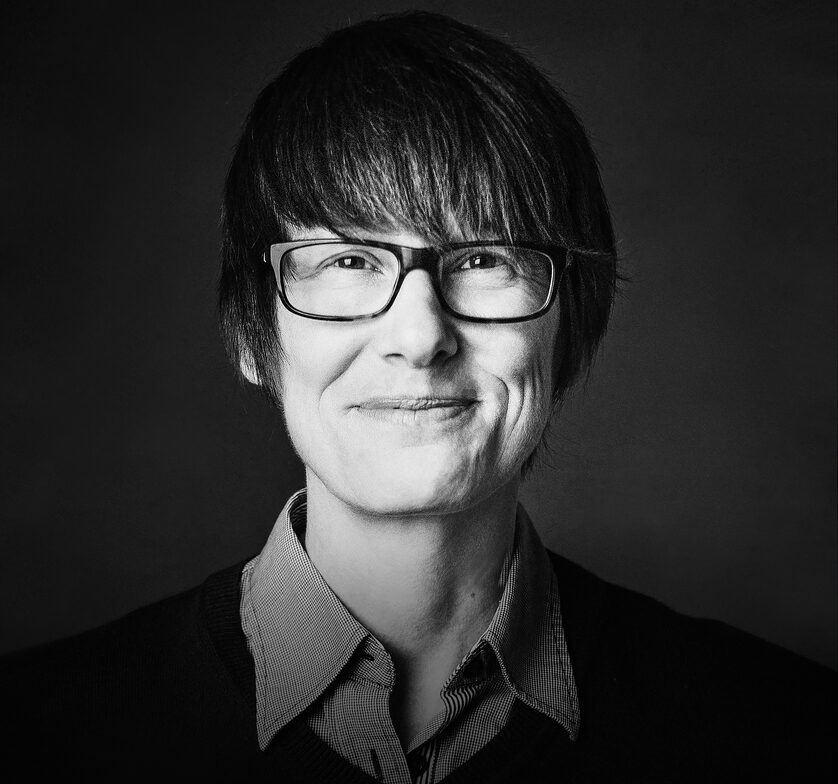
Mary L. Gray
Senior Principal Researcher, Microsoft Research
Bio
Mary Gray is Senior Principal Researcher at Microsoft Research and Faculty Associate at Harvard University’s Berkman Klein Center for Internet and Society. She maintains a faculty position in the Luddy School of Informatics, Computing, and Engineering with affiliations in Anthropology and Gender Studies at Indiana University. Mary, an anthropologist and media scholar by training, focuses on how people’s everyday uses of technologies transform labor, identity, and human rights. Mary earned her PhD in Communication from the University of California at San Diego in 2004, under the direction of Susan Leigh Star. In 2020, Mary was named a MacArthur Fellow for her contributions to anthropology and the study of technology, digital economies, and society.
Mary’s work includes In Your Face: Stories from the Lives of Queer Youth (1999) and Out in the Country: Youth, Media, and Queer Visibility in Rural America (2009), which looked at how young people in rural Southeast Appalachia use media to negotiate identity, local belonging, and connections to broader, imagined queer communities. The book won the American Anthropological Association’s Ruth Benedict Prize and the American Sociological Association’s Sexualities Studies Book Award in 2009. And, with Colin Johnson and Brian Gilley, Mary co-edited Queering the Countryside: New Directions in Rural Queer Studies (2016), a 2016 Choice Academic Title.
In 2019, Mary co-authored (with computer scientist Siddharth Suri), Ghost Work: How to Stop Silicon Valley from Building a New Global Underclass. The book chronicles workers’ experiences of on-demand information service jobs—from content moderation and data-labeling to telehealth—work that is essential to the global growth of artificial intelligence and platform economies more broadly. It was named a Financial Times’ Critic’s Pick and awarded the McGannon Center for Communication Research Book Prize in 2019. The book was also awarded the 2020 Communication, Information Technologies, and Media Sociology section of the American Sociological Association (CITAMS) Book Award Honorable Mention. The book has been translated into Korean and Chinese.
Mary chairs the Microsoft Research Ethics Review Program—the only federally-registered institutional review board of its kind in Tech. She is recognized as a leading expert in the emerging field of AI and ethics, particularly research at the intersections of computer and social sciences. She sits on the editorial boards of Cultural Anthropology, Television and New Media, the International Journal of Communication, and Social Media + Society. Mary’s research has been covered by popular press venues, including The Guardian, El Pais, The New York Times, The Los Angeles Times, Nature, The Economist, Harvard Business Review, The Chronicle of Higher Education, and Forbes Magazine. She served on the Executive Board of the American Anthropological Association and was the Association’s Section Assembly Convenor from 2006-2010 as well as the co-chair of the Association’s 113th Annual Meeting. Mary currently sits on several boards, including the California Governor’s Council of Economic Advisors, Public Responsibility in Medicine and Research (PRIM&R), and Stanford University’s One-Hundred-Year Study on Artificial Intelligence (AI100) Standing Committee, commissioned to reflect on the future of AI and recommend directions for its policy implications.

Michelle Miller
Director of Innovation, Center for Labor and a Just Economy, Harvard Law School
Bio
Michelle Miller is the Director of Innovation for the Center of Labor and a Just Economy at Harvard Law School where she researches the impact of technology on working class communities. She joined the Center after a decade as the co-founder and co-director of Coworker, an organization that nurtures early stage worker-led organizing. In her role at Coworker, she also pioneered the labor movement’s research of and response to the proliferation of software being used to manage and surveil workers, through early reports, research and documentation of automated technology. She is a Visiting Social Innovator with the Social Innovation + Change Initiative at the Harvard Kennedy School and sits on the boards of the Brooklyn Institute for Social Research and Arts and Democracy. Michelle lives in Brooklyn, NY.

Arun Sundararajan
Harold Price Professor of Entrepreneurship and Director, Fubon Center for Technology Business and Innovation, NYU Stern School of Business
Bio
Arun Sundararajan is the Harold Price Professor of Entrepreneurship and Technology at New York University’s Stern School of Business, where he also serves as Director of the Fubon Center for Technology, Business and Innovation. An internationally recognized expert on artificial intelligence governance and the future of work, his best-selling and award-winning book, “The Sharing Economy,” published by the MIT Press, has been translated into Japanese, Korean, Mandarin Chinese, Portuguese and Vietnamese. Find him at https://digitalarun.io/ and https://linkedin.com/in/digitalarun
Moderator

Anmol Chaddha
Principal, Omidyar Network, and Fellow, Future of Work Initiative, The Aspen Institute
Bio
Anmol Chaddha is a fellow with the Aspen Institute Economic Opportunities Program’s Future of Work Initiative. He is also principal on the Reimagining Capitalism team at Omidyar Network, where he focuses on increasing the power of working people.
Before joining Omidyar Network, Anmol led the Equitable Futures Lab at the Institute for the Future in Palo Alto, California. He managed the California Future of Work Commission created by Governor Gavin Newsom to develop a broad agenda to promote economic equity in the state. Anmol has extensive experience in policy and social science research, including economic inequality, racial inequality, low-wage work, job quality, debt, and wealth. Anmol previously worked with the Federal Reserve Bank of Boston, where he established an initiative to improve the quality of jobs in low-wage industries, led quantitative research on racial wealth inequality, and examined the rising debt burdens of low-income families.
Anmol received a doctorate in sociology and social policy from Harvard University, where he was a Fellow in the Multidisciplinary Program in Inequality and Social Policy at the Kennedy School of Government. He also received a master’s degree in sociology from Harvard University and attended the University of California, Berkeley, for his undergraduate degree.
About This Series
This event is part of a series called “Back to the ‘Future of Work’: Revisiting the Past and Shaping the Future,” curated by the Aspen Institute’s Future of Work Initiative. For this series, we gather insights from labor, business, academia, philanthropy, and think tanks to take stock of the past decade and attempt to divine what the next one has in store. As the future is yet unwritten, let’s figure out what it takes to build a better future of work.
About the Future of Work Initiative
The Aspen Institute’s Future of Work Initiative, part of the Economic Opportunities Program, empowers and equips leaders to innovate workplace structures, policies, and practices that renew rather than erode America’s social contract.
About the Economic Opportunities Program
The Aspen Institute Economic Opportunities Program advances strategies, policies, and ideas to help low- and moderate-income people thrive in a changing economy.
Join Our Mailing List
To receive occasional emails about our work — including new publications, commentary, events, fellowships, and more — join our mailing list.
Connect on Social Media
For news and updates every day, connect with us on the social media platform of your choice.
