


Wealth represents a key part of financial security, and all families need and deserve the benefits that wealth provides. The wealth we refer to here is less about multi-million-dollar accounts and portfolios of investment properties, and more about the resources to invest in stable housing, protection from financial shocks, retirement with dignity, and the confidence to take risks. While the specifics will differ, all families should have access to the essentials whose costs extend beyond their current month-to-month income.
We have a range of ways of understanding sufficient levels of financial resources such as the living wage, various levels of emergency savings, and retirement preparedness. Changes in median net worth track trends in household wealth, but still do not tell us whether those amounts are sufficient for families to meet their broader financial needs. All of these measures provide crucial insight, but do not capture the range of what wealth does for families. Wealth provides protection, opportunity, and peace of mind, and our understanding of whether families have the wealth they need should account for all these functions.
“Wealth provides protection, opportunity, and peace of mind, and our understanding of whether families have the wealth they need should account for all these functions.”
Right now, we lack clear targets and markers of progress on the resources and amounts move families from asset poverty to economic mobility. Leaders from across sectors are developing the policies, programs, and products that can build wealth for families in the bottom half of the wealth distribution. And the insights from these new measures of essential wealth can sharpen our understanding of what works and for whom and provide a clearer sense of the amounts of wealth that families need to succeed.

Three Emerging Themes Around Essential Wealth Measurement
In September 2025, Aspen FSP and the Federal Reserve Bank of Boston co-convened leaders to explore the essential wealth concept, discuss ways to develop a set of measures, and brainstorm ways to deploy the measures to strengthen wealth-building approaches. The 60-plus attendees—who represented a wide range of backgrounds from academia, think thanks, government, business, philanthropy, and nonprofits—aligned around three key themes.
- Attendees reached strong consensus that the concept of essential wealth is helpful because it highlights that there is a baseline amount of wealth that all families need to thrive. Participants agreed that both income and assets are critical for everyone, regardless of their income, and wanted others in similar leadership positions to understand that as well. The group identified that essential wealth goes beyond emergency savings; it is an amount that facilitates increased opportunities for them. They agreed that essential wealth supports households’ financial resilience and economic mobility, and may include other elements that are harder to quantify.
- People lack essential wealth for systemic reasons rather than due to their individual choices and behaviors. Participants shared the conviction that individuals and families face too many financial pressures and challenges to solve for their own essential wealth without institutional support. People highlighted that many families lack strong ties to institutions that support wealth-building, including employers, financial institutions, and governments. Moreover, the United States broadly lacks the infrastructure people need to accumulate and preserve assets. Policies like asset limits and benefits cliffs , debt-based higher education financing, lack of universal, affordable health care, and lack of uniformity in the wealth-building supports offered by employers were all named as contributing to this challenge.
- Most participants agreed that they would use essential wealth metrics if they existed. Nonprofit practitioners described how essential wealth metrics could help them better understand the impact of their services on their clients. Policy leaders and advocates were excited about how essential wealth metrics could inform both policy design and evaluation. Investors – both private sector and philanthropic – likewise were enthusiastic about incorporating essential wealth metrics into both their investment strategy-making and impact evaluations.
Tensions and Challenges Related to Essential Wealth Measurement
Areas where perspectives differed focused on who essential wealth metrics should be designed for and what a successful measure would capture. Participants expressed the desire for essential wealth metrics to be designed for everyone from individual households to nonprofit practitioners, to policy leaders, investors, philanthropic institutions, and academics. However, they also recognized that it was not possible to build a straightforward, actionable set of metrics for all of those potential users’ needs.
A significant minority of participants identified investors and resource allocators in policy and philanthropy as the initial users, though nonprofit practitioners and researchers articulated clear use cases as well. All lamented the lack of wealth-building infrastructure, and articulated a desire for scale solutions and a need for better tools to measure impact. Attendees also debated whether this effort should more strongly emphasize issues such as wealth inequality and other disparities that relate to the reasons so many households seem to lack the amount of wealth they need to thrive in the first place.

Another central tension related to whether the definition of “essential wealth” should encompass assets that support well-being (which was generally discussed in health terms). People were divided on whether it was possible to operationalize well-being, what could be considered essential, challenges related to accounting for differences in baseline health, and methodological challenges related to linking wealth with happiness or satisfaction in life.
Finally, participants raised challenges related to data availability, defining the components of essential wealth, methodological approaches to creating metrics, and the difficulty of creating a metric that is both recognized as rigorous and easy to understand and use.
Next Steps for Developing an Essential Wealth Measurement
Aspen FSP’s next steps include research and partnerships to advance the essential wealth concept, develop a precise definition for the term, and prototyping and testing metrics.
After the convening, we published Toward the Development of an Essential Wealth Concept and Measurement, co-authored by Aspen FSP staff and our partners at the Federal Reserve Bank of Boston. This primer makes the case that it is necessary to create metrics for essential wealth because the concept is not well represented by existing wealth and asset metrics. It provides a detailed accounting of existing metrics and explores how new metrics for essential wealth would enhance a variety of efforts to help families build the wealth they need to thrive.
By mid-2026, Aspen FSP researchers and partners will develop a definition of essential wealth and release an initial data-driven framework and measurement approach, which we hope will both strengthen existing wealth-building initiatives and inspire further development and innovation. Informed from the convening and our engagement and analyses thus far, we argue that impactful essential wealth metrics should:
- Clearly link dollar amounts of wealth to outcomes such as financial resilience, economic mobility, and well-being, articulating a set of sufficient wealth thresholds and identifying who has yet to hit those thresholds.
- Provide a sense of the type and scale of interventions needed to ensure all families have the essential wealth they need to experience financial resilience, economic mobility, and well-being.
- Enable geographic analysis of essential wealth nationwide, at the state-level when and where possible, with a framework of how to pursue local-level analysis.
- Shed light on the demographic differences (such as age and race) in how essential wealth varies and who has enough.
- Shift narratives about who needs and deserves wealth, and why.
We look forward to engaging with potential users of essential wealth metrics—especially leaders in policy, investing, and philanthropy—to strengthen the measure’s applicability, collaborate on new policy and impact research, and set and track goals to help U.S. families build life-enhancing wealth.
This report is a product of Aspen FSP. Aspen FSP thanks Gary Community Ventures, Prudential Financial, Surdna Foundation, and World Education Services for their generous support of Aspen FSP for this work. If you are interested in learning more about this work, please contact Steven Brown at [email protected].
Disclaimer
The views represented here, including findings, interpretations, and conclusions, are the authors’ own and do not necessarily represent the Federal Reserve Bank of Boston, the Federal Reserve System, or its Board of Governors; nor those of Aspen FSP’s funders. Any errors or omissions are the authors’ own.

Video: We Don’t Have to Choose Between Financial Stability and Wealth
Trump Accounts Are Here–Now Let’s Make Them Work for the Kids Who Need Them Most

It’s Time to Connect Financial Security and Economic Policy

Lessons from Expert Roundtables on Designing an Effective Early Wealth Building Policy

4 Models for Investing in Inclusively Owned Commercial Real Estate
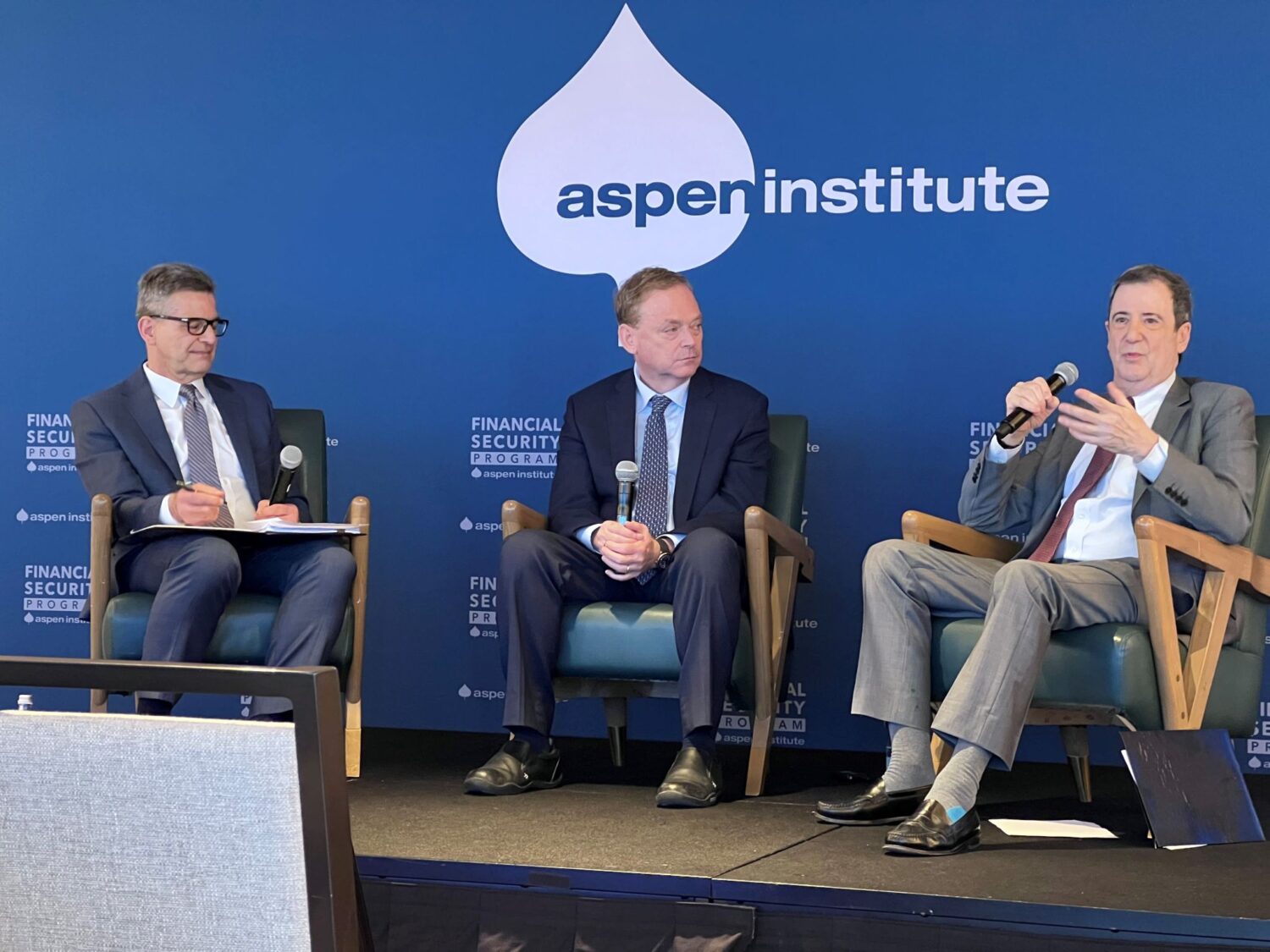
How We Can Make Universal Early Wealth Building Accounts a Reality

Ownership Investing: Financing the Future of Wealth
Investing in Inclusively Owned Commercial Real Estate

From Rent to Riches? A Profile on the Wealth and Financial Well-Being of Renter Households