Aspen is a place for leaders to lift their sights above the possessions which possess them. To confront their own nature as human beings, to regain control over their own humanity by becoming more self-aware, more self-correcting, and hence more self-fulfilling.
Walter P. Paepcke, Aspen Institute Co-Founder
Aspen Institute
Blog Posts, and Publications
Medical Debt and its Impacts on Health and Wealth: What Can Philanthropy Do to Help?
Seventy-nine million Americans struggle to pay their medical bills or are paying off medical debt. With the healthcare system structured to place a significant burden of the cost of care on households, medical debt is the most common type of debt in collections and the most common debt to lead to bankruptcy. Medical debt also disproportionately impacts communities of color, perpetuating and exacerbating the racial wealth gap by draining cash flow that other households without medical debt can save or invest. The good news – philanthropy has an opportunity to find and invest in solutions to support the millions of households struggling at all phases of the medical debt lifecycle. Each opportunity is accompanied by real examples that have been proposed or enacted and recommendations for philanthropy to support change and solutions at scale.
This is the third installment of Asset Funders Network’s three-part series on consumer debt.
Click hereto access the webinar and related slide deck.
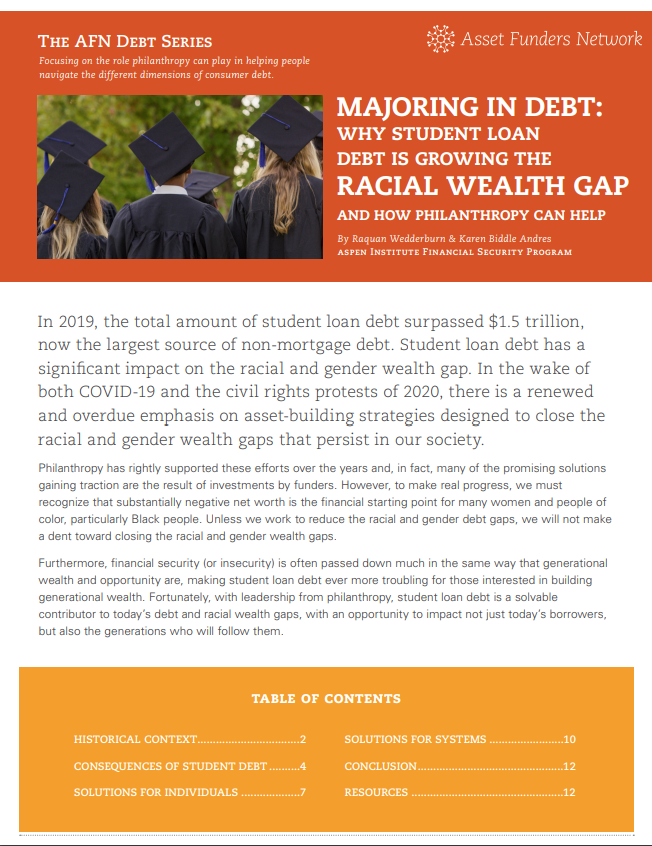
The problems that emerge from carrying student loan debt are systemic and have consequences not only for borrowers and their households, but also their communities, their states, and the nation’s economy. But these problems are solvable.