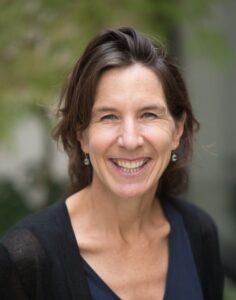
As a student of political economy, Heather McCulloch has always focused on how policy choices affect economic outcomes, and for whom. Or, in the words of her graduate school professor, “Cui bono?“—who benefits?
This question has guided McCulloch across more than two decades as an advocate and thought leader on economic inclusion, including her work as an entrepreneur-in-residence and senior fellow at the Aspen Institute Financial Security Program (Aspen FSP). One prime example: She founded and leads Women in the Economy, a national initiative that engages local, state, and national leaders from across sectors to reimagine an economy designed to work for women.
Now, after four years of seeding and growing Women in the Economy at Aspen FSP, McCulloch is transitioning the initiative to become an independent project of the nationally recognized fiscal sponsor Community Initiatives, where she will continue to helm the work as executive director.
We took advantage of this exciting moment to ask McCulloch to reflect on her journey with Aspen FSP and signal the path forward for gender economic equity.
What first sparked your personal interest in (and passion for) the intersection of women and the U.S. economy?
Since grad school, my career has focused on supporting nonprofit, public, private, and philanthropic leaders to design and implement economic systems—policies, programs, and practices—that are inclusive, by design.
Like so many of my peers, I’m also a co-breadwinner for my family—we could not get by without my financial contributions. Yet, I’ve seen and experienced the many ways that public policies and private sector practices in the U.S. block, rather than support, me and so many other women from earning, saving, investing, and fully contributing to our economy.
It has never made sense to me. Why would policymakers design systems that leave the talent and creative energy of half of our workforce on the table? That’s why 10 years ago, I decided to shift my focus—my time, energy, and my passion—on building an economy that works for women.
For the past four years, you’ve led Women in the Economy, a research and action project that aims to answer the question: “What would the economy look like if it were designed to work for women?” What was the impetus for this project, and why was Aspen FSP the place to do it?
I’ve known, admired, and worked with Aspen FSP Co-Executive Directors Ida Rademacher and Joanna Smith-Ramani for decades. I met Ida in the early days of the asset-building movement, and both Ida and Joanna were active in a national network I launched in 2016 called Closing the Women’s Wealth Gap.
When I shared that I was embarking on a new project to interview women across the country about how to build an economy designed to work for them, they were both excited and invited me to base it at Aspen FSP. For the last four years, they—and so many of my Aspen FSP colleagues—have been thought partners, advisors, supporters, and champions every step of the way.
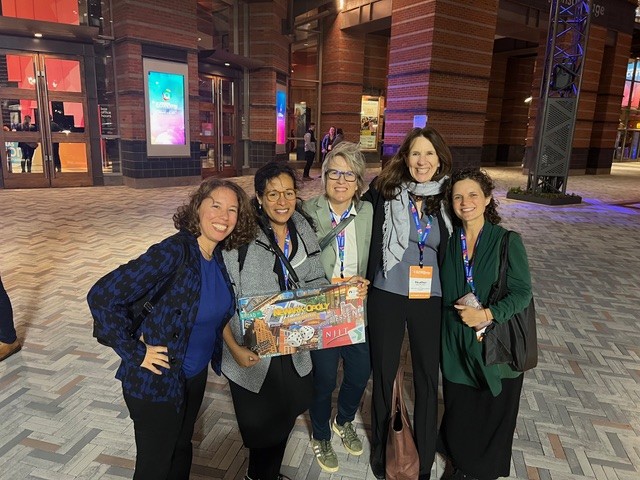
Being at Aspen has been a privilege. I’ve gotten to know people across the Institute who’ve shared their time, ideas, networks, and contacts. A major highlight for me has been the opportunity to collaborate with the team at Aspen Digital that is leading the WIN Challenge, with support from Melinda French Gate’s company, Pivotal Ventures. We’ve learned from one another, shared networks, opened doors, and lifted up each other’s work in ways that have strengthened all of our work, as well as the broader movement.
What have been some of the highlights of the Women in the Economy work, and what has made them meaningful for you?
In 2025, I had the privilege of co-hosting living room conversations in cities across the country, with local leaders from across sectors who care deeply about building an economy that helps women and girls thrive. Our first gathering took place a few days after the early anti-DEI executive orders, and at each successive gathering, another harmful policy was rolled out or an effective one rolled back, each with serious impacts on the economic security of working women and their families.
The living room meetings gave us spaces to digest all of it, together in community, as leaders who care deeply about the effects on women, families, and our economy. Despite the climate outside of the rooms, the conversations in these spaces were all about love, community, and resilience, fueled by a ubiquitous desire to work together on solutions that help women and girls succeed.
How do you see this work evolving right now? What’s next for Women in the Economy?
We’ve been incredibly grateful for our partnership with Aspen FSP, which has enabled us to connect with so many leaders across the country. But all good things come to an end, and it’s time for us to move to the next step. So, starting May 1, we’ll be spinning Women in the Economy off to become an independent project of a fiscal sponsor, Community Initiatives. We will always keep—and cherish—our connection to the Aspen Institute; and Joanna will continue to guide the initiative as part of a five-member advisory committee, so the connection will remain tangible.
Most of the leaders I work with are very aware that there’s no silver bullet to the deepening economic insecurity of women and their families in the U.S., as historically our country has never been intentionally designed to work for women. The silver lining is that this moment is galvanizing leaders from across sectors to come together and figure out how to bring all of our social, political, and economic capital into rethinking and designing economic systems that work for all of us.
Billions at Risk: What Drives Wealth Loss for Black Families
Innovations to Accelerate Rural Wealth Building

Colorado Essential Wealth Metric
Essential Wealth: A New Benchmark for Financial Security
“Champions of Financial Literacy”: How SFEPD Is Helping the Next Generation Build Wealth

Colorado’s Tenant Equity Vehicle: A Pioneering Approach to Renter Wealth Creation
The World Is Watching: What Comes Next for 530A Accounts (“Trump Accounts”)
Growing the Pie: Lessons on Wealth Building with Devin Murphy
Families Need Wealth. But How Much Is Essential?