Aspen is a place for leaders to lift their sights above the possessions which possess them. To confront their own nature as human beings, to regain control over their own humanity by becoming more self-aware, more self-correcting, and hence more self-fulfilling.
When asked what is essential to their American Dream, most Americans named freedom of choice, a good family life, a comfortable retirement, and a home of their own.
All of these aspirations require wealth to achieve. Retiring comfortably requires accumulated savings and assets. Owning a home requires a down payment and the ability to sustain it. The freedom to make choices—to change jobs, to move closer to loved ones, to handle a medical bill, to invest in a child’s education—requires a financial cushion that income alone cannot provide.
In short, wealth is not just for the wealthy. It is necessary for everyone, and essential throughout their lives.
But a lack of clarity of what constitutes “enough” wealth leads to challenges in creating actionable and effective policies and wealth-building tools for families—and to knowing when we’ve succeeded.
Aspen FSP’s work over the past year to develop a new benchmark for sufficient wealth aims to fill that gap and deliver a new way to measure what families need not just to survive, but to thrive.
The headline finding is stark: The vast majority of American households—three out of four—do not have essential wealth.
This metric is the result of rigorous research and analysis, but it is also a practical tool designed for action. Our aim is for leaders to use this metric to focus their wealth-building strategies and scale impact, and to partner with us to accelerate its deployment.
People’s financial goals and aspirations map onto three core functions of wealth—resilience, prosperity, and well-being—which we take as the basis for defining and measuring “enough” wealth. The essential wealth metric is designed to account for and measure all three of these complementary functions, and it also takes into account how wealth needs vary across life stages and geographies.
Key Milestones
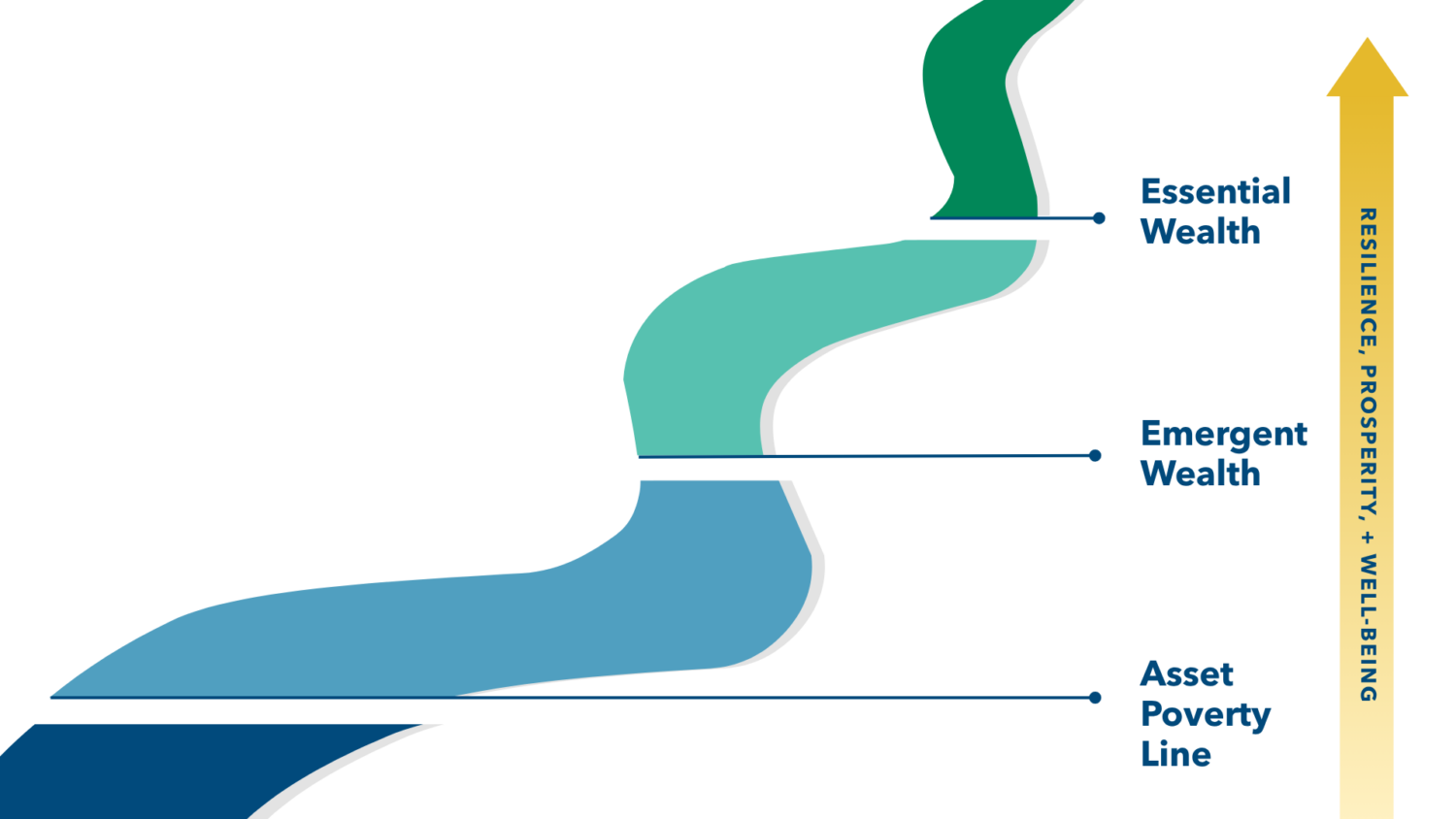
This framework identifies 3 key milestones on the path to essential wealth.
1. Asset Poverty Line
The asset poverty line reflects whether a household has enough wealth to subsist at the federal poverty line for three months without any income. It is the wealth equivalent of the income poverty rate—a baseline below which families cannot weather even a brief disruption. Households in or near asset poverty do not have reliable financial security.
2. Emergent Wealth
Emergent wealth is the baseline for meaningful resilience and the foundation for growing prosperity. At this milestone, families have enough liquid savings to handle a typical expense shock and enough net worth to hold a meaningful amount of at least a primary appreciating asset or more modest ownership across multiple assets.
3. Essential Wealth
Essential wealth is the level at which families hold multiple appreciating assets at levels that allow them to comfortably take risks and plan for the future. And, it marks the transition to wealth that begins to compound across generations.
What’s more, each milestone maps to the Consumer Finance Protection Bureau’s Financial Well-Being Scale; above the asset poverty line corresponds to lower financial well-being, emergent wealth to medium-to-high, and essential wealth to high. The metric also accounts for wealth needs across different life stages and geographies and complements existing approaches to understanding financial sufficiency, such as the Living Wage Calculator.
How Many Americans Have Essential Wealth?
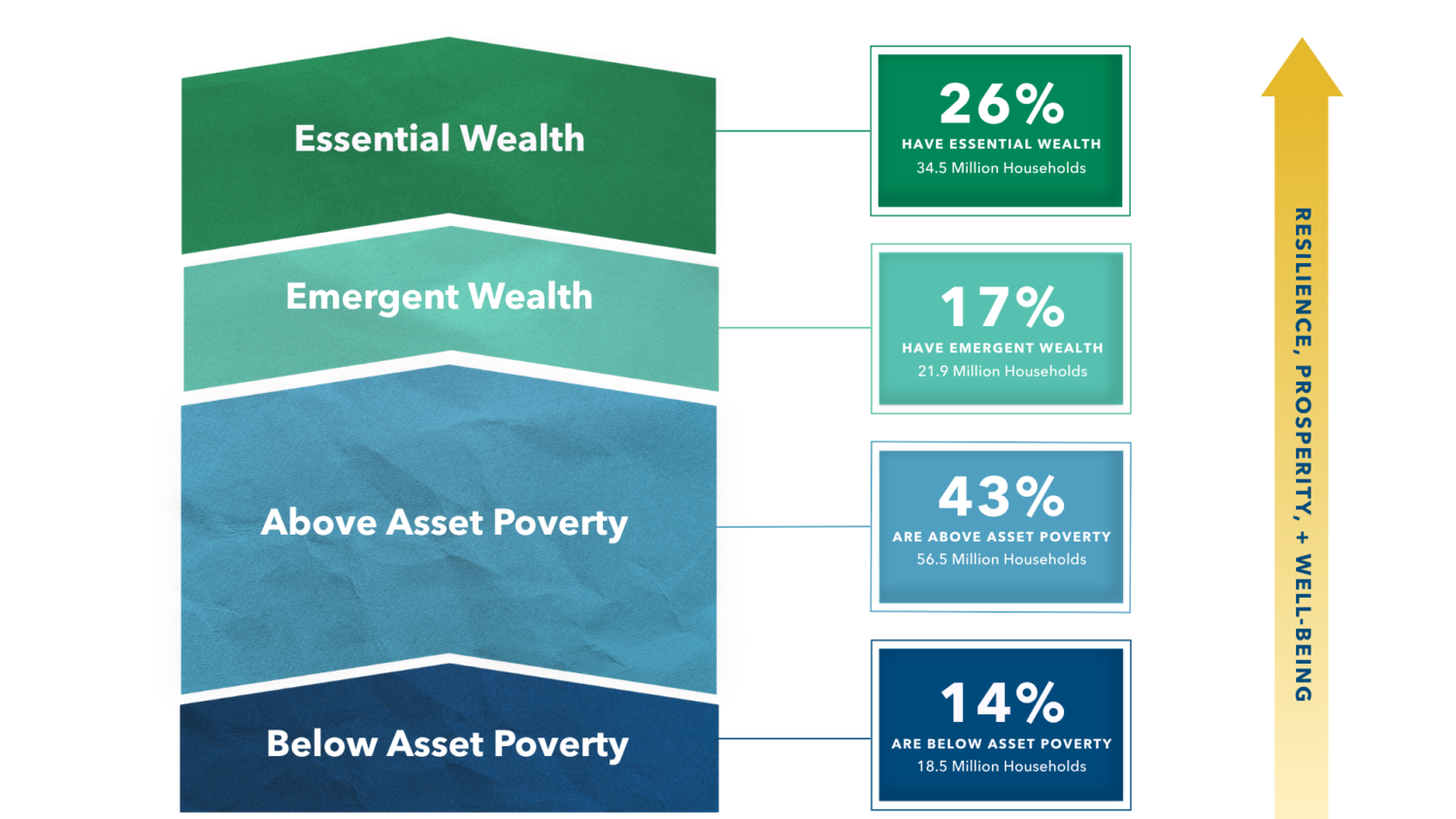
Just 26 percent of households have enough wealth to experience resilience, prosperity, and well-being.
Fewer than half of U.S. households clear even the emergent wealth threshold, having attained either emergent or essential wealth. The largest share of households (43 percent) has escaped asset poverty but stalled short of a foundational level of savings and wealth—a sign that for most Americans the challenge is not escaping acute fragility, but moving from barely getting by to building durable security.
The estimates of where households fall on the essential wealth path are based on Aspen FSP calculations of savings and wealth data from the 2022 Survey of Consumer Finances.
How We Got Here
Aspen FSP developed this metric with collaboration and feedback from a number of philanthropic, research, and practitioner partners. We based our work on what it looks like to have enough savings for typical shocks and also have the net worth necessary to support ownership and investment in life-enhancing assets. And we aligned what having these levels of savings and assets would mean for subjective financial well-being, taking into account different ages as well.
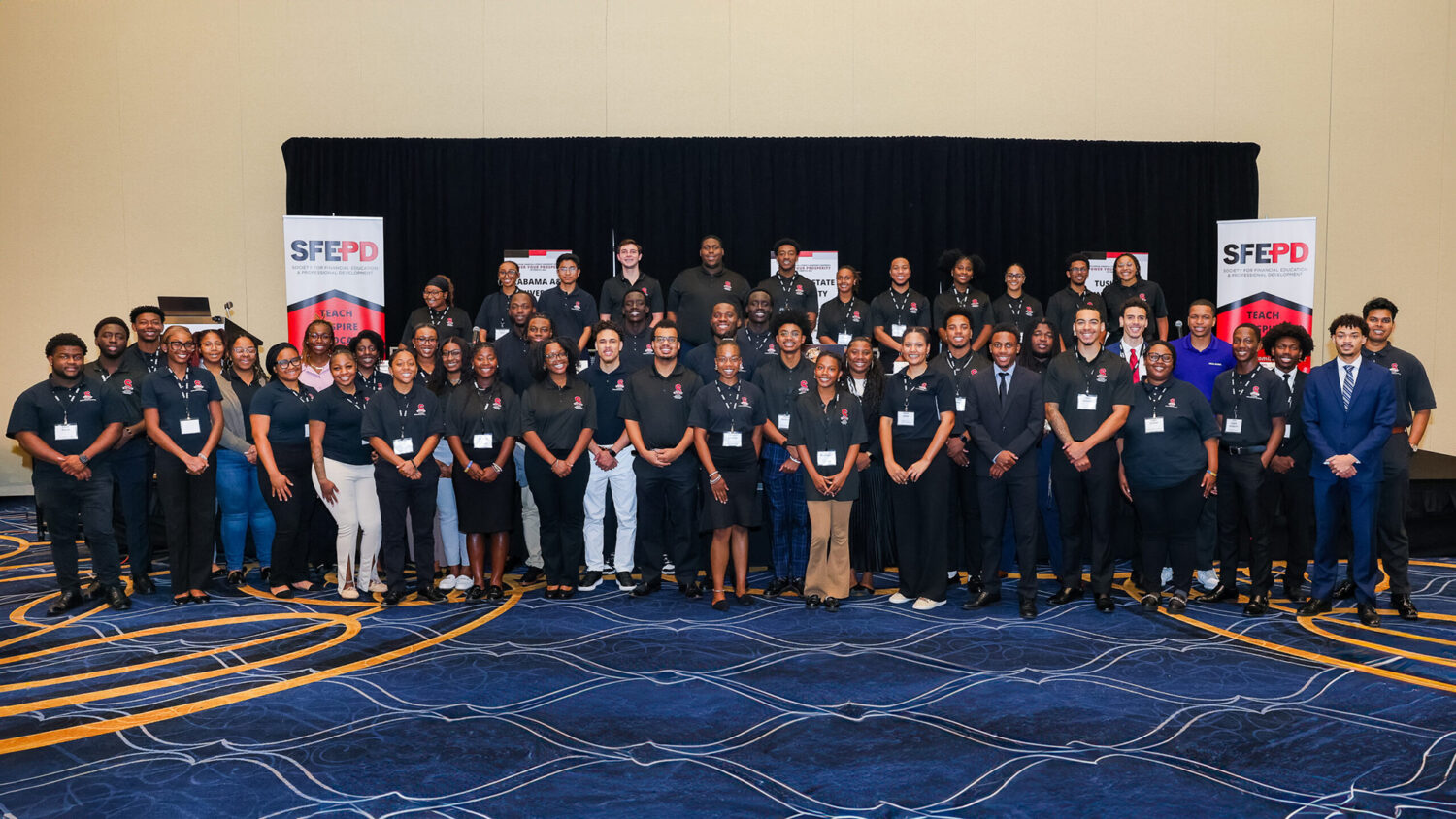
Photo courtesy of the Federal Reserve Bank of Boston, 2025.
Exploring the Essential Wealth Metric: An Explainer
Report author and Aspen FSP’s Director of Insights and Evidence, Steven Brown, explains how we constructed the metric—and how organizations can leverage it for action.
How Can I Use This Metric?
This metric is designed not just as a research output but as a practical tool for leaders to clarify what they’re building toward, design more effective interventions, and measure progress.
Making the Case
Wealth-building investments often face an implicit comparison: dollars spent on assets versus dollars spent on immediate needs like food, housing, and energy. The essential wealth metric offers a way to argue that families need both, not one first and then the other later. It also makes clear that no single asset class can do it all, as reaching essential wealth typically requires a diverse portfolio of appreciating assets—home equity, retirement savings, and other investments working together—rather than outsized reliance on any one vehicle.
In practice, this could look like:
A nonprofit program leader working to expand a renter cash back and savings initiative can ground that argument in concrete, population-level data.
A philanthropic funder evaluating a portfolio of asset-building programs can use the thresholds to ask whether participants are reaching balances that approach emergent wealth.
Scoping and Designing Solutions
Once the case is made, the framework helps leaders match the right tools to the right households, asking sharper questions about which interventions move which households across which thresholds.
In practice this could look like:
Government and program leaders designing children’s savings accounts, like 530A Accounts or baby bond programs, can design deposit and contribution amounts to move children up to a specific target, such as emergent wealth—or even essential wealth—rather than to amounts that leave participants short of any meaningful milestone at age 18.
Funders can identify regions where emergent wealth is structurally out of reach and prioritize efforts to support more affordable pathways to asset building through shared ownership.
Advocates and leaders focused on closing the racial wealth gap can identify which pathways, such as lowering educational costs, reducing student loan debt, or strengthening retirement and lifelong investing efforts, offer the largest leverage points.
Tracking Impact
With programs in place, the essential wealth metric can also help track their progress. Ongoing analysis of existing data can update general trends, and additional impact modeling that builds on these thresholds can gauge whether larger programs are moving the needle.
What Comes Next?
Now that we know what households need, we have an opportunity to do something big about it. Together, we can apply these new insights to program and policy development, modeling, and evaluation.
The data make clear that the majority of Americans are navigating an economy in which building the wealth they need is structurally out of reach—not for lack of effort, but for lack of the right conditions, tools, and investments working together.
The essential wealth metric gives us a sharper way to see that gap and a more precise way to close it for families who need a foundation to weather shocks, seize opportunities, and build something lasting; and for leaders who want their investments to actually move the needle.
We urge funders, policymakers, and partners to join us in turning these measures into action—because getting this right, at scale, is both possible and necessary.
Case Study: Colorado
We collaborated closely with our partners at Gary Community Ventures to publish a companion report that applies the essential wealth metric to Colorado household data.
Leveraging this analysis, Gary Community Ventures is now working with local partners to assemble a broad and diverse coalition committed to creating access to wealth for all. Their goal is to double the number of Coloradan families achieving essential wealth in the next decade.
Acknowledgements
This report is a product of Aspen FSP. Aspen FSP thanks Gary Community Ventures, Prudential Financial, Surdna Foundation, and World Education Services for their generous support of Aspen FSP for this work. The findings, interpretations, and conclusions expressed in this report—as well as any errors—are Aspen FSP’s alone and do not necessarily represent the views of its funders or other participants in our research process.
Thank you to the colleagues both within and outside Aspen FSP who generously shared their expertise, participated in our research process, and provided critical feedback as we developed the essential wealth metric. Special thanks to Marija Bingulac and Marybeth Mattingly from the Federal Reserve Bank of Boston, Jill Hawley and Julie Stone from Gary Community Ventures, Clint Key from Key Evidence & Insights, and Hector Ortiz of the Consumer Financial Protection Bureau for their thought partnership on the development of this metric. We are grateful to the dozens of others who shared their expertise, ideas, and feedback with us during the September 2025 Convening on Measuring U.S. Household Essential Wealth, in one-one-conversations, and in feedback on drafts versions of this work. And we also offer our appreciation to Christopher Roudiez for helpful research assistance.
Finally, thank you to our Aspen FSP colleagues Ida Rademacher, Joanna Smith-Ramani, Devin Murphy, Jason Ewas, Katherine Lucas McKay, Bianca Lopez, Shehryar Nabi, Julia Rocchi, and MegAnne Liebsch for thought partnership, research assistance, and communication support.
Though Black Americans have experienced greater economic opportunities, many still face wealth loss. This report examines historical events and current trends to develop broad estimates of the amount of Black-owned assets at risk in home equity, retirement savings, and wealth held in businesses they own.
As part of our essential wealth metric project, Aspen FSP has collaborated closely with our partners at Gary Community Ventures to look specifically at the wealth of Coloradans.
This webinar will explore Aspen FSP’s essential wealth metric, showing how it can help leaders across philanthropy, research, policy, and the private sector deepen their impact.
This case study from Gary Community Ventures and Aspen FSP explores the design, policy, and financing tools that made the Colorado Tenant Equity Vehicle (TEV) possible.
Aspen FSP Fellow Devin Murphy is committed to growing models of wealth building so that all U.S. families can thrive. Learn more about his work in this Q&A.
Attaining a baseline of security, mobility, and well-being requires wealth. But exactly how much is needed? This brief aims to offer a path toward greater empirical understanding of what constitutes essential wealth and how to measure it.