
“Champions of Financial Literacy”: How SFEPD Is Helping the Next Generation Build Wealth
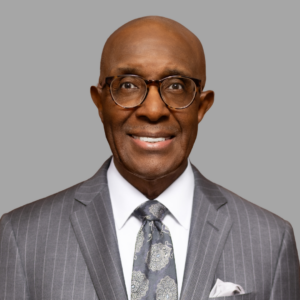
Ted Daniels
Founder and President, Society for Financial Education and Professional Development

Charniece Jones
Student Ambassador
Usually when people are recognized in public, it’s because they’re celebrities or other public figures. Ted Daniels—founder and president of the Society for Financial Education and Professional Development (SFEPD)—was recognized for his role in financial literacy.
“My wife and I were coming back from Atlanta,” Daniels shared with us in a recent interview, “and the young Delta agent who assisted me said, ‘Your face looks familiar.’” It turned out the agent had graduated from Tennessee State University’s College of Business and remembered Daniels presenting on financial literacy training at her program.
Now in its 26th year, SFEPD offers tailored workshops and a robust Student Ambassador Program that seeks to improve participants’ financial knowledge, confidence, and well-being, all with an aim to help them build wealth and achieve economic mobility. Working predominantly with Historically Black Colleges and Universities (HBCUs), SFEPD is also filling a critical need: building pathways for people of color, especially young Black people, to enter the financial services and asset management industries.
In this Q&A, we chat with Daniels as well as Charneice Jones, a current SFEPD Student Ambassador through Tuskegee University, about how their work helps others build wealth, achieve economic mobility, and help their communities along the way.
This interview has been edited for length and clarity.
Tell us about yourself, Ted. Why did you found SFEPD?
Ted Daniels: I founded SFEPD because I saw a massive need for financial literacy, specifically within the Black community. Before SFEPD, I worked at the U.S. Department of Housing and Urban Development for 31 years in various management roles. During my time there, the federal government switched from a civil service retirement plan to the Thrift Savings Plan (TSP). I noticed that many professionals—people with degrees who were doing quite well—had absolutely no idea how to make investments or plan for retirement.
It got to the point where my secretary would schedule sessions for people to line up outside my door just so I could teach them the basics: what a bond was, what a stock was, and what the different funds meant. I eventually became a licensed investment advisor so I could better help the community. I decided to retire early to establish SFEPD because it was clear that people wouldn’t invest if they didn’t have the knowledge.
Can you share more about the financial education and professional development training SFEPD offers?
Daniels: Our work at SFEPD stands on two main pillars. One is financial education. We teach students the skills needed to maximize the income they generate from their degrees. This includes “value-based budgeting,” credit management, insurance, and home ownership. We even cover estate planning, as many families lack a clear plan for transferring wealth to the next generation.
The other is professional development. We want students prepared for the job market the moment they graduate. This includes reviewing resumes, learning how to negotiate salaries, and understanding workplace benefits like the difference between a PPO and an HMO. We even have a brochure called Your New Job that helps them navigate tax forms like the W-4.
This way, they have the financial knowledge needed to maximize the income generated from their degrees, and they have professional tools to move up and grow their careers.
Charniece, what led you to become an SFEPD student ambassador?
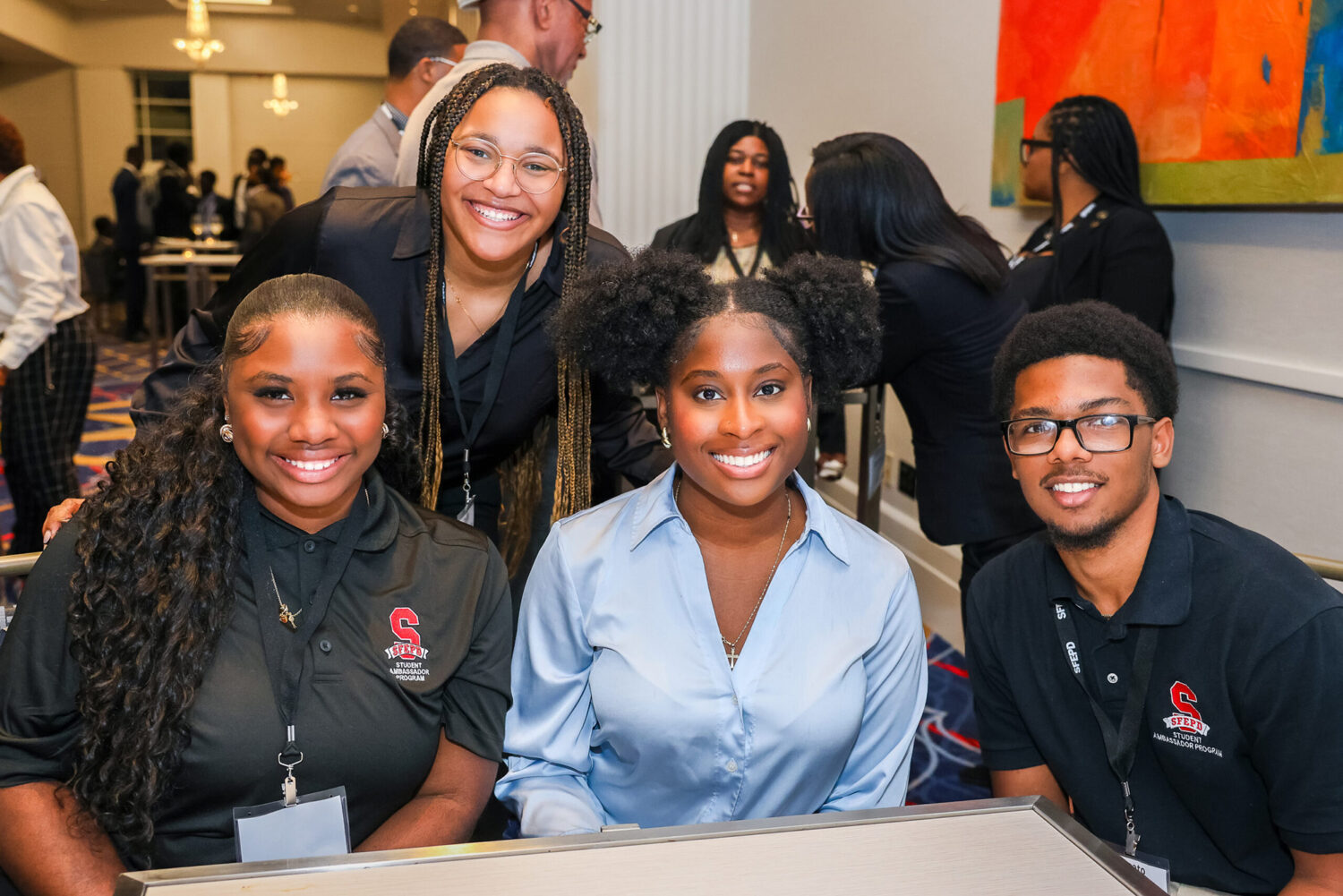
Charniece Jones: I’m a senior accounting student at Tuskegee University, and I’ve had the pleasure of acting as a student ambassador with SFEPD for about two years now, as well as a peer financial coach for about a year and a half.
I was first introduced to the program after sitting in on a presentation led by a former Tuskegee student ambassador. After hearing about the mission of SFEPD—the economic elevation of communities that have not had the opportunity to establish this level of socioeconomic status in the past—I knew it was an initiative I wanted to be part of.
Later, Mr. Daniels came to Tuskegee University to speak to our students, and I heard firsthand the passion and vision he has for SFEPD. The next semester, I was able to join the program as an ambassador and begin to immerse myself in the role.
What does the role of student ambassador entail?
Jones: I like to call us “champions of financial literacy.” As ambassadors, we give financial literacy presentations to our peers, friends, family, and community members. We establish relationships with our peers to answer their questions and provide the tools they need to invest in their financial journeys.
On the professional development side, we are poured into intellectually, I would say. We have monthly continuing education meetings where we connect with our fellow HBCU student ambassadors. While we’re contributing to others’ development, we’re continuing our own development too. We’re learning about various financial topics, we’re able to ask questions of seasoned professionals, and we work on our resumes, LinkedIn, and professional presence.
Another signature SFEPD program is the Annual Financial Literacy Leadership Conference. Can you tell us more about this gathering?
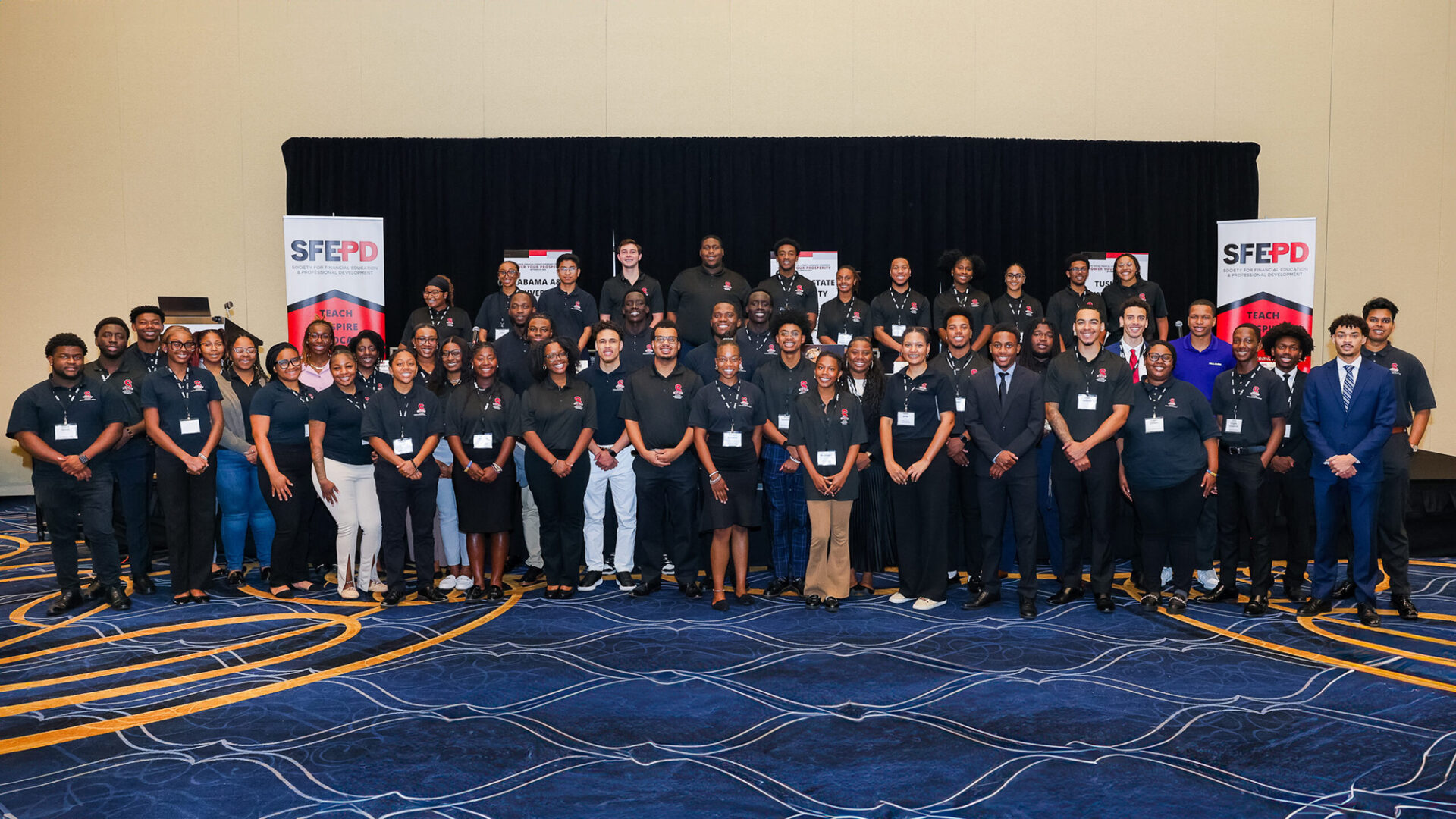
Daniels: The SFEPD Annual Financial Literacy Leadership Conference is a national-level gathering, and attendees include financial professionals, representatives of financial institutions, researchers, federal and state policymakers, SFEPD student ambassadors, and consumers. At the conference, SFEPD student ambassadors have the opportunity to gain additional financial knowledge to use in their financial literacy training sessions.
One of the conference’s key highlights is the HBCU Financial Literacy Bowl. The Bowl has two rounds of competition, based on knowledge of the key personal money management concepts. The first round is virtual and takes place in September of each year, and the top three winners from this round attend the Annual Financial Literacy Leadership Conference to compete in the final. The Bowl began three years ago and has become very competitive.
How does the student ambassador and peer educator model make SFEPD different from other financial literacy organizations? Why is it important that young adults receive financial literacy training directly from their peers?
Daniels: I believe students are more apt to listen to and be serious with each other than with an older adult. To prove this, I hired an independent consultant to compare our peer-to-peer training results with those of individuals who hadn’t received it. The results showed that those who received peer-to-peer training scored 132 points higher in financial well-being.
Jones: I think the foundation of it is relatability. We’re interacting with fellow college students [with whom] we share experiences, feelings, sentiments, [so] we’re able to communicate these financial literacy topics in a way that is digestible. Knowing that someone from a similar background at a similar age who comes from the same or different HBCU, knowing that that person could succeed in mastering these concepts, I think that’s encouraging for our peers to see that we’re able to do it and understand that they could do it as well.
This model of relationship that we form with our peers is what I think is super unique to SFEPD. And, like Mr. Daniels mentioned, that’s why it works and why we’re able to make the impact that we can.
What have you learned from working as a student ambassador, Charniece?
Jones: I’ve learned how to recognize a need and establish a solution–and that the solution could be limitless if you pour in the time, resources, and effort.
[My student ambassador experience] also shows that if I’m passionate about something as an individual and recognize that something should be done about it, as long as I pull together different pieces, I could definitely see an impact in that space.
Professionally, presenting these topics, interacting with peers, and developing my network has solidified my presence. I’ve learned how to present myself in a room and carry conversations. I don’t look at interviews as “interviews” anymore—just as conversations.
Can you share more about SFEPD’s work to help young people take the Securities Industry Essentials (SIE) exam?
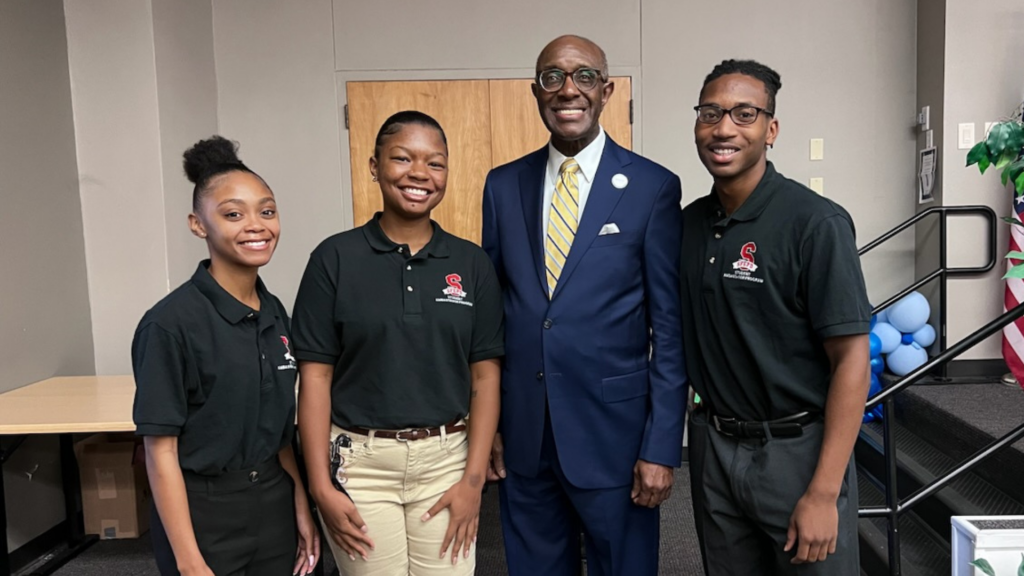
Daniels: There are very few people of color in the financial services and asset management industries. So, my thought was to find a way to get more people into these industries so they could gain the knowledge needed to be able to help their community.
We started the SIE initiative in the spring of 2023 to create a pathway for students into the financial services industry. The SIE exam is the prerequisite to getting a job in the financial services or asset management industry. It is the first hurdle you have to clear before you can test for more advanced licenses. We also use a cohort model where students have an intensive six-week preparation period, led by a professor who coordinates with SFEPD. They meet every Thursday evening to review materials and take pre-tests. By the seventh or eighth week, they are ready to pass the exam.
[Through this initiative] I wanted to help students who are still in college prepare for and pass the SIE so that, when there was a job opportunity available at a finance services firm or an asset management firm, they would be ready. To date, we’ve already helped 44 students pass the exam; this spring alone, we’re preparing 38 students to pass the SIE exam.
For those students who have passed the SIE exam, what are those people doing now?
Daniels: Many of them are already working in the asset management or financial services industries at firms like Vanguard, UBS, and Ally. They’re doing quite well because they have the opportunity to have successful careers and have good incomes while helping others invest and create wealth.
Let’s fast forward 30 years. What does the U.S. look like if SFEPD is successful in its mission?
Daniels: My hope is that we’re going to create a more efficient American economy because people will have the knowledge to use their financial resources properly. By infusing this knowledge into individuals and households, we can actually reduce the cost of social programs because the need won’t be as great.
My hope also is to create a network where the student ambassadors who have graduated become financial educators in their community, [still connected] to SFEPD. So, after they finish school, they still are engaged in helping the communities that they live in.
Jones: Currently, it’s super uncommon to be financially literate, and I think we’re not yet experiencing the fullness of us reaping the benefits of this knowledge. Incorporating financial literacy directly into our K-12 and college education systems would drastically lessen the learning curve we see when people leave school and have to start making real financial decisions. Then we’ll see young people establishing a level of wealth that people in the past were not able to. And with that, I think, SFEPD’s vision comes to fruition.
Putting Resources in the Right Hands: How One Fellowship Is Supporting Financial Services Professionals on Native Reservations

What Expanding Native American Representation in the Legal Field Can Teach Us About Building a More Diverse Financial Services Industry

Billions at Risk: What Drives Wealth Loss for Black Families

Innovations to Accelerate Rural Wealth Building

Colorado Essential Wealth Metric
How State and Local Governments Can Advance Early Wealth Building for All

Essential Wealth: Exploring a New Benchmark for Financial Security

Essential Wealth: A New Benchmark for Financial Security
From Band-Aids to Stepping Stones: How We Can Rebuild Young Adults’ Trust in Public Benefit Systems
Stay Connected
Join our work to build financial security for all.
Subscribe to Our Newsletter
Stay up to date with our latest news and events.
