Description
Since the mid-1900s, the nine-to-five work schedule has often been viewed as the standard. For many workers, this schedule has never worked.
Parenting and other caregiving responsibilities, health challenges, the pursuit of education and skills, existing employment, and other factors mean many people do not have a lot of predictability and consistency in their availability. Some may only be able to work a few hours a week and may not know week to week when that can happen. And yet, many obviously need to work to get by and meet their basic needs. While app-based platforms have often been heralded for providing the flexibility workers in these situations need, these jobs have often perpetuated low wages and low job quality standards.
Join the Aspen Institute Economic Opportunities Program on January 21, from 2 to 3:15 p.m. Eastern time, for “Beyond 9 to 5: Facilitating Good Jobs for People with Unpredictable Schedules.” This conversation will explore a range of strategies for ensuring that those who need a flexible and adaptable work arrangement don’t have to endure low quality jobs and low wages.
Speakers
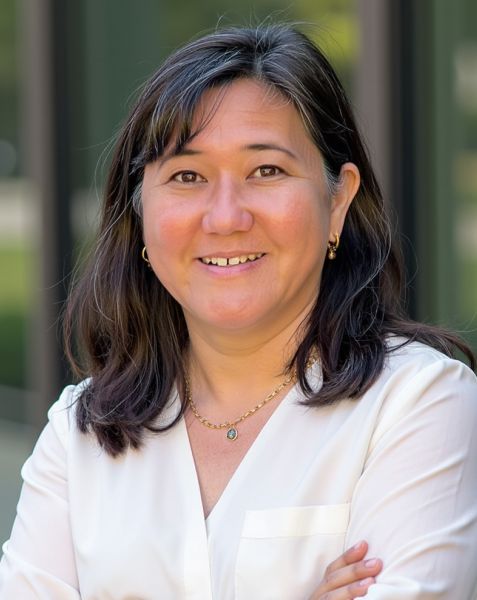
Marcy Chong
Director, Service Employees International Union
Bio
Marcy Chong is the director of the Service Employees International Union (SEIU) campaign to create state-level sectoral organizing, making it possible for rideshare drivers to collectively bargain and form a union. Marcy is also director of the SEIU’s State Power Program, with the charge of unifying political and organizing work across locals and industries to rewrite the rules for unions for all. State Power focuses on the critical states of Colorado, Michigan, Minnesota, Virginia, and Wisconsin.
Marcy has previously worked in SEIU’s public division, health care division, and strategic initiatives department. Marcy began working for SEIU more than 25 years ago in long-term care research. She has worked for Change to Win, CTW Investment Group, and related unions, and she was part of the founding team at Action Network/Action Builder. Marcy holds an MBA from The Tuck School of Business at Dartmouth and a Bachelor of Arts in Ethics, Politics, and Economics from Yale University.

Minsun Ji
Executive Director, Rocky Mountain Employee Ownership Center;
Executive Director, Drivers Cooperative-Colorado
Bio
Minsun Ji (Ph.D.) is a labor-community organizer, activist scholar and popular educator. She has extensive experience in nonprofit management and employee ownership efforts.
Minsun was the graduate program director of the Center for New Directions in Politics and Public Policy in the Political Science Department at the University of Colorado Denver where she created graduate program tracks in the social economy and community-labor organizing to grow leaders of social- economy labor organizing in Colorado. Minsun organized immigrant janitors, immigrant day laborers and domestic workers and she was the founder and the executive director of Denver’s first worker center, El Centro Humanitario para los Trabajadores (The Humanitarian Center for Workers).
She served as a research fellow at the Institute for Cooperative Digital Economy at the New School of Social Science, and a J. Robert Beyster Employee Ownership Fellow at the School of Management and Labor Relations at Rutgers University.
She was also a Colorado Governor’s Commissioner on Employee Ownership ( 2019-2020) and, currently, she has been actively engaged in building social cooperatives for marginalized communities and driver-owned platform cooperatives in different cities in the US.

Wingham Rowan
CEO of the Modern Markets for All
Bio
Wingham Rowan ran UK government programs that led the world by creating a sophisticated platform for all types of hourly labor under local control of cities or counties. Funding came from the Office of the Deputy Prime Minister, the National Health Service, Cabinet Office and 20 city governments who launched the platform.
The platform was eventually made a cornerstone of an overarching project to modernize Britain’s public assistance within the Department for Work and Pensions, the country’s labor ministry. The focus was extending protections, control, options, meaningful data, and progression to people with complex lives who cannot accommodate regular availability for employment.
Many years before “The Sharing Economy”, he authored two books (one published internationally) and countless articles about the potential of new markets to increase economic activity in communities. At the time he was producing and hosting what became the UK’s longest-running television series about the internet.
He has written multiple policy papers about the “grey zone” between structured work and unemployment. His papers advocating “Full Spectrum Employment Support” – increasing options for irregular workers in the workforce system, not just job seekers – have been published by institutes from the anti-poverty left to the free-market right. His work has been the subject of recent features in The New Yorker, the Financial Times, and Forbes.

Nick Schultz
Executive Director, Pacific Gateway Workforce Investment Network
Bio
Nick Schultz has over 30 years of direct experience in the fields of economic and workforce development. He is a nationally recognized expert and seasoned leader with a proven track record of creating operational efficiency, innovative and responsive program development and leading high-functioning teams. Nick’s unique ability to understand both the big picture and place-centric need has allowed him to continually partner with both private and public investors to fund signature initiatives recognized for their lasting impact on the built environment, business community and for residents.
He has led specific efforts funded by the Annie E. Casey Foundation, the Aspen Institute, Bloomberg Philanthropies, James Irvine Foundation, Kauffman Foundation, Wells Fargo, the Walmart Foundation, Forward Cities, Living Cities and the U.S. Departments of Commerce, Defense, Housing & Urban Development and Justice. Nick’s signature achievement is evidenced most directly by the City of Long Beach’s notoriety as “Space Beach.” He authored the Defense Industry Adjustment proposals and managed the projects that saw the workforce transition, supply-chain stabilization/optimization and physical transformation of the former Boeing C-17 facility and surrounding commercial corridors into the western United States’ leading technology commercialization and satellite/rocket manufacturing hub.
Nick holds a master’s degree in diplomacy from Norwich University, is a Marrano Fellow of the Aspen Institute, a graduate of the University of Pennsylvania’s Fels Institute of Government inaugural class of “Leading in a New Age,” past vice-president of both the California Workforce Association, and the United States Conference of Mayor’s Workforce Development Council, and a member of the Linked Learning Alliance Equity Council.
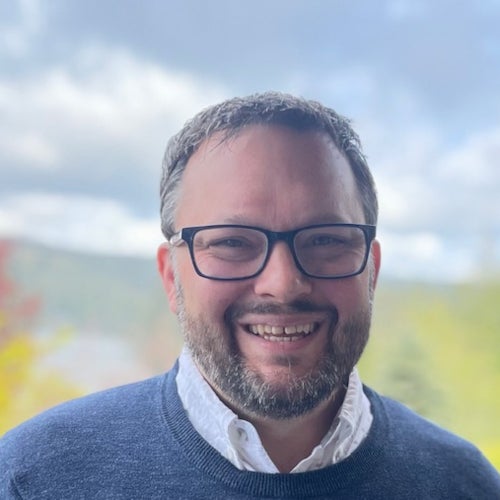
Matt Helmer (Moderator)
Director, Job Quality and Worker Well-Being, Economic Opportunities Program, The Aspen Institute
Bio
Matt Helmer is director of job quality and worker well-being at the Aspen Institute Economic Opportunities Program and joined the program in April 2022. Matt’s work focuses on developing conversations, tools, and research that advance job quality, equity, and economic security for workers with low and moderate incomes. He worked for the Institute’s Workforce Strategies Initiative (WSI) from 2009 to 2014. With WSI, Matt researched community college and nonprofit partnerships and construction pre-apprenticeship and apprenticeship programs, facilitated the Sector Skills Academy, and supported the Reinventing Low-Wage Work and Working in America discussion series.
Matt has a background in workforce development, affordable housing, and adult education. Before rejoining the Institute in 2022, Matt worked for the Seattle Housing Authority (SHA), where he led a team of analysts and project managers charged with advancing the agency’s strategic priorities. Matt helped lead the development and implementation of workforce development and asset building programs, eviction prevention strategies, and trauma-informed customer service. Before joining SHA, Matt was a senior policy analyst at the Seattle Jobs Initiative, where he evaluated workforce development programs and conducted research on job quality and economic development issues in the Seattle region. Prior to coming to the Institute in 2009, Matt worked for a local nonprofit in Seattle supporting immigrants and refugees, served in Damascus as a senior English language fellow for the US State Department, and was a Peace Corps Volunteer in Tonga. He has bachelor’s and master’s degrees in teaching English to speakers of other languages from Southern Illinois University and a master’s degree in public administration from the University of Washington. Matt lives outside Seattle with his wife and two sons and enjoys spending time with them exploring the beaches, mountains, and forests of the Pacific Northwest.
About the Economic Opportunities Program
The Aspen Institute Economic Opportunities Program advances strategies, policies, and ideas to help low- and moderate-income people thrive in a changing economy.
Join Our Mailing List
To receive occasional emails about our work — including new publications, commentary, events, fellowships, and more — join our mailing list.
Connect on Social Media
For news and updates every day, connect with us on the social media platform of your choice.
More Events by the Economic Opportunities Program



Employee Ownership Ideas Forum 2026
View Event