

Description
What many believe is a thing of the past is in fact an ever-growing crisis, with life and death consequences for children across the US.
In a wave of rollbacks, at least 10 states have passed laws to restrict child labor protections in the last couple of years. Today, children as young as 13 are working grueling jobs that put their health, safety, and development at risk — in meatpacking plants, warehouses, and tobacco fields instead of schools. Migrant children especially are at risk of being exploited. Many arrive in the US without parents or guardians, lacking legal protections or a support system. These children are often funneled into the most dangerous sectors of the labor market, where oversight is weak and accountability is rare. Over the last several years, there have been numerous reports about children being seriously injured or killed working in incredibly dangerous conditions.
In this event — hosted by the Aspen Institute Economic Opportunities Program on November 19, 2025 — we explore how we arrived at the current landscape of child labor; what it means in the current context; and how we can protect children moving forward and explore what policymakers, child advocates, and labor advocates can do to address weakening child protections.
This conversation includes opening remarks from Yesenia Cuello (Co-founder, NC Field), followed by a panel discussion with Ron Estrada (Chief Executive Officer, Farmworker Justice), Reid Maki (Director, Child Labor Advocacy, National Consumers League), Nina Mast (State Economic Analyst, Economic Policy Institute), Charlie Wishman (President, Iowa Federation of Labor, AFL-CIO), and moderator Kristina Cooke (Journalist, Reuters).
This event is part of our Opportunity in America series. For highlights from this discussion, subscribe to our YouTube channel. Or subscribe to our podcast to listen on the go.
Opening Remarks

Yesenia Cuello
Co-founder,
NC Field
Bio
Yesenia Cuello is the executive director and co-founder of NC FIELD, a community-based nonprofit in eastern North Carolina that works alongside rural families to improve health, education, and working conditions. A former child farmworker, Yesenia began her advocacy as a teenager organizing with Poder Juvenil Campesino, a youth-led movement that partnered with Human Rights Watch and others to expose hazardous child labor in US tobacco fields. Along with a national network of working youth and allies, she helped successfully advocate for the first federal minimum age for pesticide applicators in the United States.
Under her leadership, NC FIELD has expanded tenfold, employing and training bilingual community health workers and navigators from impacted communities and utilizing an assets-based lens to build local capacity. Yesenia serves on multiple statewide and national coalitions including the Child Labor Coalition, Farmworker Advocacy Network, and the Kate B. Reynolds Trust Health Improvement Advisory Council, continuing her work to provide local services to families and to advance protections for working children by elevating the voices of rural immigrant communities.
Speakers
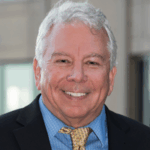
Reid Maki
Director, Child Labor Advocacy,
National Consumers League
Bio
In his role at the director of child labor advocacy at the National Consumers League (NCL), Reid coordinates the activities of the Child Labor Coalition (CLC), which has 38 organizational members and strives to minimize exploitative child labor domestically and internationally and works to protect the health, safety, and wellbeing of child workers in the United States and abroad. The CLC has worked with Congress and federal agencies to improve child labor responses, educate the public about child labor issues, and organize responses from the nonprofit community.
Prior to joining NCL in 2008, Reid worked for 12 years at the Association of Farmworker Opportunity Programs where he served as the communications director and led the Children in the Fields Campaign. Its goal is to end the legal loopholes in US child labor law that permit child agricultural laborers to work longer hours, to work at younger ages, and to perform hazardous work at younger ages than children working in other industries. That work to protect child farmworkers continues.
We face new challenges with the recent expansion of hazardous child labor in the US and state and federal child labor increasingly under attack. Internationally, critical US government funding for international child labor remediation projects has ended abruptly.

Ron Estrada
Chief Executive Officer,
Farmworker Justice
Bio
Ron Estrada serves as the chief executive officer of Farmworker Justice, a national advocacy organization based in Washington, DC that works to improve the living and working conditions of farmworkers and their families. Formally, Estrada served as senior vice president of corporate social responsibility and government relations for Univision Communications where he oversaw the portfolio with community-based organizations, key local and national stakeholders and leaders from public and private sectors.
Estrada also co-founded the Univision Foundation where he developed and directed the implementation of the foundation’s first charter. Moreover, Estrada led Univision’s policy, advocacy, and CSR initiatives for network and local media teams representing 126 broadcast and radio stations throughout the US and Puerto Rico. Formerly, Estrada also served as senior executive for UnidosUS and the United States Hispanic Chamber of Commerce.

Nina Mast
State Economic Analyst,
Economic Policy Institute
Bio
Nina Mast (she/they) joined EPI in 2022 as an economic analyst on the State Policy and Research team. Mast’s research at EPI includes a focus on child labor standards. Mast is a graduate of the Master of Public Policy program at UC Berkeley’s Goldman School, where she served as a researcher for the UC Berkeley Labor Center and represented academic student employees as a union steward with UAW-2865.
Mast has been interviewed or quoted by numerous outlets including ABC News, NBC News, The New York Times, The Wall Street Journal, The Washington Post, CNN, and The New Yorker, and appeared on American Public Media for “Marketplace” and the popular “Pitchfork Economics” podcast.
Before graduate school, Mast worked as a researcher in the labor movement and at issue advocacy organizations focused on health care and the economy. At SEIU Local 32BJ, she conducted research to support fast-food workers in Connecticut and commercial cleaning workers in New York. Prior to 32BJ, she worked on issue campaigns at The Hub Project and efforts to advance a progressive economic worldview at the Groundwork Collaborative.
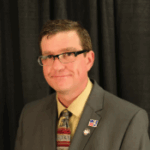
Charlie Wishman
President, Iowa Federation of Labor,
AFL-CIO
Bio
Charlie Wishman became secretary-treasurer of the Iowa Federation of Labor, AFL-CIO, in January of 2012, and president of the organization on May 1, 2020.
Charlie is a member of the International Association of Machinists and Aerospace Workers (IAM) Local 254. He has also been a member of the International Association of Machinists and Aerospace Workers (IAMAW), American Federation of State County and Municipal Employees (AFSCME), and the American Federation of Teachers (AFT).
He has worked as community liaison for the Food Bank of Iowa and first became a union member working as an organizer for Iowa Citizen Action Network in 2006. In 2009 he became a Communications Specialist for AFSCME Iowa Council 61.
In the fall of 2011 he came to work for the Iowa Federation of Labor as Communications Director. Charlie also served as President of the Iowa Workers’ Compensation Advisory Council and also serves on the Iowa Workforce Development Board, the Labor Advisory Committee of the University of Iowa Labor Center, United Way of Central Iowa, the John L. Lewis Museum Board, The Iowa Labor History Society Board, the Labor Advisory Board of the Chicago Federal Reserve, as well as other boards and working groups to advocate for the advancement of the cause of working people.
Charlie graduated from the University of Northern Iowa in 2002. His family lives in Des Moines. He is widowed and has two children who attend Des Moines Public Schools, Isaac and Ivy.
Moderator

Kristina Cooke
Journalist,
Reuters
Bio
Kristina Cooke is an investigative reporter at Reuters focused on immigration. In 2025, she was part of a team of reporters who were awarded the Pulitzer Prize for Investigative Reporting for coverage of the fentanyl supply chain. In 2023, she and colleagues were finalists for the Pulitzer Prize for National Reporting for an investigation into migrant child labor in the United States. Originally from Germany, she joined Reuters in London in 2005 and is now based in San Francisco.
More Events by the Economic Opportunities Program











About Opportunity in America
Opportunity in America, an event series hosted by the Economic Opportunities Program, considers the changing landscape of economic opportunity in the US and implications for individuals, families, and communities across the country.
About the Economic Opportunities Program
The Aspen Institute Economic Opportunities Program advances strategies, policies, and ideas to help low- and moderate-income people thrive in a changing economy.
Join Our Mailing List
To receive occasional emails about our work — including new publications, commentary, events, fellowships, and more — join our mailing list.
Connect on Social Media
For news and updates every day, connect with us on the social media platform of your choice.
