About this Event
“Social contract” has quickly become one of the most-used, least-defined phrases in the AI policy conversation. This first event in a two-part series will trace the origin and history of the American social contract, examining how work became the anchor of economic security, mobility, and civic identity in the United States.
From an economy whose foundations were built on forced and unpaid labor, through the rise of industrialization, the New Deal, a postwar economic boom, financialization, and then globalization, the relationship between workers, employers, and the state has been redefined repeatedly. Panelists will discuss these inflection points, focusing on who was (and was not) party to these agreements — from organized labor and industrial barons to policymakers and grassroots movements — and under what circumstances their compromises established the baseline expectations of a middle-class life.
Speakers explore the evolving role of labor and how structural shifts over the 20th century laid the groundwork for today’s economic landscape — including the extent to which AI is a novel force reshaping our society. The discussion provides essential context for today’s leaders to understand their respective roles in forging a new social contract for the 21st century — a discussion that will continue in the second installment of the series: Work and the Social Contract in the Age of AI: Where do we go from here?
This conversation was hosted by the Future of Work Initiative, an initiative of the Aspen Institute’s Economic Opportunities Program on September 23, 2026 — explores what drove this transformation, who bears its costs, and what it would take to reverse it.
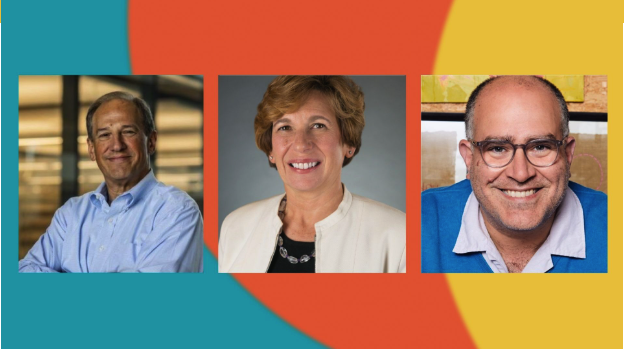
Our speakers include Joseph Blasi (Rutgers University), Chris Hyams (former CEO of Indeed), Marshall Kosloff (Niskanen Center), Liba Wenig Rubenstein (Future of Work Initiative, The Aspen Institute), and Erica Smiley (Jobs with Justice).
For highlights from this discussion, subscribe to our YouTube channel. Or subscribe to our podcast to listen on the go.
This event is part of our Opportunity in America series.
Speakers

Joseph Blasi
J. Robert Beyster Distinguished Professor and Director Emeritus of the Institute for the Study of Employee Ownership and Profit Sharing at the School of Management and Labor Relations at Rutgers University
Bio
Joseph Blasi is the J. Robert Beyster Distinguished Professor and Director of the Institute for the Study of Employee Ownership and Profit Sharing at the School of Management and Labor Relations at Rutgers University. He is an economic sociologist and teaches the undergraduate and graduate courses on corporate governance. His work includes economic sociology, the social and economic history, and public policy, particularly focused on the issue of capital shares, namely, broad-based employee stock ownership, profit sharing, gain sharing, and stock options in corporations, in countries, in industries, and regions, for example, with a recent study of Silicon Valley and work on different historical periods of American history. He is currently a Visiting Associate at the School of Historical Studies at the Institute for Advanced Study. He also serves as a Senior Fellow of The Aspen Institute.
He has written thirteen books including The Citizen’s Share: Reducing Inequality in the 21st Century (Yale University Press, 2013, with Richard Freeman and Douglas Kruse), Shared Capitalism at Work (University of Chicago Press, 2010, with Douglas Kruse and Richard Freeman), In The Company of Owners (Basic Books, 2003, with Douglas Kruse and Aaron Bernstein), The New Owners (HarperCollins, 1991, with Douglas Kruse), and Employee Ownership (Harper and Row, 1988), A Working Nation (Russell Sage Foundation, 2000, with various co-authors). His articles have appeared in the The British Journal of Industrial Relations, Industrial Relations, and the Industrial and Labor Relations Review, among others.
A member of the Department of Human Resource Management and the Department of Labor Studies and Employment Relations at Rutgers since 1989, he worked for many years in the University Senate, serving as a member of its executive committee. He has been a Research Associate in Labor Studies at the National Bureau of Economic Research, the William D. Loughlin Member at the School of Historical Studies at the Institute for Advanced Study in Princeton, New Jersey from 2007-2008 and the Andrew W. Mellon Foundation Member at the School of Social Science of the Institute from 1995-1996, as well as a Visiting Scholar at the Center for the Study of Social Organization at Princeton University, a Visiting Professor at the Department of Sociology at Princeton University, and a Visiting Professor at the Yale School of Management, and a Visiting Scholar at the Harvard Business School.
He received the Lady Davis Fellowship from Hebrew University of Jerusalem and the Fulbright Fellowship at the University of Haifa and was for many years a Lecturer in Social Studies at Harvard University. Early in his career he served as a Legislative Assistant in the United States House of Representatives. Blasi received his doctorate from the Harvard University Graduate School of Education.

Chris Hyams
Visiting Lecturer, Huston‑Tillotson University; former CEO, Indeed
Bio
Chris Hyams is the former CEO of Indeed, the world’s leading job site, where he spent 15 years before leaving to focus full-time on the challenges and opportunities of responsible AI. He is a board trustee and visiting lecturer at Huston-Tillotson University, a historically Black University in Austin, Texas, where he teaches on the intersection of technology, power, and justice. Chris is a board member at Guardrails Alliance, a super PAC supporting common-sense AI guardrails and fighting the AI industry’s efforts to buy Congressional influence and block meaningful regulation.
Chris started his career working in adolescent addiction recovery, and then as a high school special education teacher in the Vermont public school system. After working as a musician in Los Angeles, he went back to school to study computer science. Chris worked as a software engineer, and later became vice president of engineering at Trilogy Software. Prior to Indeed, he was founder & CEO of B-Side, a technology platform for independent film discovery and distribution. Chris earned an A.B. in architecture from Princeton University and a master’s in computer science from Rice University. He lives in Austin, Texas.

Marshall Kosloff
Director, Special Projects, Niskanen Center; Host, “The Realignment”
Bio
Marshall Kosloff is a Senior Fellow and Director of Special Projects at the Niskanen Center, where he develops programs and partnerships for a pragmatic approach to addressing the governance and policy challenges of the 2020s. There, he co-produces the annual Abundance conference and hosts The Realignment at Niskanen, a podcast that examines the profound shifts transforming American politics and society. Kosloff serves as the Executive Producer of Endless Frontiers, an annual gathering in Austin, is a Senior Fellow at UT Austin’s Strauss Center for International Security and Law, and serves on the Welcome Committee for Bloomberg Beta’s annual Going to Work conference.

Liba Wenig Rubenstein
Director, Future of Work Initiative at the Economic Opportunities Program, The Aspen Institute
Bio
Liba Wenig Rubenstein is the director of the Future of Work Initiative.
Previously, Liba was the founding and lead social impact executive at MySpace, Tumblr, and 21st Century Fox, where she pioneered ways to harness companies’ financial, human, cultural, and technological resources for social, civic, and environmental progress and built bridges between sectors to amplify impact. She has helped found the Civic Alliance, chaired the board of premier youth vote organization the Alliance for Youth Organizing, served as a member of the World Economic Forum’s Global Agenda Council on Sustainable Consumption, and advised nonprofits Pop Culture Collaborative, KW Foundation, Vote.org, Social Impact Fund, CARE, Civic Nation, Why Tuesday?, and Invisible Children. Born and bred in Brooklyn, and a proud product of New York City public schools, Liba graduated from Yale University with distinction in American studies and now resides in Los Angeles with her husband and two young daughters.

Erica Smiley
Executive Director, Jobs with Justice
Bio
Erica Smiley, Executive Director, Jobs with Justice. A long-time organizer and movement leader, Smiley has been spearheading organizing and policy interventions for Jobs with Justice for nearly 20 years. Smiley is a published author, having co-authored the book The Future We Need: Organizing for Economic Democracy in the Twenty First Century, and has regularly published features Nonprofit Quarterly, Dissent Magazine, the Journal on Class, Race and Corporate Power, and other publications lifting strategic organizing, movement building, and economic democracy.
Originally from Greensboro, North Carolina, Smiley is a proud product of public schools and a graduate of the University of North Carolina at Chapel Hill. In recognition of her contributions to labor and social justice, she was awarded an honorary doctoral degree from the CUNY School of Labor and Urban Studies in 2025.
About the Future of Work Initiative
The Aspen Institute’s Future of Work Initiative, part of the Economic Opportunities Program, empowers and equips leaders to innovate workplace structures, policies, and practices that renew rather than erode America’s social contract.
About the Economic Opportunities Program
The Aspen Institute Economic Opportunities Program advances strategies, policies, and ideas to help low- and moderate-income people thrive in a changing economy.
Join Our Mailing List
To receive occasional emails about our work — including new publications, commentary, events, fellowships, and more — join our mailing list.
Connect on Social Media
For news and updates every day, connect with us on the social media platform of your choice.

Work and the Social Contract in the Age of AI: How did we get here?

Back to the Future of Work: Revisiting the Past and Shaping the Future

The Power to Shape What Comes Next: Writing the Future of Work Together
Power At Work Blogcast #107:
Worker Power & Agency

Worker Power in the Age of AI Monopolies: Why We Need Structural Solutions Now
Reflections on the Future of Work from Aspen Ideas Festival 2025