What is the Role of Sport in Society and International Relations?
A Why We Play roundtable hosted by Aspen Institute Italia
A Why We Play Conversation in Italy
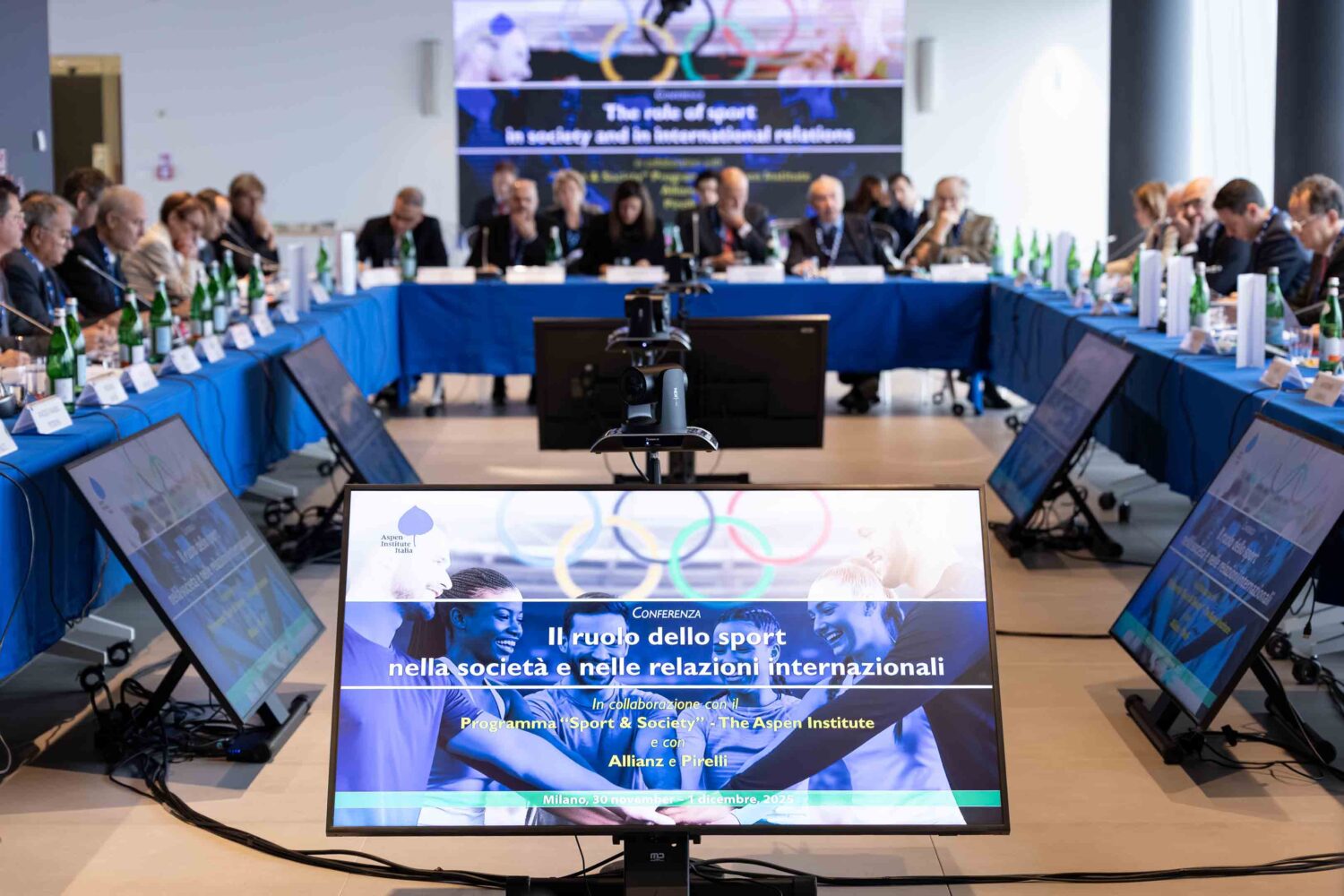
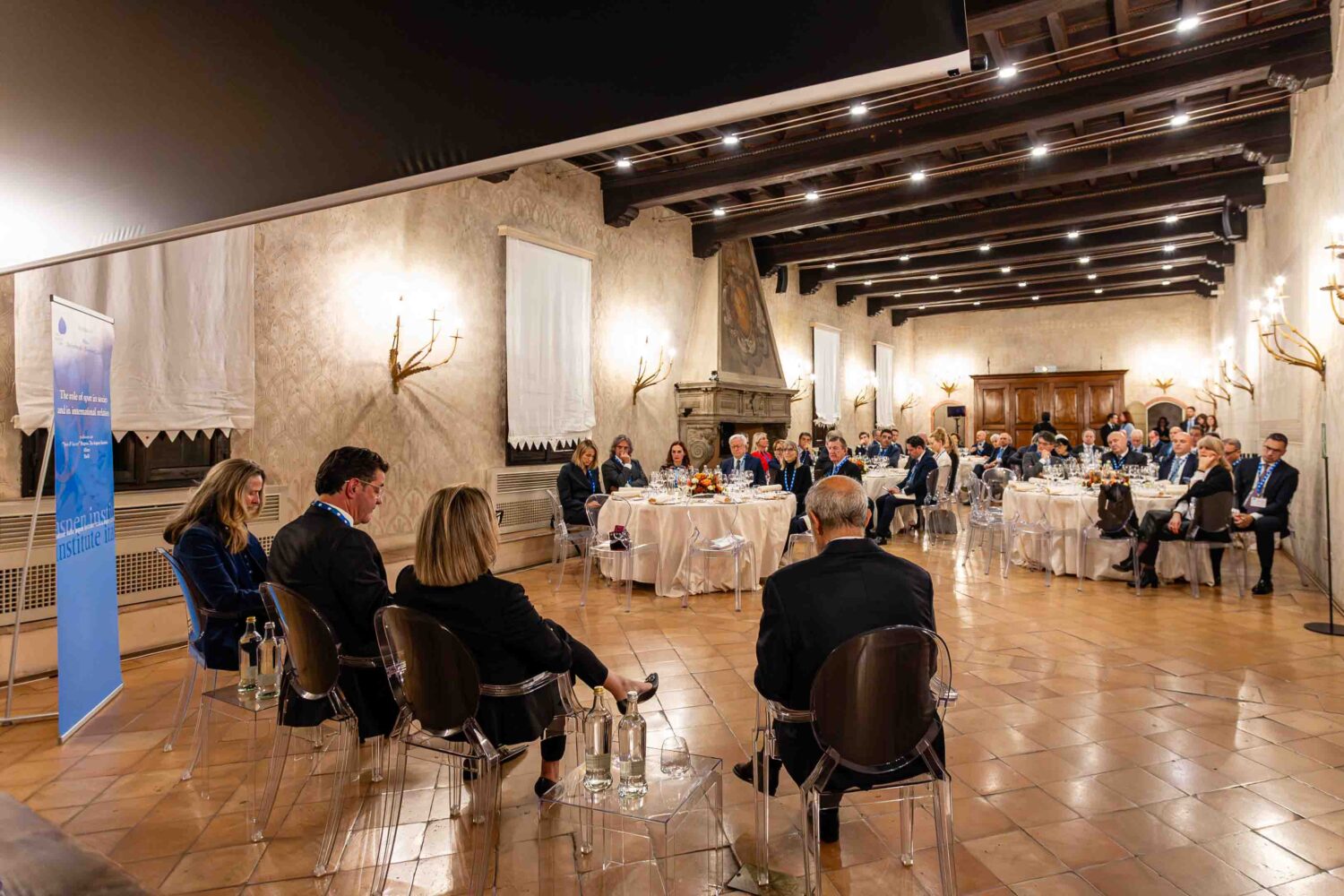
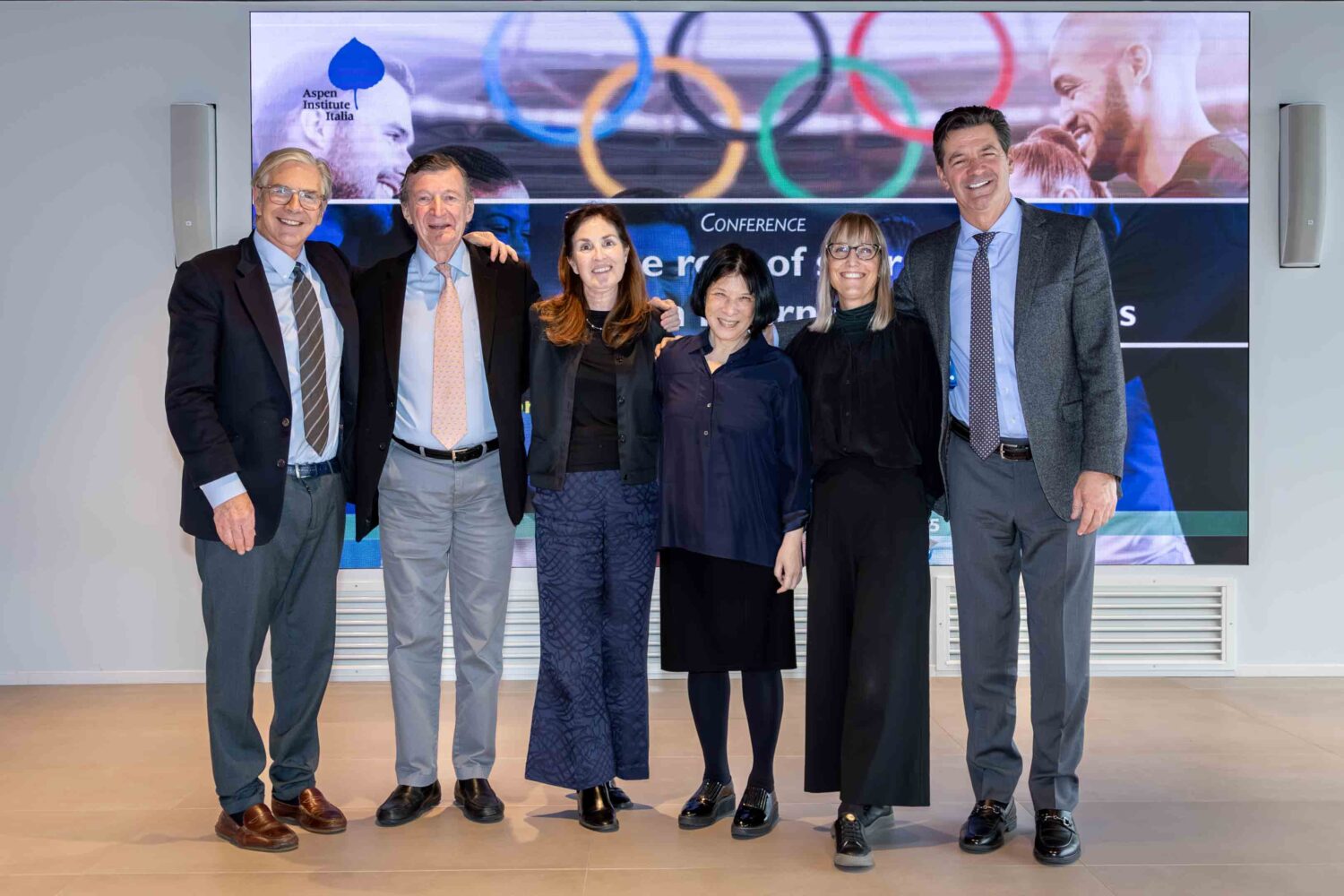
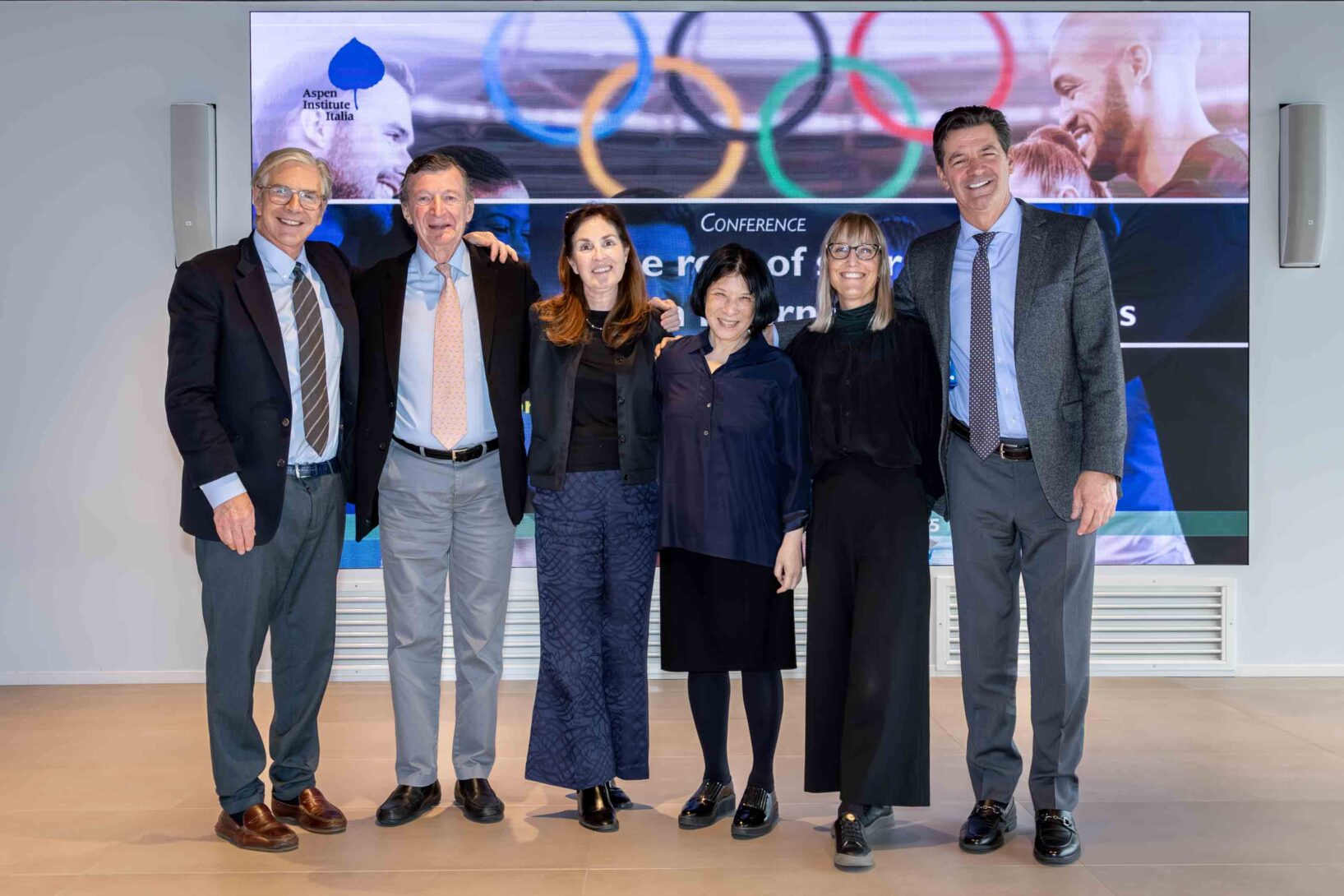
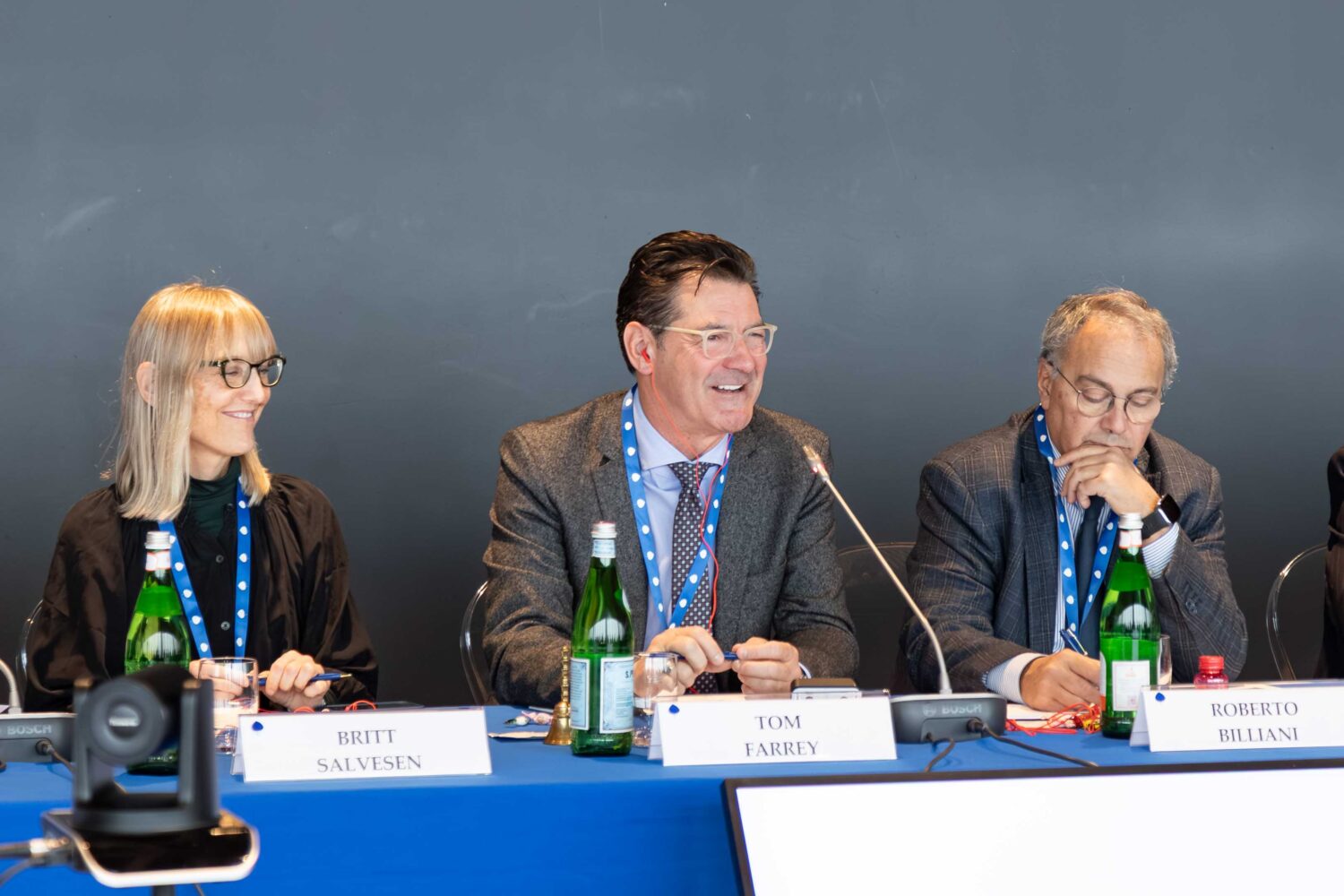
As part of the Why We Play series, the Aspen Institute’s Sports & Society Program and Aspen Institute Italia came together in Milan, Italy to host a roundtable conversation titled The Role of Sport in Society and International Relations. The discussion explored sport not only as competition or entertainment, but as a powerful social, cultural, economic, and diplomatic force shaping communities, institutions, and global relations.
Summary prepared by Aspen Institute Italia.
Key Themes from the Conversation
Values, competition and cooperation: the anthropological foundation of sport
This theme examines competition as a shared pursuit shaped by common rules and cooperation, rather than conflict.
- Competition in sport is fundamentally cooperative: Sport is grounded in a shared pursuit toward a common goal, where rules enable cooperation rather than conflict.
- Excellence depends on equality, not exclusion: When sport is based on shared rules and equal conditions, competition produces recognition and merit, not exclusion or inequality.
- Sport’s values are lived practices with relevance beyond the field of play: Respect, reciprocity, fairness, and responsibility are operational values that can be transferred to social and institutional life.
Sport and social cohesion: well-being, inclusion, and education
This theme highlights sport’s role in strengthening individual and collective well-being while fostering inclusion, trust, and a sense of belonging.
- Sport strengthens well-being and social capital: Widespread participation in sport is closely linked to improved quality of life, physical and psychological health, confidence, and social capital.
- Sport functions as a public asset and social safeguard: When supported through infrastructure, clubs, and public policy, sport helps communities become more resilient and inclusive, particularly in contexts of marginality, inequality, and urban decay.
- Sport creates inclusive spaces for belonging and participation: By offering an “inclusive tribe,” sport enables multiple identities to coexist without conflict and strengthens civic sense, participation, and collective engagement.
Sport and its economic and technological dimensions: supply chains, events, media and AI
This theme explores sport as a powerful economic engine shaped by global supply chains, major events, and evolving media ecosystems.
- Sport is a significant economic driver: Sport feeds into structured industrial supply chains, generates employment, mobilizes public and private investment, and contributes meaningfully to national economies.
- Major sporting events create unprecedented global impact: Events such as the Olympic Games concentrate global attention and generate economic, media, and symbolic value, while also raising important questions about financial, environmental, and social sustainability.
- Technology and AI are transforming performance and access: Artificial intelligence and analytics are redefining training, injury prevention, and performance models, while also creating opportunities to democratize excellence by expanding access to advanced tools.
Sport and international relations: soft power and sports diplomacy
This theme explores sport’s role as a powerful form of soft power and an increasingly structured tool of international relations.
- Sport functions as a strategic tool of soft power: Historically, sport has contributed to the construction of nations’ image and identity, with athletes and teams acting as informal ambassadors of values and expertise.
- Sport reflects and amplifies geopolitical dynamics: Phenomena such as sportswashing, boycotts, and political instrumentalization highlight both the non-neutrality of sport and its extraordinary symbolic relevance.
- Sports diplomacy can open channels for dialogue: Initiatives like the Olympic Truce demonstrate sport’s ability to create spaces for communication even in conflict situations, where traditional diplomacy faces limitations.
Aspen Italia Roundtable Summary
The Role of Sport in Society and International Relations.
Summary prepared by Aspen Institute Italia.