Can a house with an open-door policy change a neighborhood?
Subscribe to Weave’s Newsletter
This story was originally published on Weave’s newsletter. Every week, you’ll get resources on how to weave our communities and restore social trust.
After graduating from Bible school in Arkansas, Coleman Yoakum and a group of friends moved to Pontiac, Mich. They chose a neighborhood that was struggling, where many houses were boarded up. Some had signs saying “All copper stolen” to avoid being further damaged. Crime and unemployment were high and the community had a large number of homeless folks. But that didn’t deter them; in fact, it motivated them. “We wanted to move somewhere that needs good neighbors and see if being a good neighbor can change a community,” says Yoakum.
They bought a duplex, knocked down a wall to live together, and got “horrible jobs” to pay the bills. “The goal was really to live as cheaply as possible so that we didn’t have to spend so much time at work out of the neighborhood, so we’d have time to meet and build relationships with our neighbors,” he says. They knew a lot of folks were struggling and wanted to help. They didn’t have much to offer, so they began sharing what they had. “We just plugged in a powerstrip and hung it out the front window of our house because if you are homeless, your lifeline is your phone.”
As folks came around to charge their phones, they’d start a conversation with them. They got to know each other and slowly built relationships with them. The shared house soon developed an open-door policy for anyone in the neighborhood. “If you need a place to shower, you can shower. If you want to cook some food, you can cook food. If you need to do laundry, we’ve got a washer and dryer in the basement,” says Yoakum.
To reach more neighbors, the group hosted a neighborhood barbecue on the first Saturday of every month. They got to know more folks, who told them that food insecurity was a real issue in the neighborhood. Together, they came up with the idea to start a community garden. “As we were talking to neighbors about the garden, they started saying ‘oh, I know how to grow green beans, collard green, tomatoes, and okra,” he says. “All the knowledge to fix the problem was in the neighborhood. People knew how to garden. They just needed a little bit of resources and a place to grow the food.”
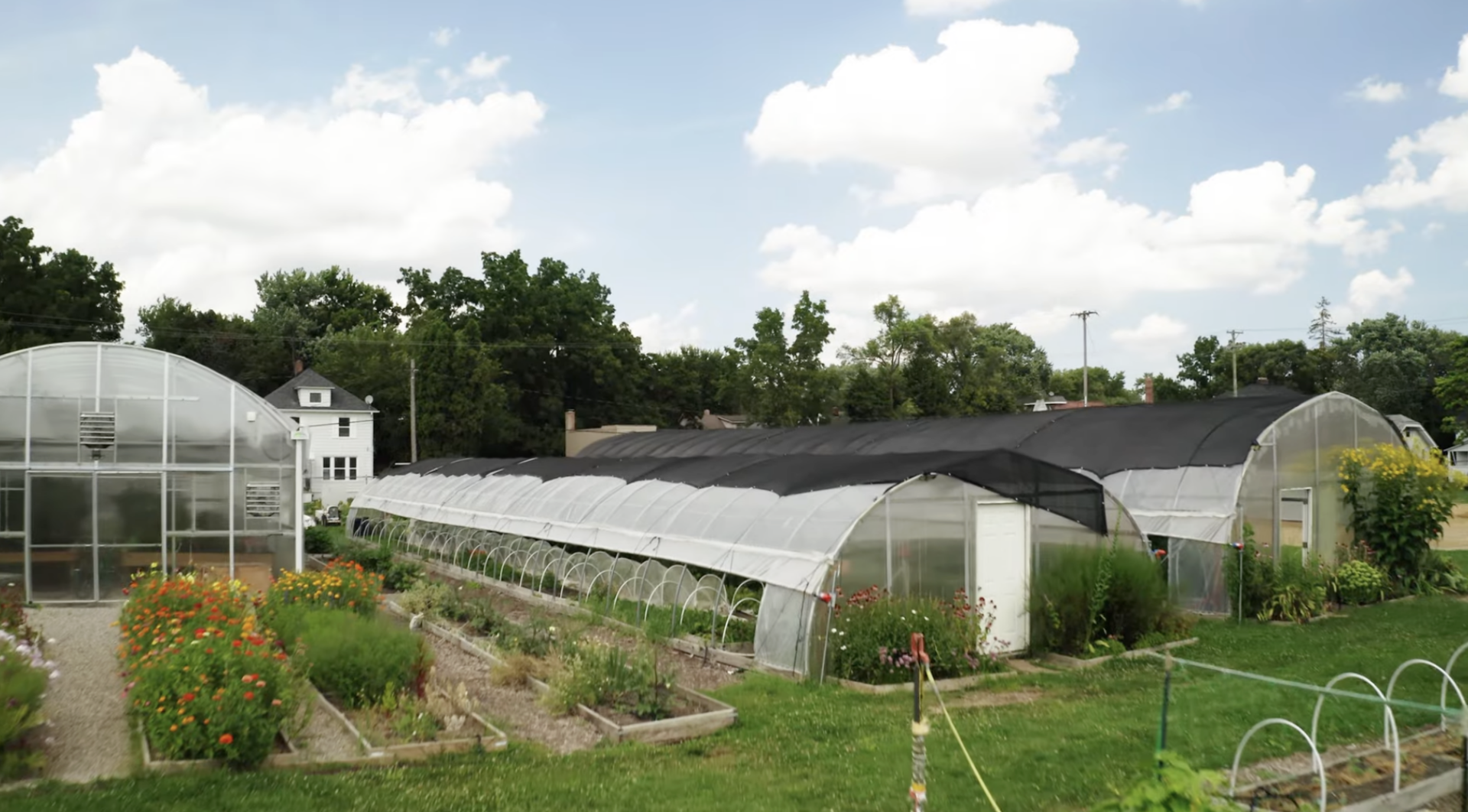
The neighborhood had many vacant lots from houses that had burned or been torn down. They went to the county to ask about using those spaces. “They said ‘we really don’t sell many vacant lots, so what about $10,’ I had $80 in my pocket so we bought eight.” Neighbors showed up to build the garden together. By the first year, they grew 500 pounds of food. The next year, they did 1200 pounds. Now, the garden has grown to an acre and a half, the largest in the city of Pontiac.
Over time, this consistent, relationship-first approach kept the neighborhood flourishing. The initiative, Micah 6 Community, has grown far beyond that initial shared house and the garden. A few years ago, they purchased the Webster Elementary School building, a beautiful and large space that had been closed since 2008 and had fallen into disrepair. “We started having conversations with neighbors on what they wanted to see in this building. We heard that there were no gyms in this neighborhood that you can walk to. Mostly what folks wanted was health and wellness, youth activities, entrepreneurship, and arts and culture.”
So, they built it. The Webster Community Center hosts a basketball court, a gym, a stage, a community market, community health outreach offices, a launchpad kitchen, and a small business incubator. “We went from a place where people were trying to get out of here as fast as possible, to families telling us that they waited on lists trying to get into this neighborhood now because of the community center.”
Yoakum says that anyone can replicate what happened in Pontiac, Mich., if they are intentional in weaving their communities together. “Good neighbors can make a neighborhood good. Investing in your community, getting to know your neighbors, serving each other, setting a new tone can really make an undesirable place desirable again.”


The Solutions Bringing Us Closer to a Whole-of-Ecosystem Response to Scams
Design of Business Takes on Radical Collaboration, Recorded Live in Aspen: A Guide to the DB|BD Season
What Are You Teaching Me Today?
Helping Afghan women gain freedom in Arkansas
Know a Courageous Leader Taking On a Critical Issue? Nominate Them for the McNulty Prize & Catalyst Fund

Mapping the Religion & Media Space