If food is love, what about the leftovers?
Subscribe to Weave’s Newsletter
This story was originally published on Weave’s newsletter. Every week, you’ll get resources on how to weave our communities and restore social trust.
After a Chicago Cubs game in 2021, Omar Tarabishi and his wife were walking past the concession stands and noticed a ton of leftover food. They stopped and asked what happened to it.
“It all gets thrown away. This was just one game at one stadium,” Tarabishi says. “Can you imagine what this is like nationwide?”
Back home in his Baltimore neighborhood, he asked the same question at local restaurants and bakeries. He got the same answer – the food is tossed. “I knew I couldn’t start with collecting food from stadiums, so I thought, let’s work literally from our neighborhood outward.”
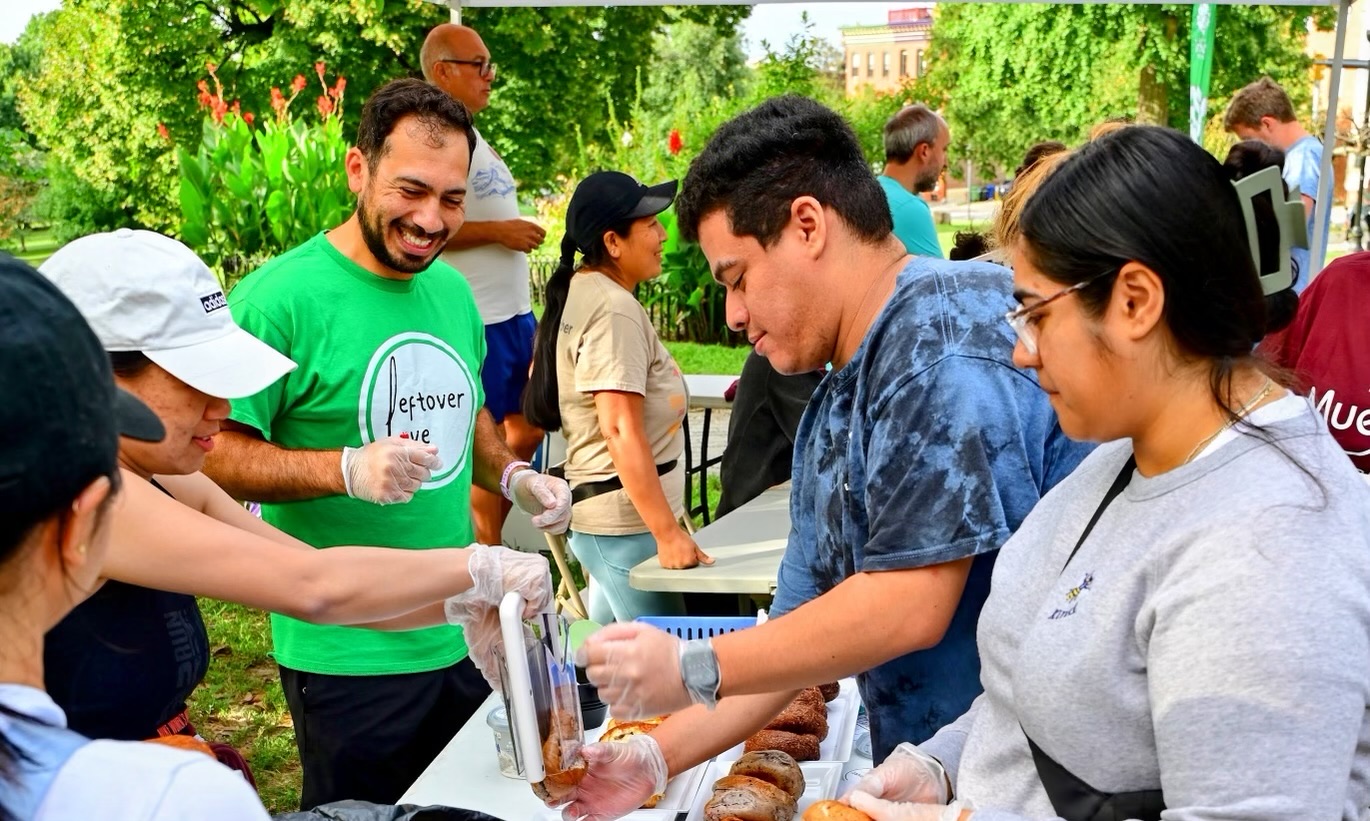
Tarabishi, his spouse, and some friends began collecting leftover pastries and breads and bringing them to one of the free community fridges in his Patterson Park neighborhood. “People take what they need and give what they can,” Tarabishi explains. A Facebook group called Feeding Baltimore helps folks find community fridges and lets volunteers know when to re-stock them.

A community fridge on 123 N Linwood Ave in Baltimore City where volunteers leave unused food. Photo credit: Omar Tarabishi
Soon, they were collecting more food than would fit in the fridges. Business owners wanted to donate their leftover food. “They see that it’s a way to give back,” he says. It makes the businesses feel more connected to folks in their community.
So the project had to grow. Now, it distributes leftovers at weekly free markets in neighborhoods where hunger is a constant concern. Tarabishi turned the project into a nonprofit called Leftover Love. And it has become about more than free food. ”It has been beautiful to see the relationships and trust being built with our volunteers and food donors,” he says.
Today, Leftover Love works throughout the city of Baltimore. About 25 volunteers drive regular pickup and delivery routes every week. Another group of volunteers steps in when someone can’t make a run. Most of this growth has been by word of mouth. “The community is our best source of marketing and spreading the word,” says Tarabishi.
As the project grows, volunteers are trying new things to deepen their connection to the community. For the past few months, they’ve supported monthly themed dinners at the Baltimore Station – a residential space for unhoused veterans – where volunteers come in and help serve a meal that feeds 30 or more. “It’s one thing to drop-off food and go on with your day, but it’s another thing to drop-off, help set up and serve, and spend time with those consuming the food.”
Last year, Tarabishi was selected by local community advocates to receive a 2024 Baltimore Weaver Award. The Award led to more media stories about Leftover Love and helped Tarabishi connect with weavers across the country. He is learning how other local, regional, national, and even international organizations do their work, which has inspired him to think even bigger about using food to spread love and bring communities together in Baltimore.

The Solutions Bringing Us Closer to a Whole-of-Ecosystem Response to Scams
Design of Business Takes on Radical Collaboration, Recorded Live in Aspen: A Guide to the DB|BD Season
What Are You Teaching Me Today?
Helping Afghan women gain freedom in Arkansas
Know a Courageous Leader Taking On a Critical Issue? Nominate Them for the McNulty Prize & Catalyst Fund
Mapping the Religion & Media Space