Impact STORY
Navigating Growth, Change, and Impact: Insights from Laela Sturdy, Managing Partner at CapitalG

Laela Sturdy is the Managing Partner of CapitalG, Alphabet’s independent growth fund, where she has led investments in transformative technology companies such as Stripe, Duolingo, Gusto, UiPath, Webflow, and Whatnot. Notably, Laela’s promotion to Managing Partner in 2023 positions her among the few women leading established multibillion-dollar venture firms. Prior to joining CapitalG in 2013, she served as Managing Director of Emerging Businesses at Google, contributing significantly to the growth of YouTube and Google Search.
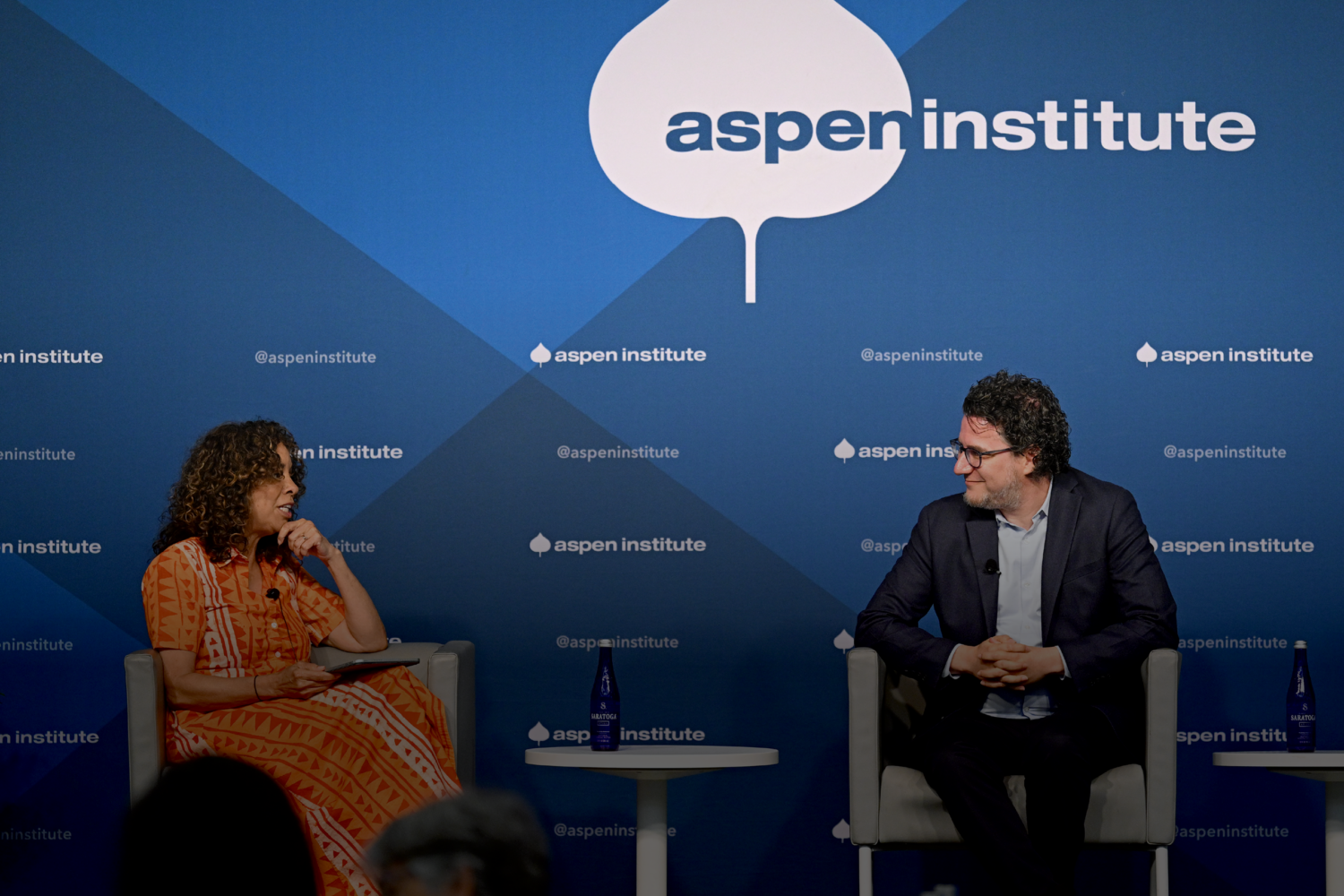
As a leader at the forefront of technological investment and a Finance Leaders Fellow at the Aspen Institute, we spoke with Laela at the 2024 Resnick Aspen Action Forum to discuss lessons from leading through rapid change, stepping into a role achieved by only a select few, and the potential of the private sector—particularly in finance and tech—to drive meaningful social impact. Answers have been edited for clarity and length.
Can you talk a bit about your role and what CapitalG does?
I’m the managing partner of CapitalG. CapitalG is Alphabet and Google’s growth equity investment fund. Our mandate is to invest in generational technology companies and partner with them to scale. As managing partner, I oversee our fund strategy, recruit and help build an amazing team of partners to lead new investments, and support our operational and portfolio growth team.
What led you to take on this position?
So I’ve been a general partner at CapitalG for more than a decade, and I was an operator for a while before that and then took on the managing partner role about a year and a half ago. It’s been an incredible transition. I love investing, I love partnering with our portfolio companies, and I really love building and leading a team in such an exciting and vibrant sector. It was a pretty natural leadership transition for me to move from the general partner to the managing partner role. It’s been a really fun year and a half, and we got a lot of exciting changes and team building ahead.
What’s been your biggest leadership learning in this transition?
The biggest leadership learning is just continuing to help people get comfortable with change. I am actually someone that loves change, so I think I found the right industry for me in technology many years ago when I first started working in this space. The pace of change in 2024 is quite incredible with all the advances in AI and the macroeconomic uncertainty. One of the things I believe is needed to be a leading investment firm, to continue to drive returns, and be a great partner to our portfolio companies, is that we have to be continuously learning.
We have to be able to adapt our strategy based on the macro and micro opportunities. The most fun and rewarding leadership challenges are just helping bring the team along in that journey and helping find strength and excitement alongside the amount of change that is required to build and sustain a firm that’s going to be at the top of the game.
What are the values that guide your leadership?
The values that guide my leadership focus on self-awareness, teamwork, and fostering partnerships that drive growth. I love bringing diverse groups together, aligning incentives, and promoting transparent communication to bring everyone along to achieve as big a goal as possible.
What do you think the role of the private sector in tech and finance have in driving social change?
Tech and finance have tremendously important roles to play in driving social change. Being a venture capitalist, I work at the intersection of technology and finance and help to fund new entrepreneurs.
Eleven years ago, I invested in Duolingo, the language-learning app, and served on its board for over a decade. Partnering with founders like Luis von Ahn, Duolingo’s CEO and founder, was an incredible journey. Together, we worked to scale his visionary ideas in product and engineering—helping people learn languages more effectively—into a successful global business. The impact has been remarkable, from creating jobs in cities like Pittsburgh and New York to improving lives worldwide. It’s inspiring to see how technology-driven innovations like Duolingo not only enhance individual learning experiences but also drive economic growth, create jobs, and expand opportunities for everyone.
For me, there’s nothing more exciting than supporting entrepreneurs and helping accelerate innovation, optimism, and creativity. It’s inspiring to explore new ways of doing things and creating positive impacts—both on individual lives and the world more broadly.
Why is collaboration so important for impact?
Collaboration unites resources and expertise to achieve a shared goal—justice, prosperity, and societal well-being. By working together, we avoid duplicating efforts and maximize impact. This is especially true in Africa, where challenges are vast and varied. Collaboration among ALI South Africa, East Africa, and West Africa, allows us to learn from each other and create continent-wide solutions.
We talk a lot about inflection points in the Fellowship. Describe an inflection point that you experienced and how that contributed to where you are today?
I feel like I’ve been fortunate to have several inflection points. I think one that really stands out is COVID. That’s probably a more recent one where, like so many people, the first several months were an enormous challenge and held a lot of economic uncertainty.
I was on the board of several portfolio companies where their business all of a sudden had fallen off a cliff in lots of different areas. There were questions of would they have enough capital and how should they change their strategy? At the same time, I had three young kids at home that were no longer attending school. I find that during points of immense challenge is an opportunity to really reflect on what’s most important. During that time, I focused deeply on introspection and personal growth, which helped me connect with what matters most to me. This allowed me to lead authentically, sharing my struggles with my team and explaining the reasoning behind my decisions. Together, we worked on supporting our founders and companies more effectively.
It was a pivotal moment that led to more transparent and balanced leadership. It also brought exciting changes to how we approached company building—shifting toward more global, hybrid models and embracing innovation. A lot of innovation came from these challenges and moments of introspection.
What questions should business leaders ask themselves when designing their companies with impact in mind?
Business leaders should focus on embedding impact by implementing effective feedback mechanisms to ensure their products and companies achieve their intended goals while ready to address unintended consequences. This involves creating open channels to listen to stakeholders and fostering a leadership culture where team members can speak truthfully about challenges.
Additionally, leaders should consider structural initiatives, like Pledge 1%, which encourages entrepreneurs to allocate 1% of their equity toward social impact efforts. Embedding impact requires a holistic approach, spanning tactical and strategic actions, and should be integrated at every stage of a company’s journey—from its inception to long-term operations across public and private sectors.
How has your experience as a Finance Leaders Fellow influenced your leadership?
The Fellowship has had a tremendous positive impact on my life. I feel so grateful to have been a part of this experience, and I know I’ll feel grateful for many years to come because I really believe it’s an ongoing journey. The most important thing has been the friendships and the relationships that I’ve built. I’m really inspired by the friends and the peers in my class. I’ve learned so much about diverse perspectives and I’ve felt emotionally connected by people sharing parts of themselves. Through that, I’ve been able to grow in my compassion and skills as a leader and also just become a more well-rounded human. It’s an incredible learning journey and an incredible community to be in fellowship with.
The Finance Leaders Fellowship is developing a global community of values-based senior finance leaders driving industry change to power societal progress, now with 126 Fellows across 22 countries. Using the Aspen Institute method of text-based dialogue, and building upon the Institute’s commitment to values-based, action-oriented leadership, the program encourages selected Finance Fellows to consider values and perspectives necessary for effective leadership in finance and in society at-large. The Finance Leaders Fellowship was co-founded in 2016 by Aspen Institute Henry Crown Fellow, Ranji Nagaswami, and Aspen Institute Trustee, Chris Varelas.
About the Aspen Global Leadership Network:
The Aspen Global Leadership Network (AGLN) is a dynamic, worldwide community of nearly 4,000 entrepreneurial leaders from over 60 countries. Spanning business, government, and the nonprofit sector, these leaders share a commitment to enlightened leadership and the drive to tackle the most pressing challenges of our times. Through transformative fellowships and gatherings like the Resnick Aspen Action Forum, AGLN Fellows have the unique opportunity to connect, collaborate, and challenge each other to grow and make a meaningful impact.
In Session: Maureen Conway

Building Economic Security: A Book Talk with Arindrajit Dube and Carrie Joy Grimes

What Employee Ownership Means to Workers
The Solutions Bringing Us Closer to a Whole-of-Ecosystem Response to Scams

Employer-Friendly Practices: A Guide for Higher Education

MillerKnoll: Developing Operations Leaders from Within and Beyond — A Case Study in Structured Talent Development
Design of Business Takes on Radical Collaboration, Recorded Live in Aspen: A Guide to the DB|BD Season

A Typology of State-Supported Work-Connected Learning Programs