The Art of Moderating
Michael K. Powell Reflects on His Approach to Moderating a Seminar

Aaron Britt
Guest Writer
A former FCC Chair on the joy and labor of being a longtime Aspen seminar moderator
Michael K. Powell has been, as he put it, “dancing around the Institute” since he was 34.
In 1999, he was selected as a member of the third class of Henry Crown Fellows, a two-year program he describes as life-changing.
Now 63, the former Chairman of the Federal Communications Commission under Presidents Clinton and George W. Bush has found a kind of calling that dates back to his experience as a Henry Crown Fellow.
After learning at the feet of those who moderated his Henry Crown Fellowship class, he’s since become a beloved Institute moderator in his own right.
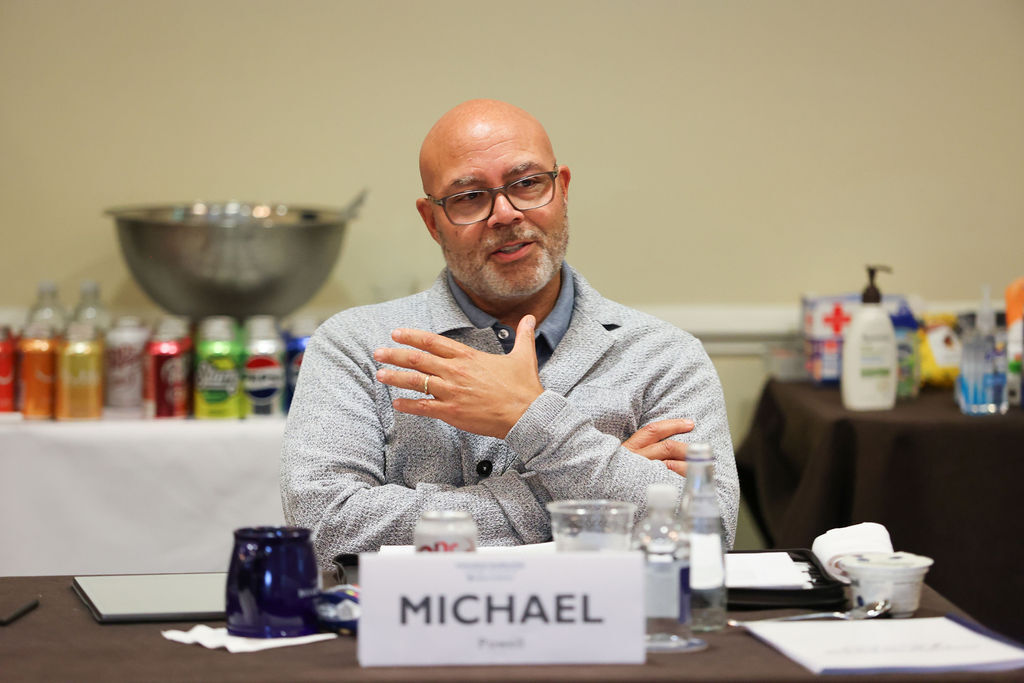
“I’ve now been a moderator of the Aspen Executive Seminar five times, with two more [leadership seminars] coming up in the next two months,” he says. He’s also returned the early favor by moderating the Henry Crown Fellowship.
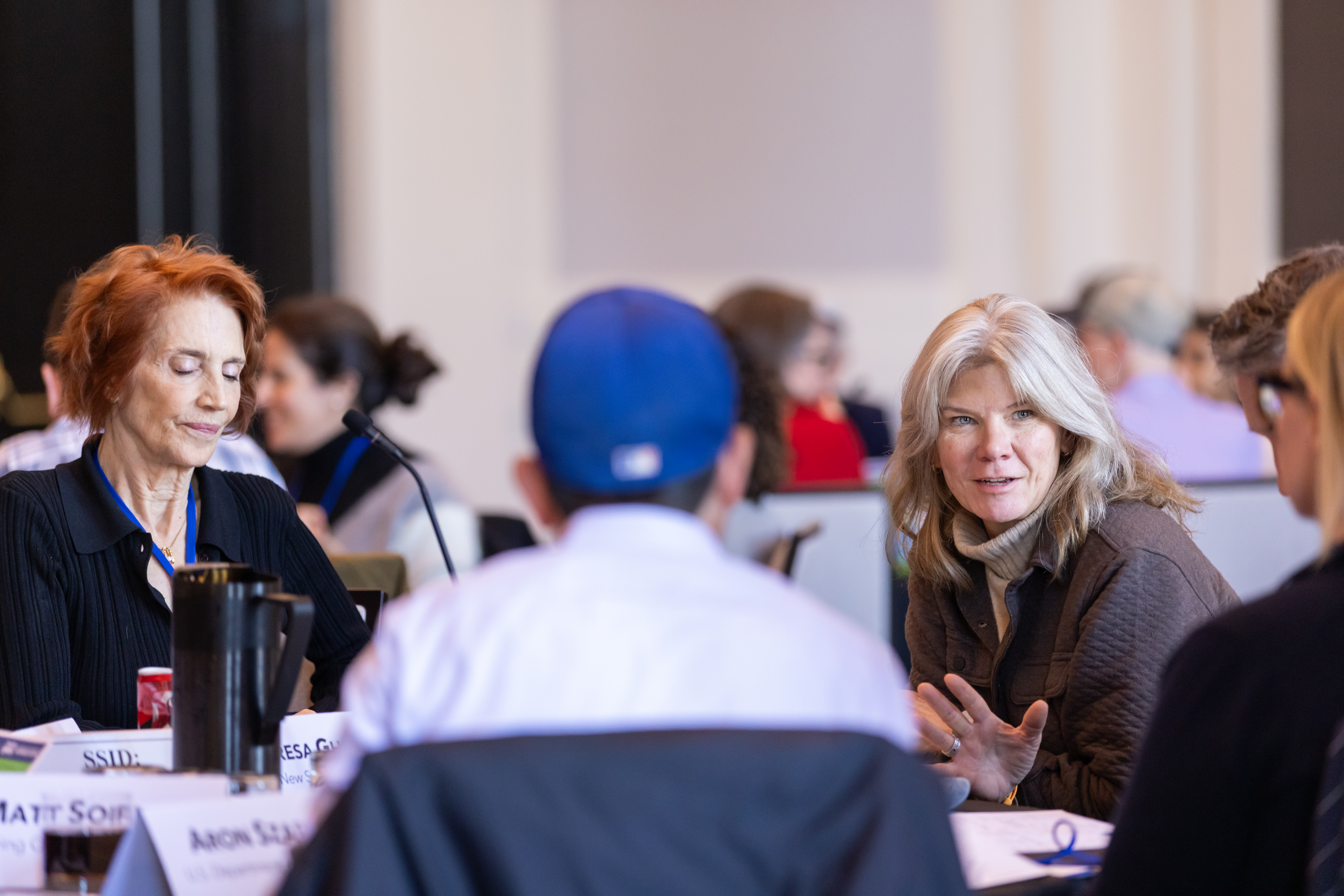
Powell’s approach, like most seminar moderators at the Aspen Institute, is deeply rooted in the Aspen method. Though he certainly gives his seminars their own flavor. Moderating Aspen Institute seminars–such as the Aspen Executive Seminar– is built upon a few essential practices. Sessions are fundamentally Socratic, emphasizing discussion and inquiry. They’re also text-based, seminar dialogue always pushing out from an essential piece of text, which could come from sources as disparate as Aristotle to a piece of collage art from a local artist. Finally, everyone sits in what Powell calls “a sacred circle,” which erases any sense of hierarchy.
“The moderator isn’t a professor,” Powell continues, “your role is not to be instructional, you’re more akin to an orchestra conductor. In the room at a seminar is a symphony of instruments [the participants], all of which reflect different perspectives—and the score is the text. My job is to be a master of the score, which I’ve read, wrestled with, and explored more than participants. But I use that score to try to create a conversation that builds on the great ideas in the text. I try to pull all those participants (the instruments) into the conversation.”
“If you get all that right,” he adds wryly, “it creates a magic, a verve, a spirit, a combined energetic quality in the room that’s unusual and participants find a little bit electric.”
Today, Powell sees his role as a seminar moderator as an exercise in inviting people to open themselves up so they can actually explore their beliefs instead of stating their opinions.
“It’s not easy,” he says, “but it’s so rewarding for everyone. Sometimes you need to hold people to that level of exploration and not let them off the hook, not let them escape, which very smart people often are able to do.”

Holding the people in the Institute seminars, he moderates the serious work of intellectual exploration, which requires a facility with the texts that Powell has spent years coming to possess. And today, he describes the pleasures of preparing for a seminar in the same terms as those of actually facilitating one.
“I treat my texts with reverence,” he says. ”I have them elegantly bound so that they have a physical presence. These are some of the most important thoughts ever thought by the most important thinkers! I deeply admire the Talmudic transition of text and reading, and I borrow from that in how I prepare.”
Powell says his texts are “infected with notes and lines and drawings and highlights.”
“If you opened my Nicomachean Ethics, you wouldn’t be able to read it!”
Perhaps the most rewarding element of moderation is that Powell himself is constantly learning, right along with the seminar participants. He never goes into the seminar space thinking that his journey with a text is done. “I open a text I know well, and read it anew each time. I’ve never had it speak to me in the same way twice–not in totality–and I usually gain a keener insight into what the writer is after each time.”
Subscribe to the Aspen Leadership Seminars Newsletter.
A monthly exploration of how we can become more self-aware, more self-correcting, and more self-fulfilling as leaders.
Design of Business Takes on Radical Collaboration, Recorded Live in Aspen: A Guide to the DB|BD Season
What Are You Teaching Me Today?
Helping Afghan women gain freedom in Arkansas
Know a Courageous Leader Taking On a Critical Issue? Nominate Them for the McNulty Prize & Catalyst Fund

Mapping the Religion & Media Space

Aspen Business & Society Dispatches from Climate Week